
Selecting the right storage solution for your fitness equipment is just as important as choosing the weights themselves. A high-quality dumbbell rack not only keeps your workout area organized but also plays a vital role in preventing injuries, protecting your flooring, and extending the lifespan of your gear. The ideal rack style for your home gym depends on the size of your current dumbbell collection, your plans for future expansion, the physical dimensions of your workout space, and the structural limits of your home.
By evaluating the structural differences between tiered, vertical, wall-mounted, and A-frame racks, you can make an informed decision that enhances both the safety and efficiency of your training sessions. Whether you are setting up a dedicated garage gym or carving out a small workout corner in a city apartment, choosing the right storage configuration ensures your weights are always secure and within easy reach.
Quick Decision Guide: Matching Rack Style to Your Space
To choose the best storage system, you must balance the physical footprint of the rack with the total weight of your dumbbell collection. A rack that is too small will leave dangerous clutter on your floor, while a rack that is too large can swallow up valuable training space. Before making a purchase, take a moment to count your current pairs of dumbbells, note their materials, and estimate how many more pairs you plan to add over the next few years.
Products mentioned in this guide
Prices are valid at publication and may change. Please refer to the product page for the latest price.
The table below provides a comparative overview of the four primary rack styles to help you narrow down your options based on space, capacity, and user needs:
| Rack Type | Ideal User Profile | Floor Footprint | Relative Weight Capacity | Best Collection Size |
|---|---|---|---|---|
| Tiered | Heavy lifters, dedicated gym rooms, expanding collections | Large | High | Large (8+ pairs) |
| Vertical | Space-conscious lifters, apartment dwellers | Compact | High | Medium to Large (6-10 pairs) |
| Wall-Mounted | Minimalists, multi-purpose room users | Zero | Moderate | Small to Medium (3-6 pairs) |
| A-Frame | Beginners, temporary setups, light fitness enthusiasts | Moderate | Low to Moderate | Small (3-5 pairs) |
When assessing your current inventory, remember to account for the physical shape of your dumbbells. Fixed hex dumbbells, round pro-style dumbbells, and adjustable dumbbell systems all sit differently on storage shelves. Anticipating your future strength progression is also key; if you plan to buy heavier sets within the year, investing in a rack with extra shelf space now will save you the cost of a complete replacement later.
Tiered Dumbbell Racks: Best for Heavy, Expanding Collections
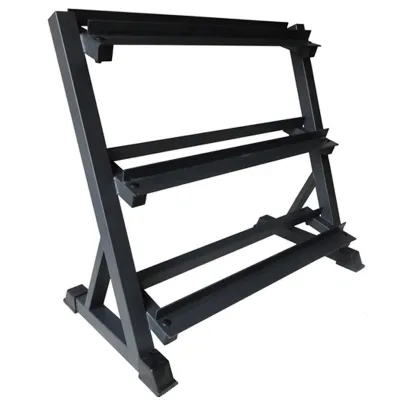
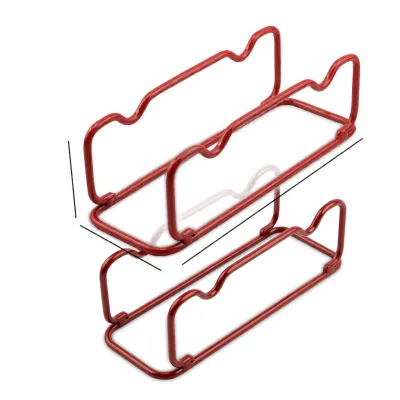
Tiered dumbbell racks, often featuring two or three horizontal shelves, are the gold standard for dedicated home gyms and serious lifters. The primary advantage of a tiered design is its exceptional ergonomic utility. Because the shelves are staggered horizontally, you can approach the rack, bend at the hips, and lift heavy weights while maintaining a neutral spine, which significantly reduces the risk of lower back strain during transitions.

These racks require a substantial amount of linear wall space and floor depth. Because they spread the weight horizontally, they are highly stable and virtually impossible to tip over, making them the safest choice for holding heavy iron or rubber hex dumbbells. This spacious layout makes them ideal for dedicated garage gyms, spare bedrooms, or large workout spaces where floor real estate is not at a premium.
However, the massive stability of tiered racks comes with a spatial trade-off. They are the least space-efficient option available, taking up a large rectangular chunk of your floor. Furthermore, once a tiered rack is fully loaded with hundreds of kilograms of iron, moving it becomes incredibly difficult and dangerous; you will need to unload every single dumbbell before attempting to reposition the frame.
Before purchasing a tiered rack, use this pre-purchase checklist to ensure compatibility:
- Verify tier distance: Measure the distance between the front and back rails of the shelves to ensure your specific dumbbell heads (especially larger rubber hex or urethane models) will sit securely without slipping through or overlapping.
- Check shelf length: Ensure the total horizontal length of the shelves can accommodate the combined width of all your dumbbell heads placed side-by-side.
- Review weight ratings: Confirm the manufacturer's maximum weight capacity per shelf, ensuring your heaviest pairs do not exceed the structural limits of the steel support bars.
Vertical Dumbbell Racks: Best for High Capacity in Small Footprints
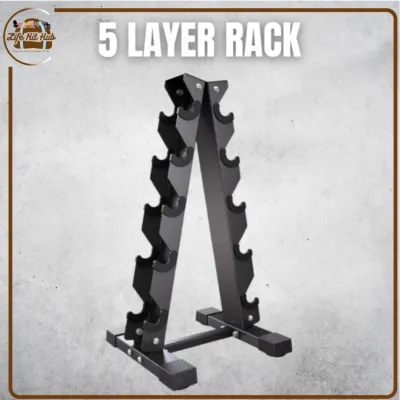
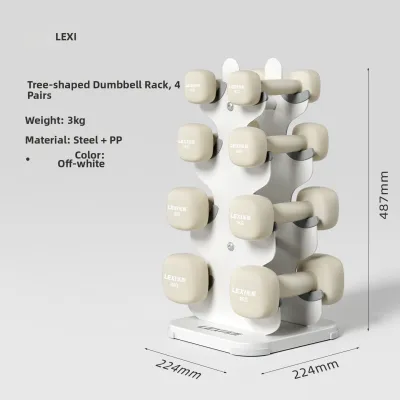
If you have a large collection of dumbbells but are working with limited floor space, a vertical dumbbell rack is an excellent solution. These racks store your weights in a vertical column or tower structure, utilizing vertical height rather than horizontal floor area. This design allows you to store a significant amount of weight while occupying a footprint that is often no larger than a single square meter.
Vertical racks are highly popular in apartment home gyms, corner setups, or multi-purpose rooms where keeping the center of the floor clear is essential. By stacking the weights vertically, you can keep your training area organized without sacrificing valuable floor space needed for dynamic movements, lunges, or cardio equipment.
Because vertical racks stack heavy weights upward, their center of gravity rises as you load them. This structural reality makes stability and safety a primary concern. To mitigate the risk of tipping, it is essential to inspect the base width of the rack before buying. Look for models featuring wide, flared bases, heavy-gauge steel construction, and built-in anti-tip feet.
There is also an ergonomic trade-off to consider with vertical storage. Reaching up high to pull down a heavy dumbbell, or bending awkwardly to lift a heavy weight from the very bottom slot, can place unusual stress on your shoulders and lower back. To ensure safe operation, always place your heaviest dumbbells in the lowest slots to keep the center of gravity as low as possible, and reserve the upper cradles for your lightest pairs.
Wall-Mounted Racks: Best for Clearing Floor Space
Wall-mounted dumbbell racks offer a minimalist, ultra-clean aesthetic by completely removing storage frames from your floor. This style is perfect for small rooms, shared living spaces, or home gyms where you need every square inch of floor space for yoga, bodyweight mobility drills, or high-intensity interval training. Keeping the floor clear also makes cleaning, sweeping, and mopping your workout space incredibly easy.
Installing a wall-mounted rack requires strict adherence to structural safety guidelines. Because dumbbells exert a continuous downward gravitational pull, these racks must be anchored directly into solid wall studs or masonry walls, such as concrete hollow blocks (CHB) common in Philippine homes. You must never attempt to mount a weight rack solely onto standard drywall, gypsum board, or hollow plaster partitions, as the weight will inevitably tear the anchors out, causing severe wall damage and potential injury.
Due to the physical limitations of wall anchoring, wall-mounted racks are generally designed for lighter to medium-weight dumbbell sets, typically ranging from 2 kg to 10 kg pairs. They are not engineered to support massive powerlifting collections or heavy pro-style round dumbbells. Attempting to overload a wall-mounted unit poses a serious structural risk to your home.
If you choose this style, carefully verify the quality of the mounting hardware included in the package. Many imported racks include standard plastic wall plugs that may not be suitable for your specific wall type; purchasing high-quality sleeve anchors or expansion bolts from a local hardware store is highly recommended. Additionally, if you are renting an apartment or condominium, consult your tenancy agreement regarding drilling rules, as repairing deep anchor holes in concrete walls can be difficult and costly when moving out.
A-Frame Racks: Best for Beginners and Portable Setups
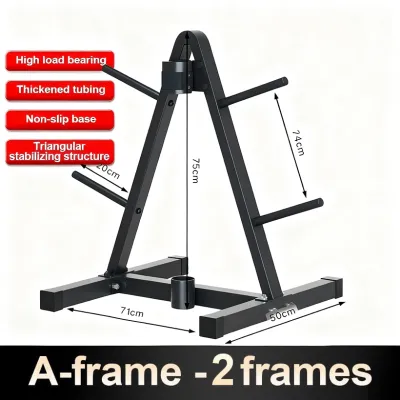
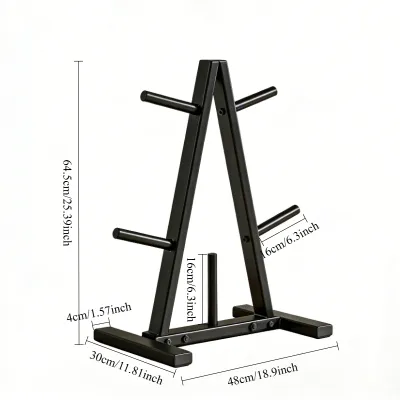
Named for their triangular profile, A-frame dumbbell racks are lightweight, highly portable, and incredibly easy to set up. Many A-frame models are foldable or require minimal assembly, making them an excellent choice for fitness beginners, temporary workout spaces, or individuals who move frequently and need equipment that is easy to pack and transport.
These racks are best suited for small starter sets, light vinyl-coated or neoprene dumbbells, or compact adjustable dumbbells. Because of their triangular geometry, they distribute weight evenly down to a relatively small base, making them efficient for storing a few pairs of light weights in a corner or closet when they are not in use.
However, A-frame racks have distinct structural limitations. They possess a lower overall weight capacity compared to heavy-duty tiered or vertical steel frames. Furthermore, because of their narrow top and wider base, they can become highly unstable if you load them unevenly. If you remove several pairs from one side while leaving the other side fully loaded, the uneven weight distribution can cause the rack to tip over unexpectedly.
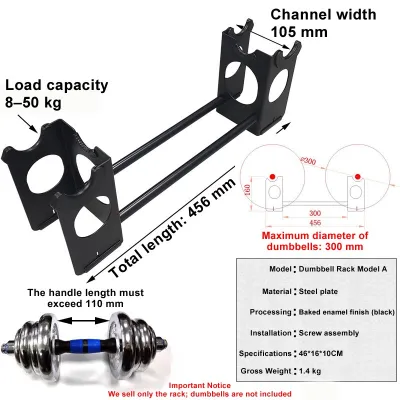
Before purchasing an A-frame rack, carefully inspect the locking mechanisms on foldable models to ensure they lock securely into place and will not collapse under load. You should also measure the width of the individual plastic or rubber cradles. Ensure the cradle width matches the handle length of your dumbbells; if the cradles are too wide or too narrow, your dumbbell handles will not rest securely, leading to slipping or pinched fingers during storage.
Essential Specs and Safety Checks Before You Buy
Before finalizing your purchase of any dumbbell rack, running through a series of technical, material, and environmental checks will ensure your investment is safe, durable, and compatible with your home environment.
Weight Capacity Verification
Never guess or estimate the weight capacity of a storage rack. Calculate the exact total weight of your current dumbbell collection and add a buffer for any heavier pairs you plan to buy. Compare this total sum against the manufacturer’s rated maximum load capacity. Keep in mind that some manufacturers state a “total capacity” while others state a “per-shelf capacity.” Operating a rack close to or beyond its maximum limit can cause the steel shelves to bow, weld joints to crack, or the entire frame to collapse under dynamic loading.
Material and Rust Resistance
In the tropical, high-humidity climate of the Philippines, rust is a constant threat to fitness equipment. This risk is amplified if your home gym is located in a garage, an open-air carport, a covered balcony, or a room without continuous air conditioning. To protect your investment, look for racks constructed from heavy-gauge steel finished with a high-quality, electrostatic powder coating or galvanized finish. Regularly inspect the frame for deep scratches or chips in the paint, as exposed raw steel will quickly oxidize in humid air. Wiping down the frame with a dry microfiber cloth after sweaty workouts is a simple, highly effective way to prevent moisture buildup and rust.
Footprint vs. Clearance
When measuring your workout room, do not just measure the physical base dimensions of the rack. You must also account for the “clearance zone” around it. Ensure you have at least 60 to 90 centimeters of open space in front of and around the rack. This buffer zone allows you to walk up to the rack, bend down with proper lifting form, and safely extract or return heavy weights without hitting your elbows on adjacent walls, columns, or other exercise machines.
Floor Protection
Heavy steel racks loaded with iron weights can easily damage residential flooring. On delicate wood parquet, laminate, or ceramic tiles, a heavy rack can cause deep scratches, dents, or cracks. Look for racks that feature thick, non-marking rubber feet or end-caps on the base. For maximum protection, place a high-density rubber gym flooring mat beneath the rack. This mat will distribute the concentrated weight of the rack across a larger surface area, absorb vibrations when you set weights down, and significantly reduce noise.
Dumbbell Compatibility
Not all dumbbell racks are universally compatible with every style of dumbbell. For example, tiered racks with angled rails are designed specifically to cradle the flat edges of hexagonal dumbbells. If you place round pro-style dumbbells on these rails, they may roll or sit unevenly unless the rack features specialized rubber saddles. Similarly, if you use selectorized adjustable dumbbells, they require flat, wide shelves rather than narrow rails or vertical cradles. Always verify that the shelf style, rail spacing, and cradle dimensions of the rack align perfectly with the physical shape of your weights.
Frequently Asked Questions (FAQ)
Can I store kettlebells or adjustable dumbbells on standard dumbbell racks?
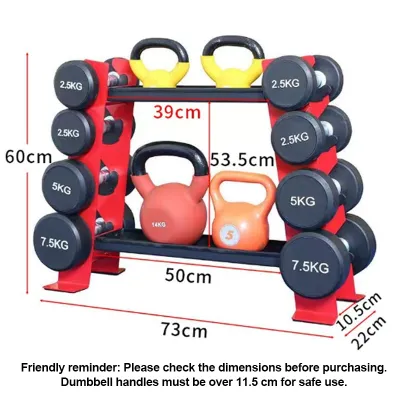
Standard dumbbell racks are engineered specifically for the symmetrical shape and balanced weight distribution of traditional dumbbells. Kettlebells have a completely different center of gravity, a wide body, and a single top handle, which prevents them from sitting securely on angled rails or narrow vertical cradles. Placing a kettlebell on a standard rail can cause it to slip through, potentially damaging your floor or causing injury. Similarly, block-style or dial-style adjustable dumbbells require a flat, continuous shelf surface rather than open rails. Before storing these items, check the manufacturer’s guidelines to see if the rack is explicitly rated for kettlebells or adjustable models, or invest in a hybrid rack designed with flat shelves.
How do I protect my dumbbell rack from rusting in a humid climate?
To prevent rust in humid tropical environments, keep your dumbbell rack in a well-ventilated area of your home, away from open windows where rain might splash. If your gym is in an enclosed room, using a dehumidifier can significantly lower moisture levels. After every workout, make it a habit to wipe down both the dumbbells and the rack frame with a clean, dry cloth to remove corrosive sweat and condensation. If you notice any scratches or chips in the powder-coated finish, clean the area immediately and apply a small amount of rust-inhibiting touch-up paint to seal the exposed steel and prevent oxidation from spreading.
Does a vertical dumbbell rack need to be anchored to the wall?
While many heavy-duty, commercial-grade vertical dumbbell racks are designed to be freestanding, anchoring them to a wall is highly recommended for home environments. Because vertical racks have a high center of gravity, they are susceptible to tipping if they are loaded unevenly, bumped during a dynamic exercise, or if someone accidentally trips over the base. Anchoring is especially critical if the rack is placed in a high-traffic area, or if you have children or pets in your home who might pull on the weights. Consult your product manual for specific anti-tip hardware instructions, and use appropriate wall anchors suited for your specific wall material to secure the top of the frame.
Community discussion
Share your experience or ask a question. Comments are reviewed before publication.