
Selecting the right elastic rubber band for exercise depends on your specific fitness goals, target muscle groups, and training environment. Whether you are looking to build muscle, recover from an injury, or warm up before a heavy lifting session, matching the correct band design to your routine ensures both safety and optimal results. These lightweight, highly portable tools have become a staple in modern fitness routines, offering a versatile alternative to bulky gym equipment.
In tropical climates like the Philippines, where high humidity can cause traditional iron weights to rust and degrade quickly, rubber resistance bands offer a durable and space-saving solution for home workouts. They allow you to perform full-body strength training, mobility drills, and targeted rehabilitation exercises without occupying valuable living space. Understanding the unique characteristics of each band type is the first step toward building an effective, low-impact workout routine.
Understanding the Main Types of Elastic Exercise Bands
To choose the best tool for your workouts, you must first understand the physical differences and primary functions of the four main elastic band designs available on the market.
Products mentioned in this guide

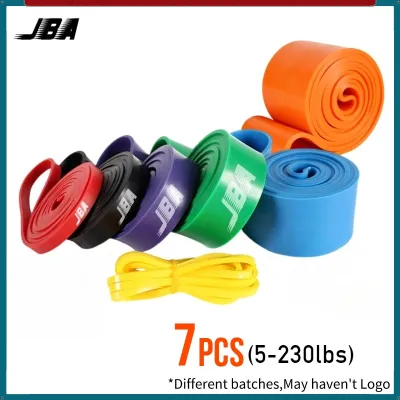
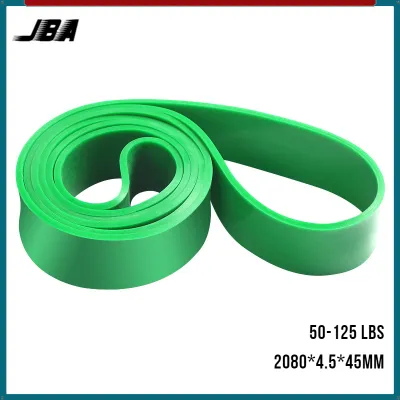
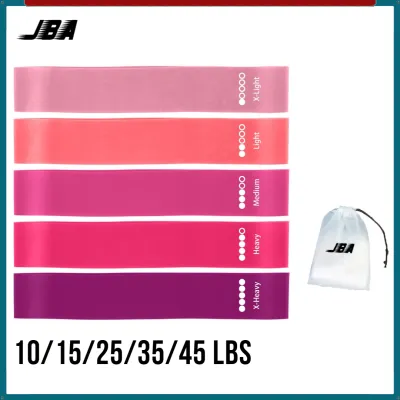
Prices are valid at publication and may change. Please refer to the product page for the latest price.
Loop bands are continuous circular bands that come in two primary variations: mini loops and large loops. Mini loops are typically wide and short, measuring about 10 to 12 inches in length. They are designed to be placed around your thighs, calves, or ankles to provide lateral resistance. This makes them exceptionally effective for lower body activation, glute isolation, and hip strengthening exercises. Large loop bands, often called pull-up assist bands, are much longer and thicker. These heavy-duty bands are used for full-body compound movements, adding resistance to squats, or providing upward assistance during pull-ups and dips.
Tube bands with handles consist of hollow cylindrical rubber tubes equipped with plastic, foam, or fabric handles at each end. These bands are designed to mimic the mechanics of gym cable machines. Because the handles provide a secure, comfortable grip, tube bands are ideal for upper body training. You can easily perform exercises such as bicep curls, shoulder presses, chest flyes, and tricep extensions. Many tube bands feature metal carabiners, allowing you to clip multiple tubes to a single pair of handles to adjust the resistance level.
Figure-8 bands consist of a shorter length of rubber tubing crossed in the middle to form an hourglass shape, with soft handles on both ends. This design limits the range of motion and provides immediate, high-tension resistance. Figure-8 bands are highly specialized for targeted upper body isolation, particularly chest expansion, upper back retraction, and shoulder external rotation. They are excellent for quick, high-repetition toning exercises and are highly favored for travel due to their ultra-compact size.
Therapy bands, also known as flat bands, are wide, thin sheets of non-looped latex or synthetic rubber. They do not feature handles, loops, or clips; instead, you customize your grip by wrapping the flat material directly around your hands or feet. These bands provide gentle, highly linear resistance throughout the entire movement. Because they offer precise control and low tension, therapy bands are primarily used in physical rehabilitation, gentle stretching, yoga, and Pilates to restore joint mobility and rebuild muscle strength safely.
Matching the Right Band to Your Fitness Goals
Selecting the ideal elastic rubber band for exercise requires aligning the band’s structural design with your personal training objectives and current physical capabilities.

If your primary goal is muscle building and strength training, you should prioritize heavy-duty large loops and tube bands with handles. These designs allow you to apply progressive overload, which is the gradual increase of stress placed upon the body during exercise. Tube bands are particularly useful for replicating traditional dumbbell and cable exercises, while large loops can be wrapped around your back during push-ups or under your feet during squats to increase the peak tension at the top of the movement.
For physical therapy and injury recovery, flat therapy bands and light mini loops are the most appropriate choices. Recovering joints and healing muscle fibers require low, predictable resistance that does not shock the musculoskeletal system. Using a light mini loop or a flat therapy band allows you to perform slow, controlled movements that target deep stabilizing muscles, such as the rotator cuff or the gluteus medius. Always consult a qualified physical therapist to verify that your chosen band tension matches your specific recovery protocol.
If you are focusing on mobility, warm-ups, and form correction, mini loop bands are indispensable. Placing a light or medium mini loop just above your knees during warm-up squats forces your hip abductors to engage, preventing your knees from caving inward—a common form error known as knee valgus. This simple activation drill prepares your nervous system and joints for heavier loads, reducing the risk of injury during your main workout.
For those seeking maximum home gym versatility, an interchangeable tube band set with a door anchor is highly recommended. These comprehensive packages allow you to anchor the bands at various heights, enabling you to perform high-to-low woodchops, chest presses, and lat pulldowns. When shopping on local online marketplaces, look for sets that offer a clear progression of resistance levels, allowing you to scale your workouts as your strength improves over time.
Checking Resistance Levels and Safety Limits
Using elastic bands safely requires understanding how manufacturers rate their products and learning how to inspect the material for signs of wear.
First, it is important to note that resistance band color-coding systems are not standardized across the fitness industry. A yellow band from one manufacturer might represent light resistance, while another brand might use yellow for extra-heavy tension. Always refer to the product packaging, user manual, or the manufacturer’s official website to verify the specific weight equivalent or tension range of each color in your set.
Before starting any exercise, verify the manufacturer’s stated maximum stretch limit. Most high-quality rubber bands are designed to stretch up to three or four times their resting length, but stretching them beyond this limit can cause sudden structural failure. Overstretching increases the risk of the band snapping back toward your face or body, which can cause severe bruising or eye injuries.
Perform a quick visual and tactile inspection of your bands before every single workout session. Run your fingers along the entire length of the rubber to check for micro-tears, small nicks, dry patches, or areas where the material has become thin or brittle. Pay close attention to the connection points where the rubber meets the handles, clips, or loops, as these areas experience the highest stress during use.
Establish strict stopping conditions for your equipment. If you observe any physical damage, peeling, discoloration, or a permanent loss of elasticity, discard the band immediately. Never attempt to tie a knot in a torn band to continue using it; the knot creates a concentrated stress point that is highly susceptible to snapping under tension. Replacing a worn band is a simple and inexpensive way to prevent painful training accidents.
Setting Up Secure Anchors and Maintaining Your Bands
Proper installation and regular maintenance are essential to extend the lifespan of your bands and ensure a safe workout environment.
When anchoring your bands for upper or lower body exercises, always select a secure, immovable anchor point. If you are using a door anchor, place it on the hinge side of a solid, heavy door that closes toward you, and ensure the door is fully latched and locked. Avoid wrapping your bands around sharp metal brackets, rough wooden posts, or abrasive concrete pillars, as these surfaces can easily slice through the rubber under tension.
Sweat, body oils, and tropical humidity can accelerate the degradation of rubber and latex materials. Clean your bands regularly by wiping them down with a soft cloth dampened with warm water and a mild, non-abrasive soap. Avoid using harsh chemical solvents, alcohol-based disinfectants, or bleach, as these substances strip the rubber of its natural moisture, leading to rapid cracking and dry rot.
Store your bands in a cool, dry place away from direct sunlight and heat sources. The intense UV rays and high temperatures common in the Philippines can dry out rubber quickly, making it brittle and unsafe to use. Keep your bands loosely coiled in a drawer, closet, or a breathable mesh storage bag, and avoid leaving them stretched or hung under tension when they are not in use.
Frequently Asked Questions (FAQ)
Can I combine multiple elastic exercise bands for more resistance?
Yes, you can stack multiple bands together to increase the total resistance of your exercise. However, you must ensure that your anchor point, handles, and carabiners are rated to handle the combined load safely. Additionally, verify that all stacked bands have similar stretch limits so that one band does not overstretch and snap before the others reach their capacity.
Are fabric resistance bands better than rubber ones for leg workouts?
Fabric bands offer distinct advantages for lower-body training because they do not roll up, pinch the skin, or slip down your legs during high-repetition movements. However, they have a much shorter stretch range and a higher baseline resistance compared to traditional rubber loops. For exercises requiring a wide range of motion or lighter, progressive tension, rubber bands remain the more versatile choice.
Community discussion
Share your experience or ask a question. Comments are reviewed before publication.