
Choosing the right front rack for your bike transforms how you interact with your bicycle, turning a simple recreational machine into a capable utility vehicle. Unlike rear racks, which place weight behind your saddle, a front rack positions cargo over or alongside the front wheel, offering distinct advantages in accessibility and weight distribution. The ideal choice depends on your specific riding style, whether you are navigating busy city streets on a daily commute, embarking on a multi-week self-supported tour, or rolling down to the local market for quick errands. Matching your rack selection to your primary riding habits ensures a safer, more stable, and highly efficient cycling experience.
Understanding Your Cargo Needs and Riding Style
Before selecting a front rack, evaluate what you plan to carry, how often you will carry it, and how much weight your bicycle can safely support. A commuter carrying a laptop and a change of clothes has vastly different requirements than a long-distance tourer packing camping gear and multiple days of food. Take a moment to assess the physical dimensions and weight of your typical cargo, as overloading a rack or choosing an improper style can severely compromise your bicycle’s handling and structural integrity.
Load placement plays a critical role in how your bicycle steers and responds to rider input. Carrying weight high on a front platform rack can make steering feel slow or floppy at low speeds, while placing the load too low can affect ground clearance on tight turns. Generally, keeping the center of gravity as low as possible and close to the steering axis yields the most predictable handling. Understanding these dynamics helps you decide whether you need a low-riding rack that hugs the fork blades or a wide platform that sits above the front wheel.
Products mentioned in this guide
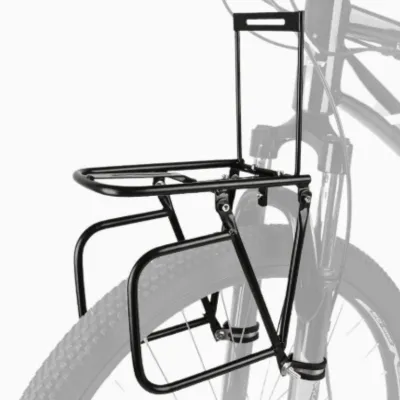
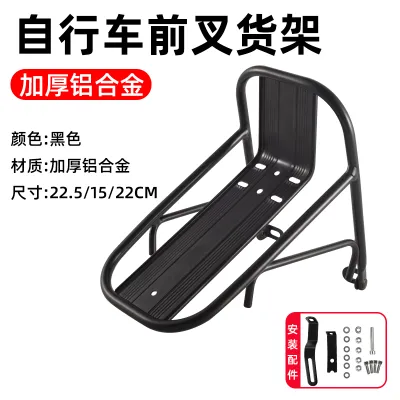
15 Lazada user ratings
Lightweight and durable, Fast shipping service, Secure mounting system, Sturdy aluminum frame, serves its purpose, hope it will last longer.…Read full reviewShow less
Lightweight and durable, Fast shipping service, Secure mounting system, Sturdy aluminum frame, serves its purpose, hope it will last longer. thank you.
The installation was pretty smooth and didn't take much effort.
Lightweight and durable, Perfect
Good quality material,
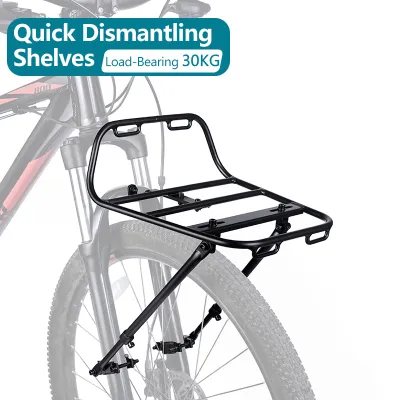
7 Lazada user ratings
Awesome, the product is really good, even better than I expected.
nice good quality
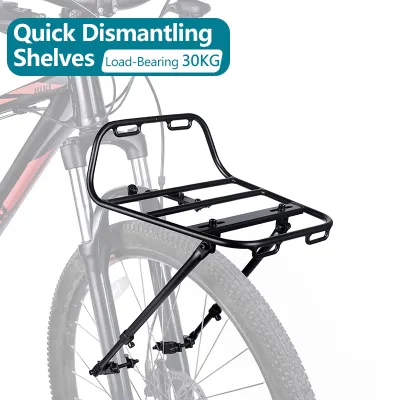
2 Lazada user ratings
The packaging is very good. The material of the items is durable quality.
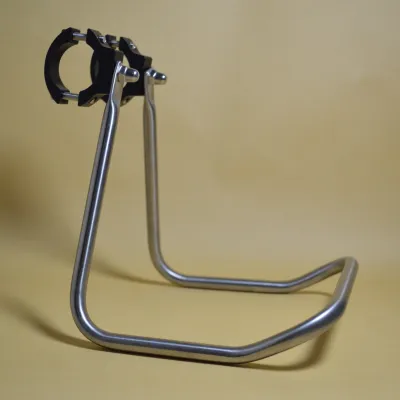
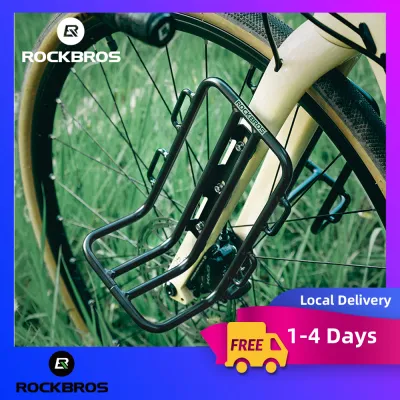
123 Lazada user ratings
Photo not related. Many times order here, they packed it well, very fast delivery. Very recommended, I will order again soon. Thankyou Sleek…Read full reviewShow less
Photo not related. Many times order here, they packed it well, very fast delivery. Very recommended, I will order again soon. Thankyou Sleek black color adds style, Great for long-distance biking trips, Excellent value for the price, One-year warranty for peace of mind,
Sleek black color adds style, Sturdy aluminum alloy material, Great for long-distance biking trips, Securely holds items in place, Provides …Read full reviewShow less
Sleek black color adds style, Sturdy aluminum alloy material, Great for long-distance biking trips, Securely holds items in place, Provides ample space for luggage, One-year warranty for peace of mind, Excellent value for the price, Convenient and easy to install,
late posting gayun pa man salamat parin at malaking baGay para sa ak8n ma6 Nagagamit akong Maasahan sa biyahe koh.
Received the item... quality is okay, it's beautiful, and delivery was fast despite it being right during Tet.
maganda at maayos.. bobili uli
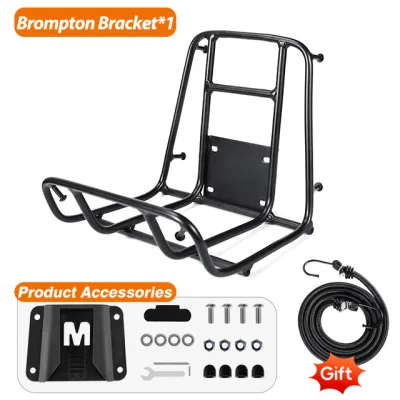
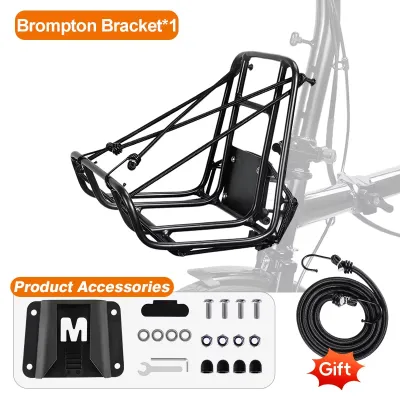
Prices are valid at publication and may change. Please refer to the product page for the latest price.
Finally, match your packing habits to the manufacturer’s specified weight limits. Every front rack comes with a maximum load capacity determined by its materials, construction, and mounting points. Exceeding these limits can lead to catastrophic hardware failure, potentially causing the rack to collapse into your front wheel while riding. Always cross-reference your realistic cargo weight with the rack’s technical specifications, keeping in mind that dynamic forces—such as hitting a pothole—place additional stress on the mounting hardware.
Front Rack for Bike Types by Riding Scenario
Front racks are not one-size-fits-all accessories; their geometries, mounting styles, and materials vary significantly to suit different riding environments. A rack designed to withstand the rugged demands of wilderness touring will likely feel excessively heavy and cumbersome on a lightweight commuter bike, while a minimalist errand rack may buckle under the weight of heavy panniers. By understanding how rack geometry changes based on the primary riding scenario, you can narrow down your options to the designs that offer the best balance of stability, capacity, and convenience.

Commuting: Daily Reliability and Quick Access
For the daily commuter, a front rack must offer a balance of quick access, weather-resistant durability, and urban stability. Commuters often need to transition rapidly from riding to walking, making compatibility with quick-release bags or standard panniers highly desirable. A popular configuration for urban riding is a medium-sized top-platform rack, which allows you to strap down a backpack, briefcase, or grocery bag using elastic cargo nets. This setup keeps your essentials within arm’s reach, allowing you to monitor your belongings while navigating busy city traffic.
When selecting a commuter rack, consider whether a low-rider or a top-platform design fits your route. Low-rider racks mount panniers low on the fork blades, which minimizes the impact on your steering and makes handling predictable when carrying heavy laptops. However, if your commute involves frequent stops, curbs, or tight maneuvers, a top-platform rack might offer better convenience for quick loading and unloading. Whichever style you choose, always verify the manufacturer’s weight limits to ensure the rack can handle your daily cargo without flexing or rattling over uneven city streets.
Touring: Heavy Loads and Long-Distance Stability
Long-distance touring demands the utmost in structural integrity, material reliability, and load capacity. When you are miles away from the nearest bicycle shop, your equipment must be exceptionally durable and, if necessary, easy to repair. Steel is often the preferred material for touring racks because of its high fatigue strength and the fact that it can be welded by local shops in remote areas, whereas aluminum racks, while lighter, are much harder to repair on the road.
To maintain stability over hundreds of kilometers of varied terrain, touring cyclists almost universally rely on low-rider front racks. By positioning the panniers low and centered over the front axle, these racks drastically reduce the steering inertia that can make a heavily loaded bicycle difficult to control. This low center of gravity is particularly beneficial when climbing steep hills or descending at high speeds. When preparing for a tour, always verify the maximum load capacities and look for structural reinforcements, such as oversized tubing and robust mounting brackets, to ensure your gear remains secure throughout the journey.
Casual Errands: Lightweight and Easy Handling
If your cycling consists primarily of quick trips to the local market, coffee shop runs, or casual weekend rides, a heavy-duty touring or commuter rack is likely unnecessary. Instead, a lightweight, minimalist front rack is the ideal choice to preserve your bike’s natural agility and aesthetic. Porteur-style racks or small platform racks are perfect for these scenarios, offering a flat surface where you can easily strap down a small box, a six-pack, or a light bag of groceries.
These minimalist racks are typically constructed from lightweight aluminum or thin-walled steel tubing, keeping the added weight on your front wheel to a minimum. Because they are designed for lighter loads, they are often much easier to install and remove, making them excellent options for riders who only want a rack on their bike occasionally. While they offer superb convenience, it is vital to respect their lower weight limits and avoid overloading them, as carrying excessive weight on a high, wide platform can quickly make steering unstable and unpredictable.
Key Compatibility and Installation Checks
Before purchasing any front rack, you must perform a thorough compatibility check to ensure it will physically fit your bicycle’s frame and fork. Bicycle forks vary widely in their design, materials, and integrated mounting points. Start by inspecting your fork for dedicated eyelets, which are threaded holes designed specifically for mounting racks and fenders. Look for eyelets near the front dropouts and mid-blade bosses on the sides of the fork legs, as these are the most secure attachment points for heavy-duty racks.
If your bicycle fork lacks these dedicated mounting points, you will need to explore alternative mounting solutions. Some racks are designed to mount directly to the front axle or use specialized adapters, such as p-clamps or thru-axle mounting kits. However, these adapters often have lower weight capacities than direct frame mounts. Additionally, you must check for physical clearance around your front wheel. Ensure the rack does not interfere with your brakes, mudguards, or tire width, leaving ample room for the wheel to spin freely under load.
If you are unsure about compatibility, or if your bicycle has a carbon fiber fork, it is highly recommended to consult the bicycle manufacturer’s specifications or visit a professional mechanic. Carbon forks require extreme caution, as clamping adapters onto carbon tubing can cause structural damage and lead to sudden fork failure. A professional mechanic can verify the safety of your setup, ensure all bolts are torqued to the correct specifications, and help you choose a rack that integrates seamlessly with your bicycle’s existing hardware.
Frequently Asked Questions (FAQ)
Can I use a touring front rack for daily commuting?
Yes, you can certainly use a touring front rack for your daily commute, though there are some trade-offs to consider. Touring racks are built for heavy-duty durability, which means they are often heavier and less aerodynamic than minimalist commuter options. If you do not mind the slight weight penalty, a touring rack offers incredible reliability and long-term durability. To optimize handling on short trips, try to place your daily essentials in smaller panniers mounted low on the rack, or adjust your bag placement to keep the weight balanced across both sides of the fork.
Do I need a specific fork to mount a front rack for bike?
While having a fork with dedicated threaded eyelets and mid-blade bosses makes installation straightforward and secure, it is not always strictly necessary. Many manufacturers offer adapter solutions, such as rubber-lined p-clamps, specialized axle-mount hardware, or thru-axle adapters, which allow you to mount racks on forks without built-in eyelets. However, you must exercise caution when using these adapters, as they typically support lower weight limits than direct frame mounts. Never install clamp-on adapters on carbon fiber forks without explicit approval from the manufacturer, and always consult a professional mechanic if you are uncertain about the structural safety of your mounting setup.

Community discussion
Share your experience or ask a question. Comments are reviewed before publication.