
Choosing the right golf ball is not about buying the most expensive option on the shelf; it is about matching the ball’s internal construction to your current swing speed and playing style. In golf, the ball is the only piece of equipment you use on every single shot, making its design critical to your performance. Selecting a ball that aligns with your skill level helps optimize distance, control shot dispersion, and prevent unnecessary spending on premium models that might actually hinder your progress on the course.
Understanding Golf Ball Layers and Construction
To make an informed purchase, you must first understand how a golf ball is engineered. Modern golf balls are built using a layered design, consisting of a core, one or more mantle layers, and an outer cover. The core acts as the engine of the ball, storing and releasing energy upon impact. The cover is the outer skin that directly interacts with the clubface grooves, while the mantle layers in multi-piece balls act as transition zones that regulate spin and feel depending on how hard the ball is struck.
Manufacturers manipulate these layers to design balls that either prioritize distance or maximize spin. Distance-focused designs typically feature a larger, firmer core and a harder outer cover, which minimizes spin off the driver to keep the ball flying straight and far. Conversely, spin-focused designs utilize softer covers and specialized mantle layers to generate high spin rates, allowing players to control the ball’s trajectory and stop it quickly on the greens.
Products mentioned in this guide
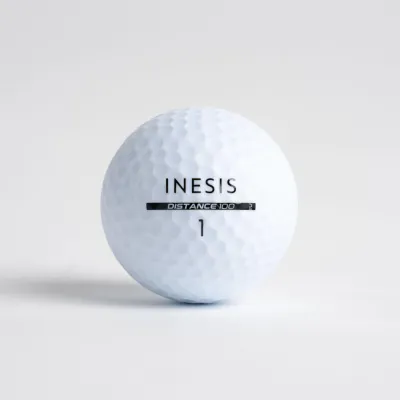
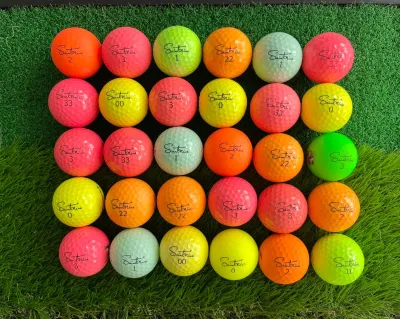
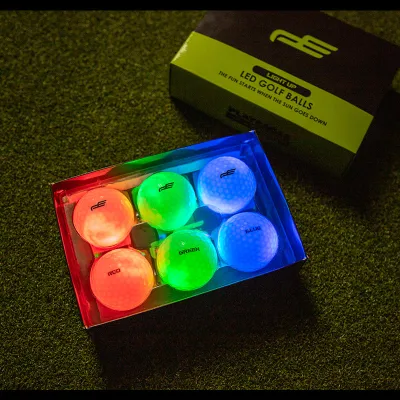
Prices are valid at publication and may change. Please refer to the product page for the latest price.
The number of layers directly influences how a ball compresses and transfers energy. A simple two-piece ball behaves consistently regardless of the club used because it has only one boundary line between the core and the cover. Multi-layer balls, however, are designed to activate different layers depending on the force of the impact. A high-speed driver swing compresses the ball all the way to its core for low-spin distance, while a delicate wedge shot only engages the soft outer cover and mantle, producing high spin for precise short-game control.
Matching Golf Ball Types to Your Skill Level
Golfers progress through distinct stages of skill, swing speed, and consistency. Matching your golf ball to your current playing profile ensures you are not fighting your equipment while trying to lower your scores.

Beginners and High Handicappers (2-Piece Balls)
Beginners and high-handicap players typically struggle with consistent contact, moderate to slow swing speeds, and severe shot dispersion, such as chronic slices or hooks. For these players, a two-piece golf ball is highly recommended. These balls feature a large, highly resilient rubber core wrapped in a firm, durable cover. This construction is designed to maximize distance even at lower swing speeds while keeping spin to a minimum.
Reducing spin is highly beneficial for developing players. Side spin is the primary culprit behind wild slices and hooks; because a two-piece ball resists spinning, it naturally helps mitigate these lateral curves, keeping more shots on or near the fairway. Additionally, two-piece balls are highly durable, resisting scuffs and cuts when they inevitably contact cart paths, trees, or rough terrain.
From a budget perspective, two-piece options are highly practical. Beginners tend to lose multiple balls per round, especially when playing on challenging courses with dense tropical roughs or water hazards. Spending a fortune on premium balls only to lose them in the hazards can quickly make the game frustrating and expensive, making affordable two-piece options the logical choice.
Intermediate and Mid Handicappers (3-Piece Balls)
Intermediate players and mid-handicappers have usually developed a more consistent swing, moderate swing speeds, and a desire to improve their short game. At this stage, players begin hitting more greens in regulation but find that their shots roll off the back of the green because their two-piece ball lacks stopping power. This is the transition point where a three-piece golf ball becomes highly advantageous.
Three-piece balls introduce a mantle layer between the core and the cover. This intermediate layer acts as a control valve for spin and feel. When struck with a driver, the mantle helps transfer energy efficiently to the core while keeping spin low for distance. When struck with a wedge, the soft cover is pinched against the firm mantle, creating the friction necessary to generate greenside spin and control.
Matching a mid-range compression three-piece ball to a moderate swing speed allows intermediate players to experience a softer feel off the clubface without sacrificing distance. This balance provides the feedback necessary to develop touch around the greens while maintaining respectable distance from the tee box.
Advanced and Low Handicappers (Multi-Layer Balls)
Advanced players and low-handicap golfers possess high swing speeds, consistent strike quality, and the ability to intentionally shape their shots. These players demand maximum spin separation, meaning they require ultra-low spin off the driver to maximize distance, combined with exceptionally high spin off their wedges for precise control and stopping power on firm greens.
Multi-layer balls, featuring four or five distinct layers, are engineered to deliver this exact performance. By utilizing multiple mantle layers of varying hardness, these balls fine-tune energy transfer across different club categories. A long iron shot will engage different layers than a short pitch, allowing highly skilled players to execute a wide variety of specialized shots.
However, these premium balls require a high level of consistency and swing speed to unlock their benefits. If your swing speed is too slow, you will not be able to compress the firm inner layers, resulting in a loss of distance. Furthermore, the soft covers scuff more easily and the balls carry a premium price tag, making them a poor investment for players who cannot consistently strike the center of the clubface.
Essential Specifications to Check on the Packaging
When shopping for golf balls, the packaging contains valuable technical specifications that can help you identify how the ball will perform. Understanding these terms allows you to verify the ball’s characteristics before making a purchase.
Compression ratings measure how much a golf ball deforms under a standard load. Ratings generally range from low (35 to 70) to high (90 to 110). Low-compression balls are softer and easier to deform, making them ideal for players with slower swing speeds who need help generating ball speed. High-compression balls are firmer and require a fast, powerful swing to compress the core fully; using a high-compression ball with a slow swing speed will result in a harsh feel and reduced distance.
Cover materials are another critical specification to check, with the two primary options being ionomer (often branded as Surlyn) and urethane. Ionomer covers are incredibly durable, slide easily over obstacles, and help minimize spin, making them standard on distance-focused two-piece balls. Urethane covers are much softer and flexible, allowing the clubface grooves to grab the cover for maximum spin and control, which is why they are featured on premium multi-layer balls.
Dimple patterns also play a vital role in the ball’s aerodynamics. The depth, shape, and number of dimples determine how air flows around the ball during flight, creating lift and reducing drag. Packaging descriptions often indicate whether a ball is designed for a “high launch” or a “penetrating flight.” Players who naturally struggle to get the ball airborne should look for high-launch dimple designs, while those playing in windy conditions may prefer a lower, penetrating trajectory.
Building Your Shortlist: Purchasing and Testing Strategies
Before committing to a specific golf ball, developing a practical testing and purchasing strategy can save you money and improve your on-course consistency.
One common decision is choosing between brand-new balls and recycled or lake balls. While recycled balls are highly affordable, players should exercise caution. Balls that have spent extended periods submerged in water hazards can absorb moisture, which can degrade the core and lead to unpredictable flight distances and trajectories. For beginners, high-quality recycled balls are an excellent way to save money, but intermediate and advanced players should stick to new balls to ensure performance consistency.
Avoid the common mistake of buying premium, high-compression tour balls simply because they are used by professional players. If your swing speed does not match the ball’s design, you will likely experience shorter drives and amplified slices. It is far better to play a budget-friendly ball that matches your swing characteristics than a premium ball that penalizes your mistakes.
Instead of purchasing a full dozen of an unfamiliar model, look for smaller sleeve packs containing three balls, or seek out mixed sampler packs. Take these balls to the practice green first. Spend time chipping and putting with different models to evaluate their feel, sound, and roll. Once you find a ball that feels comfortable and predictable around the green, take it to the course to observe its flight and distance off the tee before buying in bulk.
Frequently Asked Questions (FAQ)
Does a more expensive golf ball automatically improve my game?
No, a higher price tag does not guarantee better performance for every golfer. Premium, expensive golf balls are engineered with multi-layer constructions and soft urethane covers designed to maximize spin and control. For a beginner or high-handicapper, this extra spin can actually make the game more difficult by amplifying slices and hooks. Additionally, if your swing speed is not fast enough to compress a firm, high-compression premium ball, you will likely lose distance compared to using a softer, less expensive two-piece ball.
Should I change my golf ball in hot or humid weather?
Environmental conditions can influence how a golf ball performs, particularly in tropical climates like the Philippines. High temperatures generally make the rubber core of a golf ball more elastic, which can slightly increase ball speed and make the ball feel softer. However, high humidity increases air density, which can create more drag and slightly reduce overall carry distance. If you regularly play in hot, humid conditions, you may want to verify that your balls are stored in a cool, dry place to prevent long-term core degradation, and consider testing a slightly firmer compression ball if your current choice begins to feel too soft or lose flight stability.
Community discussion
Share your experience or ask a question. Comments are reviewed before publication.