
Selecting the right golf ball is one of the most overlooked aspects of improving your game. Many players simply grab whatever is on sale or play premium models used by professionals, assuming that more expensive gear automatically leads to better scores. However, playing a ball that does not match your swing speed and skill level can actively hinder your progress, causing lost distance off the tee or a lack of control around the greens.
To find the ideal match, you must evaluate your current playing ability, swing characteristics, and budget. The goal is to find a ball that complements your strengths and minimizes your typical mistakes. By understanding how different designs behave, you can make an informed decision that saves you money and helps lower your scores.
Assess Your Current Golf Skill Level and Swing Speed
To establish a baseline for your selection, start by identifying your player category. High-handicap players and beginners typically score over 100 strokes per round, struggle with consistent ball striking, and often battle a severe slice or hook. Mid-handicap players generally score between 85 and 99, showing more consistent contact but still experiencing occasional misses and seeking better control on approach shots. Low-handicap players consistently shoot under 80, possess highly repeatable swings, and prioritize precise spin control and shot-shaping ability.
Products mentioned in this guide
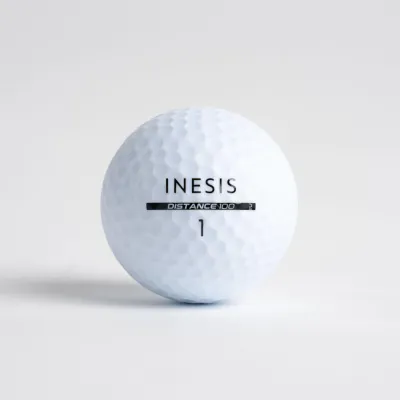
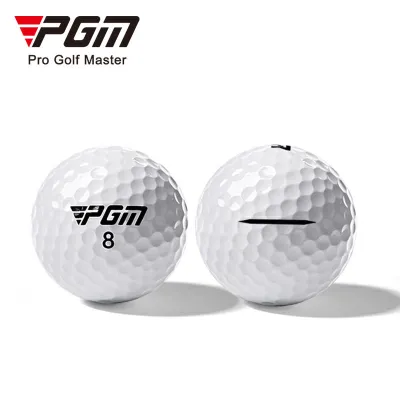
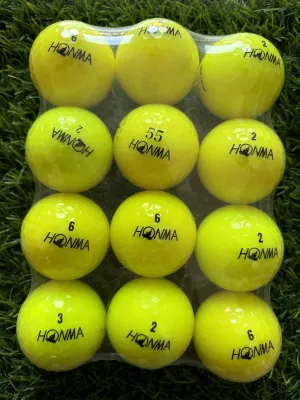
Prices are valid at publication and may change. Please refer to the product page for the latest price.
Your swing speed is another critical factor that dictates how a ball behaves at impact. While a professional launch monitor provides the most accurate measurement, you can estimate your swing speed using your average driver carry distance. If your tee shots carry less than 200 yards, your swing speed is likely below 85 miles per hour, placing you in the slower swing category. A carry distance between 200 and 240 yards indicates a moderate swing speed of 85 to 100 miles per hour, while carrying the ball past 250 yards suggests a fast swing speed exceeding 100 miles per hour.
Your skill level and swing speed determine whether you should prioritize distance or spin. Slower swing speeds and high-handicap players benefit most from balls designed to maximize distance and minimize sidespin, which helps keep the ball in the fairway. Conversely, faster swingers and low-handicap players already generate ample distance and require a ball that offers high spin on approach shots to stop quickly on the greens.
Understanding Golf Ball Construction and Compression
Golf balls are generally categorized by their construction, which ranges from simple two-piece designs to complex multi-layer models. Two-piece balls consist of a single large solid core wrapped in a thin, durable cover. This design is engineered for maximum distance and low spin, making it highly forgiving for beginners who need help keeping the ball straight. Because they are simple to manufacture, two-piece balls are also the most affordable option on the market.

Three-piece and multi-layer balls introduce one or more mantle layers between the core and the cover. These intermediate layers are designed to deliver variable performance depending on the force of the impact. When struck with a driver, the high impact force compresses the entire ball, engaging the core to deliver low spin and high speed for maximum distance. On shorter approach shots and chips, the lower impact force only engages the outer layers, producing high spin for precise control around the greens.
Compression is a measure of how much a golf ball deforms under a standard load, rated on a scale typically ranging from 30 to over 100. Low-compression balls (ratings below 70) are soft and require less force to compress, making them ideal for players with slower swing speeds who need help launching the ball high and far. High-compression balls (ratings of 90 and above) are firm and require a fast, powerful swing to compress fully. If a slow-swinging player uses a high-compression ball, they will fail to compress the core, resulting in a significant loss of distance and a harsh feel at impact.
The cover material also plays a major role in the ball’s performance, durability, and cost. Ionomer covers, often referred to by the brand name Surlyn, are highly durable, resistant to scuffs, and slide easily off clubfaces to reduce unwanted sidespin. However, they offer a firmer feel and limited spin on short shots. Urethane covers are much softer and grip the clubface grooves at impact, producing the high spin rates required for advanced greenside control, though they are more expensive and prone to scuffing.
Matching Ball Characteristics to Your Playing Style
Choosing the right ball requires balancing the trade-off between tee-box distance and greenside stopping power. If you play on courses with firm, fast greens, such as those commonly found in the Philippines during the dry season, a ball that rolls out excessively can make it difficult to keep your approach shots on the putting surface. In this scenario, transitioning to a ball with a softer cover can provide the necessary bite to stop your ball closer to the pin.
Your typical ball flight should also guide your selection, particularly if you struggle with a persistent slice or hook. High-spin balls exaggerate any tilt in the spin axis, turning a mild fade into a severe slice that lands in the hazards. If accuracy off the tee is your primary struggle, choosing a low-spin, two-piece ball can help straighten out your ball flight and keep you in play, even if it means sacrificing some greenside control.
Finally, consider your personal preference for feel when putting and chipping. Some golfers prefer a soft, muted feel and sound off the putter face, which helps them gauge distance on fast greens. Others prefer a firmer, clickier feedback that provides clear sensory confirmation of a clean strike. Because feel is entirely subjective, it is important to test different options on the practice green to see which texture gives you the most confidence.
When to Upgrade or Change Your Golf Ball
You should consider changing your golf ball model when you observe clear signs that your current choice is holding your game back. For instance, if your swing speed has increased through practice and your shots are now ballooning high into the air and losing distance, your ball may have too low of a compression rating for your current swing. Similarly, if you are consistently hitting clean wedge shots that land on the green but roll off the back edge, you likely need to upgrade to a ball with a urethane cover.
Budget is a highly practical factor that should influence your decision, especially given the rate at which beginners lose balls. In the Philippines, premium multi-layer urethane balls typically cost between ₱2,500 and ₱3,500 per dozen, which can quickly become a significant expense if you frequently hit balls into water hazards or dense tropical rough. For high-handicappers, playing a durable two-piece ionomer ball priced between ₱800 and ₱1,500 per dozen is a much more sensible choice that reduces the financial stress of a lost ball.
When you decide to test new models, establish a structured evaluation process rather than relying on driving range results. Start on the practice putting green, chipping and putting with a few different options to compare their feel and roll consistency. Next, take these balls onto the course during a quiet afternoon and hit identical shots from the fairway and around the green. Observe how each ball reacts upon landing, noting which model provides the predictable trajectory and stopping power that matches your playing style.
Frequently Asked Questions (FAQ)
Do expensive golf balls make a difference for beginners?
For beginners, expensive multi-layer golf balls rarely provide a noticeable performance benefit and can actually hinder progress. Premium balls are designed to spin highly, which can worsen slices and hooks for players who have not yet mastered consistent swing paths. Additionally, because beginners lose balls more frequently, spending ₱2,500 or more per dozen can create unnecessary pressure, whereas affordable two-piece balls offer better durability and straighter flight paths at a fraction of the cost.
Should I use the same golf ball all year round?
While the tropical climate in the Philippines remains warm, seasonal shifts between the wet and dry seasons can affect ball performance. During the hot, dry months, the warm air is less dense, and dry fairways offer plenty of roll, allowing you to play firmer, higher-compression balls effectively. In contrast, during the rainy season, wet fairways eliminate roll-out, and damp conditions can make the air feel heavier. Switching to a slightly softer, lower-compression ball during the wet season can help you maintain optimal launch and carry distance when the course is soft.
How do I know if my golf ball compression is too high or too low?
You can diagnose a compression mismatch by paying close attention to the feel and flight of your shots. If the compression is too high for your swing speed, the ball will feel incredibly hard—almost like hitting a rock—and you will notice a loss of distance along with a lower, weak ball flight. If the compression is too low, the ball may feel excessively mushy at impact, and you might see your shots balloon high into the air, stalling and losing distance when flying into a breeze.
Community discussion
Share your experience or ask a question. Comments are reviewed before publication.