
Finding the right golf club requires matching your current handicap and physical measurements to specific club designs and specifications. Rather than simply buying the most expensive or popular models, you must evaluate your swing characteristics, body proportions, and on-course goals to determine which woods, irons, wedges, and putters will actually improve your game. In a tropical climate like the Philippines, where high humidity and seasonal rains affect turf conditions and grip traction, choosing the correct equipment is even more critical to maintaining control and consistency.
Assess Your Current Skill Level and Playing Goals
Your current skill level dictates how much assistance you need from your equipment. Golf clubs are engineered with specific player profiles in mind, balancing forgiveness, distance, and control. Selecting a club that matches your experience tier ensures you do not fight your equipment while trying to execute a shot.
Beginner and high-handicap players benefit most from game-improvement clubs. These designs typically feature cavity-back irons with perimeter weighting, which helps keep the clubface stable on off-center hits. A low and deep center of gravity helps launch the ball higher into the air, which is crucial for players who struggle with consistent upward launch. Drivers for this group usually have larger profiles, higher lofts, and draw-biased weighting to help get the ball airborne quickly and counteract a common slice.
Products mentioned in this guide
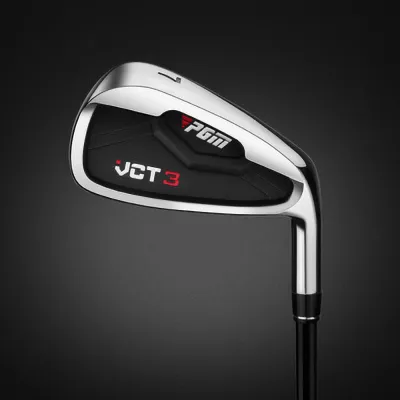
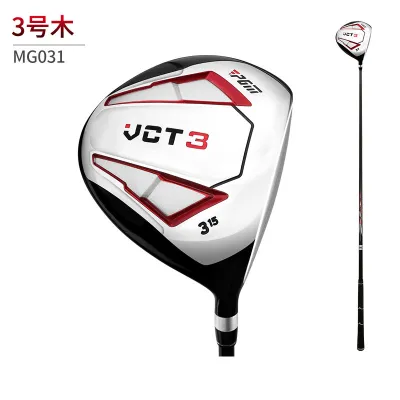
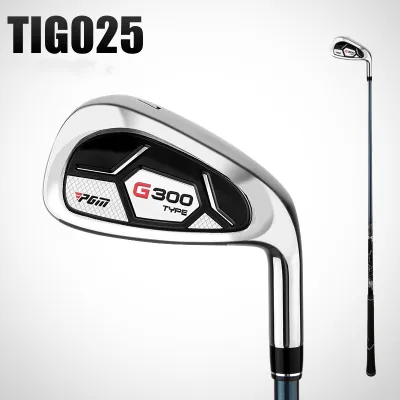
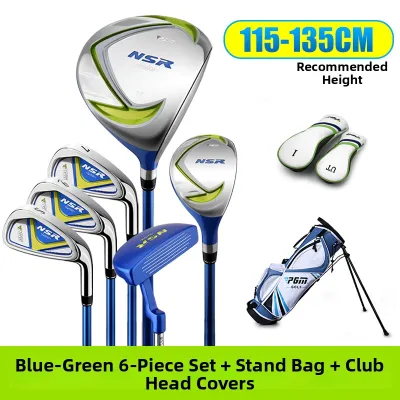
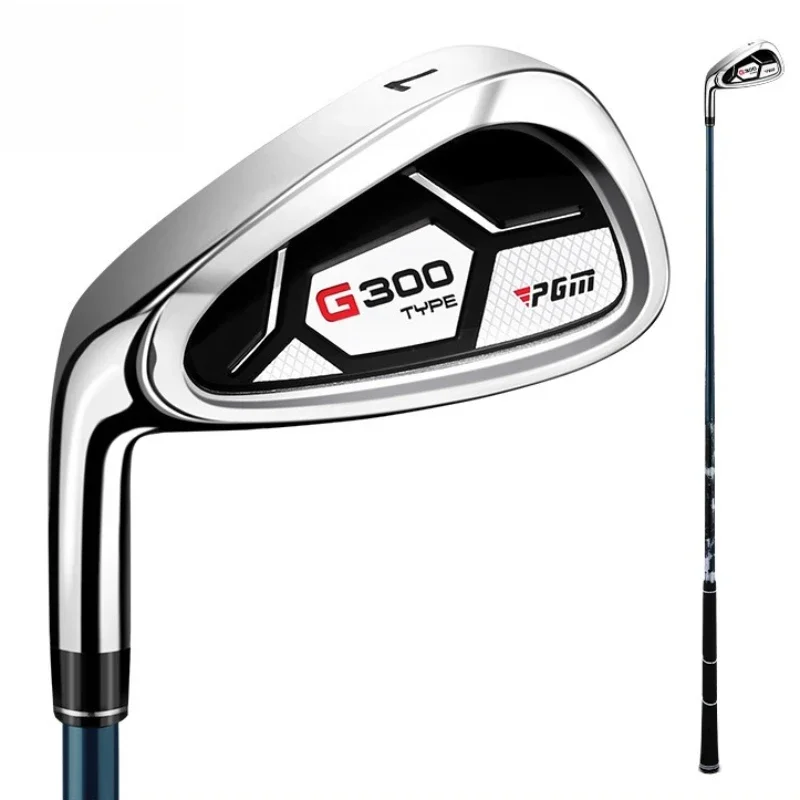
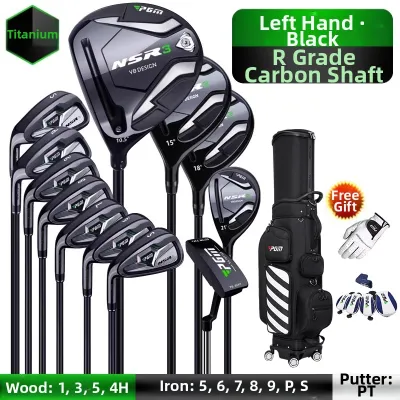
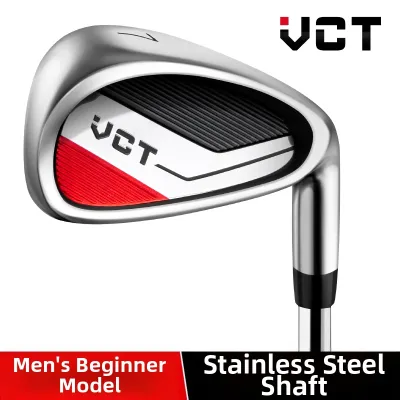
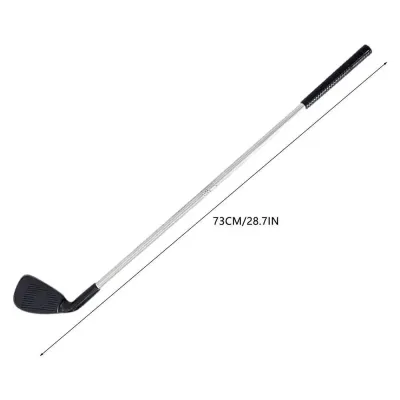
Prices are valid at publication and may change. Please refer to the product page for the latest price.
Intermediate and mid-handicap players often transition to player-distance or blended sets. These clubs offer a balance of workability and forgiveness, featuring slightly thinner top lines and smaller clubheads while retaining some cavity-back technology. The multi-material construction in player-distance irons provides a soft feel while maintaining high ball speeds. This category allows you to start shaping your shots and controlling your trajectory without completely sacrificing distance on mis-hits.
Advanced and low-handicap players generally evaluate blades or muscle-back irons. These clubs feature a solid construction that provides precise feedback and maximum shot-shaping capability. They have a high center of gravity and minimal offset, giving the player complete control over the trajectory and shape of the ball. However, they offer very little forgiveness on off-center strikes, meaning a highly consistent swing is required to avoid a significant loss of distance. Drivers for advanced players tend to have lower lofts and adjustable weights to optimize spin rates and launch angles.
Match Club Specifications to Your Body Type and Swing
Your physical proportions and swing mechanics are unique, meaning off-the-rack clubs may not align with your natural posture. Matching club specifications to your body type prevents you from making awkward physical compensations that can lead to inconsistent contact or chronic discomfort.

Your height and wrist-to-floor measurement are the primary factors in determining club length and lie angle. To perform this measurement, stand on a flat surface in your normal shoes, with your arms relaxed at your sides, and measure from the major crease of your wrist down to the floor. If your arms are relatively long or short for your height, you may need custom adjustments to ensure the clubhead sits flush against the turf at address.
The lie angle is the angle between the center of the shaft and the sole of the clubhead. If the lie angle is too upright for your height, the toe of the club will point upward at address, causing shots to pull to the left. Conversely, if the lie angle is too flat, the heel will lift, causing shots to push to the right.
Swing speed and shaft flex are closely linked. A shaft that is too stiff for your swing speed can result in a low, right-biased ball flight, while a shaft that is too flexible can cause high, inconsistent shots that miss to the left. Rather than relying solely on age or gender assumptions, you should verify your actual swing speed and transition tempo using a launch monitor.
Grip size is another critical factor that is often overlooked. Using hand and finger measurements helps determine whether you need standard, midsize, or jumbo grips. Grips that are too small encourage excessive hand action, which can lead to a hook, while grips that are too large restrict hand rotation, often resulting in a block or slice. In the warm, humid climate of the Philippines, selecting a grip material that manages moisture effectively—such as corded or highly textured rubber—is just as important as choosing the correct size.
Identify the Essential Club Types for Your Bag
A standard golf bag can hold up to 14 clubs, but you do not necessarily need every option to play effectively. Building a functional set involves selecting clubs that serve specific purposes and cover distinct distance gaps.
Woods and hybrids are essential for long-distance shots. Many players find traditional long irons, such as a 3-iron or 4-iron, difficult to hit consistently from the fairway or rough. Replacing these with hybrids can provide a higher launch, more forgiveness, and better consistency from various lies. Hybrids are particularly useful when playing on tropical courses where the grass can be thick and grabby, as the wider sole glides through the turf more easily than a sharp iron blade.
Your iron set should be chosen based on your longest consistent iron. If you struggle to hit a 5-iron consistently, there is little benefit in carrying it. Instead, focus on a set makeup where each iron produces a distinct distance gap, typically around 10 to 15 yards between clubs. If your 5-iron and 6-iron both travel the same distance, removing the harder-to-hit long iron and replacing it with a high-lofted fairway wood or hybrid will make your long approach shots much more consistent.
Wedges are crucial for short-game control and scoring. You should select specific lofts to fill the gaps between your pitching wedge and your sand wedge. A sand wedge typically has more bounce—the angle of the sole relative to the ground—which prevents the club from digging too deeply into soft sand or wet turf. A lob wedge, with 58 to 60 degrees of loft, is useful for high, soft-landing shots over obstacles, but requires precise contact to execute properly.
Putters must match your natural stroke path and visual preferences. If you have a straight-back, straight-through putting stroke, a face-balanced mallet putter can help keep the face square. If your stroke has a natural arc, a toe-hang blade putter will better match your movement, helping you start more putts on your intended line. Mallet putters offer high moment of inertia (MOI), meaning they resist twisting on off-center strikes, which is highly beneficial for players who struggle with consistent alignment.
When to Upgrade or Seek Professional Fitting
Knowing when to transition from your current set to new equipment depends on observable performance trends and physical feedback. Upgrading should be a deliberate decision based on how well your clubs support your current swing rather than marketing trends.
There are several observable signs that your current clubs no longer match your swing. If you experience consistent directional misses despite making good contact, or if you notice unexplainable distance gaps where two different clubs hit the ball the same distance, your shafts or clubheads may be mismatched. Physical discomfort, such as lower back strain or wrist fatigue after a round, can also indicate improper club length or weight.
A professional fitting session offers significant diagnostic value. A fitter uses launch monitors to analyze your dynamic lie angle, spin rates, and launch conditions. This data-driven approach ensures you select the correct shaft weight, flex, and clubhead design, removing the guesswork from your purchase and preventing costly mistakes.
If you are working within a budget, you can prioritize high-impact, frequently used clubs rather than replacing an entire set at once. Upgrading your putter and wedges first can yield immediate improvements in your short game, where most strokes are played. You can then save for a custom-fitted iron set or driver as your budget allows.
Frequently Asked Questions (FAQ)
Do beginners need a full 14-club set?
Beginners do not need a full 14-club set to start learning the game. Starting with a half-set, typically consisting of a driver or hybrid, a few mid-irons, a wedge, and a putter, is often more beneficial. This smaller selection reduces decision fatigue on the course, keeps the bag lightweight, and helps you focus on mastering basic swing mechanics and distance control before adding more complex clubs.
How do I know if my golf clubs are the wrong length?
You can identify incorrect club length through physical posture and contact patterns. If a club is too short, you may find yourself bending excessively at the waist, which can lead to lower back discomfort. If a club is too long, you might stand too upright or consistently strike the ball near the heel of the club. Checking your impact patterns on the clubface can help verify if a length adjustment is necessary.
Community discussion
Share your experience or ask a question. Comments are reviewed before publication.