
Choosing the right golf training mat material depends on your individual angle of attack, practice volume, and whether you prioritize joint protection over realistic turf feedback. A mat that works perfectly for a golfer with a shallow, sweeping swing might cause wrist discomfort or rapid wear for someone with a steep, divot-taking motion. By understanding how rubber bases, synthetic turf surfaces, and foam inserts interact with your club and body, you can select a setup that matches your training habits and protects your equipment.
Identifying Your Swing Style and Practice Volume
Your physical swing mechanics dictate how your club interacts with a golf training mat. Golfers with a steep angle of attack tend to hit down on the ball, driving the clubhead into the turf. On a real golf course, this action creates a divot, but on an unyielding artificial mat, the clubhead collides with a hard surface, sending shockwaves up the shaft to your hands, wrists, and elbows. Conversely, golfers with a shallow angle of attack sweep the ball off the turf with minimal downward force, requiring less shock absorption but still needing realistic friction to simulate true fairway conditions.
Practice frequency and volume are equally critical when establishing your baseline requirements. If you hit fifty balls once a week, a lightweight, portable mat may suffice. However, if you practice daily, hitting hundreds of shots, the constant friction and impact will quickly degrade low-quality materials. High-volume practice demands a mat with high tear resistance and a base that does not compress permanently over time.
Products mentioned in this guide
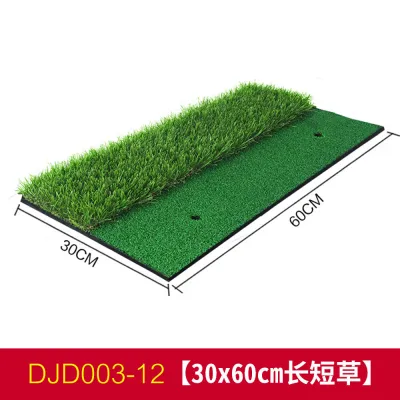
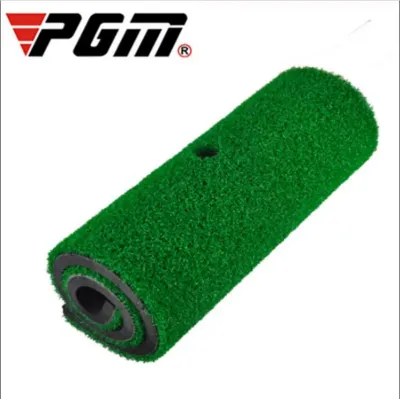
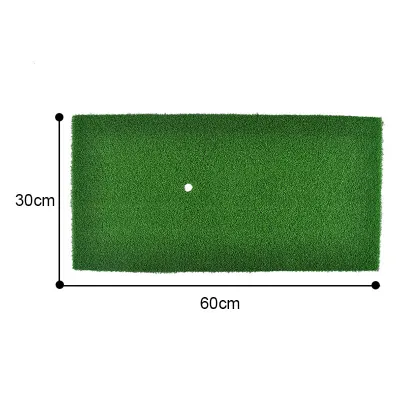
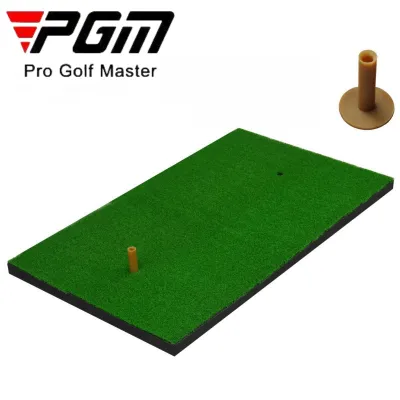
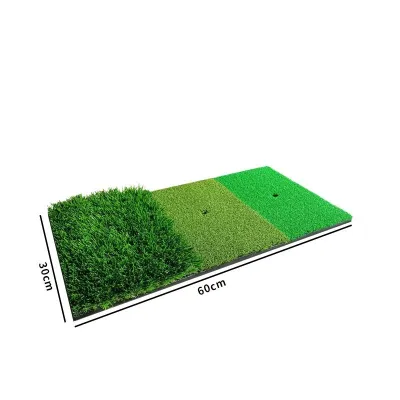
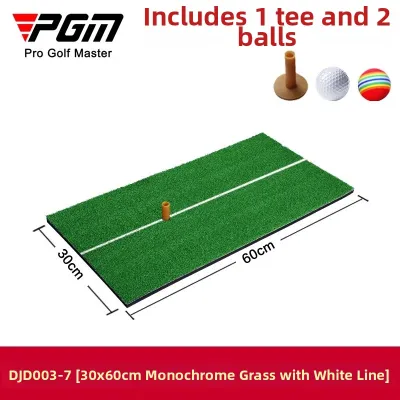
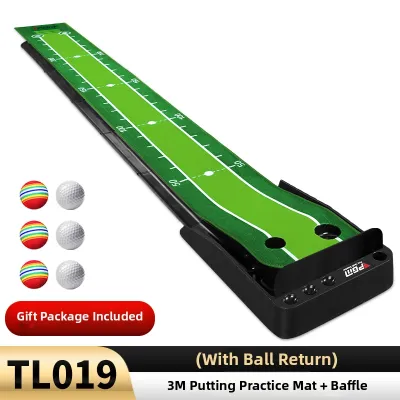
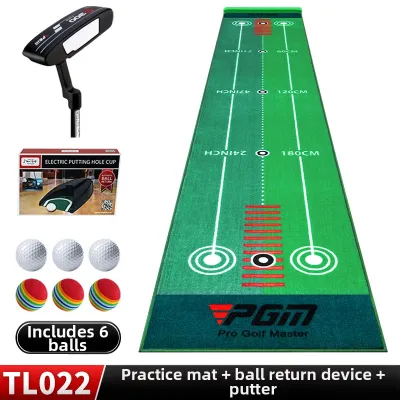
Prices are valid at publication and may change. Please refer to the product page for the latest price.
Physical comfort should never be an afterthought, especially during long practice sessions. Repeatedly striking a hard, poorly cushioned surface can lead to chronic joint fatigue or repetitive strain injuries. If you already experience wrist or elbow discomfort, prioritizing a mat with advanced shock-absorbing layers is essential, even if it means sacrificing a small amount of feedback realism.
Evaluating Core Mat Materials and Construction
Most modern golf training mats feature a multi-layered construction designed to balance stability, realism, and comfort. The bottom layer typically provides weight and grip to keep the mat in place, while the top layer simulates the playing surface. Many premium options also incorporate a middle layer specifically engineered to absorb shock and mimic the natural give of real soil.

Rubber Bases for Stability and Durability
The base layer of a golf training mat is responsible for keeping the surface flat and stationary during high-speed swings. A heavy, dense rubber base provides the necessary friction and weight to prevent the mat from sliding on slick surfaces like concrete, tile, or polished garage floors. When a golfer shifts their weight and rotates their body, a lightweight mat can easily bunch up or shift, disrupting their alignment and stance.
While solid rubber excels at providing a stable foundation, it has distinct limitations when it comes to shock absorption. Solid, vulcanized rubber does not compress easily under sudden impact. If you have a steep swing, striking a mat with a thin turf layer over a solid rubber base can feel like hitting concrete, leading to rapid joint fatigue.
When evaluating rubber bases, check the manufacturer’s specifications for thickness and weight. A thicker rubber base, often ranging from 10mm to 15mm, generally offers superior stability and better dampening properties than thin, lightweight alternatives. Look for heavy-duty, commercial-grade rubber that resists cracking and warping, especially if you plan to use the mat in areas exposed to temperature fluctuations or high humidity.
Synthetic Turf for Realistic Club Interaction
The top layer of synthetic turf is where your club makes direct contact, making it the primary driver of swing feedback. The height of the turf fibers, known as the pile height, and the stiffness of the synthetic material determine how the club glides through the ball. Short, stiff fibers simulate a tightly mown fairway, allowing the club to slide easily, while longer, denser fibers can mimic the resistance of the rough.
Turf face weight, which measures the weight of the synthetic fibers per square yard, directly influences how realistic the surface feels. A higher face weight indicates a denser turf cover, which prevents the club from sliding too easily and provides a more accurate representation of real grass resistance. Low-density turf can feel slick and artificial, masking poor shots by allowing the club to bounce forward instead of digging in.
To ensure your mat survives thousands of swings, verify the turf’s durability ratings on the product label. Look for nylon or high-grade polypropylene fibers that are UV-stabilized and securely knitted into the backing material. High-quality synthetic turf resists fiber shedding and prevents the formation of permanent divot depressions where the club repeatedly strikes the surface.
Foam and Gel Inserts for Shock Absorption
To bridge the gap between stability and joint protection, many manufacturers incorporate foam or gel inserts into their mat designs. These compressible middle layers are engineered to absorb the downward force of a steep swing, simulating the natural compression of real turf and soil. By allowing the clubhead to sink slightly into the mat, these inserts prevent the harsh club bounce that often leads to wrist injuries.
However, foam and gel materials are subject to wear and compression set over time. Under high-volume practice, lower-grade foam can lose its elasticity, leaving a permanent indentation where you repeatedly strike the ball. Once the foam collapses, the mat loses its shock-absorbing properties, exposing your joints to increased impact forces.
Additionally, you must consider how the thickness of these inserts affects your overall stance and swing plane. If the mat features a thick foam insert but lacks a matching level stance area, your feet may sit lower or higher than the ball. This height discrepancy can alter your posture and swing mechanics, potentially creating bad habits that do not translate well to the actual golf course.
Matching Materials to Specific Training Scenarios
Different practice goals require specific material combinations to maximize the effectiveness of your training sessions. For full swings and driving practice, stability and tee compatibility are paramount. High-speed driver swings exert significant lateral force on the mat, requiring a heavy rubber base to prevent slipping. Furthermore, if you prefer using real wooden or plastic tees rather than fixed rubber tubes, you will need a mat with a dense, deep synthetic turf layer or a specialized insert that can hold a standard tee securely.
For short game practice, such as chipping and pitching, realistic turf interaction is far more important than heavy shock absorption. Chipping requires precise contact, and a mat that is too forgiving will mask fat shots by allowing the club to slide into the ball. To practice varied lies, look for mats that offer interchangeable turf sections, allowing you to transition from a smooth fairway lie to a thick, challenging rough simulation.
Indoor and apartment setups present unique challenges, particularly regarding space, noise, and floor protection. In the Philippines, where indoor spaces can experience high humidity, selecting materials that do not trap moisture is crucial to prevent mold and mildew. A mat used indoors must have a soft, non-marking rubber or foam base to protect delicate flooring from scratches and impact damage. Additionally, thick foam layers can help dampen the thumping sound of club impact, making your practice sessions much quieter and more neighbor-friendly.
Essential Specifications to Verify on Product Labels
When shopping for a golf training mat, look past generic marketing claims and focus on verifiable specifications listed on the product label. Start by checking the total thickness of the mat, which is the combined measurement of the base, cushioning layer, and turf. A total thickness of 15mm to 30mm is generally recommended for a good balance of comfort and stability, though professional-grade mats can be even thicker.
Next, verify the base weight and dimensions. A standard full-size mat should weigh enough to remain anchored without external weights; for a 1.5-meter by 1.5-meter mat, a weight of 15 to 20 kilograms is common for commercial-grade stability. If you choose a smaller, portable mat, ensure it features a high-traction, non-slip backing or includes securing pegs for outdoor use.
Finally, review the manufacturer’s guidelines regarding surface compatibility, care, and warranty conditions. Some mats are designed strictly for flat, indoor subfloors, while others can handle slightly uneven outdoor surfaces like grass or dirt. Pay close attention to care instructions, especially regarding sun exposure and wet conditions, as prolonged exposure to tropical heat and rain can degrade synthetic adhesives and cause the layers to delaminate.
Decision Framework: Choosing the Right Mat for You
To finalize your choice, evaluate your practice style against the following conditional guidelines:
- Choose a mat with a thick foam or gel insert if you have a steep angle of attack, practice frequently on hard surfaces like concrete, and prioritize joint protection over maximum turf feedback.
- Choose a heavy, dense rubber base paired with a high-density, short-pile nylon turf if you have a shallow swing, want realistic fairway feedback, and require maximum durability for daily, high-volume practice.
- Avoid mats where the total thickness forces you to stand significantly higher than the ball, unless you plan to purchase a matching stance mat to keep your feet level with the striking surface.
- Verify before purchasing that the mat's dimensions fit your designated practice area, that the turf supports your preferred tee style, and that the base material is compatible with your specific subfloor to prevent slipping or floor damage.
Frequently Asked Questions (FAQ)
Can I use a golf training mat directly on concrete or hard floors?
Using a thin golf training mat directly on concrete or other unyielding hard floors carries a high risk of club bounce and joint strain. Without adequate cushioning, the energy from your swing is transferred directly back into your hands, wrists, and elbows, which can lead to discomfort or injury over time. Before setting up your mat on a hard surface, check the manufacturer’s guidelines to ensure the mat is rated for concrete use and will not slide or degrade prematurely. If your mat lacks sufficient built-in cushioning, consider placing interlocking foam tiles or a specialized rubber underlay beneath it to absorb shock and protect both your joints and the underlying floor.
Community discussion
Share your experience or ask a question. Comments are reviewed before publication.