
Finding the ideal jumping rope is not about searching for a single, universally superior model. The right material depends entirely on your current skill level, your primary fitness goals, and where you plan to train. A rope that helps an advanced athlete breeze through consecutive double-unders might leave a beginner frustrated, constantly tripping over an invisible cable. By matching the physical properties of the cord to your specific workout objectives, you can accelerate your learning curve and avoid unnecessary frustration.
To make an informed decision, you must evaluate your training along two primary axes: your current coordination level and your main workout focus. Beginners generally require pronounced tactile feedback to learn when to jump, while advanced fitness enthusiasts often prioritize speed or resistance. Your training environment also plays a major role, especially in tropical climates where high humidity can affect grip comfort and outdoor concrete surfaces can rapidly wear down delicate cords.
This guide evaluates the four primary jumping rope materials available on the market: PVC or vinyl, beaded plastic, steel wire, and leather or weighted cords. Each material offers distinct characteristics in terms of weight, flexibility, and durability. Understanding these differences will help you select a tool that enhances your cardiovascular conditioning, rhythm, or strength training.
Products mentioned in this guide
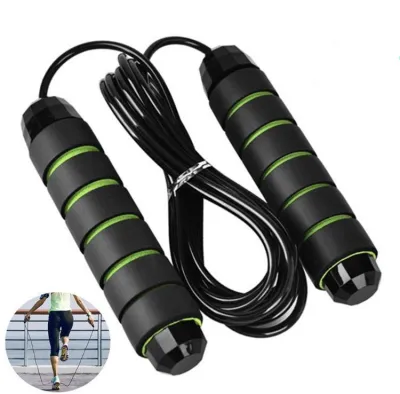
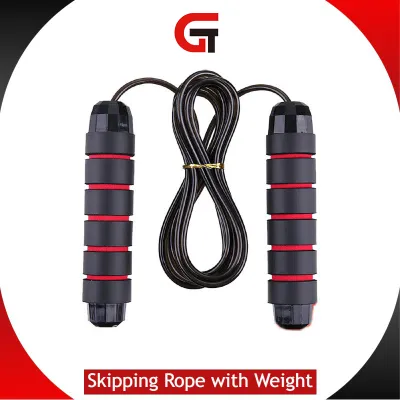
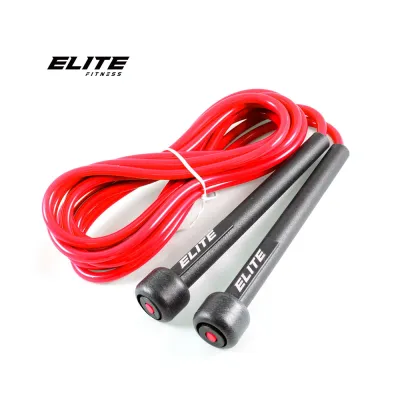
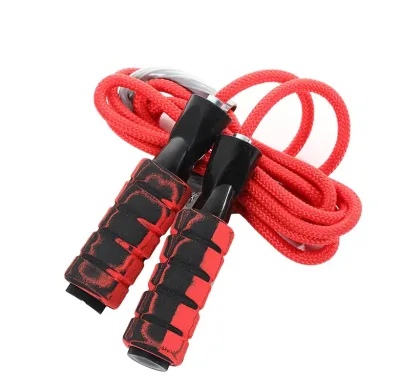
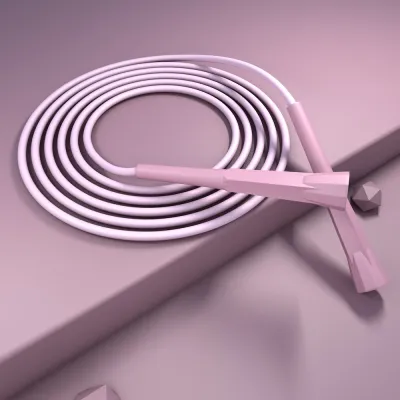
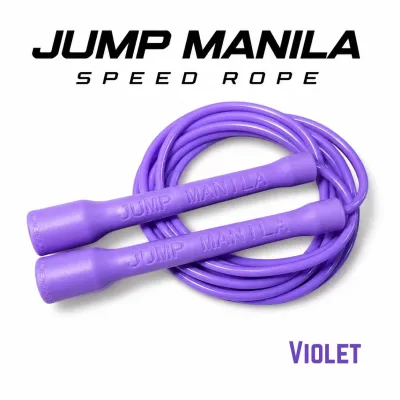
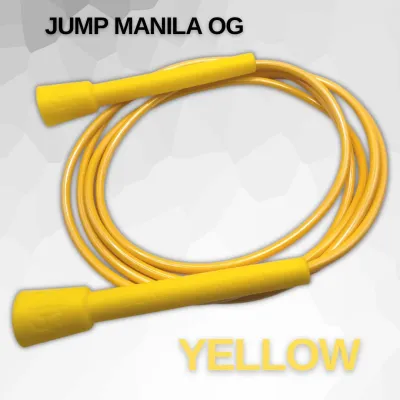
Prices are valid at publication and may change. Please refer to the product page for the latest price.
Evaluating Jumping Rope Materials by Workout Type
The physical characteristics of a jumping rope—specifically its weight, thickness, and flexibility—directly dictate how it behaves in the air. A heavier, thicker cord moves more slowly but provides strong physical feedback, allowing you to feel the position of the loop as it rotates around your body. Conversely, a thin, lightweight cord cuts through the air with minimal resistance, enabling rapid rotations but offering very little sensory feedback to help you time your jumps.
PVC and Vinyl Ropes
Standard synthetic ropes made of solid PVC or vinyl are widely considered the most versatile starting point for general fitness. These cords strike an excellent balance between a lightweight design and sufficient tactile feedback. Because the material has a moderate weight, it retains its shape in the air, making it easier for beginners to establish a consistent jumping rhythm without the rope tangling or collapsing.
When it comes to durability, PVC holds up remarkably well across various training environments. Whether you are jumping on indoor gym mats or outdoor concrete driveways, these ropes resist abrasion better than many natural materials. However, in highly humid or warm tropical conditions, some low-grade vinyl cords can become overly flexible or sticky, so verifying the material quality is essential before purchasing.
From a budget perspective, PVC ropes are highly accessible, often representing the most cost-effective option in local currency (₱). They are an ideal choice for general cardiovascular conditioning, warm-ups, and high-intensity interval training (HIIT). If you are looking for a low-maintenance, all-around tool that can transition easily from an indoor living room to an outdoor patio, a high-quality PVC rope is a practical investment.
Beaded Ropes
Beaded ropes consist of a flexible inner nylon cord threaded with segmented plastic beads. This unique design is highly favored by freestyle jumpers, trick enthusiasts, and beginners alike. The primary advantage of a beaded rope is the distinct auditory and tactile feedback it provides; every time the beads strike the ground, they produce a loud “click” that helps you synchronize your jumps with a steady rhythm.
The weight distribution of a beaded rope is also highly advantageous for learning complex footwork and freestyle tricks. Because the weight is distributed evenly across the entire length of the cord via the individual beads, the rope maintains a consistent, open arc even at slower speeds. This structural stability prevents the rope from tangling or bending awkwardly when you attempt crossovers, side swings, or behind-the-back transitions.
Maintenance is another strong point for this category. If individual plastic segments wear out from friction against rough outdoor surfaces, you can easily slide off the damaged beads and replace them. Additionally, adjusting the length of a beaded rope is a straightforward process that involves untying the knot inside the handle, removing a few segments, and retying the cord to match your height.
Steel Wire and Speed Cables
Steel wire ropes, often referred to as speed cables, are designed for one primary purpose: maximum velocity. These ropes feature a very thin, lightweight metal core that cuts through the air with virtually zero aerodynamic resistance. This makes them the standard for high-speed workouts, competitive jump rope sports, and advanced functional fitness routines that require consecutive double-unders or triple-unders.
However, this extreme speed comes with a significant trade-off in terms of feedback and user difficulty. Because the wire is incredibly thin and light, you will feel almost no physical feedback as it rotates, requiring a high level of pre-existing coordination and timing to avoid tripping. Furthermore, mistimed jumps can result in painful whips against your shins or calves, making this material unsuitable for absolute beginners.
Durability is highly dependent on the surface you train on and the presence of a protective coating. Bare steel wire will fray and degrade almost instantly on concrete or asphalt. To prevent this, look for steel cables coated in a thin layer of protective PVC or nylon. Even with a coating, using a dedicated jumping mat is highly recommended to preserve the integrity of the wire and protect your joints from hard impacts.
Leather and Weighted Cords
Leather ropes and heavy weighted cords offer a premium feel and a distinct training stimulus focused on upper-body endurance. The inherent weight of a thick leather strip or a weighted synthetic cord slows down the rotation speed significantly, forcing your shoulders, forearms, and wrists to work harder to maintain momentum. This makes them excellent tools for building upper-body strength and muscular endurance during longer cardio sessions.
The increased weight also provides exceptional tactile feedback, making it very easy to feel exactly where the rope is at any point in its rotation. However, leather ropes have strict environmental limitations. They are highly sensitive to moisture and should never be used on wet surfaces or left in humid outdoor environments, as moisture can cause the leather to stretch, rot, or fray. They are strictly intended for indoor use on smooth wooden floors or specialized gym mats.
Additionally, leather requires a distinct break-in period to lose its coiled shape from packaging and hang straight. Unlike low-maintenance synthetic alternatives that are ready to use out of the box, leather cords benefit from occasional conditioning with leather oil to maintain their flexibility and prevent cracking over time.
Decision Framework: Choose the Right Material for Your Routine
To simplify your selection process, apply these conditional rules based on your training environment, skill level, and fitness goals.

Choose a PVC or Vinyl Rope if:
- You are a beginner or intermediate jumper looking for an affordable, all-purpose fitness tool.
- You train on a mix of indoor and outdoor surfaces and want a low-maintenance cord.
- Your primary goal is general cardiovascular conditioning or warming up before weight training.
Choose a Beaded Rope if:
- You want to learn freestyle tricks, complex footwork, or rhythm-based routines.
- You struggle with timing and need clear auditory feedback (the clicking sound) to jump consistently.
- You want a highly durable rope that can handle rough outdoor concrete without wearing out the inner cord.
Choose a Steel Wire Rope if:
- You are an advanced jumper aiming to master double-unders or high-speed intervals.
- You primarily train indoors on gym mats or smooth surfaces, or you use a dedicated jump rope mat outdoors.
- You prioritize speed and efficiency over upper-body strength development.
Choose a Leather or Weighted Rope if:
- You want to focus on shoulder, forearm, and grip strength during your cardio workouts.
- You always train indoors on smooth, dry surfaces like hardwood or rubber tiles.
- You prefer a classic, heavy-swinging rope and do not mind performing regular material maintenance.
| Material | Ideal Skill Level | Primary Workout Goal | Recommended Surface Type |
|---|---|---|---|
| PVC / Vinyl | Beginner to Intermediate | General Cardio & HIIT | Indoor Mats, Smooth Concrete |
| Beaded Plastic | Beginner to Advanced | Rhythm, Tricks & Footwork | Outdoor Concrete, Asphalt, Mats |
| Steel Wire | Advanced | High-Speed, Double-Unders | Indoor Mats, Smooth Wood |
| Leather / Weighted | Intermediate to Advanced | Upper-Body Strength & Endurance | Indoor Wood, Smooth Gym Tiles |
Neither may fit if:
- You attempt to use a bare steel wire rope or a premium leather rope directly on rough, abrasive outdoor concrete. The steel wire will fray rapidly, posing a safety hazard, while the leather will scuff and tear within a few sessions.
- You are an absolute beginner trying to learn basic jumping mechanics with an ultra-thin speed cable. The lack of tactile feedback will likely lead to constant tripping, frustration, and painful shin strikes.
Verify first if:
- The rope's connection point matches your training style. Check the manufacturer's specifications to verify if the handles use ball bearings (essential for high-speed steel wires) or simple peg connections (common and acceptable for beaded or basic PVC ropes).
- The material is rated for your local climate. In hot, humid environments, verify that synthetic cords are UV-resistant and designed not to become overly sticky or soft when exposed to heat.
Essential Specifications to Verify Before Purchase
Selecting the right rope material is only the first step; you must also ensure the secondary hardware matches your physical needs and training environment. Pay close attention to the handle design and grip ergonomics. In warm, tropical climates where sweat can quickly compromise your hold, look for handles wrapped in non-slip, sweat-resistant tape or textured rubber. Lightweight plastic handles are excellent for speed, while heavier aluminum handles can add a minor strength-building element to your routine.
The internal mechanism of the handle is equally critical. High-speed workouts require smooth, frictionless rotation, which is best achieved through integrated ball bearings that allow the rope to spin independently of the handle. For slower, rhythm-based jumping with beaded or PVC ropes, simple bushing or snap-lock systems are perfectly adequate and often more durable over the long term.
Before your first workout, you must properly measure and adjust the rope length to match your height. To do this, stand on the center of the cord with one foot and pull the handles straight up along the sides of your body. For beginners, the tips of the handles should reach your armpits. As your form improves and your jumps become more compact, you can shorten the rope so the handles align with your lower chest or ribs.
Finally, watch out for common purchasing red flags. Avoid ropes with fixed, non-adjustable lengths unless you are absolutely certain the measurements match your body dimensions. Be cautious of poorly secured end-caps or adjustment screws that can fly off during high-speed rotations. Investing a few moments to verify these mechanical details ensures a safer, more effective, and highly rewarding workout experience.
Community discussion
Share your experience or ask a question. Comments are reviewed before publication.