
Finding the ideal kid scooter for girls involves much more than selecting her favorite color or a fun pattern. To ensure a safe, comfortable, and confidence-building ride, you must align the scooter’s physical design with your daughter’s current age, height, and motor skills. While general age brackets serve as a useful starting point, her actual physical coordination and balance are the ultimate deciding factors. A well-fitted scooter allows her to ride naturally without straining her back or struggling to maintain control, turning outdoor play into a healthy, skill-building activity.
Assessing Readiness: Age, Height, and Balance Signals
Before looking at specific models, evaluating your daughter’s physical readiness is the most critical first step. Age and height are easy to measure, but they do not tell the whole story of her physical development. Some children develop advanced balance early, while others benefit from extra stability as they refine their motor skills. Selecting a scooter based solely on age can lead to frustration if the toy is either too challenging to balance or too restrictive for her coordination level.
To determine her readiness, observe her daily movements in a familiar environment, such as a backyard, a local park, or a flat subdivision driveway. You can use this practical checklist to evaluate her current balance and coordination:
Products mentioned in this guide
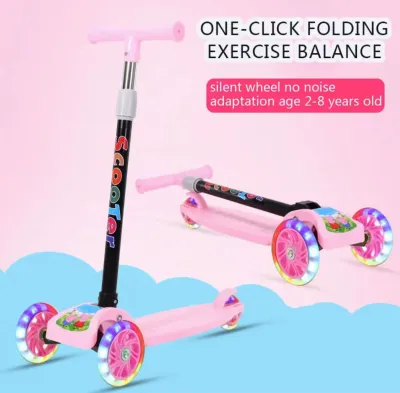
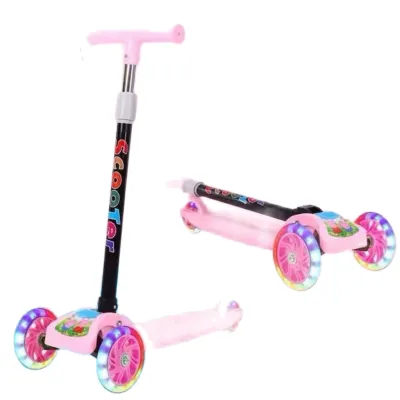
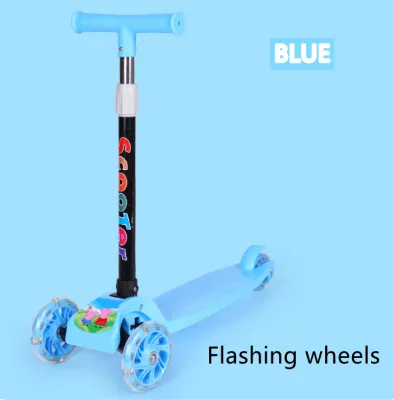
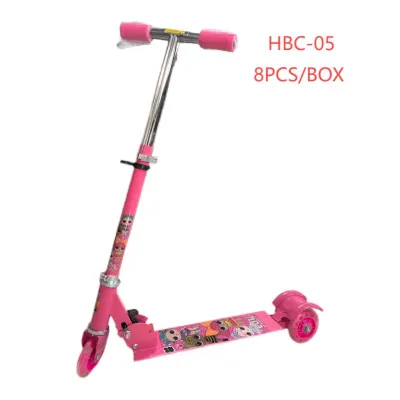
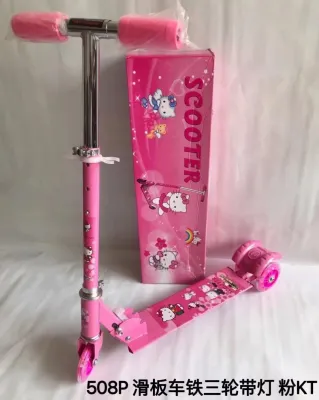
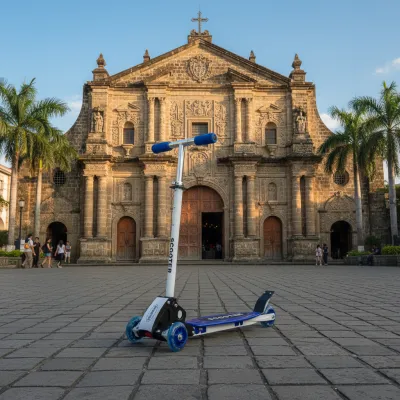
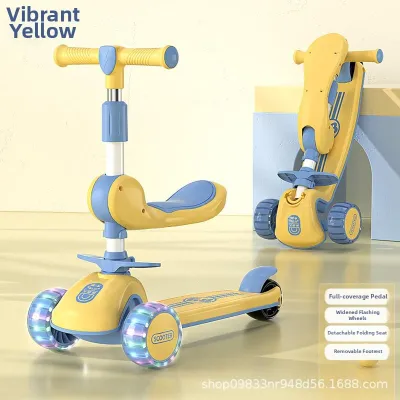
Prices are valid at publication and may change. Please refer to the product page for the latest price.
- Can she stand steadily on one foot for three to five seconds without wobbling or reaching out for support?
- Does she walk, run, and change directions smoothly on slightly uneven ground, such as grass or textured pavement?
- Can she jump with both feet landing together safely, showing good lower-body control?
- Does she demonstrate an understanding of basic spatial awareness, such as stopping when asked or steering clear of obstacles?
These physical observations help you decide whether she should begin with a highly stable three-wheel model or transition to a classic two-wheel option. If she struggles with standing on one foot or frequently trips on uneven paths, a three-wheel platform offers the necessary support to build her confidence. Conversely, if she runs with high agility and easily manages physical challenges, she may be fully prepared to handle the active balancing required by a two-wheel scooter.
Choosing the Wheels: 3-Wheel vs. 2-Wheel Kid Scooter for Girls
The wheel configuration is the defining structural feature of any kid scooter for girls, directly impacting how the vehicle steers, balances, and moves. Choosing between three wheels and two wheels determines how much physical effort your daughter must exert to keep the deck upright.

3-Wheel Scooters for Toddlers and Beginners
Three-wheel models are generally engineered for riders between the ages of 2 and 5, or for children who are under 110 centimeters in height. These scooters typically feature two wheels in the front and one in the back, creating a triangular, self-standing base that does not tip over when stationary. This design removes the immediate need to balance, allowing young riders to focus entirely on learning how to push off the ground and steer.
Most high-quality three-wheel models utilize a “lean-to-steer” mechanism rather than a traditional turning handlebar. Instead of twisting the grips, your daughter gently leans her body weight left or right to curve the scooter in that direction. This intuitive movement matches a toddler’s natural physical instincts and helps develop core strength, coordination, and spatial awareness. Choose a three-wheel scooter if your daughter is a first-time rider, is still building basic motor confidence, or needs a stable platform that lets her play without the fear of falling over sideways.
2-Wheel Scooters for Older Kids and Balanced Riders
Two-wheel scooters are designed for older children, typically starting around age 5 and up, or for those who have grown taller than 110 centimeters. Unlike their three-wheel counterparts, these models require active, continuous balancing to stay upright. They feature a single wheel at the front and one at the back, meaning the scooter will fall over if it is not in motion or supported by a kickstand.
This configuration offers significantly higher speed, agility, and maneuverability, allowing for sharp turns and a more dynamic riding experience. The steering is direct, meaning the handlebars turn just like a bicycle. This setup is ideal for girls who have outgrown the speed limits and steering constraints of a beginner model. If your daughter can easily balance on a two-wheel bicycle, possesses strong core coordination, and craves a faster, more responsive ride, a two-wheel scooter is the natural next step.
Sizing for Comfort: Handlebar Height and Deck Dimensions
Ensuring the scooter is ergonomically sized to your daughter’s body prevents physical fatigue, promotes correct posture, and reduces the risk of falls. A scooter that is too large will be difficult to steer, while one that is too small can cause her to hunch over, putting unnecessary strain on her back and shoulders.
To find the perfect handlebar height, use a simple rule of thumb: when your daughter is standing straight on the deck with her shoes on, the handlebar grips should sit comfortably between her waist and lower chest. Ideally, they should rest approximately two to three inches below her armpits. This height allows her elbows to bend at a comfortable, relaxed angle, giving her maximum leverage to steer and control the scooter without overextending her arms.
Because children grow rapidly, prioritizing a model with adjustable handlebars is highly practical. An adjustable T-bar features a secure locking collar and push-button detents that let you raise the grips as she grows. While budget-friendly models in the Philippines start around ₱1,500, premium adjustable options can range up to ₱5,000 or more, offering greater long-term value by extending the usable lifespan of the scooter and ensuring she maintains an upright, safe posture over several years of use.
Beyond the handlebars, the deck dimensions play a critical role in stability and ease of use. The deck clearance—the distance between the bottom of the deck and the ground—should be relatively low. A lower deck requires less bending of the supporting leg when she pushes off the ground, which significantly reduces muscle fatigue and makes it easier for younger riders to maintain their balance.
The width of the deck must also be carefully matched to her size. It should be wide enough for her to place both feet on it comfortably when coasting, yet narrow enough that she does not trip over the sides while pushing. Always inspect the deck surface for high-traction grip tape or textured, non-slip molded plastic. In the humid, tropical climate of the Philippines, sudden afternoon rain showers can make smooth plastic decks incredibly slippery, making a high-traction surface essential for safe riding.
Finally, always verify the manufacturer’s specified weight capacity before making a purchase. The maximum weight limit is a critical structural safety rating; exceeding it can cause the deck to flex excessively, drag against the ground, or cause the wheel bearings to fail prematurely. Ensure your daughter’s current weight is well below the maximum limit to guarantee optimal frame rigidity and smooth wheel performance.
Safety First: Brakes, Weight Limits, and Protective Gear
Riding a scooter should always be paired with proper safety habits, high-quality protective gear, and an understanding of the local riding environment. No matter how advanced your daughter’s skills are, mechanical safety features and protective equipment are non-negotiable requirements for every ride.
When evaluating braking systems, a rear foot brake—a metal or plastic fender over the back wheel that slows the scooter when stepped on—is the standard and safest option for young riders. Rear brakes are intuitive to operate and prevent the scooter from stopping too abruptly, which can throw the rider forward. Hand-operated lever brakes, similar to those on bicycles, are generally not recommended for toddlers or very young children, as their small hands often lack the grip strength and coordination required to squeeze the lever effectively in an emergency.
Before she takes her first roll, equip her with a properly fitted, certified helmet. The helmet should sit level on her head, covering her forehead, with the chin strap fastened securely so that no more than two fingers can fit underneath. For beginners and those transitioning to two-wheel models, high-impact knee and elbow pads are highly recommended to protect against scrapes and bruises on hard concrete.
Because local riding conditions in the Philippines can vary, parents must perform a quick environmental check before letting their children ride. Avoid steep hills, wet concrete, or overly rough, cracked asphalt. Wet surfaces drastically reduce the grip of polyurethane wheels, making braking difficult and increasing the risk of sliding. If you live in an area with uneven pavements, verify that the scooter’s wheels are made of high-quality, shock-absorbing polyurethane rather than hard, brittle plastic, which can vibrate excessively and lose traction easily.
Additionally, visibility is crucial for outdoor safety, especially during late afternoons or in shaded subdivision streets. Choose scooters with bright, high-visibility deck colors, or apply reflective stickers to the frame. Many modern scooters feature motion-activated LED lights built directly into the wheels, which require no batteries and significantly improve her visibility to pedestrians and nearby vehicles while adding a fun, glowing element to her ride.
Frequently Asked Questions (FAQ)
When should my daughter switch from a 3-wheel to a 2-wheel scooter?
Your daughter is ready to transition to a two-wheel scooter when she displays consistent physical coordination and outgrows the capabilities of her three-wheel model. Look for clear, observable signs: she can easily balance on one foot for several seconds, she complains that her three-wheel scooter feels too slow, or she frequently lifts the front wheels off the ground while trying to make sharp turns. Additionally, if her physical height or weight approaches the manufacturer’s maximum limits for her current three-wheel model, it is time to upgrade to a larger, more robust two-wheel scooter to ensure structural safety.
How do I measure the correct handlebar height for her?
To measure the correct handlebar height at home or in a store, have your daughter stand straight on the scooter’s deck with her usual riding shoes on. Let her arms hang naturally at her sides. The ideal handlebar height should align with her waist or belly button, which is approximately two to three inches below her armpits. When she reaches out to grip the handlebars, her elbows should have a slight, relaxed bend of about 15 to 30 degrees. This positioning ensures she has maximum physical leverage to steer safely without hunching forward or overextending her shoulders.
Community discussion
Share your experience or ask a question. Comments are reviewed before publication.