
Running in the dark requires a delicate balance of personal comfort and active visibility. While traditional reflective gear relies entirely on external light sources like vehicle headlights to bounce back light, active illumination ensures you are seen regardless of surrounding light levels. Choosing the right running lights led setup is a critical decision that directly impacts your safety on the road.
The ideal form factor depends on your specific running route, local traffic density, and your personal tolerance for wearing extra gear. There is no single universal option that excels in every scenario. Instead, runners must choose between the comprehensive coverage of a vest, the lightweight versatility of an armband, or the minimalist convenience of a clip-on light.
To make an informed choice, you must evaluate where you run, when you run, and how your body reacts to gear in your local climate. For example, a runner navigating unlit provincial roads needs a vastly different visibility profile than someone logging miles in a well-lit urban park.
Products mentioned in this guide
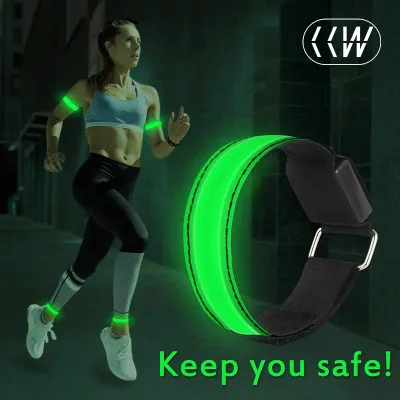
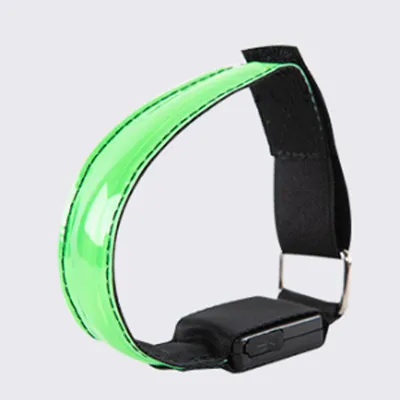
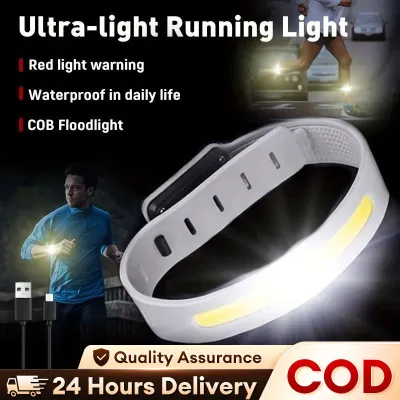
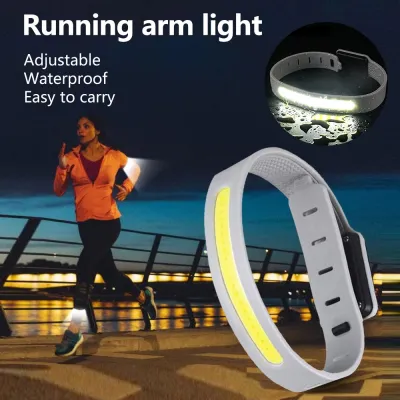
Prices are valid at publication and may change. Please refer to the product page for the latest price.
Key Decision Factors for LED Running Gear
Before comparing individual form factors, it is essential to understand the primary dimensions that determine how a running light performs in real-world conditions. These factors include visibility angles, physical comfort, battery systems, and weather resistance.
Visibility angle is the most critical safety metric. A 360-degree light source ensures you are visible to motorists approaching from any direction, including side streets and driveways. Directional lights, on the other hand, project illumination in a narrow beam, which is excellent for path-finding but leaves blind spots to your sides and rear.
Comfort and chafing are major considerations, particularly for runners in tropical environments like the Philippines. High humidity and ambient temperatures often exceed 30°C even during early morning or late-evening runs. Under these conditions, heavy sweating is inevitable. Any gear that traps heat, rubs against bare skin, or shifts during your stride can cause painful chafing and skin irritation within a few kilometers.
Power sources also dictate long-term usability. Modern running lights typically utilize either integrated rechargeable lithium-ion batteries or replaceable coin-cell batteries (such as CR2032). Rechargeable systems are highly cost-effective for daily runners, though they require regular access to a charging port. Coin-cell systems offer longer shelf lives and are lighter, making them excellent for occasional runners or backup emergency gear.
Weather resistance is another non-negotiable factor. Tropical downpours and sudden monsoonal rains can quickly ruin poorly sealed electronics. When shopping, always verify the manufacturer’s Ingress Protection (IP) rating. An IPX4 rating indicates resistance to splashing water from any direction, which is sufficient for light drizzle, while IPX6 or IPX7 ratings offer protection against high-pressure streams or temporary submersion, ensuring reliability during heavy downpours.
Finally, remember that safety gear is a tool to assist your situational awareness, not replace it. No matter how bright your light is, defensive running habits—such as running against the flow of traffic, staying off the road surface where possible, and avoiding distractions—remain your primary line of defense.
Choosing Running Lights LED Vests for Maximum Visibility on Dark Roads
Choosing running lights led vests for maximum visibility on dark roads is the most effective way to ensure motorists see you from a distance. Vests are designed to drape over your shoulders and secure around your torso, positioning bright LED strips or fiber-optic cables high on your body where they are most visible to drivers.

The primary advantage of an LED vest is its true 360-degree visibility profile. Because the light tubes or LED elements wrap entirely around your chest, shoulders, and back, you are visible from every angle. This comprehensive coverage is particularly valuable at complex intersections where vehicles may turn from multiple directions. Additionally, vests distribute their weight evenly across your shoulders, preventing the lopsided bounce associated with single-sided gear.
However, vests present distinct challenges in hot and humid climates. The straps and back panels, even when made of mesh, restrict airflow across your chest and back. This can lead to rapid heat retention and increased sweating. If you prefer running in lightweight singlets or bare-chested, the synthetic straps of a vest can rub directly against your skin, causing severe chafing over longer distances.
The ideal user for an LED running vest is someone who regularly runs on unlit rural roads, provincial highways with fast-moving traffic, or suburban areas lacking sidewalk infrastructure. In these high-risk environments, the maximum visibility of a vest is worth the trade-off in heat retention.
When selecting a vest, prioritize models with highly adjustable, elasticized straps that allow you to customize the fit over different types of clothing. Look for minimalist designs that use thin fiber-optic cables rather than thick fabric panels to maximize breathability and minimize skin contact.
LED Armbands: Balanced Visibility for Suburban Routes
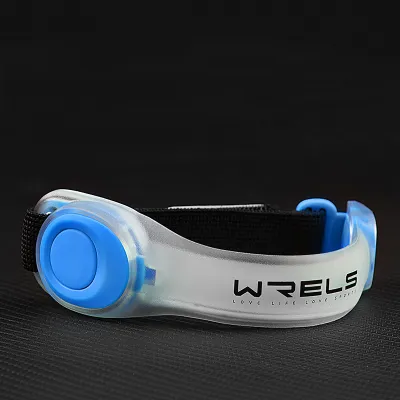
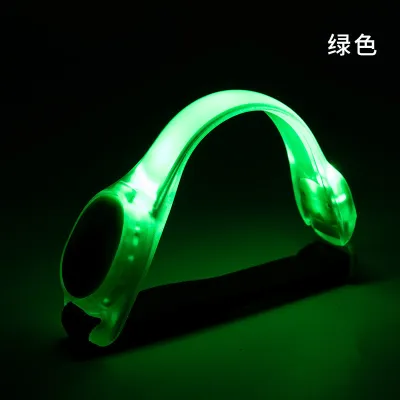
LED armbands offer a balanced compromise between visibility and physical freedom. These devices typically consist of a flexible, light-emitting band secured around your upper arm, forearm, wrist, or ankle using a hook-and-loop strap or a slap-band mechanism.
Because armbands are worn on your limbs, they take advantage of your body’s natural running biomechanics. The constant back-and-forth movement of your arm swing creates a dynamic, moving light source. Human peripheral vision is highly sensitive to motion, meaning a swinging light is often noticed by drivers much faster than a stationary light source of equivalent brightness.
The minimalist footprint of an armband is a significant benefit for runners in warm regions. By leaving your chest and back completely uncovered, armbands allow your body to cool itself efficiently through sweat evaporation. They are also highly portable, making them easy to slip into a pocket or hydration vest if you transition into a well-lit area.
The primary drawback of armbands is the potential for slippage. As you sweat, the friction between the band and your skin decreases. This can cause the armband to slide down your arm, requiring frequent adjustments during your run. Tightening the band to prevent slipping can restrict blood flow or cause muscle fatigue. Furthermore, wearing an armband on your wrist or forearm can sometimes interfere with the sensors of smartwatches or fitness trackers.
This form factor is ideal for runners who navigate suburban streets with intermittent street lighting. It provides sufficient directional and side visibility without the bulk of a full vest, making it a favorite for those who prioritize upper-body mobility.
To minimize slippage, look for armbands that feature textured silicone backing on the inner strap. This material maintains its grip even when wet with sweat, allowing you to keep the band secure without over-tightening it.
Clip-On LED Lights: Minimalist Gear for Well-Lit Paths
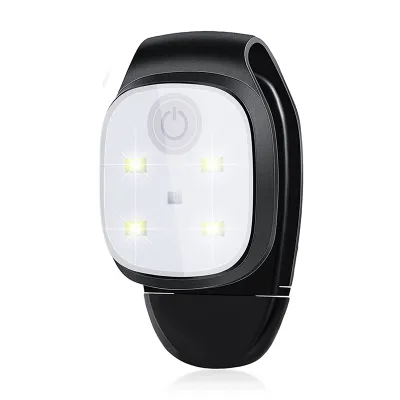
Clip-on LED lights represent the ultimate in minimalist safety gear. These small, lightweight pods utilize spring-loaded clips or strong magnets to attach directly to your existing running gear, such as shoe laces, waistbands, shirt collars, hat brims, or the straps of a hydration pack.
The main appeal of clip-on lights is their weightless feel. Weighing only a few grams, they cause virtually zero distraction or physical restriction. Because they attach to your clothing or accessories rather than wrapping directly around your body, the risk of skin chafing is almost entirely eliminated. They are also highly versatile, allowing you to position them exactly where you need a quick burst of light.
However, clip-ons have notable limitations in terms of safety coverage. A single clip-on light only projects light in one direction, leaving you completely invisible from other angles. To achieve even basic front-and-back visibility, you must purchase and wear multiple clips. Additionally, because of their small size, clip-on lights generally have lower lumen outputs and smaller battery capacities than vests or armbands.
Another risk is attachment failure. Vigorous running movements, stepping off curbs, or navigating uneven trail paths can cause clip-on lights to bounce off unnoticed. Magnetic clips can shift if attached to thick fabrics, while plastic spring clips can degrade and snap over time.
Clip-on lights are best suited for runners who stick to well-lit urban environments, such as paved city parks, active recreation zones, or brightly lit sidewalks. In these areas, you do not need to light up the path ahead; you simply need a small marker light to alert pedestrians and slow-moving cyclists of your presence. They also serve as excellent secondary backup lights to complement a primary vest or headlamp.
To ensure your clip-on stays secure, look for models with heavy-duty metal clips, locking plastic clasps, or high-strength neodymium magnets. Avoid using them on loose-fitting apparel where excessive bouncing will inevitably cause them to fall off.
Vest vs. Armband vs. Clip-On: Quick Comparison
To help you visualize the trade-offs between these three designs, the table below compares their performance across key operational categories.
| Form Factor | Best Environment | Visibility Angle | Comfort/Weight Profile | Key Limitation |
|---|---|---|---|---|
| LED Vest | Unlit roads, highways, high-traffic areas | 360-degree (Full coverage) | Even weight distribution; can trap heat | Heat retention and potential skin chafing |
| LED Armband | Suburban streets, mixed lighting routes | Directional & motion-based | Lightweight; leaves torso free | Can slip down the arm due to heavy sweat |
| Clip-On LED | Well-Lit parks, paved urban paths | Single-direction (Narrow) | Minimalist; virtually weightless | Risk of falling off; limited brightness |
This comparison highlights that choosing the right light is a matter of matching your route’s risk level with your personal comfort threshold. A vest offers unmatched safety on dark roads but requires a compromise on breathability. A clip-on offers maximum comfort but provides minimal safety coverage on unlit streets.
Final Decision Framework: Match the Light to Your Route
To finalize your decision, consider the specific characteristics of your typical running routes and your personal gear preferences.
Choose an LED Vest if:
- You run on provincial roads, rural highways, or streets without dedicated sidewalks or streetlights.
- You frequently navigate complex intersections where traffic approaches from multiple angles.
- You want a single, comprehensive visibility solution that does not require managing multiple separate devices.
Choose an LED Armband if:
- You run in suburban neighborhoods with intermittent street lighting where you need side-profile visibility.
- You run in hot, humid conditions and want to keep your chest and back completely uncovered to maximize cooling.
- You appreciate the attention-grabbing effect of a light source that moves dynamically with your arm swing.
Choose a Clip-On LED if:
- You run primarily in well-lit urban parks, running tracks, or master-planned commercial areas.
- You are highly sensitive to gear weight and want a completely non-intrusive visibility solution.
- You already own a primary light source (like a headlamp) and need a lightweight red flasher for rear-facing safety.
Verify first if:
- Your local race guidelines or night-running events have specific mandatory gear requirements, as some ultra-marathons mandate 360-degree vests rather than clip-ons.
- The manufacturer's warranty explicitly covers water damage from heavy sweat or tropical rain storms, ensuring your investment lasts through changing seasons.
- The device's charging port is protected by a secure rubber gasket to prevent sweat-induced corrosion over long-term use.
Community discussion
Share your experience or ask a question. Comments are reviewed before publication.