
The ideal paracord to pack for mountain climbing depends entirely on your specific scenario, ranging from lightweight micro cord for gear tethering to standard Type III (550) cord for camp setups, and Type IV (750) cord for heavy static hauling. While paracord is an incredibly versatile utility tool for shelter building, gear repairs, and tool retention, it is strictly a utility cord and must never be used as a life-safety climbing rope. To choose the right cord, you must match its material and strength specifications to your venue, weather conditions, carrying methods, and intended tasks. By evaluating these factors before your climb, you can optimize your pack weight while ensuring you have the correct tool for every backcountry challenge.
Understanding Paracord Grades and Strict Safety Limits
Standard utility cords are classified by military-derived grades, with Type III (550 cord) and Type IV (750 cord) being the most common. The numbers “550” and “750” denote the minimum breaking strength in pounds under ideal, static laboratory conditions. Crucially, this rated breaking strength is not the safe working load; the actual safe working load is a small fraction of this number, typically calculated using a safety factor to account for wear, knots, and environmental degradation.
Genuine mil-spec Type III cord (MIL-C-5040H) undergoes rigorous testing, ensuring it contains 7 to 9 inner strands, each made of three plies of nylon. Commercial-grade paracord may only have two-ply strands or use lower-quality synthetic fibers. Always verify the manufacturer’s specifications and look for clear labeling to ensure the cord meets your performance requirements.
Products mentioned in this guide
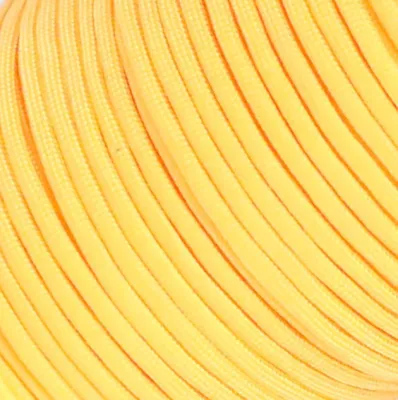
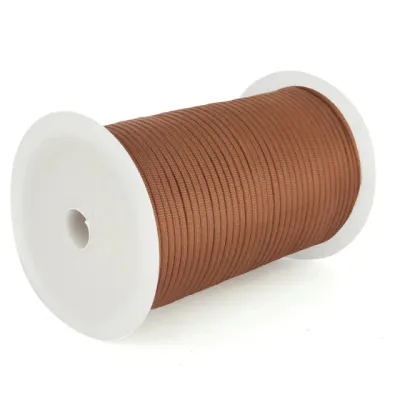
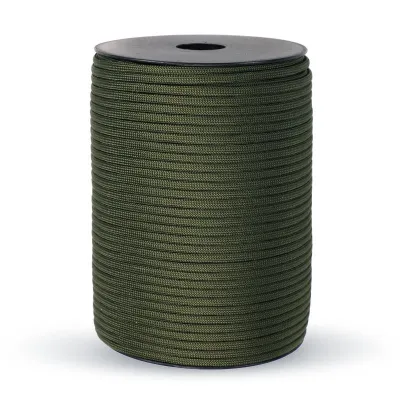
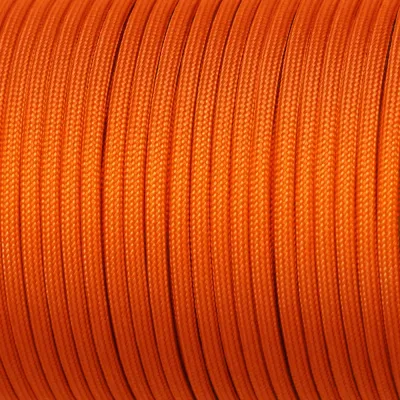
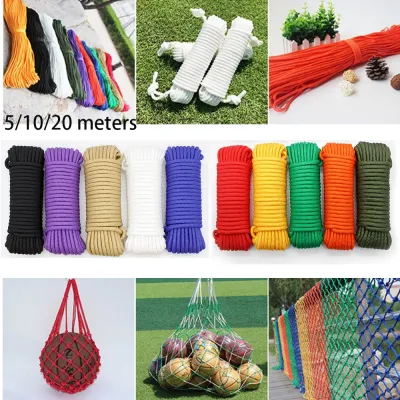
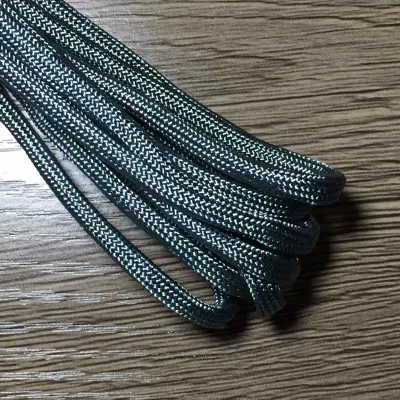
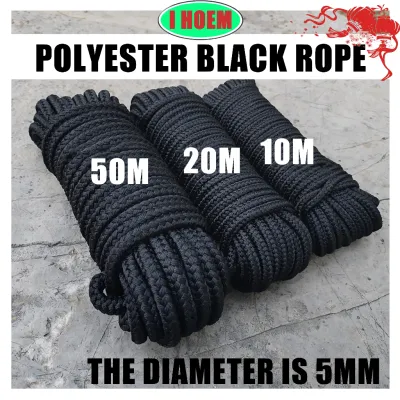
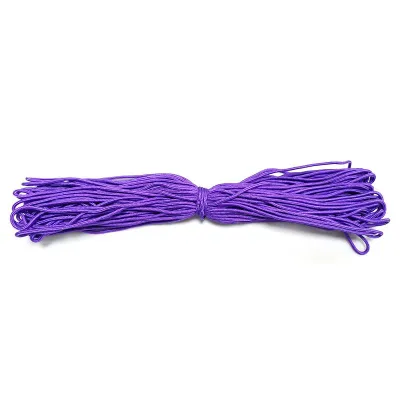
Prices are valid at publication and may change. Please refer to the product page for the latest price.
Crucial Safety Boundary: Paracord is strictly a utility accessory and is completely unsuited for life-safety climbing applications. It must never be used for belaying, lead climbing, prusiking, rappelling, or constructing human anchor systems. If you encounter any situation where a human fall is possible, stop immediately. Utility cord cannot replace certified dynamic climbing ropes, professional training, or sound mountain judgment.
Common materials like nylon and polyester offer distinct characteristics. Nylon provides excellent elasticity and shock absorption, which is useful for tensioning shelters against high winds, but it naturally absorbs water and can lose a portion of its tensile strength when wet. Polyester offers lower stretch, superior resistance to ultraviolet (UV) degradation, and minimal water absorption, making it highly reliable in wet, humid, tropical environments. Always verify the raw material composition, UV resistance rating, and load specifications on the product label before packing.
Gear Tethering: Securing Tools and Preventing Drops
Core Needs: On steep trails, exposed ridges, or vertical scrambles, dropped gear can be lost forever in dense jungle foliage, deep ravines, or down rock faces. Securing your equipment requires a cord with low bulk, high flexibility, and minimal weight so that it does not interfere with your movement or clutter your harness.

Recommended Types: Micro cord (typically 1.18mm to 2mm in diameter, often rated around 90 to 100 lbs) is ideal for lightweight items like headlamps, GPS units, compasses, and multi-tools. Standard 550 paracord is better suited for heavier gear like metal water bottles, cameras, or small tool rolls.
Length Guidelines: Carry short pre-cut lengths of 1 to 3 feet, or keep a small, compact spool in your pack’s brain compartment.
Usage Tips: Use secure, easily releasable knots such as the bowline or a simple lark’s head to attach the cord to your gear. Always check your tool manufacturer’s instructions to identify approved attachment points and avoid damaging the tool’s casing. Ensure tethered gear does not create tripping hazards, snag points, or interfere with your harness gear loops or climbing hardware. If a cord snags on a branch or rock during a climb, stop and untangle it immediately rather than forcing your way through, which could damage the gear or compromise your balance.
For rapid access, store pre-cut micro cord lanyards in hipbelt pockets, or clip small spools directly to your pack’s exterior daisy chains. Ensure the total weight of tethered tools is evenly distributed to maintain balance. Regularly inspect the cord for wear where it rubs against metal eyelets or plastic loops.
Camp Setup: Ridgelines, Guylines, and Shelter Building
Core Needs: Pitching a reliable shelter in tropical climbing venues demands a cord with excellent tension holding, weather resistance, and sufficient length to span natural anchor points like trees or volcanic boulders. Sudden monsoonal downpours, high humidity, and strong winds require a robust setup that will not sag or slip overnight.
Recommended Types: Standard Type III (550) paracord is the industry benchmark for camp utility. Its multi-strand nylon core provides the necessary elasticity to absorb sudden wind gusts without tearing your tarp’s tie-out loops or snapping under tension.
Length Guidelines: Pack a continuous 50-to-100-foot hank for main tarp ridgelines or hanging food bags away from wildlife. For individual tent guylines, pre-cut lengths of 10 to 15 feet are highly efficient and easy to manage in low-light conditions.
Usage Tips: If your tent or tarp has small plastic tensioners or tiny grommets that cannot accommodate a full 4mm utility cord, you can carefully melt the end of the cord, slide back the outer sheath, and extract one or two inner strands to use as fine guyline thread. Always protect your cord from sharp rock edges or abrasive tree bark by wrapping a piece of clothing or smooth padding around the contact points. Verify that all knots, such as the taut-line hitch or midshipman’s hitch, are securely tied and dressed before nightfall. Regularly inspect your guylines during extended storms, as nylon cord will stretch when wet and may require periodic re-tensioning.
In high-humidity tropical environments, moisture absorption is a constant challenge. Wet nylon paracord not only loses strength but also tends to bind tightly, making knots like the bowline or figure-eight exceptionally difficult to untie once they have dried. To mitigate this, choose polyester utility cords when maximum wet-knot security is required, or use slip-knot variations that release under tension.
Emergency Repairs: Fixing Gear and Field First Aid
Core Needs: Backcountry gear failures can compromise your safety and comfort. When a backpack strap tears, a tent seam splits, or a boot lace snaps, you need a cord that can be broken down into fine, strong threads for precise sewing, lashing, and binding tasks where the full thickness of the cord is impractical.
Recommended Types: Look for genuine Type III paracord containing 7 to 9 individual inner yarns. Avoid cheap “solid braid” or commercial imitation cords, which often feature a polyester sleeve filled with loose, unspun fiber filler that cannot be used for repairs.
Length Guidelines: Keep a dedicated 20-to-30-foot length of genuine 550 cord coiled inside your backcountry repair or first aid kit.
Usage Tips: To repair a torn backpack strap, a ripped tent wall, or a failing boot lace, cut the outer sheath, pull out the required length of inner nylon yarn, and use a heavy-duty sewing needle to stitch the material. If you must perform an emergency field repair on safety-critical gear like a harness or load-bearing backpack frame, check the manufacturer’s instructions first. If the repair conflicts with safety guidelines, stop use immediately and consult a professional. For makeshift splints, use the outer sheath to lash supportive branches or trekking poles around the injured limb. Note that improvising medical splints requires proper wilderness first aid training; do not attempt complex medical immobilization without certified instruction.
Beyond stitching fabric, paracord can resolve smaller gear failures. For instance, if a boot lace snaps on a muddy trail, a single inner strand of paracord can serve as a temporary lace, provided you verify it fits through your boot’s eyelets without binding. Similarly, a short piece of the outer sheath can replace a broken zipper pull on your rain jacket.
Heavy Hauling: High-Load Utility and Non-Human Anchors
Core Needs: High static tensile strength, low elongation, and durability under friction are essential when hauling heavy gear bags up steep trail sections, hoisting large supply packs, or securing heavy camp structures.
Recommended Types: Type IV (750) paracord or specialized high-strength utility cords featuring a technora or dyneema core are recommended. These cords provide an extra margin of safety for heavy, non-human loads and resist abrasion better than standard utility cord.
Length Guidelines: A dedicated 50-foot length is highly effective for hauling lines and complex gear-hanging systems.
Safety Boundaries: “Makeshift anchors” in this context must strictly refer to securing gear, tarps, or equipment. Never use paracord to anchor a human body, build a climbing anchor system, or lower a person down a cliff. When calculating working loads for heavy gear, always apply a conservative safety factor of at least 10:1 (meaning a cord rated for 550 lbs of static breaking strength should not be subjected to working loads exceeding 55 lbs). If a load shows signs of slipping, or if the cord exhibits visible fraying or glazing from friction heat, stop the operation immediately and inspect the equipment.
It is critical to distinguish between static and dynamic loads when hauling equipment. A static load is a stationary weight, while a dynamic load involves movement, such as a pack slipping and falling a short distance during a haul. A sudden slip can easily double or triple the force exerted on the cord, instantly exceeding its breaking strength.
Packing Strategy: Consolidating Lengths for Multi-Day Climbs
The “One Cord” Strategy: For most multi-day climbs, carrying multiple specialized cord types adds unnecessary weight and complexity. Standard 550 paracord is the most versatile single choice, capable of handling gear tethering, camp setup, and emergency repairs.
Total Packing Recommendations: A total of 100 to 150 feet of paracord is generally sufficient for a multi-day mountain expedition. Divide this total into one continuous 50-to-100-foot hank for main ridgelines, and three to four pre-cut 10-to-15-foot utility lengths for quick deployment. This setup covers most standard mountain climbing needs without overloading your pack.
Storage Tips: Avoid loose tossing or messy bundles that lead to frustrating tangles on the trail. Use efficient wrapping techniques like the figure-eight wrap or a quick-release daisy chain. These methods keep the cord compact, prevent kinking, and allow you to deploy the exact length you need in seconds, even when wearing gloves or operating in heavy rain.
Frequently Asked Questions (FAQ)
Can I use paracord as a replacement for my climbing sling or cordelette?
Absolutely not. Climbing slings and cordelettes are manufactured from specialized materials like Dyneema, Spectra, or high-tenacity nylon, designed and certified to withstand dynamic impact forces measured in kilonewtons (kN). Paracord is rated in pounds of static tensile strength and lacks the dynamic elongation, energy absorption, and thermal resistance required to survive a climbing fall. Using utility cord in place of certified climbing gear introduces an extreme risk of catastrophic failure. Always verify that your life-safety gear carries official UIAA or CE certifications.
Does paracord weaken when wet?
Yes. Standard nylon paracord absorbs water, which can temporarily reduce its tensile strength by up to 10% to 15% depending on the specific fiber quality. Wet nylon also stretches more under load and becomes significantly heavier. If your climbing venue is prone to high humidity or heavy tropical rainfall, verify if a polyester utility cord is more appropriate, as polyester retains its full strength and resists water absorption. After every wet climb, thoroughly dry your paracord in a shaded, well-ventilated area before storage to prevent mildew and fiber rot.
How do I prevent paracord ends from fraying on the trail?
The most effective field method is to cut the cord cleanly and melt the exposed inner strands and outer sheath together using a lighter or a camp stove flame. If you are operating in an environment where open flames are restricted, unsafe, or prohibited, you can prevent fraying by tightly wrapping the ends with heavy-duty tape, applying a small piece of heat-shrink tubing, or whipping the ends with durable sewing thread.
Community discussion
Share your experience or ask a question. Comments are reviewed before publication.