
Selecting the right Petzl descender depends entirely on your specific vertical discipline, the rope systems you employ, and your level of technical training. There is no single device that excels across all climbing, canyoning, and rescue scenarios. Choosing the wrong model can lead to rapid gear wear, difficult rope management, or compromised safety in high-risk environments.
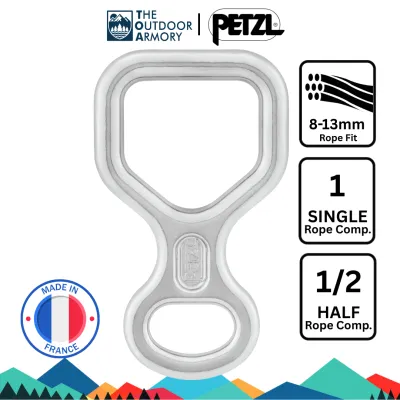
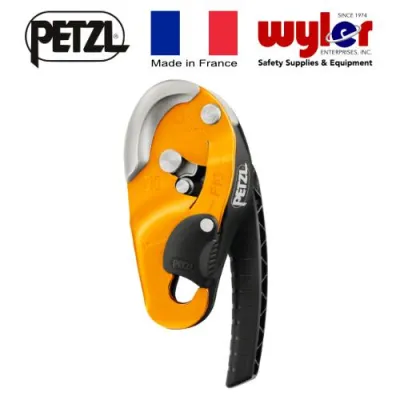
For heavy rigging, industrial rope access, and technical rescue, a self-braking device like the Petzl I’D provides essential mechanical assistance and safety overrides. If you are navigating wet, tropical canyons where rapid friction adjustments and water-shedding designs are paramount, the specialized Petzl Pirana offers tailored control. For traditional multi-pitch climbing, caving, or minimalist alpine descents, the classic simplicity of the Figure Eight remains a reliable, lightweight option.
Identifying Your Descent Environment and Technique
Before selecting a descender, you must analyze the specific environment where you will perform your descents. Vertical activities vary widely in their physical demands, environmental hazards, and rigging complexity. A device designed for dry, vertical rock faces may perform poorly or wear out prematurely when subjected to the grit and moisture of a tropical canyon.
Products mentioned in this guide
Prices are valid at publication and may change. Please refer to the product page for the latest price.
In wet environments, such as the humid waterfalls and river canyons found in tropical regions, water and suspended sediment act as abrasives on both your rope and your hardware. These conditions require a descender that can manage wet, slippery ropes while allowing you to adjust friction on the fly. Conversely, industrial rope access and technical rescue operations demand robust, self-locking mechanisms that can support heavy loads and facilitate hands-free work positioning.
Rope configuration is another critical factor in your decision. You must determine whether your activities require descending on a single rope, double ropes, or twin ropes. Some descenders are strictly designed for single-rope systems, while others accommodate dual-strand rappels, which are common in traditional rock climbing for retrieving your rope from below.
Finally, evaluate your technical proficiency and physical stamina. Friction-based descenders require continuous, active control with your brake hand, demanding high vigilance and physical grip strength. Assisted-braking devices offer mechanical backup but introduce complexity, requiring formal training to prevent rigging errors or panic-induced mistakes.
Comparing Core Petzl Descender Models
Petzl’s descender lineup spans a wide spectrum of mechanical complexity, weight, and intended application. Understanding the design philosophy behind each category helps you narrow down which device matches your primary vertical activities.

Petzl I'D for Assisted Braking and Complex Rigging
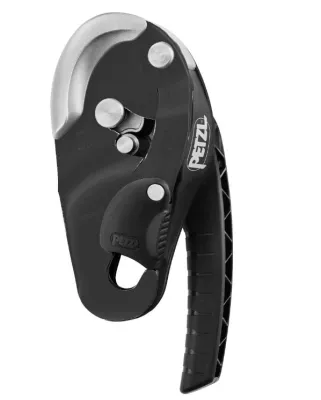
The Petzl I’D family is engineered primarily for technical rescue, work-at-height, and complex rigging systems where safety redundancies are paramount. Its defining feature is an integrated self-braking mechanism that automatically locks onto the rope when the handle is released. This allows the user to position themselves securely without needing to tie off the device.
Additionally, the I’D incorporates an anti-panic function. If the user pulls the control handle too hard—a common panic response during a rapid descent—the device automatically locks to stop the descent. This dual-layer safety system makes it highly valued in high-stress rescue scenarios and industrial environments.
However, this mechanical sophistication requires strict adherence to operational checks. You must verify the exact rope diameter compatibility engraved on your specific device batch before threading the rope. The I’D is calibrated to narrow tolerances, and using a rope outside the specified millimeter range can cause the device to slip or jam.
The primary trade-offs of the I’D are its weight and mechanical complexity. It is significantly heavier and bulkier than friction-based descenders, making it impractical for fast-moving canyoning trips or minimalist alpine climbs. Furthermore, its internal moving parts can become compromised if exposed to excessive sand, mud, or grit, requiring meticulous cleaning and maintenance.
Petzl Pirana for Canyoning and Guided Descent
The Petzl Pirana is a highly specialized descender designed specifically for canyoning and aquatic descents. Unlike mechanical devices, the Pirana is a friction-based tool featuring integrated spurs that allow you to adjust the braking tension before or even during your descent. This flexibility is crucial when transitioning between different water volumes and rope conditions.
In tropical canyoning environments, where humidity is high and ropes are constantly saturated, friction can change rapidly. The Pirana allows you to wrap the rope around its various spurs to increase friction for heavier loads or steeper drops, or reduce it when dealing with stiff, swollen ropes. You should consult the manufacturer’s official diagrams to master these different friction configurations.
Another key advantage of the Pirana is its attachment design. The positioning ring holds the locking carabiner tightly, allowing you to keep the descender permanently attached to your harness while threading the rope. This minimizes the risk of dropping the device into deep pools or fast-moving water during transitions.
However, the Pirana has clear limitations. It is not designed for rescue hauling systems, belaying a leader, or complex multi-pitch rigging where a standard tubular device or figure-eight is preferred. Its open design also means it lacks any self-locking or anti-panic features, placing the responsibility for speed control entirely on your brake hand.
Petzl Figure Eight for Traditional Rappelling
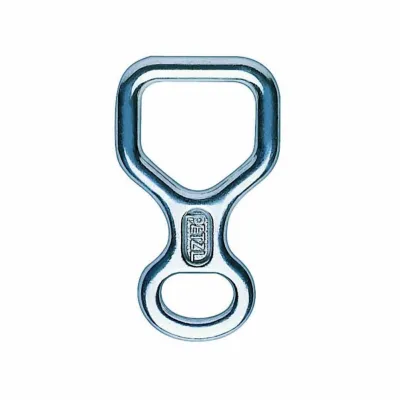
The Petzl Figure Eight represents the classic approach to vertical descent, relying on a simple, solid-aluminum shape to generate friction. Its primary appeal lies in its lightweight design, exceptional durability, and intuitive operation. With no moving parts, it is virtually impervious to mud, sand, and extreme environmental conditions.
This simplicity makes the Figure Eight highly versatile. It easily accommodates double-rope setups, allowing you to rappel down multi-pitch routes and retrieve your ropes efficiently. It also dissipates heat effectively, which is an important consideration during long, continuous descents on dry rock.
To manage friction on a Figure Eight, you must learn the correct threading methods. Threading the rope through the small ring provides standard friction, while alternative rigging methods can increase braking force. Regardless of the configuration, using a backup friction hitch, such as a prusik or autoblock tied below the device, is an absolute necessity to maintain control.
The main limitation of the Figure Eight is its lack of built-in safety mechanisms. It does not offer self-locking capabilities, meaning any loss of control by your brake hand can lead to an uncontrolled descent. It also tends to twist the rope over repeated use, which can complicate rope management on long routes.
Specification Checks and Compatibility Verification
Before purchasing or deploying any Petzl descender, you must perform a series of compatibility checks to ensure it integrates safely with your existing gear. Never assume that a device will work with any rope or carabiner in your kit.
First, verify rope diameter compatibility. Check the exact millimeter range printed directly on the body of your specific device. This range can vary not only between models but also between different generations of the same model. Additionally, consider the rope type; static ropes used in canyoning and caving behave differently under friction than dynamic ropes used in rock climbing.
Second, assess carabiner compatibility. The attachment hole of your descender must accommodate your locking carabiner without restricting its movement. If the carabiner fits too tightly, it can become cross-loaded or cause the gate to rub against the device, potentially forcing the gate open under load. Use only locking carabiners that allow free rotation within the attachment point.
Third, ensure proper harness integration. The descender must connect directly to the harness’s designated belay or rappel loop. Never attach a descender to gear loops, which are not rated for life-safety loads, or directly to tie-in points unless the manufacturer’s manual explicitly instructs you to do so for a specific rigging configuration.
Finally, establish a routine for wear and tear inspection. Inspect your descender before and after every use. Look for deep grooves worn into the metal by rope friction, sharp edges that could damage your rope, or any mechanical play in moving parts. If you detect any of these signs, or if the device has suffered a major impact, it must be retired immediately.
Safety Boundaries and Pre-Descent Protocols
Operating in vertical environments carries inherent risks that no piece of equipment can fully eliminate. Safe descent relies on strict adherence to established protocols, personal judgment, and continuous training.
The backup rule is a non-negotiable safety standard for all friction-based descenders. Always employ a backup friction hitch, such as a prusik or autoblock, attached to your harness loop and minded by your brake hand. This ensures that if you are struck by falling debris, lose your grip, or become incapacitated, the hitch will lock onto the rope and halt your descent.
Environmental hazards require constant vigilance and adaptability. In tropical climates, high humidity and sudden rainstorms can quickly turn a dry rappel into a wet, slippery descent. Wet ropes run faster through descenders, reducing friction and increasing descent speeds. Conversely, mud and grit can clog mechanical devices, causing them to stick or fail to lock properly. Always test the friction of your system at the start of a descent and adjust your technique accordingly.
It is vital to recognize that reading equipment guides or watching instructional videos does not qualify you to operate complex vertical gear. Devices like the Petzl I’D require formal, hands-on instruction from a certified professional to master correct rigging, lock-off procedures, and rescue bypasses.
If you ever encounter inconsistent behavior from your descender during a pre-descent check—such as the rope slipping through a locked device or a handle failing to engage—stop immediately. Do not attempt the descent. Consult the manufacturer’s official technical notice or seek guidance from a qualified professional to resolve the issue before using the gear again.
Frequently Asked Questions (FAQ)
Can I use a Petzl Pirana for standard rock climbing rappels?
While it is physically possible to use the Petzl Pirana for a standard rock climbing rappel, it is not recommended as a primary option. The Pirana’s design, including its friction spurs and tight carabiner attachment ring, is highly optimized for the specific demands of canyoning and single-rope descents. Using it on double-rope setups typical of multi-pitch rock climbing is cumbersome and can complicate rope retrieval. For standard rock climbing, a dedicated tubular belay/rappel device or a classic figure-eight is much more practical and efficient. Always consult the official technical notice for any specific restrictions regarding rope types and configurations.
How do I know when my Petzl I'D needs to be retired?
You must retire your Petzl I’D immediately if it shows signs of significant wear or fails any functional checks. Key indicators include deep grooves worn into the cam or friction plate by the rope, cracks or deformation in the side plates, or sluggish movement in the handle and spring mechanisms. Additionally, if the device has been subjected to a major fall or exceptional load, it must be taken out of service even if no visual damage is apparent. Always refer to the manufacturer’s explicit retirement criteria and lifespan guidelines detailed in the product’s technical notice.
Community discussion
Share your experience or ask a question. Comments are reviewed before publication.