
Selecting the right training equipment is a critical decision that directly impacts your athletic progression and the return on your investment. To choose the perfect model from the Pusun lineup, you must align the machine’s technical capabilities—such as ball speed, spin variety, oscillation patterns, and programmability—with your current skill level and specific training objectives. While a beginner requires stable, predictable feeds to build muscle memory, an advanced player needs high-speed, randomized drills to simulate real match conditions. Matching your profile to these features ensures you do not overpay for complex programming you will not use, or purchase a basic model that you will quickly outgrow.
In the Philippine context, factors like high humidity, court surfaces, and local power standards also play a significant role in your decision. Whether you are practicing on an outdoor clay court in Manila, a private subdivision cement court, or an indoor club facility, understanding how these environmental variables interact with a ball machine’s specifications is essential. By taking a systematic approach to evaluating your needs, you can select a model that serves as an effective, reliable training partner for years to come.
Quick Guide: Matching Skill Levels to Pusun Ball Machine Features
When evaluating a pusun ball machine, identifying your primary training requirements is the first step toward making an informed purchase. Different player profiles require distinct mechanical features to ensure their practice sessions are both productive and engaging. The table below outlines how key machine specifications align with various player skill levels.
Products mentioned in this guide
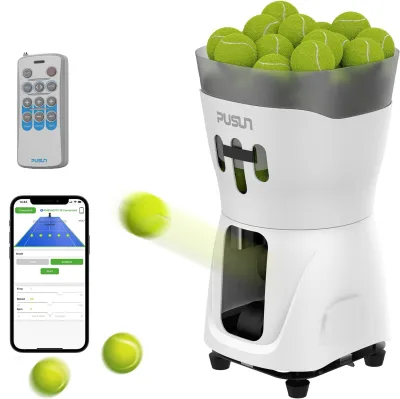
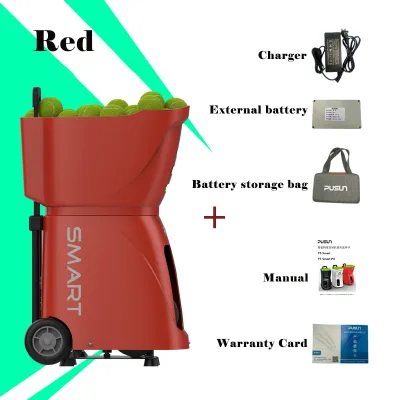
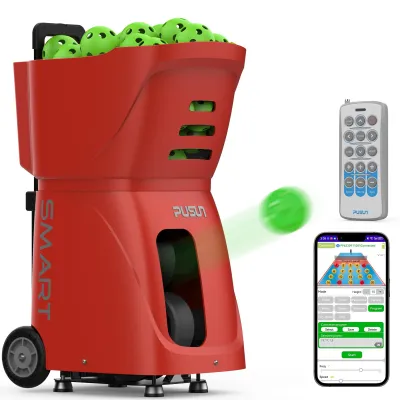
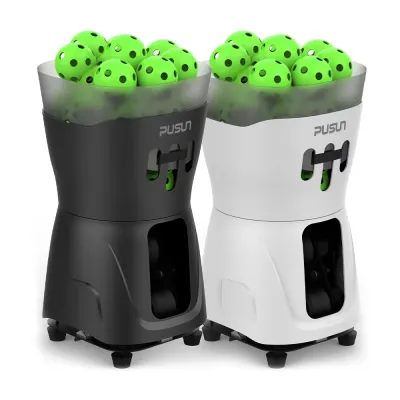
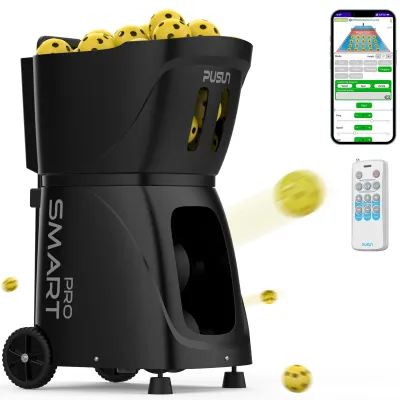
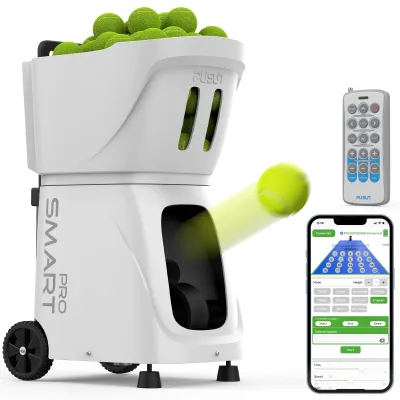
Prices are valid at publication and may change. Please refer to the product page for the latest price.
- Beginners and Casual Players: Require a consistent, predictable ball flight to establish clean contact and basic stroke mechanics. The ideal machine features simple manual controls or a basic remote, single-point feeding, adjustable speed settings, and a lightweight, highly portable design for easy transport and storage.
- Intermediate and Club Players: Need to develop footwork, lateral movement, and the ability to read different spins. The ideal machine features random horizontal oscillation, adjustable vertical trajectory, variable topspin and backspin capabilities, and a dedicated remote control or smartphone app integration for convenient mid-court adjustments.
- Advanced and Competitive Athletes: Focus on match play simulation, high-intensity aerobic conditioning, and tactical patterns. The ideal machine features fully programmable multi-point targeting, high-velocity delivery, heavy spin generation, a large ball hopper capacity, and a robust build quality designed for high-volume daily use.
By focusing on the features that match your current level, you can avoid the common mistake of paying a premium for advanced programming you do not need, or conversely, buying a basic model that fails to challenge your growth as a player.
Defining Your Current Skill Level and Training Goals
An accurate self-assessment of your current playing ability and long-term training goals is essential before investing in a ball machine. Choosing a model based solely on the highest available specifications often leads to unnecessary complexity, while underestimating your progression can leave you with a machine that no longer challenges your skills within a few months of regular practice.

Beginners and Casual Players
For those who are new to racket sports or play primarily for recreation, the primary training objective is to build muscle memory and establish a repeatable swing path. At this stage, you need a machine that delivers the ball to the exact same spot with uniform speed, height, and spin. This consistency allows you to focus entirely on your footwork alignment, contact point, and follow-through without the distraction of having to chase erratic shots across the court.
User-friendly controls are highly beneficial for beginners, as complex programming interfaces can detract from actual practice time. A simple plug-and-play setup allows you to start training immediately. Furthermore, because casual players often practice on residential driveways, subdivision courts, or local parks, portability is a major consideration. A lightweight machine with a compact footprint, a telescoping handle, and sturdy transport wheels makes it easy to load into a car trunk or store in a household closet.
Intermediate and Club-Level Players
Intermediate players have mastered basic stroke mechanics and are shifting their focus toward movement, recovery, and tactical consistency. To progress to the next level, you must train your feet to move before every shot. A machine with horizontal oscillation is invaluable here, as it sweeps the ball from side to side, forcing you to split-step, run, set up, strike, and recover back to the center of the court.
Reading and adapting to spin is another major hurdle for club-level players. Your chosen machine should offer adjustable topspin and backspin settings to simulate realistic opponent groundstrokes, such as heavy baseline drives or low-skidding slices. Having a remote control or smartphone app connectivity is highly advantageous at this stage, allowing you to pause the feed or adjust the speed and interval settings from your hitting position without constantly walking back and forth across the net.
Advanced and Competitive Athletes
Competitive athletes, varsity players, and tournament competitors require a machine that can push their physical and technical limits. Training at this level demands high-velocity feeds and heavy spin rates that accurately mimic the pace of tournament-level play. The machine must be capable of generating aggressive ball speeds and sharp angles to test your reaction time and defensive recovery skills.
Furthermore, advanced training relies heavily on programmable drills that simulate specific match play patterns, such as a deep corner groundstroke followed by a short approach shot and a high volley. A machine with multi-point programmable targeting allows you to design and save these custom sequences. To support these intense, high-volume training sessions, a large ball capacity is necessary to minimize reloading interruptions, and the internal motors must be robust enough to operate continuously under high loads.
Core Specifications to Evaluate in Pusun Models
When comparing different models in the Pusun lineup, you must look beyond marketing descriptions and carefully evaluate the technical specifications listed on the manufacturer’s product label or official spec sheets. Understanding these core metrics will help you determine if a specific model can deliver the exact training experience you require.
- Ball Capacity and Feed Rate: Hopper capacity typically ranges from 80 to over 150 balls. A larger hopper allows for longer, uninterrupted drills, which is particularly important for cardiovascular conditioning and high-volume stroke repetition. The feed rate, or frequency, indicates the time interval between consecutive feeds, usually adjustable from 1.5 to 8 seconds. Faster feed rates are essential for rapid-fire volley practice, while slower rates give beginners ample time to reset their stance.
- Spin and Speed Range: Pusun machines utilize a dual-roller friction wheel system to propel the ball. By adjusting the relative rotational speed of the upper and lower wheels, the machine can generate pure topspin, heavy backspin, or flat, spin-free shots. When evaluating models, check the maximum speed capability (often measured in kilometers per hour) and the granularity of the spin adjustments. High-end models allow you to fine-tune the spin intensity to match the heavy, dipping balls encountered in competitive matches.
- Oscillation and Placement: This specification defines how the machine distributes balls across the court. Basic models offer fixed-point feeding or simple horizontal oscillation. Mid-range models introduce vertical oscillation to vary the depth of the ball, as well as pre-set 2-line or 3-line drills that alternate feeds between specific court positions. Premium models offer fully customizable multi-point targeting, allowing you to program a sequence of shots to precise coordinates on the court via a software interface.
- Power Source and Portability: You must choose between AC-powered models, battery-powered models, or hybrid units that support both. Rechargeable lithium-ion batteries provide the ultimate portability, allowing you to train on public courts or remote facilities that lack electrical outlets. When evaluating battery models, verify the estimated runtime under normal operating conditions (typically 2 to 4 hours) and check the machine's total weight. A heavy machine without a well-designed trolley system can be difficult to transport over grass, gravel, or steep ramps.
- Control Interface: The method used to adjust the machine's settings directly affects your training flow. Manual dials located on the back of the machine are reliable but require you to walk around the net to make changes. Handheld remote controls offer basic adjustments from the opposite baseline. Smartphone app integration via Bluetooth or Wi-Fi represents the most advanced interface, providing a visual grid to program complex custom drills, track your training history, and receive firmware updates.
How to Select the Right Pusun Model for Your Needs
Selecting the ideal model requires a balanced approach that weighs technical specifications against your budget, local support, and physical training environment. By systematically addressing these practical considerations, you can make a purchase that provides long-term value and minimizes potential ownership headaches.
First, carefully cross-reference the manufacturer’s official specification sheet against the skill-level requirements you have defined. If you are a beginner, look for a model that prioritizes a lightweight frame and intuitive manual controls over complex programming. If you are an intermediate player, ensure the model you choose offers reliable horizontal oscillation and adjustable spin, as these features are non-negotiable for intermediate footwork and stroke development.
Second, establish a realistic budget that reflects your actual training frequency and needs. In the Philippine market, entry-level ball machines generally range from ₱30,000 to ₱50,000, making them an accessible option for casual home use. Mid-range club models with robust oscillation and remote controls typically fall between ₱60,000 and ₱90,000, while premium professional units with full app programmability can exceed ₱100,000. Avoid the temptation to pay a premium for advanced features if your primary goal is simple, consistent repetition.
Third, verify local availability, warranty coverage, and after-sales support before finalizing your purchase. Buying a heavy, complex electronic device through unauthorized channels or overseas sellers can carry significant risks. It is highly recommended to purchase through authorized local distributors or official brand stores in the Philippines. This ensures that you receive a compatible 220V power adapter, a valid local warranty, and direct access to replacement parts such as feed wheels, internal motors, and replacement batteries. Shipping a large machine internationally for repairs is incredibly costly and time-consuming.
Finally, assess your physical training environment and storage constraints. Measure your primary training area—whether it is a private backyard court, a subdivision clubhouse, or an indoor sports hall—to ensure the machine’s footprint and maximum ball trajectory clearance fit the space. If you plan to use the machine in a residential area or a half-court setup, look for a model that offers highly adjustable speed and trajectory settings to prevent balls from flying over perimeter fences and causing damage or injury.
Setup, Safety, and Maintenance in Tropical Climates
Operating and maintaining a ball machine in a tropical climate like the Philippines requires specific precautions to protect your investment and ensure user safety. High ambient temperatures, intense humidity, and salt air in coastal regions can accelerate the wear of electronic and mechanical components if the machine is not properly cared for.
Safe Setup and Operation
Before starting any training session, conduct a thorough safety sweep of the court area. Clear away any loose balls, leaves, twigs, or debris that could cause you to slip or trip during fast-paced movement drills. Position the machine on a flat, stable surface at the opposite side of the net, ensuring it is properly aligned with the court lines. If you are using an AC power adapter, route the extension cord safely along the sidelines and secure it to prevent tripping hazards. Always read your specific model’s user manual to verify the correct startup sequence and voltage requirements before plugging the unit into a power source.
Because a ball machine can launch balls at high velocities, never stand directly in front of the machine while it is turned on or during its startup sequence. If you need to adjust the machine’s physical position or clear a ball jam, always power down the unit completely and wait for the internal friction wheels to come to a complete stop. Additionally, remember that a ball machine is a training aid and cannot replace proper physical conditioning; always warm up thoroughly before starting high-intensity drills to prevent muscle strains or joint injuries.
Climate-Specific Care
The high humidity and heat characteristic of the Philippines can take a toll on both the electronic control boards and the rubber feed wheels of your machine. Sweat from your hands can also transfer to the balls and eventually build up inside the machine. To mitigate these risks, follow these climate-specific care guidelines:
- Wipe Down After Use: After every training session, use a dry, clean microfibre cloth to wipe down the exterior casing, the inside of the ball hopper, and any accessible internal surfaces to remove sweat, dust, and moisture.
- Store Indoors: Never leave your machine outdoors, in a damp storage shed, or in a hot garage. Store the unit in a dry, well-ventilated, climate-controlled indoor room to prevent moisture condensation on the electronic circuit boards, which can lead to short circuits or corrosion.
- Protect from Rain: Tropical rain showers can develop quickly. Never operate the machine in wet conditions, and keep a waterproof cover nearby to protect the unit if you need to transport it during a sudden downpour.
Routine Cleaning and Inspection
Over time, felt fibers from tennis balls or dust from table tennis balls will accumulate on the machine’s internal feed mechanism and rubber friction wheels. This buildup creates a smooth, slippery layer on the wheels, which can cause ball slippage, reduced speed, and inconsistent spin delivery. To maintain peak performance, inspect the friction wheels regularly:
- Clean the Wheels: Use a soft-bristled brush or a slightly damp cloth to gently scrub away accumulated felt dust and dirt from the rubber rollers. Avoid using harsh chemical solvents, as they can degrade the rubber compounds.
- Check for Wear: Inspect the wheels for signs of uneven wear, cracking, or hardening. Worn wheels must be replaced according to the manufacturer's guidelines to restore consistent ball grip and trajectory accuracy.
- Clear the Feed Path: Periodically check the internal carousel or feed tray for small debris, leaves, or broken ball fragments that could obstruct the feeding mechanism and cause internal jams.
Battery Care
Rechargeable lithium-ion batteries require careful management, especially when exposed to high ambient temperatures. To maximize your battery’s lifespan and ensure safe operation, observe the following best practices:
- Avoid Complete Depletion: Do not run the battery down to 0% charge. Recharge the battery after every training session, or when the charge indicator drops to around 20%.
- Cool Down Before Charging: Never plug the battery into a charger immediately after a long, intense training session while the unit is still hot. Allow the machine and battery to cool down to ambient room temperature first.
- Storage Charge: If you plan to store the machine unused for an extended period (such as several weeks or months), store it with the battery charged to approximately 50% to 60%. Storing a lithium battery completely full or completely empty for long periods can permanently reduce its total capacity.
- Charge in a Safe Area: Always charge the battery in a shaded, well-ventilated indoor area away from direct sunlight, flammable materials, or moisture sources.
Frequently Asked Questions (FAQ)
What type of balls should I use with a Pusun machine?
It is highly recommended to use sport-specific balls designed for the machine type. For tennis machines, pressureless tennis balls are the ideal choice because they maintain their bounce, weight, and structural shape much longer than standard pressurized balls, ensuring highly consistent delivery over hundreds of firing cycles. For table tennis machines, use high-quality, standard-sized balls that match the machine’s feed specifications. Always avoid using wet, heavily worn, soft, or dirty balls, as they can easily jam the internal feeding mechanism, cause erratic trajectories, and accelerate the wear of the rubber friction wheels.
How often should I clean the internal ball feed mechanism?
As a general rule, you should perform a basic cleaning of the ball hopper and visible feed wheels after every 10 to 15 hours of use, or roughly once a month if you train casually. If you regularly practice on dusty outdoor courts or clay courts where fine particles easily transfer to the balls, more frequent cleaning is required. A quick inspection and wipe-down after every session will prevent dirt from building up. Always consult your specific Pusun model’s user manual for detailed, step-by-step cleaning and disassembly instructions to avoid accidentally damaging internal components or voiding your manufacturer’s warranty.
Is a remote control or app connectivity necessary for intermediate players?
While not strictly mandatory for basic hitting practice, a remote control or smartphone app connectivity significantly improves your training efficiency and overall experience. It allows you to pause the ball feed, adjust the speed, modify the spin, or change the oscillation pattern from the opposite side of the court without having to constantly walk back and forth. This saves valuable training time, keeps your heart rate elevated during cardiovascular drills, and prevents unnecessary physical interruptions, allowing you to focus entirely on your footwork, technique, and recovery.
Community discussion
Share your experience or ask a question. Comments are reviewed before publication.