
Selecting a tennis training equipment set requires a clear understanding of how racket specifications affect your swing. Instead of choosing a bundle based solely on price or color, you must prioritize specific features that match your physical strength and skill level. For beginners, head size and overall weight are the most critical factors to ensure a forgiving learning curve. Intermediate and advanced players must focus on balance and grip size to refine their control and prevent physical strain during long practice sessions.
Assess Your Tennis Skill Level Before Choosing a Set
To find the right equipment, start by objectively evaluating your current playing habits. Track how often you play each month, whether it is a casual weekend hit on a local concrete court or structured weekly training sessions. Consider your typical rally length; if you struggle to keep the ball in play for more than three consecutive strokes, your equipment needs to prioritize forgiveness over precision.
Pay close attention to how your arm feels after a session. High humidity and tropical heat can accelerate physical fatigue, making a heavy or poorly balanced racket feel twice as heavy after thirty minutes of play. If you experience immediate wrist or elbow discomfort, your current gear may not match your physical baseline.
Products mentioned in this guide
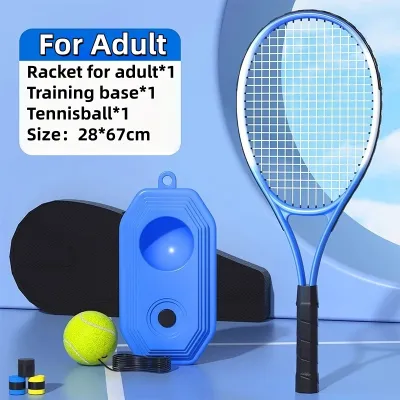
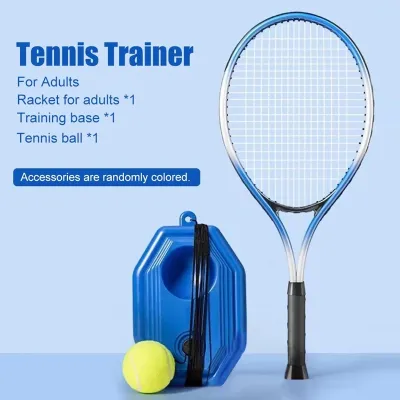
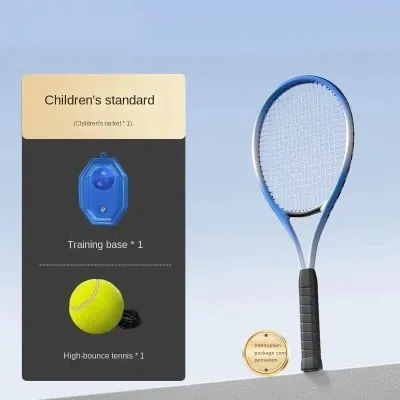
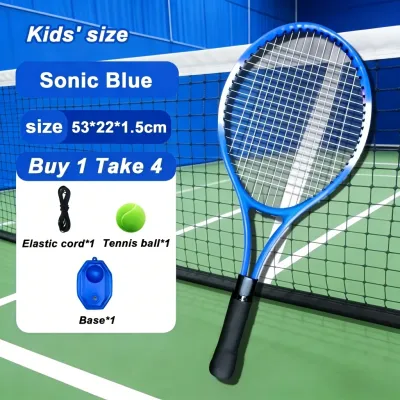
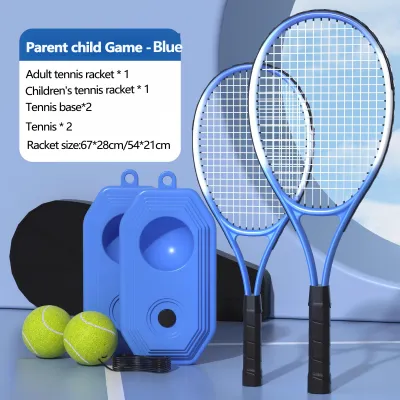
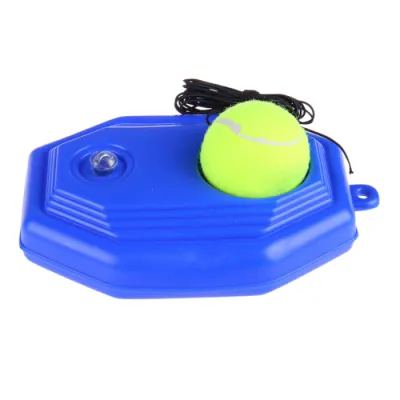
Prices are valid at publication and may change. Please refer to the product page for the latest price.
Categorizing your skill level helps narrow down your options. Beginners require maximum power and a large hitting area to build confidence and establish clean contact. Intermediate players generally look for a balanced frame that allows them to transition from defensive play to controlled, faster swings. Advanced players prioritize maneuverability and precision, requiring a setup that responds accurately to subtle wrist adjustments and high swing speeds. Your current ability dictates which specifications you must check first when unboxing or evaluating a new training bundle.
Match Racket Weight and Balance to Your Swing
Racket weight directly influences how much effort is required to swing and how stable the frame remains upon impact. When evaluating a tennis training equipment set, check the manufacturer tags or product specifications for the static weight, which is typically measured in grams. A lighter racket is easier to swing quickly, making it highly maneuverable for players who are still developing their forearm strength. However, a frame that is too light can transmit excessive shock to your wrist and elbow when hitting a fast-moving ball.

Conversely, a heavier racket provides more stability and absorbs more shock, but it requires proper swing mechanics and physical conditioning to prevent fatigue. For players practicing in warm, humid conditions, managing fatigue is essential to maintaining proper form and avoiding injury. If you choose a heavy frame without the necessary physical preparation, your swing speed will drop, and your technique will suffer as the session progresses.
Balance is another critical specification that determines how the weight is distributed across the frame. You can identify the balance point by performing a simple physical handling test. Place the throat of the racket on your index finger to find where it balances naturally.
- Head-Light Balance: The weight is concentrated closer to the handle. This setup makes the racket feel lighter and easier to maneuver at the net, which is highly beneficial for intermediate players refining their volleys.
- Even Balance: The weight is distributed equally between the head and the handle. This offers a versatile middle ground for players who want a blend of power from the baseline and control near the net.
- Head-Heavy Balance: The weight is concentrated toward the top of the frame. This design helps generate more momentum and power during groundstrokes, making it a common choice for beginners who need assistance with depth and ball speed.
Understanding these trade-offs is vital for your physical safety. Avoid selecting an overly heavy racket that strains your shoulder, but also steer clear of extremely light, stiff frames that fail to absorb impact shock.
Verify Grip Comfort and Head Size for Your Game
The grip size of your racket affects both your control over the ball and your physical comfort. Using a handle that is too small or too large forces your hand to squeeze tighter than necessary, which can lead to wrist strain and tennis elbow. To verify the grip size of a racket in a training bundle, perform the standard finger-gap test. Hold the racket in your dominant hand using a continental grip, then attempt to slide the index finger of your opposite hand into the space between your ring finger and palm.
If there is not enough room for your index finger, the grip is too small. If there is a large gap remaining after inserting your finger, the grip is too large. You can also check the handle labels, which typically range from size 0 (for smaller hands) to size 5 (for larger hands).
Head size is another specification that directly impacts your performance on the court. Racket heads are generally categorized into three main sizes:
- Oversized (105 square inches or larger): These frames provide a massive sweet spot, which offers maximum forgiveness on off-center hits. This is highly recommended for beginners who are still learning to judge ball bounce and timing.
- Midplus (98 to 104 square inches): This range offers a balanced combination of power and control, making it suitable for intermediate players who want to transition to more precise shot placement.
- Midsize (97 square inches or smaller): These heads provide excellent control and maneuverability but require highly consistent swing mechanics, making them suitable primarily for advanced players.
When evaluating a training set, keep in mind the limits of adjustability. If a racket handle is slightly too small, you can easily wrap an overgrip around it to increase the thickness and improve sweat absorption in humid weather. However, if the handle is too large, it is virtually impossible to reduce its size, meaning you should reject the set in favor of one that fits your hand correctly.
Evaluate the Auxiliary Gear in the Training Bundle
A complete tennis training equipment set often includes several non-racket components that are designed to support your practice sessions. Before purchasing, evaluate the quality of these auxiliary items to ensure they offer genuine utility. Start by checking the tennis balls included in the bundle. Ensure they are suited for your intended playing surface, whether you practice on concrete, asphalt, or clay. In humid climates, low-quality felt can quickly become waterlogged and heavy, so look for durable, weather-resistant outer felt.
Next, inspect the accessories provided in the set. Useful bundles often include vibration dampeners, which clip onto the strings to reduce frame vibrations, and sweatbands, which are essential for keeping sweat off your hands during intense outdoor practices. A durable carrying bag is also important for protecting your gear from dust and moisture when traveling to and from the court.
Finally, perform a quick value assessment. Compare the price of the entire bundle, which often ranges from ₱1,500 to ₱4,000, against the cost of purchasing a standalone racket and separate high-quality accessories. If the included balls and accessories are of low quality, it may be more practical to buy a dedicated racket and select your training aids individually.
Frequently Asked Questions (FAQ)
Can I upgrade just the racket later if I buy a beginner training set?
Yes, upgrading your racket while keeping the rest of your training gear is a common progression strategy. As your skills improve, you will notice clear signs that you have outgrown your beginner racket, such as developing consistent swing power that causes balls to fly out of bounds, or noticing that the frame flexes too much under high-speed impacts. When this happens, you can continue using the bundled carrying bag, vibration dampeners, and training balls while investing in a standalone, performance-oriented racket that matches your advanced swing speed.
Do standard training sets include rackets suitable for competitive matches?
Most standard training sets are designed for recreational play and skill development rather than competitive tournament matches. To determine if a bundled racket is match-ready, check the manufacturer specifications for the frame’s material composition. Rackets made of aluminum alloy are highly durable and cost-effective for beginners, but they transmit more vibration and offer less control. For competitive matches, look for rackets constructed from graphite or carbon fiber composites, as these materials provide the structural stiffness and feedback required for precise, high-intensity play.
Community discussion
Share your experience or ask a question. Comments are reviewed before publication.