
Selecting the right badminton shuttlecock is the most direct way to improve your game, manage your budget, and prevent unnecessary frustration on the court. For players looking at the Russ brand, the ideal model depends on three primary factors: your current skill level, your playing environment, and how much you prioritize durability over flight precision.
If you are a beginner or casual player practicing outdoors, a Russ nylon shuttlecock is the most practical choice due to its high durability and resistance to mishits. Intermediate and advanced players who train indoors or compete in tournaments will benefit more from Russ feather shuttlecocks, which offer the authentic flight trajectory, spin, and deceleration required for precise shot-making. Additionally, matching the speed rating of your shuttlecock to the local temperature and humidity is essential for maintaining a consistent game.
Identifying Your Play Style and Skill Level
Before browsing specific models, you must evaluate your regular playing habits and court conditions. Casual backyard games, street play, and open-air barangay courts present environmental challenges like wind and rough surfaces. These settings demand a highly resilient shuttlecock that can withstand contact with rackets, ground surfaces, and unpredictable gusts without losing its shape.
Products mentioned in this guide
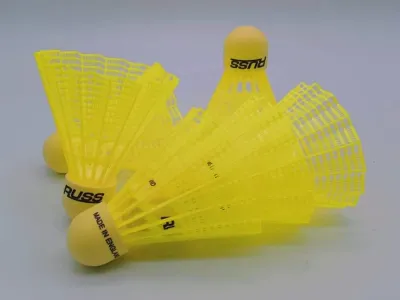
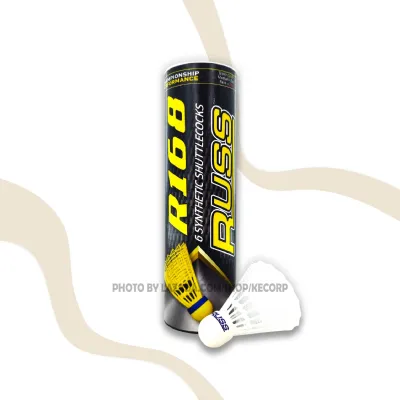
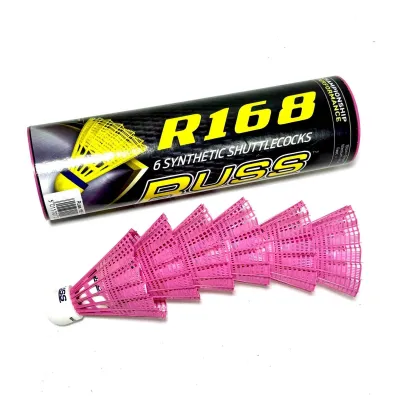
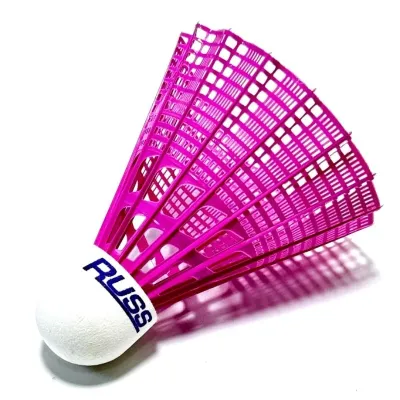
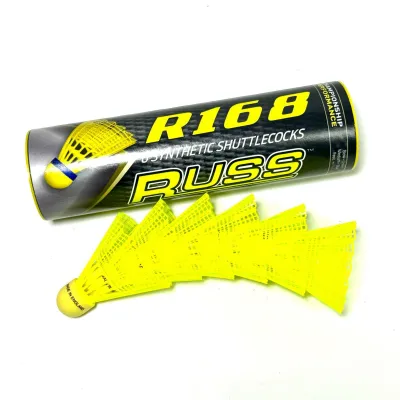
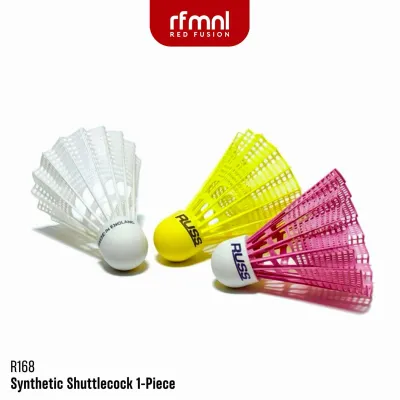
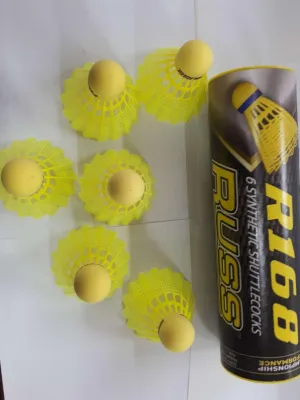
Prices are valid at publication and may change. Please refer to the product page for the latest price.
Regular club training and indoor court sessions introduce a different set of requirements. In these environments, players focus on developing consistent stroke mechanics, footwork, and tactical rallies. The shuttlecock needs to fly predictably so that you can accurately assess your hitting power and technique. If you are training multiple times a week, the rate at which you consume shuttlecocks will heavily influence your overall sports budget.
Competitive tournament play represents the highest tier of demand. Here, players require absolute consistency in flight path, speed, and weight. A single deformed feather or an uneven cork base can alter the trajectory of a smash or a delicate net drop, potentially costing a crucial point. For competitive scenarios, performance consistency always takes precedence over long-term durability.
Your hitting power and physical technique also dictate your material needs. Beginners often hit the shuttlecock with the frame of the racket or slice across the feathers due to incomplete timing. These off-center strikes can instantly ruin a delicate feather shuttlecock, whereas a synthetic model will easily survive. Calculating your budget per session in Philippine Pesos (₱) will help you decide whether the premium feel of natural feathers is worth the frequent replacement cost.
Feather vs. Nylon: Choosing the Right Russ Material
The fundamental choice between feather and nylon shuttlecocks shapes your entire playing experience. Natural feathers and synthetic nylon skirts behave differently in the air due to their physical structure and aerodynamic drag. Understanding these differences allows you to transition between materials at the right stage of your athletic development.

Feather shuttlecocks experience high initial speed off the racket face followed by a rapid, predictable deceleration as they reach the peak of their arc. This unique flight profile allows for tight net play, sharp drops, and powerful smashes that stay within the court boundaries. Nylon shuttlecocks, by contrast, tend to fly in a more parabolic path, maintaining their speed longer and dropping more slowly, which can make precise baseline clears more challenging to control.
While nylon models lack the refined flight characteristics of natural feathers, they offer a significantly lower cost-per-hour of play. A single nylon shuttlecock can often last for multiple sessions, whereas a single tube of feather shuttlecocks might be consumed in a single evening of intense intermediate play. Transitioning to feathers is highly recommended once you can consistently strike the center of the racket string bed without damaging the shuttlecock’s skirt.
Nylon Shuttlecocks for Beginners and Casual Play
Nylon shuttlecocks are engineered to withstand the learning curve of developing players. The synthetic skirt is flexible, allowing it to bend upon impact with the racket frame and quickly snap back into its original aerodynamic shape. This resilience makes them highly forgiving during fast-paced drills where mishits are common.
The flight pattern of a nylon shuttlecock is generally faster and more continuous than that of a feather model. Because the synthetic skirt does not compress or expand in the same manner as natural feathers, it does not create the same level of aerodynamic drag. While this differs from tournament standards, it provides a consistent and reliable flight path that helps beginners focus on timing, footwork, and basic stroke production.
These characteristics make nylon models ideal for outdoor recreational play, school physical education classes, and casual family games. If you are playing on concrete courts, windy parks, or multi-purpose gymnasiums without wind screens, the durability of nylon ensures your game is not constantly interrupted by broken equipment.
Feather Shuttlecocks for Intermediate and Advanced Players
For players who have mastered basic stroke mechanics, feather shuttlecocks are essential for advanced skill development. The natural structure of goose or duck feathers allows the shuttlecock to spin rapidly along its longitudinal axis during flight. This spin stabilizes the trajectory, ensuring that every clear, drop, and smash behaves exactly as intended.
The authentic deceleration of a feather shuttlecock is particularly critical for net play and defensive recovery. When you perform a delicate net drop, the feathers flare slightly to slow the shuttle down, allowing it to tumble tightly over the net tape. This level of control is virtually impossible to replicate with synthetic skirts, making feathers the non-negotiable standard for competitive matches and advanced coaching.
However, this superior performance comes with the trade-off of extreme fragility. Natural feathers are highly susceptible to cracking, bending, and splitting, especially when exposed to dry air or powerful, off-center smashes. To maintain their structural integrity, feather shuttlecocks require careful handling, proper storage, and occasional humidification before they are brought onto the court.
Decoding Speed Ratings for Weather Conditions in the Philippines
Shuttlecock speed ratings are represented by a standardized numbering system, typically ranging from 75 to 79 (or sometimes 1 to 5). These numbers indicate the weight and aerodynamic drag of the shuttlecock, which directly affect how far it will fly when struck with a standard amount of force. Choosing the correct speed rating is crucial for ensuring that your shots land where you expect them to.
Environmental factors such as temperature, humidity, and altitude play a massive role in shuttlecock flight trajectory. Warm air is less dense than cold air, which means there is less atmospheric resistance to slow the shuttlecock down. High humidity also reduces air density because water vapor is lighter than dry air molecules. Consequently, a shuttlecock will fly faster and further in hot, humid conditions than it will in a cool, dry environment.
In the tropical climate of the Philippines, where temperatures and humidity levels are consistently high, shuttlecocks naturally fly faster. To compensate for this, players at sea level or in non-air-conditioned indoor courts should select slower speed ratings, such as speed 76 or 77. Using a speed rating that is too fast for the local climate will cause your baseline clears to consistently fly out of bounds, forcing you to hold back on your swings and ruining your natural stroke mechanics.
Conversely, if you are playing in a heavily air-conditioned indoor sports center or at a higher altitude, the denser air will slow the shuttlecock down. In these specific environments, you will need a faster speed rating, such as speed 78 or 79, to achieve a natural flight distance. Keeping a close eye on your playing venue’s temperature will help you select the perfect tube of Russ shuttlecocks for the day.
Evaluating Russ Shuttlecock Models: A Buyer's Checklist
When shopping for Russ shuttlecocks, you should use a structured evaluation process rather than relying on generic recommendations. Because different models cater to distinct budgets and performance needs, inspecting the physical specifications of each tube will guide you to the right purchase.
Feather Grade and Material
- Goose Feathers: Look for models specifying goose feathers if you require the highest level of flight consistency and durability. Goose feathers have thicker, stronger shafts that resist splitting during high-velocity smashes.
- Duck Feathers: Select duck feather models for intermediate training and club play. While slightly less durable than goose feathers, they offer a highly comparable flight path at a more accessible price point.
- Nylon Skirt Quality: For synthetic models, inspect the thickness and flexibility of the nylon skirt. High-quality nylon should feel pliable but resilient, quickly returning to its conical shape when compressed.
Cork Base Construction
- Solid Natural Cork: This is the premium standard found in high-end tournament models. It provides the most consistent rebound, excellent tactile feedback, and optimal weight distribution, though it is more sensitive to moisture damage.
- Composite Cork: Featuring a layer of natural cork paired with a synthetic or reconstituted wood backing, composite cork offers a balanced middle ground. It provides a reliable feel and improved durability for regular club training.
- Synthetic Foam or Rubber: Typically found in beginner-friendly nylon models, synthetic bases are incredibly durable and waterproof. While they do not offer the same crisp feel as natural cork, they are virtually indestructible on the court.
Manufacturing and Storage Indicators
- Batch Codes: Check the bottom of the tube or the packaging seal for manufacturing batch codes. Freshly manufactured shuttlecocks retain their natural moisture, making them much less brittle than older stock that has sat on shelves for months.
- Visual Inspection: If purchasing in person, look down the tube to verify that the feathers are perfectly aligned, free of yellowing, and that the adhesive binding the feathers to the cork is clean and evenly applied.
Purchasing Tips and Authenticity Checks
To ensure you are getting genuine Russ shuttlecocks that perform as designed, it is important to buy from trusted sources. Counterfeit sports equipment is common in online marketplaces, and low-quality imitations will quickly fall apart, costing you more money in the long run. Always prioritize official brand stores, authorized local sports retailers, or highly rated specialty badminton shops.
When your shuttlecocks arrive, perform a quick unboxing inspection before heading to the court. Check that the tube’s end caps are securely sealed and that the brand labels are crisp and free of printing errors. Once open, gently slide a shuttlecock out and inspect the feather alignment; the feathers should form a perfect, symmetrical cone with no overlapping gaps or loose threads in the binding twine.
Proper storage at home is the final step in maximizing the lifespan of your purchase. Keep your shuttlecock tubes stored vertically with the cork ends pointing downward to prevent the feathers from warping under their own weight. Store them in a cool, dark place away from direct sunlight, air conditioning vents, or hot car trunks, as extreme temperature fluctuations will dry out the natural oils in the feathers and make them highly brittle.
Frequently Asked Questions (FAQ)
How can I make my feather shuttlecocks last longer?
To extend the lifespan of your feather shuttlecocks, you can introduce moisture back into the feathers before playing. A common and safe method is to place a lightly damp sponge or cloth inside the top cap of the shuttlecock tube a few hours before your session, ensuring the moisture does not directly touch the cork bases. This humidification process makes the feather shafts more flexible and less prone to snapping upon impact. Avoid soaking the shuttlecocks in water, exposing them to direct heat sources, or using heavy steam, as excessive moisture can ruin the glue and alter the weight of the cork. Additionally, rotate your shuttlecocks during practice sessions rather than using a single one until it completely breaks, allowing the feathers to recover their shape between rallies.
Can I use the same speed rating year-round?
It is generally not recommended to use the same speed rating year-round if you frequently switch between different playing environments. During the hot and humid summer months in the Philippines, a slower speed rating (such as 76) is ideal to prevent the shuttlecock from flying too long. During the cooler rainy season or when playing in heavily air-conditioned indoor courts, you may need to switch to a faster speed rating (such as 77 or 78) to maintain a natural flight distance. If you notice your baseline clears are consistently falling short despite hitting with proper technique, or if you are constantly struggling to keep your drops inside the court, it is a clear sign that you need to adjust your speed rating. Keeping tubes of two different speeds in your gear bag ensures you are always prepared for changing court conditions.
Community discussion
Share your experience or ask a question. Comments are reviewed before publication.