
Choosing a scooter kids 3 to 12 years old love to ride requires balancing developmental milestones with physical design. While the age brackets printed on packaging offer a helpful starting point, your child’s coordination, balance, and the local riding environment are the true indicators of the safest, most enjoyable choice. Navigating the transition from a highly stable 3-wheel configuration to a fast-rolling 2-wheel kick scooter, or even a motorized electric model, is a major milestone in a child’s active play journey.
Understanding the physical progression of scooter riding helps prevent both frustration and injury. A toddler starting on a scooter that is too advanced will likely lose confidence and abandon the toy, while an older child on an undersized 3-wheeler will miss out on key balance-building opportunities. By diagnosing your child’s physical readiness and matching it to the right mechanical specifications, you can select a ride that supports their growth and keeps them safe on the pavement.
Assess Your Child's Readiness: Balance, Coordination, and Age
Before focusing on specific models or colors, observe your child’s physical development during daily play. Chronological age is a convenient guideline, but motor skills develop at different rates. A reliable indicator of readiness for a standalone kick scooter is whether your child can stand steadily on one foot for three to five seconds. This basic balance check is crucial because scooter riding requires a child to support their entire weight on one leg while the other foot pushes off the ground.
Products mentioned in this guide
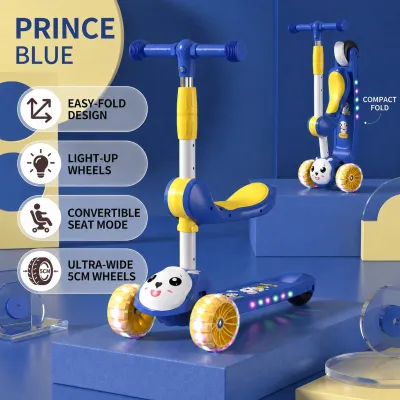
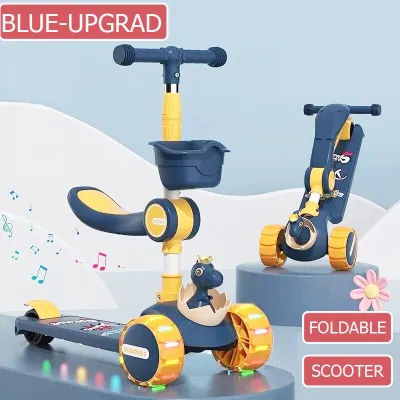
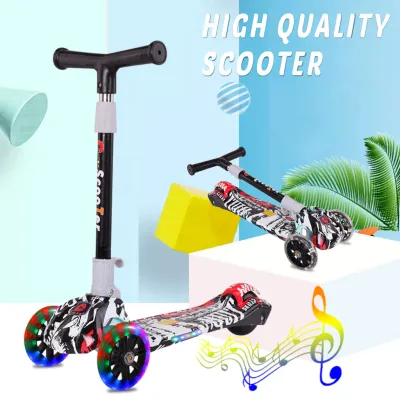
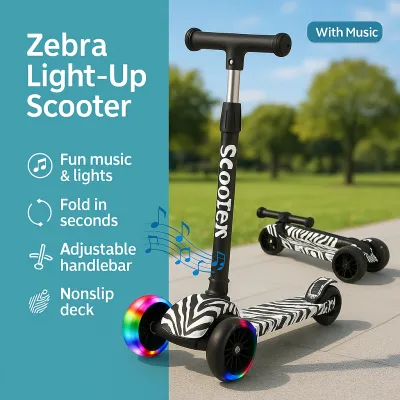
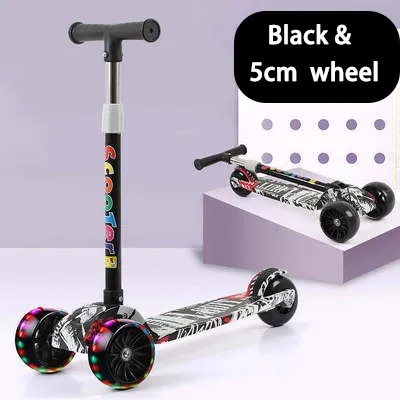
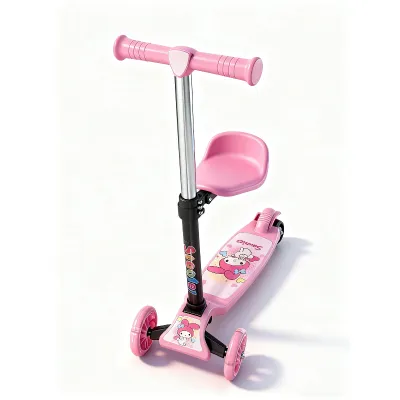
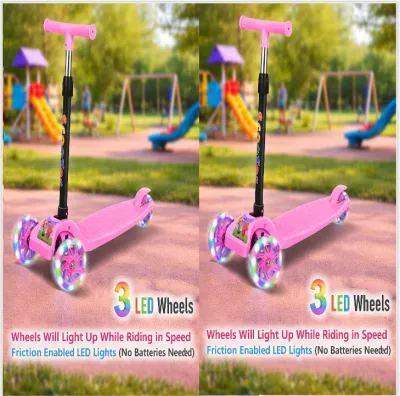
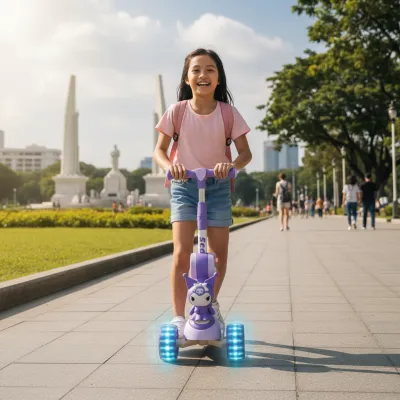
Prices are valid at publication and may change. Please refer to the product page for the latest price.
Leg strength and bilateral coordination are also essential components of a successful ride. Your child must be able to push forward with one leg and then transition that foot onto the deck to glide, all while maintaining their center of gravity. If they struggle to run smoothly or frequently trip over their own feet during regular play, they may need more time to develop their gross motor skills before stepping onto a wheeled platform.
Cognitive readiness and spatial awareness are just as important as physical strength. A child must be able to spot obstacles ahead—such as a sudden dip in the concrete, a stray stone, or a puddle—and react in time to steer around them or brake. They should also demonstrate the ability to follow simple, immediate safety instructions, such as stopping instantly when you call out. If a child tends to ride blindly without looking ahead, they require close supervision on a highly stable platform.
Transitioning from a low-slung ride-on toy to a standing scooter is a significant step. Ride-on toys keep the child’s center of gravity very low and allow both feet to remain near or on the ground at all times. A standing scooter forces the child to stand upright, raising their center of gravity and requiring dynamic balance. If your child can confidently steer a three-wheeled ride-on toy at speed without tipping over, they are likely ready to transition to a standing 3-wheel scooter.
3-Wheel Scooters: Stability for Toddlers and Beginners (Ages 3-5)
For children between the ages of 3 and 5, a 3-wheel scooter is almost always the most appropriate starting point. The primary advantage of a three-wheel configuration is its static stability; the scooter stands upright on its own without requiring the rider to maintain balance. This structural support allows toddlers to focus entirely on learning the basic mechanics of pushing with one foot and steering, building their confidence without the fear of tipping over sideways.

When exploring 3-wheel options, you will encounter two distinct steering mechanisms: lean-to-steer and traditional fixed-handlebar steering. Lean-to-steer models feature two wheels in the front and one in the back. To turn, the child leans their body weight to the left or right, which gently pivots the front wheels. This design is highly recommended because it teaches intuitive weight-shifting and core balance, laying an excellent foundation for future bicycle and skateboard riding. Traditional fixed-handlebar models, which often have one wheel in the front and two in the back, turn like a bicycle. While simple to understand, they can tip over if a child turns the handlebars too sharply while moving quickly.
Before purchasing, verify several key specifications on the product label to ensure a safe match for your child. Check the maximum weight limit, which typically ranges from 20 kg to 50 kg for toddler models. Inspect the deck width; a wider deck is highly beneficial for beginners because it provides ample space for a child to place both feet side-by-side when coasting. Finally, ensure the handlebar is height-adjustable. The T-bar should adjust easily to grow with your child, ensuring they do not have to hunch over or reach awkwardly high to steer.
Quality entry-level 3-wheel scooters in the Philippines generally range from ₱1,500 to ₱3,500. When choosing, look for models with durable fiberglass-reinforced decks and high-rebound polyurethane wheels, which absorb vibrations from rougher pavements. Avoid cheap, brittle plastic alternatives that can crack under sun exposure or heavy impact.
2-Wheel Scooters: Building Skills for Older Kids (Ages 5-12)
As children reach school age, typically between 5 and 12 years old, they begin outgrowing the physical limits of a 3-wheel scooter. You will know it is time to transition to a 2-wheel model when your child starts seeking higher speeds, complains that their 3-wheeler is too slow, or finds the wide turning radius of a lean-to-steer model too restrictive for tight corners. If their knees are consistently knocking against the handlebars even at the highest setting, or if they exceed the manufacturer’s weight limit, an upgrade is necessary.
Switching to a 2-wheel scooter introduces the challenge of dynamic balance, where the rider must keep the scooter upright through continuous movement and subtle steering adjustments. This transition actively improves core strength, ankle stability, and overall agility. Because 2-wheelers can travel much faster and turn sharply, they offer a more engaging and physically rewarding experience for older kids who have mastered basic coordination.
When selecting a 2-wheel scooter, wheel size is a critical specification to consider. Smaller wheels (typically 100mm to 120mm) are highly agile, lightweight, and perfect for smooth concrete surfaces or local skateparks. However, they transmit a lot of vibration on uneven ground. Larger wheels (145mm to 200mm) roll much more smoothly over cracks, small stones, and the rough asphalt common in suburban Philippine neighborhoods, providing a safer and more comfortable ride over longer distances.
Additionally, evaluate the deck grip and the folding mechanism. The deck should be lined with high-grit safety tape to prevent slipping, especially during humid afternoons or when encountering damp patches of pavement. For older, heavier kids, look for a robust folding mechanism made of aircraft-grade aluminum. The folding joint must lock securely into place with zero wobble; a loose or poorly designed clamp can fold unexpectedly during a ride, leading to sudden falls.
For this age group, durable aluminum 2-wheel kick scooters generally fall within the ₱2,500 to ₱6,000 price range. Investing in a reputable brand with replaceable parts, particularly the wheels and bearings, ensures the scooter can withstand years of daily use and rough handling.
Kick vs. Electric Scooters: When Is It Safe to Upgrade?
As kids approach their pre-teen years, the appeal of electric scooters often grows. However, motorized speed introduces entirely new safety dynamics that require careful evaluation. Before considering an electric model, your child must completely master a manual kick scooter. This means they can consistently execute emergency stops using the rear friction brake, maintain perfect balance at high speeds, and demonstrate the physical maturity to fall safely without causing severe injury.
Electric scooters rely on battery-powered motors, which means they do not stop instantly when a child stops pushing. Always check the manufacturer’s minimum age and weight recommendations, which are legally binding in many jurisdictions and critical for warranty validation. For kids, select models with built-in speed limiters that cap the maximum speed at a modest 10 to 15 km/h. High-speed adult models are entirely unsuitable and highly dangerous for children under 16.
Environmental and regulatory boundaries must also guide your decision. In the Philippines, the Land Transportation Office (LTO) and local government units maintain strict regulations regarding micro-mobility devices. Motorized electric scooters are generally prohibited on major public roads and national highways. Before purchasing, verify your local subdivision’s homeowners’ association (HOA) rules or village guidelines, as many private residential areas and public parks have specific restrictions or complete bans on minors operating motorized devices.
If you decide your child is ready for an electric scooter, expect to look at a price band starting around ₱8,000 to ₱15,000 for reputable, youth-specific models. Prioritize brands that offer reliable customer support, clear warranty terms, and readily available replacement batteries and chargers.
Essential Safety Gear and Pre-Ride Checks
Regardless of whether your child rides a 3-wheel, 2-wheel, or electric scooter, safety gear is non-negotiable. The most critical piece of equipment is a properly fitted helmet. Ensure the helmet sits level on your child’s head, covering the forehead, and does not tilt back or slide side-to-side. In the Philippines, look for helmets carrying official safety certification marks, such as the Import Commodity Clearance (ICC) sticker or the Philippine Standard (PS) mark, which prove the gear has passed rigorous impact testing.
To prevent common scrapes, bruises, and fractures, supplement the helmet with quality knee pads and elbow pads. Wrist guards are also highly recommended for beginners riding 2-wheel scooters, as children naturally extend their hands to break a fall. Additionally, establish a strict rule regarding footwear: children must always wear closed-toe shoes, such as sneakers or rubber shoes, with securely tied laces. Riding in tsinelas (slippers), sandals, or barefoot offers zero foot protection and significantly increases the risk of slipping off the deck.
Before every single ride, teach your child to perform a quick, three-point safety check to ensure their equipment is roadworthy:
- The Brake Check: Step on the rear fender brake or squeeze the hand brake to ensure it moves freely and presses firmly against the wheel without sticking.
- The Clamp Check: Wiggle the handlebars to verify that the quick-release collar clamps are tightly closed and that the spring-loaded locking buttons are fully popped out and engaged.
- The Wheel Check: Spin both wheels with your hand to confirm they rotate smoothly without wobbling, grinding, or catching on debris like dirt, hair, or small plastic threads.
If any part of the scooter appears loose, cracked, or damaged, stop riding immediately. Refer to the manufacturer’s maintenance manual or consult a local bicycle shop for repairs before letting your child back on the pavement.
Frequently Asked Questions (FAQ)
Can a 3-year-old ride a 2-wheel scooter?
While a highly coordinated 3-year-old might physically be able to balance on a 2-wheel scooter, it is generally not recommended. At age 3, children are still developing their lateral balance and spatial awareness. Forcing a 2-wheeler too early often leads to frequent falls, frustration, and a loss of interest in riding. A 3-wheel scooter provides the stable platform they need to master pushing mechanics and build confidence safely.
How do I know if the scooter handlebar height is correct?
To find the correct handlebar height, have your child stand flat on the scooter deck. Adjust the T-bar so that the hand grips sit roughly between their belly button and their lower chest. This positioning allows them to hold the handlebars with a slight, comfortable bend in their elbows. If the handlebars are too high, the child will struggle to steer effectively; if they are too low, they will hunch forward, putting unnecessary strain on their back and reducing their stability.
Are lean-to-steer scooters better than fixed 3-wheel scooters?
Lean-to-steer scooters are generally superior for developing a child’s balance and coordination. By requiring the child to lean their body weight to turn, these scooters mimic the physical dynamics of riding a bicycle or skateboard, making the eventual transition to a 2-wheel scooter much smoother. Fixed-handlebar 3-wheel scooters turn using traditional steering, which can feel more familiar to absolute beginners but is more prone to tipping over during sharp, high-speed turns.
Community discussion
Share your experience or ask a question. Comments are reviewed before publication.