
Selecting the ideal football size 5 depends entirely on your playing environment, frequency of use, and performance expectations. While all size 5 balls share the same official dimensions, their internal bladders, outer casings, and stitching methods differ wildly to suit competitive matches, heavy training, or casual weekend kickabouts. Understanding these structural differences prevents you from overspending on a delicate match ball that will quickly ruin on concrete, or underspending on a stiff casual ball that compromises your performance in a league game.
As the official standard for players aged 12 and older, including adults, a size 5 football typically measures between 68 and 70 centimeters in circumference. Within this size category, manufacturers engineer balls to prioritize specific characteristics: flight stability for matches, surface durability for training, or comfort and cost-efficiency for casual play. Because these design priorities often conflict, finding the right ball requires matching its construction to your primary playing scenario.
Match Play: Choosing a Football for Precision and Official Standards
Competitive matches demand a ball that behaves predictably in the air and responds instantly to your feet. To achieve this, high-performance match balls utilize premium cover materials, primarily high-grade polyurethane (PU). Unlike cheaper alternatives, PU offers excellent elasticity, a soft touch, and superior shape memory, allowing the ball to bounce back to its perfect spherical shape immediately after a high-impact strike.
Products mentioned in this guide
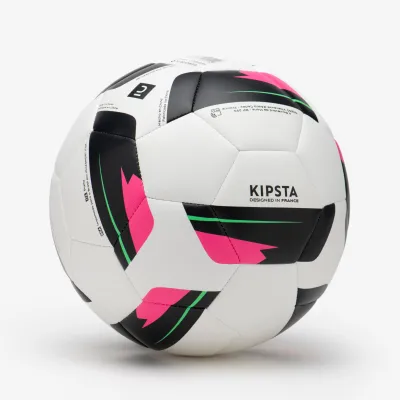
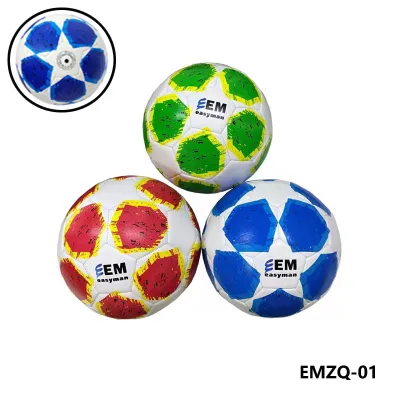
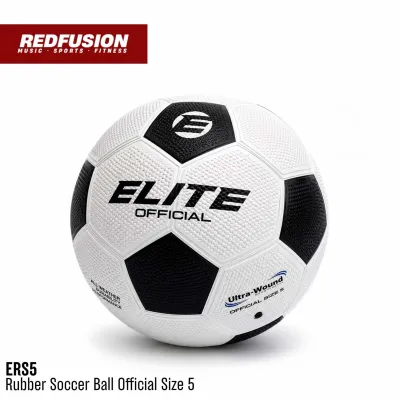
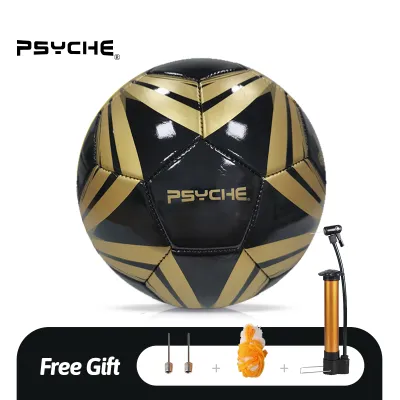
Prices are valid at publication and may change. Please refer to the product page for the latest price.
Advanced Panel Construction and Water Resistance
Modern match balls often feature thermally bonded panels rather than traditional stitching. This seamless construction technique virtually eliminates water absorption, which is a critical feature when playing during the wet season or on water-logged grass pitches. A ball that absorbs water becomes heavy, sluggish, and unpredictable, which can ruin the quality of play and increase the risk of neck or head injuries during headers. Thermal bonding ensures the ball maintains its official weight and aerodynamic flight path even in torrential downpours.
Official Certifications and Performance Trade-offs
If you plan to use the ball in sanctioned leagues or official tournaments, look for certification marks printed on the casing, such as FIFA Quality Pro or FIFA Quality. These stamps guarantee that the ball has undergone rigorous laboratory testing for weight, roundness, bounce, water absorption, and pressure retention. However, these elite performance characteristics come with a clear trade-off: match balls are designed with thinner, more delicate outer skins to maximize touch sensitivity. Using them on abrasive surfaces like concrete, gravel, or low-grade artificial turf will quickly scuff, peel, or tear the outer layer, rendering an expensive piece of equipment unusable.
In the local market, premium match balls typically sit in a higher price band, ranging from ₱4,000 to ₱8,000 or more. Because of this investment, these balls should be reserved strictly for organized match play on well-maintained natural grass or high-quality artificial turf pitches.
Training Sessions: Prioritizing Durability for Daily Drills
Training sessions involve repetitive drills, wall passes, and hundreds of high-velocity impacts against hard surfaces. A training ball must be built to withstand this daily abuse without losing its shape, air pressure, or structural integrity. To achieve this level of durability, manufacturers use thicker polyurethane (PU) or thermoplastic polyurethane (TPU) covers, reinforced with multiple backing layers of polyester or cotton blends.

Stitching Methods and Abrasion Resistance
Unlike the thermally bonded panels of high-end match balls, quality training balls often utilize machine-stitching or heavy-duty hand-stitching. Hand-stitched balls are particularly prized for training because the seams are deeper and less exposed to direct friction, protecting the high-tensile threads from wearing out on abrasive surfaces. This construction allows the ball to resist the constant friction of natural grass, dry hard ground, and the harsh rubber infill of local commercial artificial turf pitches.
Balancing Touch with Longevity
While training balls are engineered for longevity, they must still provide a realistic feel. A ball that is too hard or stiff will hurt to kick and fail to prepare you for the soft touch required in a real match. High-quality training balls strike a balance by incorporating a thin layer of foam beneath the durable TPU cover, mimicking the responsive feel of a match ball while maintaining a robust outer shell. They also typically feature butyl bladders, which retain air much longer than the latex bladders found in match balls, saving you from having to pump up the ball before every single practice session.
Mid-range training balls generally range from ₱1,500 to ₱3,500. This price point offers the best balance of durability and performance for players who practice multiple times a week.
Casual Play: Finding Comfort and Versatility for Weekend Games
For informal kickabouts in the backyard, beach games, or street matches on concrete barangay courts, performance certifications and aerodynamic perfection take a backseat to comfort, versatility, and budget. Casual play often involves mixed footwear—or no footwear at all—meaning the ball must be forgiving on impact.
Soft-Touch Materials for Recreational Comfort
To prevent bruised toes and painful impacts during casual games, look for balls with foam-backed covers or specific polyvinyl chloride (PVC) blends. While PVC is generally stiffer than PU, casual balls often use a highly cushioned foam backing to soften the overall feel. This makes the ball much more comfortable for barefoot play on the sand or light canvas sneakers on hard courts. PVC is also highly resistant to water and physical scuffing, making it incredibly durable on rough, non-standard surfaces.
Versatility Across Unforgiving Surfaces
Casual balls are designed to be kicked against concrete walls, metal fences, and gravel without falling apart. They prioritize survival over strict weight and flight standards. However, because they are built with simpler materials and basic machine-stitching, they are more prone to seam stretching and minor shape deformation over time. They also tend to use basic butyl bladders, which hold air well but may offer a slightly heavier, less lively bounce compared to training or match balls.
These recreational balls are highly budget-friendly, typically costing between ₱500 and ₱1,200. They are the perfect choice if you want a low-maintenance ball that you can throw into a backpack for a spontaneous weekend game with friends.
Cross-Scenario Compatibility: Do You Need More Than One Ball?
Many players wonder if they can simplify their gear by purchasing a single football for all activities. While a high-end training ball can easily double as a match ball for amateur Sunday leagues, using a single ball across all three scenarios requires careful consideration of your playing surfaces and budget.
The Sunday League Dilemma
If you participate in amateur leagues but also enjoy mid-week training sessions, a premium training ball is often your most cost-effective option. It provides enough responsiveness and flight accuracy for competitive play while offering the durability needed to survive regular drills. However, if you transition from a grass pitch to a concrete court for a casual weekend game, you must change your ball. Kicking a stitched training ball on concrete will quickly fray the exposed threads, leading to seam separation and bladder exposure.
Implementing a Two-Ball Rotation
For serious players, a two-ball rotation strategy is highly recommended. This setup keeps your gear in optimal condition and saves money in the long run:
- The Daily Trainer: A durable, hand-stitched or hybrid-stitched TPU training ball used for individual drills, wall work, and practice sessions on artificial turf.
- The Game-Day Ball: A premium, thermally bonded PU match ball reserved strictly for organized matches on grass or high-quality turf.
By keeping your match ball away from rough training environments, you preserve its pristine outer casing and aerodynamic properties, ensuring it performs perfectly when the score actually matters.
Extending Your Football’s Lifespan in Humid Climates
Tropical conditions, high relative humidity, and sudden downpours can severely shorten the lifespan of any football. Moisture can seep into stitched seams, weakening the internal backing layers, while intense heat can dry out synthetic leather and degrade the adhesives holding the panels together.
Post-Game Cleaning and Drying
After playing on muddy or wet pitches, always wipe your football clean with a damp cloth to remove dirt, sweat, and grass stains. Avoid using harsh chemical detergents or abrasive brushes, which can strip the protective coating off the outer cover. Once clean, allow the ball to air dry naturally in a well-ventilated indoor space. Never place the ball in direct sunlight or near artificial heat sources to speed up drying, as extreme heat causes the PU cover to crack and warp.
Smart Storage and Pressure Management
Store your football in a cool, dry place inside your home rather than leaving it in a hot car trunk or an outdoor utility shed. If you do not plan to use the ball for several weeks, slightly deflate it using a lubricated inflation needle. This relieves constant tension on the seams, stitching, and internal bladder, preventing the ball from stretching out of shape over time. Always check the manufacturer’s recommended pressure limits—usually printed directly around the valve—before re-inflating the ball for your next game.
Frequently Asked Questions (FAQ)
Is a size 5 football suitable for all ages?
No, a size 5 football is not suitable for all ages. It is the official standard size designed specifically for players aged 12 and older, including adults. Younger players should use smaller, lighter balls to match their physical development. Children aged 8 to 12 typically use a size 4 ball, while those under 8 use a size 3 ball. Introducing a size 5 ball too early can lead to joint strain, muscle fatigue, and the development of poor kicking techniques, as younger children must strain their bodies to move a ball that is too heavy for their frame.
How do I know if my football needs replacing?
You can determine if your football needs replacing through a few simple visual and physical checks. Inspect the surface for peeling panels, deep gouges, or exposed stitching threads that are frayed or broken. Check the shape of the ball by inflating it to its recommended pressure and looking for any lopsidedness or bulging. If the ball loses a significant amount of air pressure within a 24-hour period, the internal bladder or valve is compromised. Finally, perform a simple drop test from eye level onto a flat concrete floor; if the ball bounces at an odd angle or feels completely dead, the internal structure has degraded, and it is time for a replacement.
Community discussion
Share your experience or ask a question. Comments are reviewed before publication.