
Selecting the right mouth piece for taekwondo is a critical decision that directly impacts your safety on the mats. There is no single universal winner that suits every practitioner; instead, the ideal choice depends on your sparring frequency, training intensity, and budget. For casual practitioners or beginners attending light dojang sessions, a thermoplastic boil-and-bite guard offers an accessible balance of cost and protection. If you are a competitive athlete engaging in high-intensity sparring (kyorugi) or preparing for tournaments, investing in a professionally fabricated custom-fit mouth guard is highly recommended for its superior retention and low-profile design. While stock mouth guards exist as a low-cost, off-the-shelf option, they generally fall short in protection and comfort, making them suitable only as temporary emergency backups. Balancing the upfront financial investment against your long-term safety and comfort is the key to finding the right gear.
Key Requirements for a Taekwondo Mouth Guard
Taekwondo is a dynamic martial art characterized by high-velocity kicks, rapid footwork, and close-range strikes. These physical demands require protective gear that can handle unique athletic challenges. First and foremost, a mouth guard must be designed to help distribute the force of sudden impacts to the jaw, reducing the risk of dental fractures or soft tissue cuts. Because kyorugi requires continuous movement and intense cardiovascular exertion, breathing efficiency is paramount. A bulky or poorly fitting guard can restrict airflow, causing premature fatigue and hindering your performance during long rounds.
Furthermore, clear communication is essential in the dojang; you must be able to call out commands or speak to your coach without your protective gear slipping out of place. Finally, the guard must feature a low-profile design that integrates seamlessly with your headgear, ensuring your jaw remains properly aligned and supported during clenching without causing discomfort or pressure points along the temples and cheeks.
Products mentioned in this guide
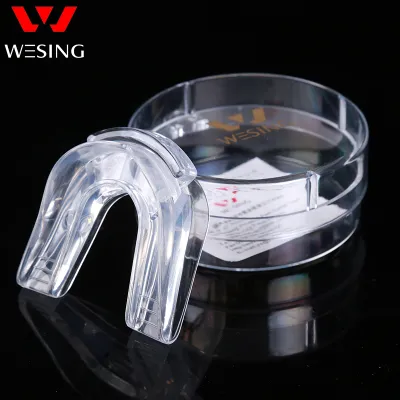
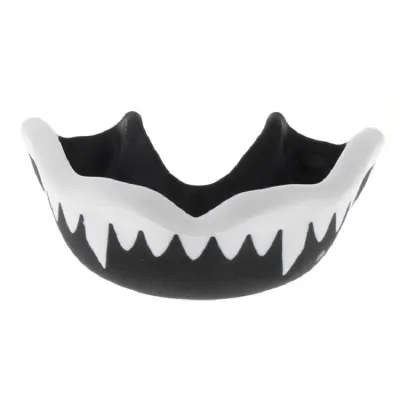
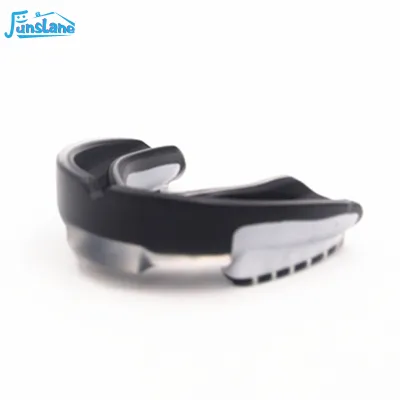
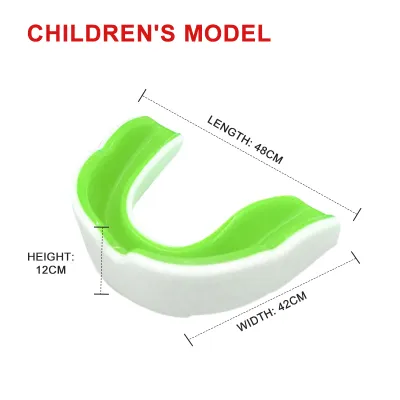
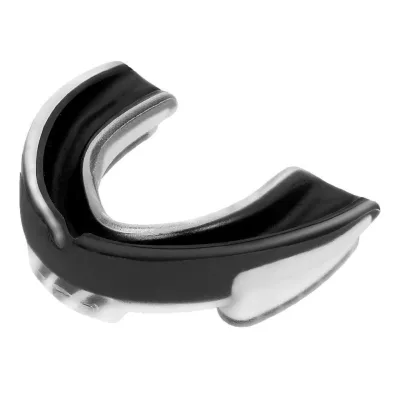
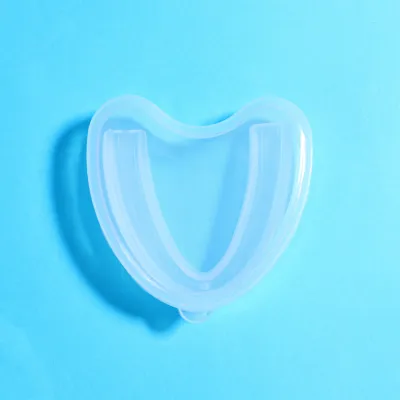
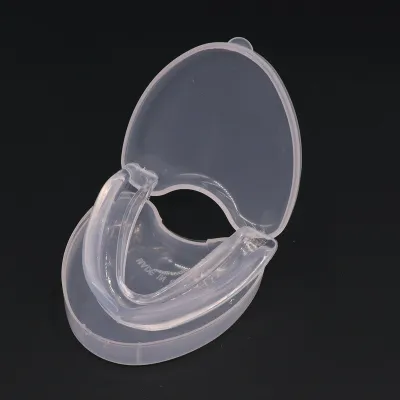
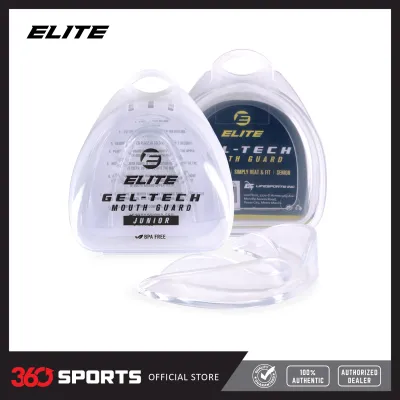
Prices are valid at publication and may change. Please refer to the product page for the latest price.
Stock Mouth Guards: Pre-Formed and Ready to Use
Stock mouth guards are pre-formed, mass-produced protective inserts that are ready to wear straight out of the packaging. They do not undergo any customization process to match your unique dental structure. Instead, they rely on a generic, one-size-fits-all shape made from rigid rubber or polyvinyl materials. Because they cannot adapt to the contours of your teeth, they require you to constantly clench your jaw to keep them in place. This constant clenching can lead to rapid jaw fatigue and distract you during active sparring drills.

The trade-offs associated with stock mouth guards are significant. They offer minimal retention, meaning they can easily dislodge during a high-velocity kick or a sudden fall, leaving your teeth entirely unprotected at the worst possible moment. Their bulky design also severely restricts breathing and speaking, forcing you to breathe primarily through your nose or risk dropping the guard if you open your mouth. Consequently, stock options are generally not recommended for regular taekwondo training. They should be reserved strictly for absolute beginners participating in non-contact drills, or kept in your gear bag as an emergency, single-use replacement if your primary guard is lost or damaged right before a class.
Boil-and-Bite Mouth Guards: The Standard for Most Practitioners
Boil-and-bite mouth guards serve as the standard protective gear for the vast majority of taekwondo practitioners. Made from thermoplastic materials, these guards soften when submerged in hot water, allowing you to mold the material directly to your teeth using your fingers, tongue, and a firm bite. This simple home-molding process creates a semi-custom fit that conforms to your dental arch, providing vastly superior retention compared to stock alternatives.
In terms of comfort and functionality, a properly molded boil-and-bite guard stays in place relatively well, allowing you to breathe and speak with moderate ease during kyorugi. It provides a reliable layer of impact absorption that is sufficient for regular, controlled sparring sessions in the dojang. However, these guards do have notable limitations. The material can wear down over time, especially if you have a habit of grinding or clenching your teeth during intense training. Achieving a perfect mold at home can also be challenging; improper heating can lead to a loose fit, while biting too hard can thin out the protective material at critical impact points, reducing its overall effectiveness. Additionally, in the warm and humid tropical climate of the Philippines, thermoplastic materials must be stored carefully in a ventilated case to prevent warping and the accumulation of bacteria.
Custom-Fit Mouth Guards: Professional-Grade Protection
For competitive athletes, advanced practitioners, and those who prioritize maximum safety, custom-fit mouth guards represent the gold standard in dental protection. This process begins with taking a precise impression of your teeth—either through a home impression kit or directly at a dental clinic—which is then sent to a professional laboratory. Technicians use these impressions to fabricate a guard tailored exactly to your dental anatomy, utilizing high-quality, multi-layered materials.
The primary advantage of a custom-fit guard is its exceptional impact distribution. Because it fits perfectly over every contour of your teeth, it spreads the force of a blow evenly across your entire dental arch, minimizing localized trauma. Its precise fit also means it boasts outstanding retention; it will not fall out even during high-velocity kicks or when you open your mouth to breathe deeply or speak to your coach. This allows for a much thinner, low-profile design that does not interfere with your breathing or your headgear. While the financial investment is higher than other options and requires a waiting period for fabrication, the long-term durability, comfort, and superior protection make it a highly worthwhile choice for serious martial artists.
Head-to-Head Comparison Matrix
To help you evaluate your options, the table below summarizes how the three primary mouth guard types compare across key performance and practical dimensions.
| Dimension | Stock Mouth Guards | Boil-and-Bite Mouth Guards | Custom-Fit Mouth Guards |
|---|---|---|---|
| Protection Level | Low (unsecured fit) | Moderate (semi-custom fit) | High (precise dental adaptation) |
| Comfort & Fit | Poor (requires constant clenching) | Good (molded to teeth) | Excellent (exact anatomical match) |
| Breathing Ease | Restricted (bulky design) | Moderate to Good | Excellent (low-profile design) |
| Durability | Low (rigid, prone to wear) | Moderate (degrades over time) | High (durable, multi-layered) |
| Relative Cost | Low (₱) | Medium (₱₱) | High (₱₱₱) |
Note: Exact pricing and availability vary. Please check with local sports retailers, online marketplaces, or your dental professional to find options that fit your budget.
Decision Framework: How to Choose Your Taekwondo Mouth Guard
To make your final decision, evaluate your current training level, sparring frequency, and specific organizational requirements using this structured framework:
Choose Stock if:
- You are attending your very first trial class and need a temporary, low-cost option.
- You lost your primary mouth guard right before a session and need an immediate, single-use backup.
- Your training is strictly limited to non-contact exercises and light pad work.
Choose Boil-and-Bite if:
- You practice taekwondo regularly (one to three times a week) and participate in controlled, light-to-moderate sparring.
- You want a reliable balance of protection and comfort without a significant upfront financial commitment.
- You are a growing teenager whose dental structure is still changing, making a highly expensive custom guard impractical.
Choose Custom-Fit if:
- You participate in high-intensity sparring, competitive tournaments, or full-contact kyorugi.
- You find that standard boil-and-bite options cause gagging, breathing difficulties, or jaw discomfort.
- You want the highest level of retention and impact distribution to protect your dental investment.
Verify first if: Before purchasing any mouth piece for taekwondo, verify the specific rules of your dojang or tournament federation. For example, World Taekwondo (WT) and local tournament guidelines often mandate that mouth guards must be clear or white. Colored or multi-colored guards are frequently prohibited in official competitions to ensure referees can easily check for dental injuries or bleeding.
Testing and Maintenance Tips: Once you receive your mouth guard, test the fit by placing it in your mouth without clenching. A well-fitting guard should stay securely on your upper teeth even when you open your mouth wide. In the humid climate of the Philippines, proper hygiene is crucial to prevent mold and bacterial growth. Always rinse your guard with cool water after every training session, clean it periodically with a mild soap or non-abrasive toothpaste, and store it in a well-ventilated protective case. Replace your guard immediately if you notice visible signs of wear, such as thin spots, tears, or a loose fit that compromises its retention.
Frequently Asked Questions (FAQ)
Do I need a mouth guard for taekwondo forms (poomsae)?
Generally, mouth guards are not mandatory for practicing or competing in taekwondo forms (poomsae), as these routines are non-contact and focus on precision, technique, and power execution. However, some practitioners choose to wear a low-profile guard during intense poomsae training to support jaw clenching during powerful movements. Always check your specific dojang rules, as instructors may have individual safety preferences for all training phases.
Can I use a football or boxing mouth guard for taekwondo?
While any mouth guard is better than none, sports-specific designs differ. Boxing mouth guards are often thicker and sometimes double-sided, which can severely restrict the rapid breathing needed for continuous taekwondo sparring. Football guards often feature helmet tethers that are unsafe and impractical for martial arts. It is best to choose a low-profile, single-arch guard designed specifically for combat sports to ensure optimal breathing and compatibility with your headgear.
How often should I replace my boil-and-bite mouth guard?
For regular practitioners training multiple times a week, a boil-and-bite mouth guard should typically be replaced every six to twelve months. You should inspect your guard regularly for signs of degradation. Immediate replacement is necessary if you observe deep bite-through marks, tears in the material, a loss of retention where the guard no longer grips your teeth, or persistent odors that indicate bacterial buildup despite thorough cleaning.
Community discussion
Share your experience or ask a question. Comments are reviewed before publication.