
For anyone preparing to explore vibrant coral reefs and shallow coastal waters, selecting the right gear is the first step toward a safe and memorable experience. Among your essential gear, the underwater breathing tube—commonly known as a snorkel—is your lifeline to the surface. For beginners, the sheer variety of designs can be overwhelming. Choosing the wrong type can lead to a frustrating cycle of swallowing saltwater, struggling to clear the tube, and experiencing jaw fatigue. To ensure a comfortable and confident start, most beginners should opt for either a dry-top or a semi-dry snorkel, depending on their comfort level in the water and how they plan to explore.
Assess Your Snorkeling Environment and Comfort Level
Before purchasing an underwater breathing tube, you must evaluate where you plan to swim and how comfortable you are in the water. Tropical destinations, such as the calm, protected bays found throughout the Philippines, offer ideal conditions for beginners. However, even the calmest waters can experience sudden shifts in wind, tide, or surface chop. If you plan to stay strictly in shallow, wave-protected areas, your equipment needs will differ significantly from those required in open-water environments where waves are more likely to wash over your head.
Your personal comfort level with water entry is another critical factor. Some beginners are highly confident swimmers who do not mind the occasional splash of saltwater in their mouth, while others find water entry highly stressful. If unexpected water in your tube is likely to cause panic, prioritizing a design that actively blocks water is essential for your safety.
Products mentioned in this guide
Prices are valid at publication and may change. Please refer to the product page for the latest price.
Additionally, consider your planned activity style. If you intend to float peacefully on the surface to observe fish and corals from above, a specialized surface-focused tube is ideal. Conversely, if you hope to occasionally dive a few feet below the surface to get a closer look at marine life, you will need a tube that accommodates submersion without creating excessive buoyancy or trapping air. Remember that no piece of equipment can replace basic swimming skills and water safety judgment; always assess your abilities honestly before heading into the water.
Understanding the Three Main Snorkel Types
The design of an underwater breathing tube dictates how air flows to your lungs and how effectively the tube manages water entry. While all snorkels serve the same basic purpose, they are categorized into three primary types based on their top and bottom configurations. Understanding these mechanical differences will help you choose the right balance of breathing ease, water protection, and simplicity.

Wet Snorkels: Simple and Streamlined
The wet snorkel is the traditional J-tube design that has been used for decades. It consists of a simple, curved plastic tube with a mouthpiece at one end and an entirely open top at the other. There are no mechanical valves, moving parts, or splash guards on a standard wet snorkel, making it the most minimalist option available.
Because of this open design, wet snorkels offer exceptionally low breathing resistance and minimal drag when moving through the water. They are lightweight and highly durable, as there are no delicate parts that can break or become clogged with sand.
However, the lack of protective features means that water will enter the tube freely whenever a wave splashes over you or when you submerge your head. To clear the water, you must master the blast-clearing technique, which requires a strong, sudden exhalation. For absolute beginners who have not yet developed this lung capacity or coordination, a wet snorkel can feel intimidating and physically demanding.
Semi-Dry Snorkels: The Versatile Middle Ground
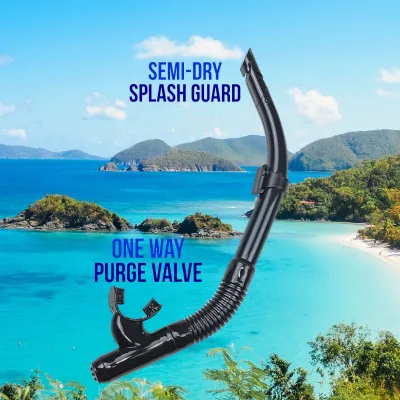
Semi-dry snorkels bridge the gap between minimalist designs and fully sealed tubes. These models feature a splash guard at the top of the tube, which uses angled vents or deflector fins to redirect surface spray and waves away from the opening. While it prevents splashes from entering, the top remains open to the air and will not seal if you submerge completely.
To handle any water that does manage to slip past the splash guard, semi-dry snorkels incorporate a one-way purge valve at the bottom, situated just below the mouthpiece. This valve allows water to collect in a small reservoir and drain out naturally using gravity or a very gentle exhale.
This combination makes semi-dry models highly versatile. They offer a relatively dry breathing experience on the surface while remaining easy to clear if you decide to dive down. The breathing resistance is slightly higher than a wet snorkel due to the added valves, but the ease of clearing makes it an excellent, adaptable choice for recreational snorkelers who want to transition between surface swimming and shallow diving.
Dry-Top Snorkels: Maximum Dryness for Surface Swimming
Dry-top snorkels are engineered to keep water out of the tube entirely, making them incredibly popular among beginners and surface swimmers. The top of the tube features a specialized float-valve mechanism. When you are on the surface, the valve remains open, allowing you to breathe normally; the moment a wave washes over the tube or you submerge your head, a small float rises to seal the opening shut.
This design provides immediate reassurance for beginners who want to avoid swallowing saltwater. You can swim through choppy surface conditions or dip your head underwater without worrying about water rushing down your airway.
However, dry-top snorkels have distinct limitations when it comes to diving below the surface. Because the valve seals the tube instantly, it traps air inside, creating upward buoyancy that can pull uncomfortably on your mask strap. Furthermore, if you attempt to inhale while the valve is sealed underwater, it creates a sudden vacuum effect that can be startling.
Additionally, the mechanical float valve is susceptible to failure if sand, salt crystals, or small debris become lodged in the mechanism. If the float gets stuck in the closed position, it can block your airflow on the surface; if it gets stuck open, it will allow water to enter unexpectedly. Regular inspection and thorough rinsing are mandatory to ensure this system functions safely.
Key Features to Check Before You Buy
Once you have decided on a snorkel type, you must evaluate specific physical features to ensure a safe, comfortable, and reliable fit. Whether you are browsing options at a local dive shop or comparing gear on an online marketplace, keep the following verification points in mind:
- Mouthpiece Material and Size: Ensure the mouthpiece is made from soft, high-quality, medical-grade silicone rather than stiff plastic or cheap rubber. Stiff materials can cause painful jaw fatigue and chafing, especially during long swims in warm, humid tropical climates. The mouthpiece should fit comfortably in your mouth without requiring you to bite down hard to keep it in place.
- Tube Diameter and Volume: The internal volume of the tube affects both your breathing comfort and your ability to clear water. A wider tube allows for easier, unrestricted airflow but holds a larger volume of air and water, requiring more effort to clear. Conversely, a tube that is too narrow increases breathing resistance. Look for a balanced diameter that matches your physical stature and lung capacity.
- Attachment System: The snorkel keeper or clip connects the tube to your mask strap. Verify that the attachment system is sturdy and easy to adjust. Quick-release plastic clips or flexible silicone keepers are highly recommended, as they allow you to detach the snorkel easily for storage without damaging your mask strap.
- Overall Length Limits: To prevent safety hazards, the tube must not exceed standard recreational lengths. An excessively long tube increases "dead air space," which is the volume of exhaled air that remains in the tube. Breathing this trapped carbon dioxide repeatedly can lead to headaches, dizziness, and fatigue. Stick to reputable sports brands that adhere to standard safety dimensions.
Making Your Final Decision and Next Steps
To make your final selection, match your swimming style and comfort level to the appropriate snorkel type using this simple guide:
- Choose a Dry-Top Snorkel if you are a beginner who plans to stay strictly on the surface, values a completely dry airway, and wants to avoid the stress of clearing water from the tube.
- Choose a Semi-Dry Snorkel if you want a versatile option that protects against surface splashes but still allows you to comfortably dive down a few feet to explore shallow reefs.
- Choose a Wet Snorkel only if you are already a confident swimmer, comfortable with water-clearing techniques, and prefer a lightweight, highly durable design with no moving parts.
Before heading out into open water, always test your new gear in a controlled environment, such as a swimming pool or calm, waist-deep water. Put on your mask and snorkel, lay face down in the water, and practice breathing slowly and deeply. If you are using a semi-dry or wet snorkel, practice clearing small amounts of water using a sharp, sudden exhale.
Proper maintenance is essential to keep your gear functioning safely. After every use, rinse your underwater breathing tube thoroughly with clean, fresh water to remove salt, sand, and chlorine. Pay close attention to the purge valve and any dry-top mechanisms, ensuring no debris is trapped inside. Allow the gear to dry completely in a shaded, well-ventilated area, and store it out of direct sunlight to prevent the silicone from warping or degrading over time.
Frequently Asked Questions (FAQ)
Can I use a scuba diving snorkel for recreational snorkeling?
Yes, you can use a scuba diving snorkel for recreational snorkeling, but there are design differences to consider. Scuba snorkels often feature a highly flexible, corrugated lower section designed to let the mouthpiece drop away from your face when you switch to your scuba regulator. While functional, this flexible section can cause the snorkel to dangle or drag more during continuous surface swimming. Additionally, scuba snorkels sometimes prioritize a streamlined profile over advanced surface splash protection, meaning they may let in more water during choppy surface conditions than a dedicated recreational semi-dry or dry-top snorkel.
How do I clear water from my underwater breathing tube?
There are two primary methods for clearing water from your tube, depending on your snorkel design and comfort level. The most common method is the blast clear, which works on all snorkel types. To perform a blast clear, take a sharp, forceful breath of air (if available) and exhale sharply and quickly through your mouth, as if spitting out a watermelon seed. This force pushes the water up and out of the top of the tube, or down through the purge valve if your snorkel has one. The second method is the displacement clear, which is used by more experienced swimmers wearing wet or semi-dry snorkels. As you ascend from a shallow dive, look straight up at the surface and exhale gently; the expanding air will naturally push the water out of the bottom of the tube before your head breaks the surface.
Community discussion
Share your experience or ask a question. Comments are reviewed before publication.