
Finding the right Yeesall treadmill for a compact condominium requires balancing your fitness routine with the realities of limited square footage. To select the model that fits your space, you must evaluate the machine’s physical footprint, its folding mechanism, and the safety clearances required in your specific layout. Rather than relying on general category descriptions, the key is to match the exact dimensions of your preferred model against your measured floor plan and vertical clearance.
Assessing Your Condo Floor Plan and Safety Clearances
Before browsing online marketplaces for a Yeesall treadmill, you need to map out your dedicated workout zone. Do not simply measure an empty patch of floor; instead, account for nearby furniture, cabinet doors, and daily traffic flow. A treadmill requires active space around it, meaning you must plan for a layout that does not block primary walkways or emergency exits.
Safety clearances are a critical factor that many condo dwellers overlook. Manufacturer manuals typically recommend leaving a clear, unobstructed zone of at least two meters behind the treadmill and about half a meter on each side. This open space is vital to prevent serious injury if you lose your balance or need to dismount quickly during a run.
Products mentioned in this guide
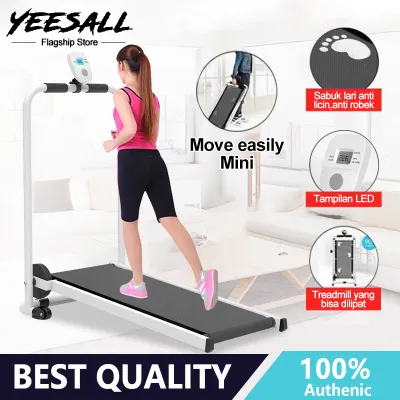
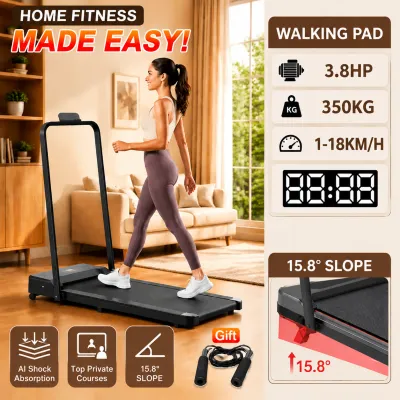
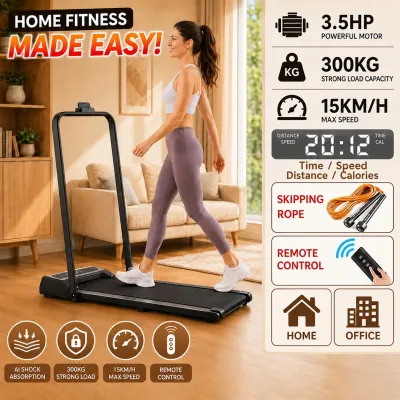
Prices are valid at publication and may change. Please refer to the product page for the latest price.
Vertical space is another essential consideration, particularly in modern high-rise developments where ceiling heights can vary. When you stand on a treadmill deck, your height increases by several inches, and if the model features an incline function, you will rise even higher. Measure your ceiling height and compare it to the deck height plus your own height, leaving at least a few inches of comfortable headroom.
Finally, plan the delivery route from the building’s entrance to your unit. Measure the width and height of your condo building’s service elevator, hallways, and your front door frame. Knowing these dimensions beforehand ensures that the boxed or pre-assembled treadmill can actually be transported into your living room without getting stuck in a tight corridor.
Decoding Yeesall Treadmill Dimensions for Compact Layouts
When reviewing Yeesall treadmill specifications, you must distinguish between the overall operational footprint and the actual running belt area. The operational footprint represents the total length and width the machine occupies on your floor when fully deployed. The running surface, while crucial for your stride length and comfort, is always smaller than this total footprint.

Console height and handrail width also play a significant role in how the machine integrates into your living space. A tall console or wide handrails can block natural light from balcony doors or windows, making a small room feel cramped. Ensure the physical structure of the treadmill does not obstruct your view or interfere with nearby wall-mounted fixtures.
Compact and ultra-thin models often feature different motor capacities and user weight limits compared to heavy-duty, non-folding alternatives. If you require a higher weight capacity or plan to use the machine for intense running rather than walking, verify that the compact model’s specifications align with your body size and fitness level. Smaller footprints sometimes involve trade-offs in frame rigidity or motor power.
Because product specifications can change, always cross-reference the exact model number on the manufacturer’s official documentation or verified product manual. Avoid relying on generic retail summaries or automated translations on ecommerce platforms, which may contain rounded numbers or inaccurate unit conversions.
Evaluating Folding Mechanisms and True Storage Footprints
For condo residents, a treadmill’s folding mechanism determines how easily the machine can be integrated into daily life. Many modern folding treadmills utilize a soft-drop hydraulic system, which assists in lowering the deck slowly and safely. Manual folding systems require you to lift and secure the deck yourself, which may be challenging if you have physical limitations or are working alone in a tight space.
Calculating the true stored footprint is essential if you plan to tuck the treadmill away when it is not in use. When folded, the deck stands vertically or folds flat, but the base and the folded frame still protrude. Check the folded depth and width specifications carefully, as the actual space required for storage is often larger than the running deck itself.
Mobility is another factor to verify before making a purchase. Look for models equipped with built-in transport wheels that allow you to roll the machine out of the way. In tropical climates like the Philippines, high humidity can affect flooring, so ensure the wheels are made of a non-marring material that will not scratch or leave marks on delicate laminate, vinyl, or polished tile floors.
Additionally, inspect the locking mechanism that secures the treadmill in its folded position. A robust, reliable lock is necessary to prevent the deck from accidentally falling, especially if you share your condo with pets or small children. The lock should feel stable and require a deliberate action to disengage.
Common Space-Measuring Mistakes to Avoid
One of the most frequent errors when planning a home gym is ignoring the swing radius of nearby doors, closets, and cabinet doors. A treadmill positioned too close to a wardrobe or entry door can block access entirely or lead to accidental collisions. Open all nearby doors fully while measuring to ensure they clear the treadmill frame in both its deployed and folded states.
Electrical safety and cable management are also easily overlooked in tight layouts. You must account for the physical space required by the power cord plug and any surge protectors extending from the wall outlet. Avoid bending the power cord at extreme angles against walls or baseboards, and keep cables organized to eliminate tripping hazards around the workout zone.
Do not assume that a “foldable” label automatically means the treadmill can be stored vertically against a wall or flat under a bed. Some models are designed to fold only at a slight angle, while others require specific wall-anchoring hardware to stand vertically safely. Always consult the user manual to confirm the approved storage orientations for your specific model.
Lastly, consider the ventilation needs of the treadmill’s motor housing. Electric motors generate heat during operation, and placing the machine flush against a wall or tucked deep into an unventilated corner can cause the motor to overheat. Leave a few inches of clearance around the motor cover to allow proper airflow, which is especially important during warm, humid seasons.
Frequently Asked Questions (FAQ)
Do I need a special mat for a Yeesall treadmill on condo floors?
Using a high-density equipment mat under your treadmill is highly recommended for condo living. A quality mat helps dampen the vibrations and impact noise that can travel through concrete floors to your downstairs neighbors. It also protects your flooring from sweat, friction, and indentation marks, while helping to keep the machine stable. Be sure to check your condo association’s house rules regarding noise and vibration limits, and consult the treadmill manual for any specific floor protection recommendations.
Can I plug a Yeesall treadmill into a standard condo wall outlet?
A treadmill should generally be plugged directly into a dedicated, grounded wall outlet that meets the voltage and amperage specifications outlined in the user manual. Treadmill motors draw significant current during startup and peak use, which can easily trip circuit breakers if shared with other high-draw appliances. Avoid using extension cords, double adapters, or standard power strips, as these can pose electrical hazards and may void your equipment warranty.
Community discussion
Share your experience or ask a question. Comments are reviewed before publication.