
Completing your essential yoga accessory set is an exciting step toward building a dedicated home practice. While a high-quality mat, durable blocks, and a sturdy strap form the foundation of your gear, adding a roller bridges the gap between active movement and deep, restorative recovery. The challenge lies in choosing the right tool, as the market offers several distinct designs, each serving a different physiological purpose.
To make the right purchase, you must first identify your primary practice goals. If your focus is on relieving general muscle soreness and easing into myofascial release, a standard smooth foam roller is your best option. For those who need to target stubborn muscle knots and deep-tissue tension, a textured roller with ridges and grids is highly effective. Meanwhile, if you want to deepen your backbends, open your chest, and improve spinal mobility, a specialized yoga wheel is the ideal addition to your collection.
By matching the roller’s specific design to your body’s needs, you can maximize the benefits of your recovery sessions. Investing in the correct tool ensures that your accessory set remains highly functional, supporting both your active yoga flows and your post-practice recovery routines.
Products mentioned in this guide
Prices are valid at publication and may change. Please refer to the product page for the latest price.
Quick Guide: Matching the Roller to Your Practice Goals
Selecting the perfect roller requires aligning the equipment’s physical properties with your daily physical routine. Standard foam rollers feature a completely smooth, uniform surface that distributes your body weight evenly. This design is highly approachable, making it the preferred choice for beginners, those recovering from mild muscle fatigue, or anyone seeking a gentle, full-body rolling session.
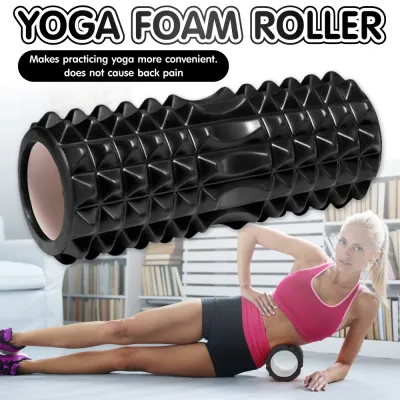
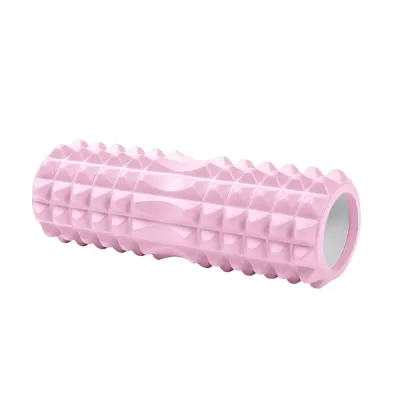
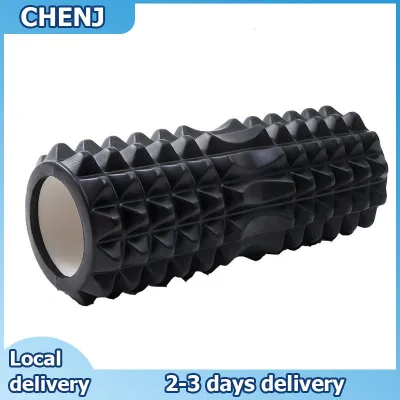
Textured rollers take recovery a step further by incorporating molded ridges, knobs, or grid patterns across their surface. These varied shapes mimic the hands and fingers of a massage therapist, allowing you to apply concentrated pressure to localized trigger points. This type is excellent for active individuals, runners, or intermediate yogis who need to break up stubborn fascial adhesions in areas like the calves, glutes, and upper back.
Yoga wheels offer a completely different functional experience compared to traditional rolling cylinders. Instead of massaging broad muscle groups, this rigid, circular ring is engineered to support your spine as you drape your back over its curve. It is a specialized tool designed to open up tight shoulders, expand the chest, and assist in advanced backbending postures, making it a favorite for practitioners looking to improve their posture and flexibility.
To make a quick decision, consider your primary pain point. If you want a versatile tool to roll out your legs and back after a workout, choose a smooth foam roller. If you have specific, intense muscle knots that require deep-tissue work, opt for a textured roller. If your main goal is to conquer stiff shoulders and deepen your backbends, the yoga wheel is the clear winner for your accessory kit.
How to Choose the Right Yoga Roller for Your Needs
Beyond simply selecting a shape, finding the right roller involves evaluating several key technical specifications. You must assess the density of the material, as this directly determines how much pressure the roller will apply to your muscles. A roller that is too soft will bottom out under your weight, offering little therapeutic benefit, while one that is too firm can cause your muscles to tense up in pain, preventing effective release.

Size and portability are equally important dimensions to consider before making a purchase. Long rollers, typically measuring around 36 inches, are excellent for home use because they can support your entire spine vertically during chest-opening exercises. Shorter rollers, ranging from 12 to 18 inches, are highly portable and perfect for targeted work on your limbs, making them easy to pack into a gym bag or store in a compact space.
Material safety and durability should never be overlooked when evaluating sports equipment. High-quality rollers are constructed from non-toxic, hypoallergenic materials that maintain their structural integrity over years of regular use. Checking the manufacturer’s product label for specific material certifications ensures that you are bringing a safe, durable product into your living space.
In the tropical climate of the Philippines, high humidity and warm temperatures introduce unique wear-and-tear challenges. Low-quality, open-cell foams can act like sponges, absorbing sweat, body oils, and ambient moisture during a humid practice session. This moisture absorption leads to rapid material degradation, unpleasant odors, and a slippery surface that compromises your grip. Selecting closed-cell materials that resist moisture penetration is essential for maintaining hygiene and safety in humid environments.
Foam, Textured, or Wheel: Which Type Fits Your Routine?
Understanding the distinct characteristics of each roller type allows you to select the one that integrates seamlessly into your daily routine. The ideal choice is not about finding a universally superior product, but rather identifying which tool matches your current physical condition, experience level, and movement practice.
Foam Rollers: Best for Beginners and Full-Body Recovery
Smooth foam rollers are characterized by their uniform, cylindrical shape and consistent surface density. Because they distribute your body weight across a broad surface area, they offer a gentler introduction to myofascial release. This makes them highly suitable for beginners whose pain thresholds might be lower, or for experienced athletes looking for a light warm-up tool to stimulate blood flow before a vigorous yoga session.
While smooth rollers are incredibly versatile for full-body rolling, they do have functional limitations. Because the surface is entirely flat, these rollers cannot penetrate deeply into localized muscle knots or reach smaller, tucked-away muscle groups. If you are dealing with deep, chronic tightness in specific areas like the piriformis or shoulder blades, a smooth roller may feel too superficial to provide complete relief.
When purchasing a smooth roller, it is crucial to look past generic marketing terms like “extra firm” and instead verify the actual material on the product specifications. Rollers made from Expanded Polypropylene (EPP) are highly durable, lightweight, and offer a firm, bead-like structure that resists warping. Ethylene-Vinyl Acetate (EVA) rollers provide a slightly softer, more rubbery feel with excellent shock absorption and slip resistance, making them highly comfortable for sensitive areas.
Textured Rollers: Best for Deep Tissue and Trigger Points
Textured rollers feature a surface covered in distinct patterns of ridges, bumps, or grooves designed to target myofascial trigger points. By concentrating your body weight onto smaller, raised contact points, these rollers penetrate deep into the muscle layers to break up fascial adhesions. This targeted pressure helps restore elasticity to tight muscles, making it a highly effective tool for intermediate to advanced practitioners who engage in intense physical training.
However, the intense pressure generated by a textured roller is not suitable for everyone. Beginners may find the sensation highly uncomfortable or even painful, which can cause the body to guard and tense up, rendering the rolling session counterproductive. Additionally, textured surfaces should be used with extreme caution around bony areas, joints, and highly sensitive muscle groups to avoid bruising or inflammation.
To ensure your textured roller stands up to repeated use, check the product specifications for a high-density, rigid inner core. Quality textured rollers typically feature a hollow core made from heavy-duty ABS or PVC plastic, wrapped in an outer layer of molded EVA foam. This dual-layer construction ensures that the roller maintains its shape and structural integrity under heavy loads, preventing the ridges from flattening out over time.
Yoga Wheels: Best for Backbends, Core, and Advanced Stretching
Yoga wheels are rigid, circular rings covered in a thin, cushioned outer layer, specifically designed to support structural stretching and balance training. Unlike cylindrical rollers that roll under your limbs, the yoga wheel is placed under your back, hips, or shoulders to assist in deep spinal extension. It acts as a supportive prop that helps you safely explore advanced backbends, open tight hip flexors, and expand your chest and shoulders.
While the wheel is a transformative tool for flexibility, it is not designed for traditional muscle rolling or broad myofascial release. It requires a baseline level of core strength, balance, and body awareness to use safely, as the circular shape can roll unexpectedly if your weight is not properly centered. It also occupies more vertical storage space and is less versatile for general lower-body muscle recovery.
Safety is paramount when choosing a yoga wheel, so you must carefully verify the manufacturer’s specified weight capacity and construction materials. Look for wheels with a high-strength inner ring, often made from specialized ABS plastic, which can safely support weight capacities ranging from 150 kg to over 250 kg. Additionally, ensure the outer padding is at least 6mm thick and made from a high-grip material like TPE to prevent the wheel from slipping out from under you during a pose.
Quick Comparison: Foam vs. Textured vs. Wheel
To help you visualize how these three options stack up against one another, the table below summarizes their key characteristics, ideal use cases, and user profiles. This side-by-side comparison makes it easy to identify which tool will best complete your current yoga accessory set.
| Roller Type | Best For | Pressure Level | Primary Use | Experience Level |
|---|---|---|---|---|
| Foam Roller | General recovery & muscle warm-ups | Low to Moderate | Broad myofascial release | Beginner to Intermediate |
| Textured Roller | Deep tissue work & stubborn knots | Moderate to High | Targeted trigger point therapy | Intermediate to Advanced |
| Yoga Wheel | Backbends, chest opening & core stability | Firm, structural pressure | Spinal extension & balance support | Intermediate to Advanced |
Final Checks: Sizing, Materials, and Care for Humid Climates
Before finalizing your purchase, taking the time to verify sizing, material compositions, and care requirements will ensure your new roller performs beautifully over the long term. Choosing the wrong size or a material unsuited to your local environment can lead to frustration and premature wear.
For traditional foam and textured rollers, a length of 12 to 18 inches is generally sufficient for rolling out individual legs, arms, and localized areas of the back. If you plan to perform core stabilization exercises or want to lie down along the length of the roller to open your chest, a 36-inch model is highly recommended. For yoga wheels, a standard 12-inch diameter fits most adults comfortably, though smaller 6-inch mini wheels are available for targeted neck and foot stretching.
When comparing materials, EVA remains the gold standard for yoga rollers due to its durability, closed-cell structure, and comfortable, rubbery grip. EPP is an excellent, eco-friendly alternative that offers maximum firmness and lightweight portability, though it lacks the slip-resistant texture of EVA. Whichever you choose, always verify the material composition on the actual product label to ensure you are getting genuine, high-quality foam rather than cheap, open-cell alternatives.
Maintaining your equipment in a humid tropical climate requires consistent, proactive care. Sweat and ambient moisture can quickly accumulate on the surface of your roller, creating a breeding ground for bacteria and mold while making the surface dangerously slick. After every sweaty practice, make it a habit to wipe down your roller with a clean, damp microfiber cloth and a mild, diluted soap solution.
Avoid using harsh chemical cleaners, bleach, or alcohol-based sprays, as these substances can dry out, discolor, and crack the foam over time. Never submerge your roller or yoga wheel in water, as moisture can easily become trapped inside hollow cores or degrade the adhesives holding the outer padding in place. Always allow your equipment to air dry completely in a well-ventilated indoor area away from direct sunlight, which can cause UV damage and warp the materials.
Frequently Asked Questions (FAQ)
Can I use a yoga wheel for muscle recovery like a foam roller?
No, a yoga wheel is not designed to replace a traditional foam roller for broad muscle recovery. The rigid, narrow, circular structure of a yoga wheel is specifically engineered to support static spinal extension, chest opening, and deep passive stretching. Attempting to roll major muscle groups, such as your quadriceps, hamstrings, or IT bands, on a narrow wheel can cause severe instability, bruising, and joint strain. For safe and effective full-body myofascial release, you should use a dedicated smooth or textured foam roller.
How do I clean my yoga roller after a sweaty session?
To clean your roller safely, wipe down the entire surface with a soft cloth slightly dampened with warm water and a tiny drop of mild dish soap. Avoid using harsh chemical disinfectants, abrasive scrubs, or submerging the roller entirely in water, as these actions can degrade the foam’s structural integrity and weaken the adhesives on hollow-core models. Allow the roller to air dry completely in a cool, shaded, and well-ventilated space before storing it. Always consult the manufacturer’s care label first for any material-specific cleaning instructions.
Community discussion
Share your experience or ask a question. Comments are reviewed before publication.