
Selecting the right badminton grip is one of the most direct ways to improve your control, comfort, and confidence on the court. In a sport where rallies are decided in fractions of a second, a slipping racket can mean the difference between a crisp smash and a missed defensive shot. The ideal Yonex grip depends entirely on your sweat level, playing environment, and tactile preference.
Heavy sweaters playing in humid, non-air-conditioned indoor courts typically find the best performance in cotton towel grips paired with grip powder. Conversely, players who prioritize a tacky, precise finger feel and play in controlled environments usually prefer polyurethane (PU) synthetic grips. Before selecting a material, you must first determine whether you need a thick replacement grip to rebuild the handle base or a thin overgrip for routine maintenance.
Replacement Grips vs. Overgrips: Identifying Your Base Need
To make an informed decision, you must first understand the structural differences between the two primary grip formats available. A replacement grip is a thick, cushioned polyurethane band designed to wrap directly onto the bare wooden handle of your racket. It serves as the primary foundation, absorbing the bulk of the vibrations generated when the shuttlecock impacts the string bed.
Products mentioned in this guide
![Buy 6 Take 2 ( total 8pcs ) YONEX Overgrip (AC420EX Hi Soft Grip) Super Grap Badminton Grip [ READY STOCK ] Pickle ball Tennis Badminton Racket Grip](https://img.lazcdn.com/g/p/c136be462fb60f9ddbcf20bba3c53c04.jpg_400x400q80.jpg_.webp)
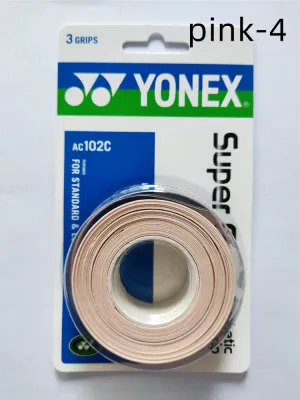
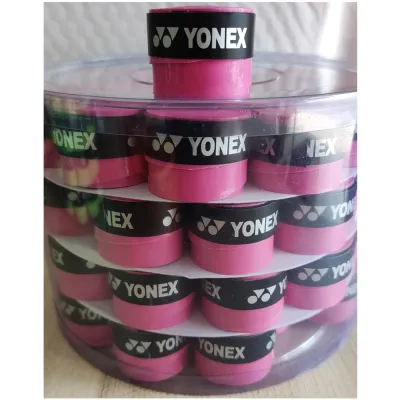
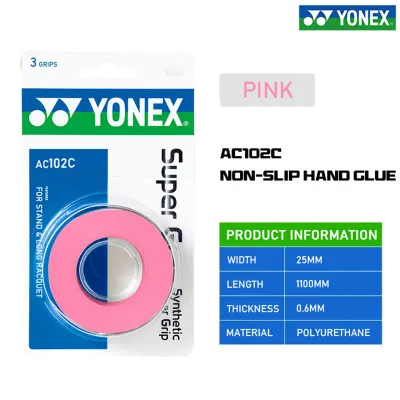
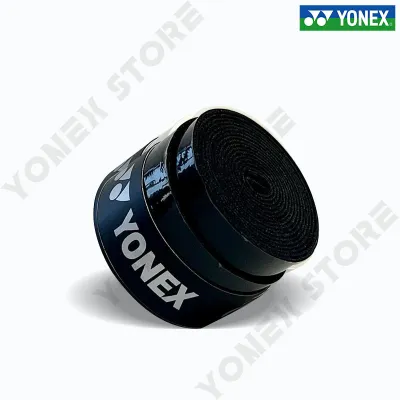
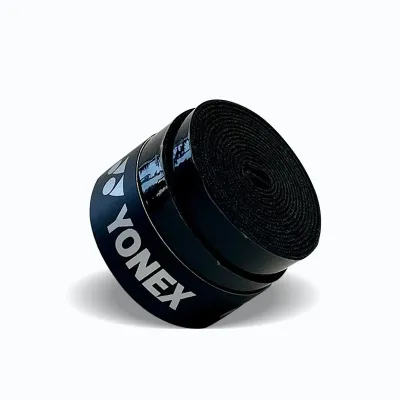
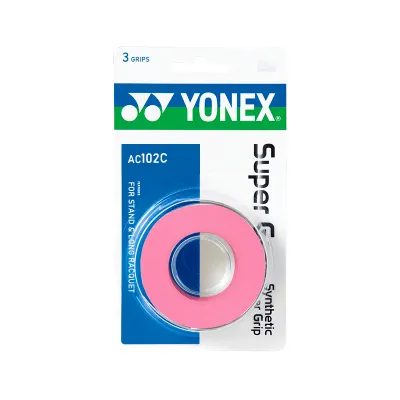
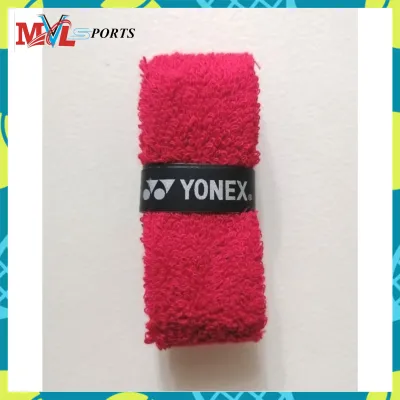
Prices are valid at publication and may change. Please refer to the product page for the latest price.
You will need to install a replacement grip when your racket’s original factory grip begins to crumble, peel, or slip. Over time, the adhesive and foam backing of a factory grip degrade due to friction, pressure, and sweat exposure. Replacing this base layer allows you to restore the handle’s original shock-absorbing properties or permanently alter the handle’s weight and thickness to suit your hand size.
An overgrip, on the other hand, is a much thinner strip of material designed to wrap over an existing base grip. It acts as a protective, easily replaceable outer layer that absorbs sweat and provides immediate surface traction. Using an overgrip is a highly cost-effective way to maintain a fresh, hygienic feel without having to strip down to the bare wood every few weeks.
However, players must be cautious when layering these materials. While wrapping multiple overgrips over a base grip might seem like an easy way to cushion a small handle, doing so can round off the handle’s bevels. The octagonal shape of a badminton handle is critical for finger feedback, helping you instinctively feel the angle of the racket face. Rounding these edges can compromise your control during quick defensive transitions and deceptive net play.
Towel vs. PU (Synthetic) Grips: Material and Feel Comparison
Once you have established your base needs, the next step is comparing the two primary grip materials: cotton towel and polyurethane (PU) synthetics. These materials offer vastly different experiences in terms of moisture management, thickness, and tactile feedback.

Towel grips are made of woven cotton fibers, offering exceptional sweat absorption capacity. They are highly favored by players who experience heavy perspiration, especially when playing in tropical climates or non-air-conditioned sports halls in the Philippines. Because cotton becomes slick when completely saturated, towel grips require the regular application of grip powder (magnesium carbonate) to maintain dry friction and secure handling. This combination creates a thick, highly cushioned, and soft feel that many power hitters prefer.
PU synthetic grips offer a completely different tactile experience. They are categorized into “tacky” and “dry” variants. Tacky PU grips feature a sticky, high-friction surface that provides an incredibly secure hold for players with dry to moderately sweaty hands. Dry PU grips, by contrast, have a velvety, moisture-resistant texture that handles moderate sweat without becoming slippery. Because PU grips are much thinner than towel grips, they offer superior shock transmission, allowing you to feel the precise vibrations of the racket frame for better touch shots.
Durability and maintenance requirements also differ significantly between the two materials. Towel grips have a relatively short functional lifespan because the cotton fibers inevitably harden and stiffen as dried sweat, salt, and skin oils accumulate. Once a towel grip becomes crusty, it loses its absorption capacity and must be discarded. PU grips generally last longer but must be replaced once the polyurethane surface wears smooth, loses its tackiness, or begins to peel and flake under your fingers.
It is also important to note that your material choice directly alters the effective handle size of your racket. A towel grip adds substantial bulk, which can shift the racket’s balance point slightly toward the handle, making the racket feel a bit more head-light. PU overgrips, being much thinner, preserve the original handle dimensions and balance point, allowing the racket to perform exactly as the manufacturer intended.
Decision Matrix: Matching the Grip to Your Playing Profile
To simplify your selection, you can use a condition-based framework that matches specific grip types to your physical profile and playing environment.
Choose towel grips if you are a heavy sweater, frequently play in humid or non-air-conditioned indoor courts, and prefer a thicker, cushioned handle. The cotton fibers will actively draw moisture away from your palms, while the added thickness provides a comfortable, secure hold during high-impact smashes.
Choose PU (tacky) grips if you have dry to slightly sweaty hands, prioritize precise finger feel, and rely on tight racket control for deceptive net play. The sticky surface ensures the racket will not twist in your hand during off-center hits, allowing you to maintain a relaxed grip until the moment of impact.
Choose PU (dry) grips if you sweat moderately, want a balance of moisture resistance and secure hold, and prefer not to use grip powder. These grips provide a consistent, velvety texture that performs reliably across a wide range of temperatures and humidity levels.
Before making your final purchase, always verify your hand size against your current handle thickness. If you have smaller hands and your racket already has a thick handle, adding a thick towel grip can make the handle excessively bulky. This forces your hand to squeeze harder to maintain control, which can quickly lead to forearm fatigue, tension, and a higher risk of repetitive strain injuries.
Installation Checks and Replacement Indicators
Proper installation and timely replacement are essential to get the most out of your chosen Yonex grip. You should regularly inspect your racket for visual and tactile signs of grip failure. These indicators include slipping during aggressive swings, peeling or curling edges, a noticeable loss of surface tackiness, or hardened, crusty towel fibers that no longer absorb moisture.
When applying a new grip, perform basic installation checks to ensure a consistent feel. Start wrapping from the bottom of the handle, maintaining even tension to avoid wrinkles or air pockets. Ensure a consistent overlap of about one to two millimeters along the entire length of the handle. Secure the top end firmly with the provided finishing tape, making sure it does not unravel during play.
Always observe the critical stop condition: if the underlying wooden handle feels soft, damp, splintered, or if the original base grip leaves a stubborn, sticky residue that alters the handle shape, stop wrapping immediately. Do not attempt to play with a compromised wooden core, as this can lead to racket breakage or injury. Instead, consult a professional racket technician or a local sports retailer to inspect or replace the wooden handle.
Finally, remember to always check the specific manufacturer instructions included with your chosen Yonex grip packaging. These guides provide exact wrapping directions, such as adjusting the wrap direction for left-handed or right-handed players, and specific overlap guidelines to ensure optimal performance and durability.
Frequently Asked Questions (FAQ)
Can I apply an overgrip directly onto the bare wooden handle?
Wrapping an overgrip directly onto a bare wooden handle is not recommended. Bare wood lacks the necessary shock absorption, which can lead to uncomfortable vibrations, blisters, or hand fatigue during intense rallies. Furthermore, the wooden handle will directly absorb your hand sweat, causing the wood to rot, weaken, or splinter over time. To protect your racket and maintain structural integrity, always apply a replacement grip or a specialized cushion wrap before layering an overgrip.
How do I maintain a Yonex towel grip to extend its lifespan?
To extend the lifespan of a towel grip, apply grip powder regularly during play to restore dry friction when the cotton fibers become matted with sweat and oils. After your playing session, avoid sealing your racket inside a damp bag; instead, let it air out in a well-ventilated area to dry completely. Keep in mind that heavily soiled, discolored, or hardened towel grips cannot be fully restored by washing and should be replaced promptly to ensure hygienic play and secure racket control.
Community discussion
Share your experience or ask a question. Comments are reviewed before publication.