
To choose the best Zylo home gym equipment, you must align your specific strength training goals—whether building maximum muscle, toning, or improving functional fitness—with your available floor space and experience level. Selecting the right setup requires understanding how different equipment designs support your physical progression while fitting safely within your home environment.
Assess Your Current Fitness Level and Space Constraints
Your fitness journey dictates the type of resistance training equipment that will serve you best. For instance, muscle hypertrophy and powerlifting require progressive overload, which is best supported by adjustable weights, heavy barbells, and robust structural racks. Conversely, general toning and muscular endurance can be effectively targeted with lighter, highly adjustable setups that emphasize high repetitions and controlled movement patterns.
Before purchasing any heavy fitness equipment, you must carefully measure your available floor space and ceiling height. In Philippine homes, particularly urban condominiums or multi-story townhouses, space is often at a premium. Ensure you leave at least a one-meter safety clearance around all sides of the equipment to allow for unhindered movement and safe mounting or dismounting. Ceiling height is especially critical for overhead presses, pull-ups, or high-cable exercises; verify that your ceiling offers at least 2.4 meters of clearance to prevent accidental contact.
Products mentioned in this guide
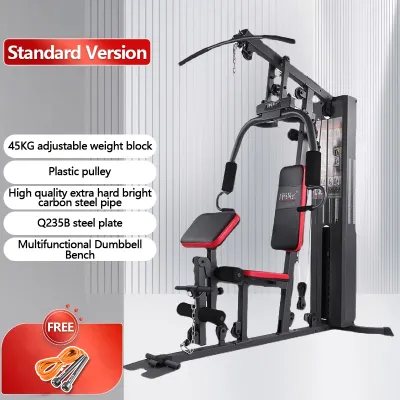
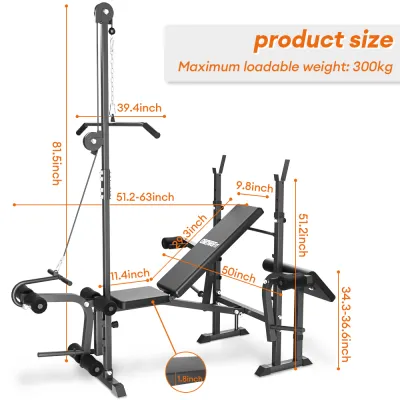
Prices are valid at publication and may change. Please refer to the product page for the latest price.
Floor load-bearing capacity is another vital consideration that is often overlooked. Heavy weight stacks, solid steel racks, and loaded barbells exert immense localized pressure on your flooring. If you are setting up your gym on a second floor or a timber-framed structure, verify the load limits of your building. Utilizing high-density rubber gym mats is highly recommended to distribute the weight evenly, absorb impact, and protect your tiles or wooden floors from structural damage.
Your current experience level should also guide your equipment selection. Beginners often benefit from the guided paths of cable systems or Smith machines, which help establish proper movement patterns with reduced risk. Advanced lifters, on the other hand, typically require the stabilization demands of free weights to engage smaller stabilizer muscles and support natural joint mechanics.
Match Zylo Equipment Categories to Your Specific Goals
Different equipment categories serve distinct physiological adaptations and movement patterns. By understanding how free weights, structural racks, and multi-station cable setups function, you can build a highly efficient home gym tailored to your specific training needs.

Choose Free Weights for Muscle Building and Toning
Free weights, such as Zylo dumbbells and barbells, are the foundation of traditional strength training. They are highly suited for unilateral training, which allows you to work each side of your body independently to correct muscular imbalances and promote symmetrical muscle growth.
When selecting free weights, pay close attention to the following product specifications:
- Grip Texture and Knurling: Look for moderate, non-abrasive knurling patterns on barbells and dumbbell handles. A secure grip is essential, especially during humid tropical seasons when sweat can compromise your hold.
- Weight Increment Options: Verify if the adjustable dumbbell sets offer small, manageable weight increments to allow for smooth progressive overload without straining your joints.
- Storage and Space Efficiency: Evaluate how much floor space a full set of fixed dumbbells requires compared to an adjustable dumbbell system. For compact homes, adjustable models offer excellent space efficiency.
Select Racks and Guided Machines for Heavy Lifting
If your training program centers on heavy compound movements like squats, bench presses, and deadlifts, a robust power rack or a guided Smith machine is an essential investment. These structures provide the necessary safety mechanisms to allow you to lift heavy loads safely, even when training alone.
Power racks offer maximum versatility by providing adjustable safety catches and spotter arms that can catch a loaded barbell if you experience muscle failure. Many racks also feature integrated pull-up bars, plate storage pegs, and landmine attachments, maximizing the utility of a single footprint.
Smith machines utilize a fixed vertical or slightly angled track for the barbell, providing a highly controlled bar path. This guided movement is beneficial for isolating specific muscle groups, performing rehabilitation exercises, or training safely without a human spotter.
Before finalizing your selection, verify these critical specifications on the manufacturer’s label:
- Maximum Weight Capacity: Check the rated weight capacity for both the frame and the safety catches to ensure they exceed your current and target lifting weights.
- Steel Gauge Thickness: Look for frames constructed from heavy-duty steel, such as 11-gauge or 12-gauge steel, which provides superior stability and prevents frame flexing.
- Safety Pin Spacing: Ensure the safety pin holes are spaced closely together, allowing you to position the spotter arms at the precise height needed for your physical dimensions.
Evaluate Multi-Station Setups for Functional Training
For those focusing on functional fitness, athletic conditioning, or rehabilitation, a multi-station cable machine or functional trainer is highly effective. These systems utilize pulleys and weight stacks to provide continuous tension throughout the entire range of motion, which is highly beneficial for joint health and targeted muscle activation.
Cable machines allow for multi-planar movements, meaning you can perform rotational, diagonal, and horizontal exercises that closely mimic real-life movements and sports activities. This versatility makes them an excellent choice for full-body functional routines.
When evaluating a functional trainer, consider the following technical details:
- Pulley Ratios: Check whether the machine uses a 1:1 or 2:1 pulley ratio. A 2:1 ratio provides smoother cable travel and longer cable extension, making it ideal for fast, athletic movements, while a 1:1 ratio delivers the full weight of the stack for heavy strength work.
- Attachment Compatibility: Verify that the cable ends use standard carabiners, allowing you to connect a wide variety of handles, ropes, and bars to target different muscle groups.
- Spatial Footprint and Assembly: Cable machines are typically large and heavy. Verify the exact dimensions and check if the unit requires floor anchoring or wall mounting to remain stable during high-velocity movements.
Verify Essential Specifications and Safety Features
Investing in home gym equipment requires careful attention to safety and structural quality. You must systematically verify key specifications on the manufacturer’s product label to ensure your equipment can withstand rigorous daily use.
Confirm the structural load capacity and material grades of any equipment you consider. High-quality strength equipment should clearly state its maximum user weight and maximum load capacity. Look for frames constructed from high-tensile steel; thicker steel gauges (indicated by lower numbers like 11 or 12) offer superior stability and resistance to bending under heavy loads.
Inspect the stability features of the equipment’s base. Wide, flared bases prevent tipping during dynamic movements, while non-slip rubber foot caps protect your flooring and prevent the machine from shifting during use. If you plan to perform heavy band work or dynamic pull-ups, verify if the frame includes pre-drilled holes for floor anchoring.
Review the warranty terms in detail before purchasing. Manufacturers typically offer different warranty periods for the structural steel frame, moving parts (like pulleys and linear bearings), and wear items (such as cables and upholstery). A comprehensive warranty is a strong indicator of manufacturing quality and long-term durability.
Ensure Authenticity and Valid Warranty Support
To protect your investment and ensure your physical safety, always purchase genuine Zylo equipment through official brand stores, authorized physical showrooms, or verified online marketplaces. Counterfeit or unauthorized replica fitness equipment often uses substandard steel and weak welds, posing a severe risk of structural failure during heavy lifts.
When your equipment arrives, verify that it includes an official warranty card and a visible, unique serial number stamped on the frame. These identifiers are crucial for registering your product and accessing customer support or replacement parts. Avoid purchasing from unverified third-party sellers or parallel importers, as these products often lack valid warranty coverage and may not have undergone the rigorous safety testing required for heavy strength training equipment.
Frequently Asked Questions (FAQ)
Is a Zylo power rack suitable for beginners?
Yes, a power rack is highly suitable for beginners, provided you prioritize safety and proper technique. The adjustable safety catches and spotter arms offer an excellent safety net, allowing novice lifters to practice compound movements like squats and bench presses with minimal risk of injury. Beginners should start with an empty barbell to master the movement path and ensure the safety catches are positioned correctly before gradually adding weight.
How should I maintain cables and pulleys on a Zylo functional trainer?
Maintaining your cable machine is essential for smooth operation and safety, especially in humid tropical climates. Perform weekly visual inspections to check for any fraying, cracking, or peeling on the cable coating. Wipe down the guide rods regularly with a clean, dry microfiber cloth to remove dust and sweat, and apply a thin layer of silicone-based lubricant as specified in the user manual to prevent rust and ensure friction-free movement. Avoid using heavy oils or WD-40, which can attract dirt and clog the pulley bearings.
Community discussion
Share your experience or ask a question. Comments are reviewed before publication.