
A waist resistance band rolling down or slipping during exercises is a common disruption that breaks your focus and compromises your workout form. This issue typically stems from a mismatch between the band’s size, its placement on your body, or the friction provided by your clothing. By identifying the exact cause and applying targeted adjustments, you can stabilize the band and maintain effective, uninterrupted training sessions.
Common Reasons Your Waist Band Rolls or Slips
Choosing a band based solely on generic resistance labels without checking the actual circumference often leads to sizing issues. If a band is too small, it stretches past its intended limit, which increases the inward compressive force. This extreme tension makes the band highly unstable, causing it to curl inward and roll up into a tight, rope-like shape as soon as you begin to move.
The human body naturally tapers, with the waist being narrower than the hips, and the thighs tapering down toward the knees. During dynamic movements like squats, lunges, or lateral walks, your muscles contract and expand rapidly. This muscular movement acts as a physical wedge, pushing the band along the natural slope of your body toward the narrowest point.
Products mentioned in this guide
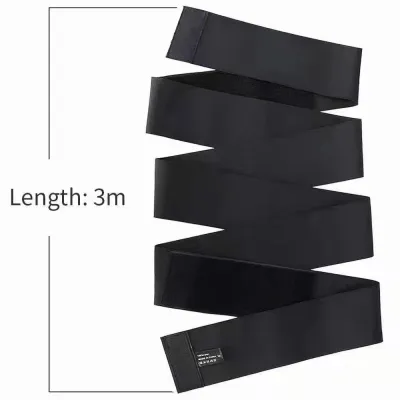
Prices are valid at publication and may change. Please refer to the product page for the latest price.
Modern athletic wear often utilizes high-performance synthetic fabrics like polyester, nylon, or spandex. While these materials are excellent for moisture-wicking and reducing chafing, their ultra-smooth, slick surface offers almost zero friction. When a latex or rubber band is placed over these slippery fabrics, it easily slides out of place with the slightest movement.
Resistance bands are subjected to constant stretching, sweat, and environmental exposure. In warm, humid tropical climates, the combination of moisture and body oils can accelerate the breakdown of natural latex and synthetic elastic fibers. As the elastic core degrades, the band loses its structural integrity and uniform tension, making it much more prone to twisting and rolling during use. Additionally, built-in silicone grip strips can peel or become clogged with lint, neutralizing their anti-slip properties.
Immediate Fixes to Stop the Band From Rolling During Workouts
If your band keeps slipping, avoid placing it directly over or immediately adjacent to major joints like the knees or hips, where the body’s angle changes drastically during movement. Instead, shift the band to a flatter, more muscular zone, such as the mid-thigh or the upper hip bone. This provides a wider, more stable surface area that can absorb muscle contractions without forcing the band to slide.

When dealing with slick synthetic leggings, you can temporarily resolve the slipping issue by switching to high-friction fabrics. Cotton-blend leggings, ribbed athletic tights, or textured fabrics provide a rougher surface that naturally grips the band. If you are working out at home, you can also try placing the band directly on your skin, provided you do not have sensitivities or allergies to the material.
Many resistance bands feature a specific interior weave or raised seams designed to enhance grip. If your band is rolling, try flipping it inside out to see if the opposite side offers better traction against your clothing. Additionally, rotating the band so that the main seam sits at the side of your hip rather than across the front or back can prevent the fabric of your clothes from catching and pulling the band down during forward-bending exercises.
Before you begin any exercise set, take a few seconds to smooth out the band entirely. Even a minor twist, fold, or curled edge creates an area of uneven tension. Once a small section of the band begins to fold over, the kinetic energy of your movement will quickly cause the rest of the band to roll up. Keeping it perfectly flat distributes the tension evenly across its entire width.
How to Choose a Non-Slip Waist Band for Future Workouts
When shopping for a replacement band on an online marketplace, look closely at the product specifications for built-in grip features. High-quality bands often incorporate double or triple rows of wavy silicone strips, rubberized webbing, or textured gel linings on the interior surface. These elements are designed to lock onto your clothing or skin, providing a mechanical barrier against vertical slipping.
Avoid purchasing bands based solely on generic sizing labels, as standards vary wildly between manufacturers. Instead, use a flexible measuring tape to measure the circumference of your waist, hips, or thighs, depending on where you plan to wear the band. Compare these measurements to the manufacturer’s detailed size chart to ensure you select a band that offers the correct level of passive tension without overstretching.
Fabric resistance bands, typically made from a blend of polyester, cotton, and elastic latex threads, are highly superior to bare latex bands when it comes to preventing rolling. The woven fabric exterior is naturally slip-resistant, does not pinch the skin, and maintains its shape under heavy load. Bare latex or rubber bands are highly elastic and excellent for linear stretching, but their thin, sticky nature makes them highly susceptible to rolling, especially when exposed to sweat.
The physical width of the band plays a massive role in its stability. Narrow bands, which are often less than two inches wide, concentrate all the elastic tension into a very thin strip of material, making them highly unstable and prone to curling. Look for bands that are at least three to four inches wide. A wider band distributes the compressive force over a larger surface area, significantly reducing the likelihood of the edges folding over.
Proper Care to Maintain Band Elasticity and Grip
Sweat, body oils, and dead skin cells naturally accumulate on your resistance band during workouts, creating a slick barrier that ruins its grip. To clean fabric bands, hand wash them in cool water using a mild, liquid detergent. Avoid using harsh chemical bleaches or fabric softeners, as softeners leave a microscopic, slippery residue on the fibers and silicone grips, permanently destroying their slip-resistant qualities.
Never place your resistance bands in a mechanical clothes dryer, and avoid hanging them in direct sunlight on an outdoor clothesline. High heat and ultraviolet radiation rapidly degrade natural latex and synthetic elastic fibers, causing them to warp, lose their elasticity, or become brittle and prone to snapping. Instead, gently squeeze out excess water and lay the bands flat to air-dry in a shaded, well-ventilated indoor space. Store them loosely rolled or flat in a cool, dry drawer away from sharp objects.
Before every workout session, perform a quick safety inspection of your resistance bands. Run your fingers along the edges to check for micro-tears, fraying threads, or areas where the internal elastic fibers have snapped and created thin spots. For bands with silicone grips, check to see if the grip strips are peeling or cracking. If you notice any of these signs of wear, or if the band feels significantly looser than when you first bought it, retire the band immediately to prevent it from snapping unexpectedly during an exercise.
Frequently Asked Questions (FAQ)
Can I wear a waist resistance band directly on bare skin?
Wearing a resistance band directly on bare skin can sometimes increase friction, particularly with fabric-wrapped bands that have woven-in grip elements. However, this practice comes with several practical drawbacks, especially in warm and humid tropical environments. As you exercise, sweat accumulates rapidly under the band, which can turn a high-friction surface into a slippery slide, causing latex bands to roll or snap out of place even faster.
Additionally, direct contact with latex, rubber, or synthetic dyes can cause skin irritation, chafing, or allergic contact dermatitis. The constant friction of the band rubbing against bare skin during dynamic movements can also lead to painful friction burns. For optimal hygiene, comfort, and consistent grip, it is generally recommended to wear a thin, breathable, moisture-wicking barrier, such as high-waisted cotton-blend leggings or athletic pants, between your skin and the band.
Does a tighter band prevent rolling better than a looser one?
It is a common misconception that a tighter band will stay in place better than a looser one. In reality, an excessively tight band increases the inward compressive force dramatically. Because your body naturally tapers, this extreme tension forces the band to slide toward the narrowest point of your waist or legs to relieve the stress. The higher the tension, the more aggressively the band will attempt to roll up into a tight, rope-like ring.
Beyond the frustration of constant rolling, wearing an overly tight band poses genuine physical risks. Excessive compression can restrict blood flow to your working muscles, compress superficial nerves, and alter your natural exercise biomechanics, which compromises your workout form and increases the risk of injury. It is far more effective to choose a wider band with built-in non-slip grips that fits comfortably flat against your body while providing the appropriate level of resistance for your current fitness level.
Community discussion
Share your experience or ask a question. Comments are reviewed before publication.