
Choosing the right Wilson tennis bag size depends on balancing your actual racket count with the extra gear required for your playing environment. While a bag’s “pack” rating indicates how many bare rackets can physically fit inside, regular players must factor in shoes, clean apparel, towels, and hydration. In the tropical climate of the Philippines, where high humidity and sudden downpours are common, your bag must also protect your equipment from moisture and extreme heat.
How to Calculate Your True Gear and Racket Capacity
To find your ideal bag size, start by counting your essential on-court equipment. Most recreational players carry one primary racket and one backup in case of a mid-match string breakage. Competitive players or tournament participants often require three or more identical rackets to ensure consistent playability across multiple sets.
Next, estimate the physical volume of your non-racket gear. Playing in warm, humid conditions means you will likely carry a change of clothes, a dedicated sports towel, and a significant amount of water. If you prefer to change into your tennis shoes at the court rather than wearing them during your commute, you must allocate a substantial portion of the bag’s main compartment to footwear.
Products mentioned in this guide

Prices are valid at publication and may change. Please refer to the product page for the latest price.
Your daily commute and transport style play a major role in determining the best bag shape and size. Navigating public transportation, riding a motorcycle or tricycle, or walking through crowded urban areas requires a bag that is easy to maneuver. A massive tournament bag can be cumbersome on a busy train or bus, whereas a compact backpack or a streamlined multi-pack bag fits more easily into tight spaces.
Consider the weather protection needed for your typical travel route. Sudden tropical rain showers can quickly soak a non-water-resistant bag, potentially damaging your grips, strings, and personal electronics. Look for bags that offer weather-resistant materials or can be easily fitted with a protective rain cover during transit.
Wilson 3-Pack Bags: Best for Casual Play and Minimalist Gear
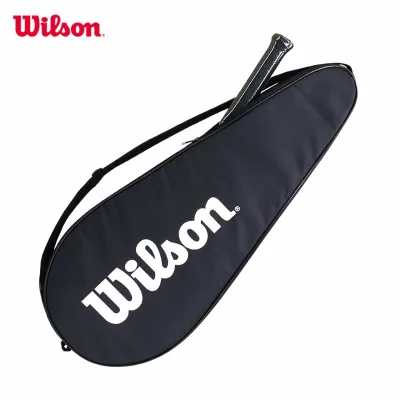
A 3-pack tennis bag is designed for players who prefer a lightweight, streamlined setup and only need to carry one or two rackets. Despite the “3-pack” designation, filling the bag with three rackets leaves virtually no room for anything else. If you carry two rackets, you will have just enough space left for a small can of balls, a spare grip, and your keys.

The primary advantage of this size is its lightweight portability. It is easy to sling over a single shoulder and does not feel bulky when walking to local neighborhood courts. This makes it an excellent choice for casual weekend players who dress in their tennis attire at home and do not need to carry a change of clothes or extra shoes.
However, the trade-off is a complete lack of dedicated compartments for bulky items. You will not find a separate shoe garage or a wet pocket for damp towels in a standard 3-pack bag. Any extra apparel or large water bottles must be carried separately, which can be inconvenient if you plan to travel longer distances.
When evaluating a 3-pack bag, inspect the shoulder strap padding and the basic compartment layout. Since these bags are often carried on one shoulder, a well-padded, adjustable strap is essential to prevent the strap from digging into your shoulder during longer walks. Look for external accessory pockets that allow quick access to smaller personal items without needing to open the main racket compartment.
Wilson 6-Pack Bags: The Versatile Standard for Regular Players
For the majority of club players and regular enthusiasts, the 6-pack bag represents the most versatile and practical choice. This size comfortably accommodates two to four rackets while leaving ample space in the secondary compartment for your court shoes, a fresh change of clothes, and a towel. It strikes a functional balance between storage capacity and physical portability.
A key benefit of a quality 6-pack bag is the dual-compartment design. This layout allows you to keep your clean apparel and sensitive racket strings completely separate from dirty shoes or damp, sweat-soaked towels after an intense session. Keeping these items isolated helps maintain hygiene and prevents unpleasant odors from transferring to your clean gear.
The physical dimensions of a 6-pack bag require more robust carrying options than a simple single shoulder strap. Most models in this category feature dual adjustable shoulder straps, allowing you to wear the bag like a backpack. This backpack-style carry distributes the weight evenly across both shoulders, which is highly beneficial when walking longer distances or commuting.
Before purchasing, assess the ergonomics of the handles and straps. The straps should feature thick, breathable mesh padding to help manage heat and moisture against your body. Check that the grab handles are reinforced with heavy-duty stitching, as a fully loaded 6-pack bag can become surprisingly heavy once you add water bottles and court shoes.
Wilson 9-Pack Bags: Built for Tournaments and Heavy Gear Loads
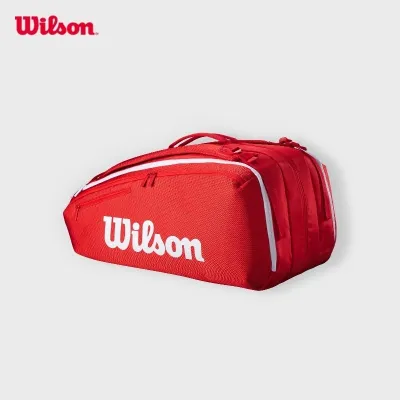
Competitive players, tournament participants, and coaches who need to carry four to six rackets alongside extensive gear will find the 9-pack bag to be the standard requirement. This high-capacity option is built to hold multiple rackets, several changes of clothing, warm-up gear, training aids, and large hydration setups. It is designed for long days spent at the tennis club or tournament venue.
One of the most critical features to verify on a 9-pack bag is the presence of thermal-lined compartments. High tropical temperatures and humidity can cause racket strings to lose tension rapidly and can even warp composite frames if left in a hot car or exposed to direct sunlight. Check the product labels and manufacturer specifications to confirm that at least one compartment features a specialized thermal barrier lining to shield your rackets from extreme heat.
The sheer volume of a 9-pack bag means it can easily become heavy and unbalanced. To counter this, look for a bag with a reinforced structural base that maintains its shape even when partially empty. This structural integrity prevents the bag from sagging and shifting weight uncomfortably against your back while you walk.
The carrying system on a 9-pack bag must be highly durable and adjustable. Look for heavy-duty, padded backpack straps that feature sternum straps to help secure the load. The connection points where the straps meet the bag body should have extra reinforcement, such as box-stitching or metal hardware, to withstand the constant stress of lifting and carrying heavy gear.
Wilson Tennis Backpacks: When to Choose Hands-Free Commuting
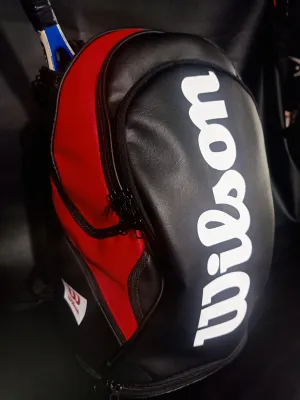
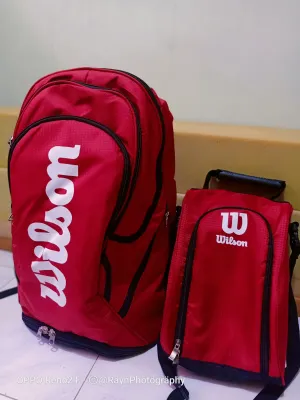
If your primary mode of travel involves riding a bicycle, commuting on public transit, or walking through busy city streets, a tennis-specific backpack is often a superior alternative to a traditional duffel-style bag. Backpacks offer a compact, vertical profile that keeps your hands completely free and minimizes your physical footprint in crowded spaces.
Most tennis backpacks are designed to carry one or two rackets in a dedicated rear compartment. This compartment typically features auto-locking zippers or external holding straps to keep the racket handles secure and prevent them from swaying side to side as you move. While you cannot carry a large collection of rackets, this capacity is perfectly adequate for casual matches and practice sessions.
The main compartment of a tennis backpack is generally optimized for daily organizational needs. Many models include a padded laptop sleeve, dedicated pockets for pens and notebooks, and smaller fleece-lined pockets for delicate items like sunglasses or smartphones. This makes them highly versatile for players who need to transition directly from work or school to the tennis court without carrying multiple bags.
When choosing a backpack, pay close attention to the ventilation features. Look for models that include an isolated bottom compartment or a ventilated shoe pocket to keep dirty court shoes separate from your laptop and clean clothes. Breathable back panels with air-mesh padding are also essential for keeping your back cool during warm commutes.
Structural Features to Verify Before You Buy
Regardless of the bag size you choose, conducting a thorough physical inspection or carefully reviewing detailed product specifications is crucial to ensuring long-term durability. Start by examining the zippers, as they are often the first component to fail under pressure. Look for heavy-duty, smooth-gliding zippers with robust pulls, and check if the seams around the zipper tracks are double-stitched.
Next, verify the water resistance and thermal protection claims by checking the manufacturer’s official material tags. High-quality bags often utilize polyurethane-coated fabrics or durable polyester blends that naturally repel light rain and moisture. If you play in areas prone to sudden downpours, ensuring the outer shell can resist water penetration will protect your expensive rackets and accessories from water damage.
Confirm the exact internal dimensions of the bag to ensure it matches your specific equipment. While standard tennis bags are designed to fit typical adult rackets, some specialized frames or extended-length models may require extra clearance. Measuring your rackets and comparing them to the bag’s listed specifications will prevent any compatibility issues.
Finally, inspect the internal compartment dividers and pocket layouts. Removable or adjustable dividers offer excellent flexibility, allowing you to customize the interior space based on whether you are carrying more rackets or more personal gear on a given day. Ensure that accessory pockets are positioned logically so you can access your keys, wallet, and phone without having to unpack your entire bag.
Frequently Asked Questions (FAQ)
Can I fit extended-length rackets in a standard Wilson 6-pack?
Standard Wilson tennis bags are generally optimized to fit standard 27-inch rackets comfortably. If you play with an extended-length racket, which can measure up to 27.5 or 28 inches, it may fit tightly or cause the zippers to stretch at the corners of a standard bag. To avoid damaging the zippers or your racket frames, always check the specific internal length dimensions on the product tag or the manufacturer’s official website before purchasing.
How do I clean and maintain the interior lining of my tennis bag?
To keep the interior of your tennis bag fresh and free from odors, start by completely emptying all compartments after your playing sessions. Wipe down the interior lining with a soft, damp cloth and a mild soap solution if necessary, then leave all the compartments zipped open to air-dry completely in a shaded, well-ventilated area. Avoid using harsh chemical solvents or submerging insulated thermal compartments in water, and always defer to the manufacturer’s care label for specific cleaning instructions.
Community discussion
Share your experience or ask a question. Comments are reviewed before publication.