
Quick Answer: Matching Your Playstyle to a Wilson Series
Selecting the right tennis racket depends heavily on your experience level, physical conditioning, and how you behave on the court. Wilson categorizes its primary racket lines to target distinct player profiles, allowing you to narrow down your choices before looking at specific technical specifications.
- Choose the Wilson Blade if you are an intermediate to advanced player who prioritizes control, precision, and a traditional feel, and you already possess the physical strength to generate your own swing power.
- Choose the Wilson Clash if you want maximum arm comfort, flexibility, and a forgiving response without sacrificing stability, making it highly suitable for players managing joint strain.
- Choose the Wilson Burn if you are an aggressive baseline player who relies on heavy topspin and explosive frame stiffness to dominate long rallies.
- Choose the Wilson Ultra if you are a beginner or intermediate player seeking effortless depth, a generous sweet spot, and easy power on every stroke.
Because individual models within each series vary in weight, balance, and string pattern, these classifications serve as a starting point. You will still need to verify the exact specifications of a specific model to ensure it matches your physical capabilities.
Comparing the Core Design Focus of Each Series
To understand why these rackets perform differently, it helps to look at the engineering philosophies behind their frame designs. Wilson engineers each line with distinct geometric shapes, carbon layups, and stiffness ratings to produce specific playing characteristics.
Products mentioned in this guide
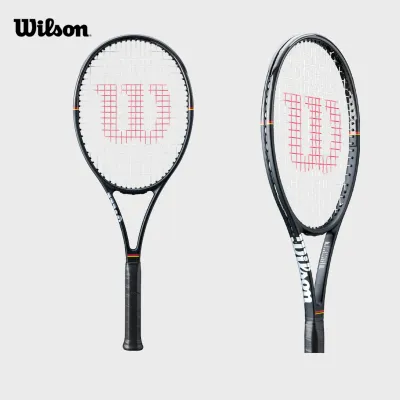
Prices are valid at publication and may change. Please refer to the product page for the latest price.

The Blade is built with a traditional, thinner beam and a lower stiffness rating. This design allows the frame to flex slightly upon impact, keeping the ball on the strings longer to give you maximum feedback and placement control. In contrast, the Clash utilizes a unique carbon-mapping construction that provides extreme flexibility along with high torsional stability, ensuring the racket bends dynamically without twisting during modern vertical swings.
On the power and spin side, the Burn and the Ultra take a different approach. The Burn features a stiff, aerodynamic beam geometry designed to help players swing fast and generate heavy topspin from the back of the court. The Ultra focuses on a thicker, stiffer frame construction that minimizes energy loss on impact, redirecting the ball’s power back across the net with minimal physical effort.
When browsing these options, always check the product packaging or the manufacturer’s official website for specific frame technologies. Look for terms describing frame flexibility, stability systems, and grommet designs, as these proprietary features directly influence how the racket behaves during a match.
Wilson Blade: Choose for Precision and Traditional Feel
The Wilson Blade is engineered for competitive players, advanced club players, and juniors who have developed consistent, fast swing mechanics. If you already generate plenty of natural power and want a racket that keeps your hardest shots inside the lines, this series is designed for your game.
This line focuses on control, touch, and traditional court feedback. When you strike the ball cleanly, the Blade provides a connected feel, letting you know exactly where the ball is heading. This feedback is crucial for players who rely on precise placement, drop shots, and sharp angles to win points.
However, this focus on control means the Blade is less forgiving on off-center hits. In the humid climate of the Philippines, where outdoor concrete courts can make tennis balls feel heavier as they absorb moisture, playing with a demanding racket requires excellent physical preparation. If your timing is slightly off, a less forgiving frame can quickly tire your arm.
Before purchasing, verify the specific head size and beam width on the manufacturer’s spec sheet. The Blade typically features smaller head sizes, such as 98 square inches, which offer excellent precision but require highly consistent contact to avoid weak returns.
Wilson Clash: Choose for Arm Comfort and Flexible Response
The Wilson Clash is designed for players who prioritize joint health, all-court versatility, and a highly forgiving feel. If you suffer from tennis elbow or shoulder discomfort, or if you simply prefer a softer feel at contact, the Clash offers a unique solution.
The engineering goal of the Clash is to deliver high flexibility without sacrificing stability. Historically, highly flexible rackets felt unstable or lacked power, but this series uses modern carbon layups to ensure the frame bends to absorb shock while remaining stiff enough laterally to keep your shots on target.
This blend of attributes makes the Clash highly versatile for recreational players and those who play long sessions under the hot sun. The reduced vibration helps protect your joints from repetitive impact, allowing you to play longer with less physical fatigue.
To ensure the Clash fits your physical conditioning, check the stiffness rating (often measured as RA) and the static weight of the specific model. A lighter version like the Clash 100L is easier to maneuver, while a heavier version offers more plow-through against fast-paced incoming balls.
Wilson Burn: Choose for Aggressive Power and Heavy Spin
The Wilson Burn is built specifically for aggressive baseliners who love to dictate play with heavy topspin and deep, powerful groundstrokes. If your strategy is to stay back, run your opponent side-to-side, and use high-arcing shots to force errors, the Burn is engineered to support this style.
The design emphasis here is on a stiff frame and aerodynamic beam shapes that allow for rapid swing speeds. This stiffness ensures that maximum energy is transferred from your swing directly into the ball, resulting in explosive pace off the court surface.
Additionally, many models in the Burn series feature open string patterns. These patterns allow the strings to grip the ball more effectively, generating the high RPMs needed to make your topspin shots dive sharply before the baseline and bounce high out of your opponent’s reach.
Keep in mind that stiffer frames transmit more vibration to your hand and arm. Players should verify the swing weight and string pattern specifications to ensure they can handle the racket’s maneuverability and stiffness, especially during long matches in tropical humidity where sweat can affect your grip stability.
Wilson Ultra: Choose for Forgiving Power and Easy Depth
The Wilson Ultra is designed to provide effortless power and easy depth, making it an excellent option for beginners, intermediate players, and doubles specialists. If you have a shorter or slower swing style and want the racket to do more of the heavy lifting, the Ultra is highly suited to your needs.
This series features a larger sweet spot and a highly stable frame geometry. The stiff construction prevents the racket from twisting when you hit the ball outside the center of the string bed, ensuring that even off-center hits travel deep into the opponent’s court with decent pace.
For doubles players who spend a lot of time at the net, the Ultra’s stability is highly beneficial. It helps you block back fast volleys with minimal twist, allowing you to maintain control over fast-paced exchanges.
When selecting an Ultra model, pay close attention to the static weight and grip size options. Beginners should generally look for lighter models that are easy to swing, ensuring they can practice proper stroke mechanics without straining their shoulders or wrists.
Final Checklist: Verifying Specs and Fit Before Purchase
Before you invest your hard-earned ₱ in a new Wilson racket, it is essential to run through a practical checklist to confirm that the specific model matches your physical needs and local playing conditions.
- Cross-reference your skill level with key specs: Check the head size, static weight, and balance point on the official spec sheet. Beginners should generally look for head sizes of 100 square inches or larger and lighter static weights to maintain control and comfort.
- Test the grip size and swing feel: If possible, visit a local sports store in the Philippines or participate in a demo program. Holding the racket in your hand and taking a few practice swings will tell you more about its balance than reading a spec sheet online.
- Account for tropical humidity: High humidity causes players to sweat heavily, which can make the racket slip. Ensure you choose a grip size that allows for a comfortable wrap, and plan to use high-quality overgrips to absorb moisture and maintain a secure hold.
- Consult a professional stringer: The strings you choose and the tension at which they are installed will dramatically affect how your racket plays. Tropical heat can cause strings to lose tension quickly, so ask a local stringer to recommend a setup that complements your chosen Wilson series.
Frequently Asked Questions (FAQ)
Can beginners use the Wilson Blade or Burn series?
While beginners can physically play with any racket, the Blade and Burn series are generally not recommended for novices. The Blade requires precise timing and a fast swing to generate depth, which can lead to frustration and poor form if you are still learning basic stroke mechanics. The Burn’s high stiffness can also transmit significant vibration to an untrained arm, increasing the risk of discomfort. Beginners are usually better off starting with the Ultra or Clash series, which offer more forgiveness and built-in power.
How do I know which grip size to choose for my Wilson racket?
To find your grip size, you can use the standard finger-test method. Hold the racket in your dominant hand using a continental grip (as if you were holding a hammer). Slide the index finger of your non-dominant hand into the space between your ring finger and your palm on the handle. If there is not enough room for your index finger, the grip is too small; if there is a large gap, the grip is too large. Keep in mind that adding an overgrip—which is highly recommended in the humid climate of the Philippines to manage sweat—will increase the handle size by about half a size, so factor this into your decision.
Community discussion
Share your experience or ask a question. Comments are reviewed before publication.