
Quick Answer: Which Golf Tee Material Should You Choose?
Choosing the right golf tee is a small decision that has a surprisingly noticeable impact on your daily rounds, your wallet, and your overall flow on the course. There is no single option that suits every player perfectly; instead, your choice should align with your playing frequency, your swing mechanics, and what you value most during a round.
For casual players, traditionalists, and those who prioritize environmental sustainability, the classic wood tee remains the standard choice. It offers an organic feel, a low upfront cost, and the peace of mind that comes with using a biodegradable material that naturally decomposes if left behind.
Conversely, if you are a high-frequency golfer, someone with a steep angle of attack, or a player who values setup consistency above all else, plastic or composite tees are highly practical. These durable alternatives resist breakage and often feature built-in height markers that help you set up identical conditions for every drive.
Products mentioned in this guide
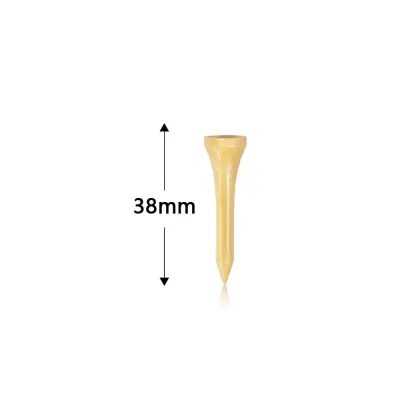

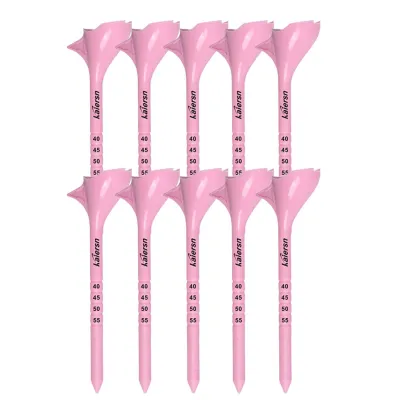
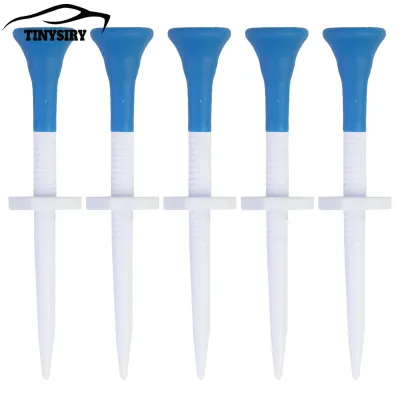
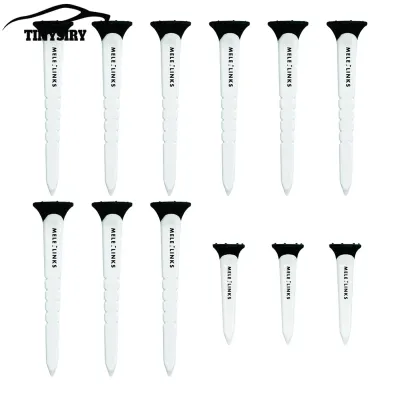
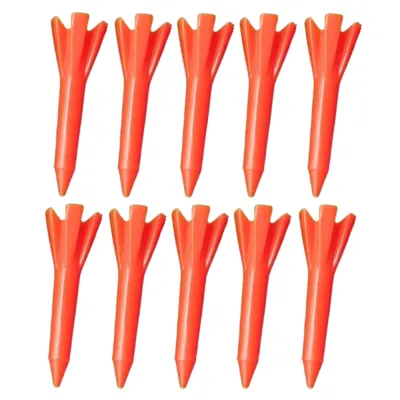
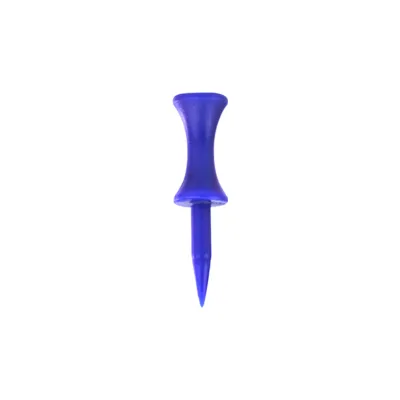
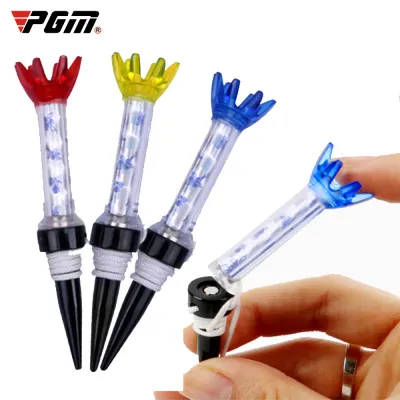
Prices are valid at publication and may change. Please refer to the product page for the latest price.
To find your ideal match, you must weigh several key factors: physical durability, long-term cost per round, performance consistency, and environmental impact. Understanding how these elements interact with your personal swing style will help you make the most practical choice for your game.
Durability and Lifespan: How Long Do They Really Last?
Wood Tees: Splintering and Breakage
Wood tees, typically crafted from hardwoods like birch or maple, are designed with a straight grain that provides excellent vertical strength. However, this lateral rigidity makes them highly susceptible to horizontal shear forces. When your driver sweeps through the hitting zone, any downward strike or steep angle of attack pinches the tee between the heavy clubhead and the compacted turf, causing the wood fibers to shear and snap.

A player’s swing mechanics dictate tee lifespan far more than the number of holes played. Golfers who sweep the ball with a clean, upward angle of attack can sometimes play an entire nine-hole round with a single wood tee. In contrast, players who hit down on the ball, creating deep divots, may break a wood tee on almost every tee box.
To maintain a stable setup, you must know when to discard a damaged wood tee. Look for hairline cracks along the shaft, a flattened or chipped cup that fails to hold the ball securely, or a bent tip. Trying to use a splintered tee can lead to minor finger pricks or, more importantly, an unstable ball that tilts right before you start your backswing.
Plastic Tees: Bending, Warping, and Snapping
Plastic tees are engineered from flexible polymers designed to absorb and deflect the energy of a high-speed clubhead. Instead of snapping upon impact, a plastic tee flexes forward, allowing the club to pass through with minimal structural resistance. This flexibility gives plastic tees a significantly longer physical lifespan than their wooden counterparts, often lasting dozens of drives before showing signs of wear.
However, plastic is not indestructible, and its performance is highly sensitive to environmental conditions. In tropical climates like the Philippines, where courses are exposed to intense sunlight and high ambient temperatures, plastic tees face rapid UV degradation. Prolonged exposure to solar radiation breaks down the polymer chains, causing the material to become brittle over time.
Additionally, leaving plastic tees in a hot golf bag or a car trunk can cause them to warp or bend permanently. You should regularly inspect your plastic tees for structural fatigue, looking for “stress whitening”—light-colored bands along the shaft where the plastic has bent repeatedly. Other signs of wear include deformed or melted prongs at the cup and a permanent curve in the shaft that prevents the tee from being pushed straight into dry, hard clay soil.
Performance and Feel: Does Tee Material Affect Your Shot?
Many manufacturers of specialized plastic tees claim that their pronged, brushed, or flexible designs offer “zero friction” or “low resistance,” leading to increased distance and reduced spin. While these claims sound appealing on the packaging, launch monitor testing consistently demonstrates that the physical material of a standard tee has a negligible impact on ball flight. At clubhead speeds typical of amateur golfers, the difference in friction between a smooth wood cup and a multi-pronged plastic crown is too small to alter your distance or spin rate in any meaningful way.
Where plastic tees do offer a tangible performance advantage is in setup consistency. Many plastic models feature molded-in ridges, colored bands, or step-down collars. These physical markers allow you to insert the tee to the exact same depth on every hole, ensuring a consistent ball height relative to your driver’s sweet spot. With traditional wood tees, you must rely entirely on visual estimation, which can vary depending on the thickness of the grass or your level of fatigue.
Despite the consistency of plastic, many golfers stick to wood because of the subjective “feel” and tactile feedback. A wood tee provides a crisp, organic snap when broken and a classic, muted sound at impact. For traditionalists, the ritual of pulling a smooth, painted wooden peg from the pocket and pushing it into the turf is an essential part of the game’s sensory appeal—a feeling that synthetic materials struggle to replicate.
Cost and Value: Calculating the True Price per Round
At first glance, wood tees appear to be the far more economical choice. A bulk bag of 100 standard wood tees typically retails for around ₱150 to ₱250 on online marketplaces, translating to just ₱1.50 to ₱2.50 per tee. In contrast, a small pack of four or five premium plastic tees can cost anywhere from ₱300 to ₱400, representing a much higher upfront investment of ₱75 to ₱100 per tee.
To find the true value, you must calculate your cost per round based on your personal breakage and loss rates. Consider this comparison:
- The Wood Tee Scenario: If you break or lose an average of five wood tees per 18-hole round, a ₱200 bag of 100 tees will last you about 20 rounds. This results in a cost of approximately ₱10 per round.
- The Plastic Tee Scenario: If you purchase a pack of four plastic tees for ₱300 and manage to keep them without losing them, a single tee can easily last 15 to 20 rounds. Even if you lose one or two over the course of a season, your cost per round drops to around ₱3 to ₱5.
However, this mathematical advantage depends entirely on your ability to find your tee after your swing. Plastic tees are highly durable, but they are still subject to the physical laws of recoil. A fast swing can launch a plastic tee several meters backward or into nearby brush. To combat this, manufacturers often color plastic tees in bright, high-visibility neon shades like pink, orange, or yellow. Wood tees, especially unpainted or natural-finish models, blend easily into the grass and are frequently left behind, turning a low-cost item into a recurring expense if you constantly lose them.
Environmental Impact and Course Maintenance
The ecological footprint of your golf gear is an increasingly important consideration for modern players and course operators alike. Wood tees are entirely biodegradable. When a wooden tee breaks and the fragments are left in the grass, they naturally decompose over a few weeks, returning organic matter to the soil. Golf course superintendents generally prefer wood because broken pieces pose no threat to expensive fairways and tee box maintenance equipment.
If a commercial mower runs over a wooden tee fragment, the spinning steel blades easily chop through the soft wood without sustaining damage. Plastic tees present a very different set of challenges. Because they are non-biodegradable, a lost plastic tee can remain embedded in the turf for decades. When these synthetic pegs find their way into the rough or fairways, they can cause severe damage to the reel mowers used by maintenance crews, dulling or chipping blades that cost thousands of pesos to sharpen or replace.
Over time, run-over plastic tees shred into microplastics, which can contaminate local water hazards and soil ecosystems. For golfers seeking a middle ground, bamboo and wood-plastic composites offer an excellent alternative. Bamboo tees are exceptionally strong—often resisting breakage far better than standard hardwoods—yet they remain fully biodegradable. Composite options combine natural wood fibers with biodegradable binders, giving you much of the durability of plastic without the long-term environmental guilt.
Decision Framework: Choose Wood or Plastic Based on Your Game
To help you finalize your purchase, use this simple framework based on your playing style, budget, and local course conditions.
Choose Wood if:
- You play golf occasionally or are just starting out and want to keep your initial equipment costs low.
- You prefer the traditional look, crisp sound, and natural feel of classic golf gear.
- You frequently forget to pick up your tee after driving and want to ensure you leave no permanent waste on the course.
- You prioritize environmental sustainability and want a fully biodegradable option.
Choose Plastic if:
- You play multiple rounds a week and want a highly durable tee that can survive dozens of high-velocity drives.
- You have a steep swing path that breaks standard wood tees almost every time you hit a driver.
- You struggle with consistent setup heights and want molded markers or step-down collars to standardize your ball placement.
- You want high-visibility colors that are easy to spot in the grass after your swing.
Verify first if: Before stocking up on bulk packs, verify the rules of the specific events or courses where you play. While the R&A and USGA permit both wood and plastic tees under the standard Rules of Golf, certain private clubs or eco-sensitive resort courses may enforce local rules banning plastic tees to protect their mowing equipment and local wildlife. Always check the club’s local policies or tournament guidelines to ensure your gear is fully compliant.
Frequently Asked Questions (FAQ)
Do professional golfers use wood or plastic tees?
The vast majority of touring professionals use traditional wood tees. This preference is driven by a combination of lifelong habit, the desire for consistent tactile feedback, and sponsor agreements with classic equipment brands. Because professional golfers have highly optimized, upward angles of attack with their drivers, they rarely break tees on clean drives, meaning the durability advantage of plastic is less relevant to them.
Are bamboo golf tees a better alternative?
Bamboo golf tees are an exceptional alternative that bridges the gap between wood and plastic. Bamboo fibers are naturally more flexible and tensile than standard hardwood, allowing these tees to bend slightly and resist snapping under impact. This makes them significantly more durable than traditional birch wood while remaining 100% biodegradable, offering eco-conscious players the best of both worlds.
Community discussion
Share your experience or ask a question. Comments are reviewed before publication.