
To compete in sanctioned World Taekwondo (WT) sparring tournaments, choosing the correct gear is a matter of both athletic performance and strict regulatory compliance. A compliant kyorugi dobok taekwondo uniform must feature the official WT approval logo, a pullover V-neck design completely free of hard fasteners, a solid white base, and a lightweight, breathable fabric blend optimized for rapid kicking.
While your training and physical conditioning form the foundation of your sparring success, failing an equipment inspection can disqualify you before you even step onto the mat. In the tropical climate of the Philippines, where high humidity inside tournament venues is common, your uniform must also balance regulatory compliance with thermal comfort. Understanding these technical specifications ensures your gear supports your mobility while meeting every official standard.
Remember that while a compliant uniform is mandatory, safety equipment and proper training are your primary defenses; a dobok cannot replace active defensive skills or referee judgment. Always inspect your gear before stepping onto the mat.
Products mentioned in this guide
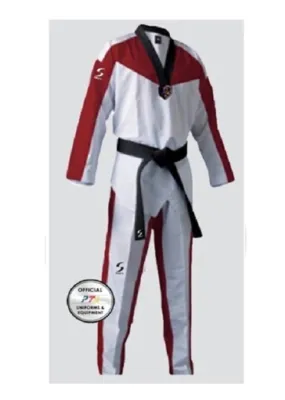
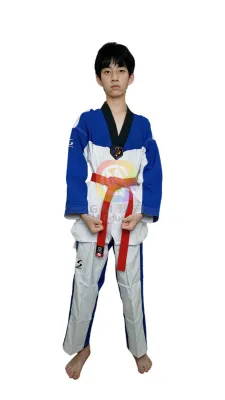
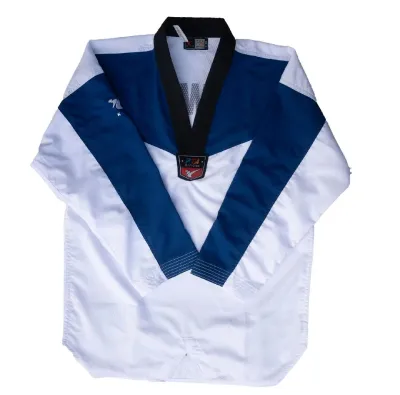
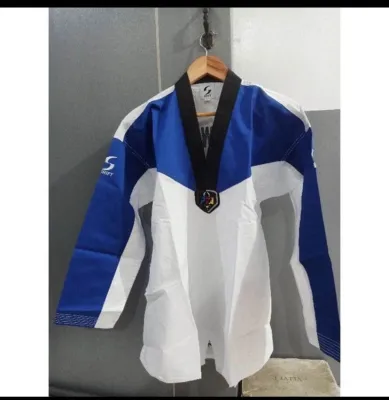
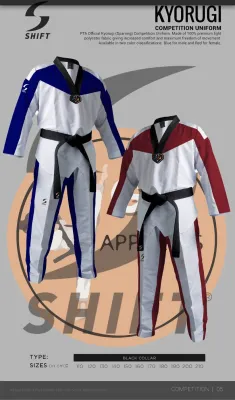
Prices are valid at publication and may change. Please refer to the product page for the latest price.
Decoding the WT Approval Mark and Certification
The most critical feature of any competition-ready uniform is the official World Taekwondo approval mark. This certification indicates that the manufacturer has met the precise dimensional, safety, and material standards set by the international governing body. The mark is typically displayed as an embroidered or printed WT logo, usually positioned on the chest, sleeve, or upper back of the jacket, as well as on the upper thigh of the pants.
It is vital to distinguish a WT-approved kyorugi dobok taekwondo uniform from standard training uniforms and specialized poomsae (forms) uniforms. Training uniforms often lack the official certification mark, while poomsae uniforms feature distinct cuts and colors, such as open-front jackets or colored pants, which are entirely prohibited in sparring divisions. Wearing a non-approved uniform to the official weigh-in or equipment check is one of the most common reasons athletes face immediate disqualification.
Before making a purchase, always verify the current certification status of the brand and model. You can cross-reference the manufacturer’s claims with the list of approved equipment on the official World Taekwondo website or consult authorized local distributors. Because WT updates standards periodically to enhance athlete safety and fair play, a model that was approved in previous years may not necessarily meet current competition requirements.
Mandatory Design Specs: V-Neck, Fit, and Color for Kyorugi Dobok Taekwondo
The physical construction of a kyorugi dobok is highly regulated to minimize injury risks for both competitors. The jacket must feature a pullover V-neck (or Y-neck) design. Under WT rules, any form of hard fastener—including zippers, buttons, snaps, velcro, or tie-strings—is strictly prohibited on the jacket. These components can cause scratches, cuts, or puncture injuries during high-impact exchanges, or they can catch on an opponent’s foot protector during a kick.

Color requirements are equally strict to maintain visual uniformity and facilitate clear scoring. The baseline standard for WT kyorugi jackets and pants is plain white. While some national teams or professional leagues utilize colored uniforms, standard amateur and regional tournaments require a clean, white base. You must check the specific tournament rulebook regarding the collar color; while black collars are traditionally reserved for black belt holders, some junior or novice divisions may require a red-and-black (poom) collar or a plain white collar.
Fit and length parameters are designed to balance protection with unrestricted movement. The sleeves of the jacket must extend to cover the elbows and reach at least halfway down the forearm, but they must not extend past the wrist joint. Similarly, the pant legs must cover the knees and reach down to the ankles, but they must not be so long that they drag on the mat or create a tripping hazard. The uniform must also accommodate mandatory protective gear, including forearm guards, shin guards, and a trunk protector (hogu), without stretching or restricting your range of motion.
Because local tournaments, such as those sanctioned by the Philippine Taekwondo Association (PTA), may enforce specific local variations or strict tolerances depending on the age and skill level of the competitors, always consult the event’s official bulletin. Ensuring your uniform fits correctly under these guidelines prevents last-minute adjustments or forced replacements at the venue.
Fabric Traits That Matter for Kyorugi Mobility
Unlike traditional martial arts uniforms made from heavy, stiff cotton canvas, modern kyorugi doboks rely on advanced synthetic fabric blends. Sparring requires explosive speed, high kicks, and rapid footwork, meaning your uniform must offer maximum flexibility and minimal resistance. Heavy fabrics hold moisture and become heavy when wet, which slows down your kicks and drains your energy over multiple rounds.
In the hot and humid conditions characteristic of Philippine sports arenas, moisture-wicking and quick-drying properties are essential. High-performance doboks typically utilize polyester-cotton blends or 100% specialized polyester fabrics designed to pull sweat away from your skin. This prevents the fabric from clinging to your limbs, which can severely limit your kicking range and cause chafing during intense matches.
The weight and weave of the fabric also influence your performance and comfort. Many WT-approved uniforms feature textured weaves, such as ribbed, diamond, or honeycomb patterns. These structures minimize the surface area of the fabric making contact with your skin, allowing air to circulate and keeping you cooler. Additionally, these specialized weaves are designed to be highly durable, resisting tearing or stretching when grabbed or pulled during close-range clinches.
In the Philippine market, WT-approved doboks generally span broad price bands, typically ranging from ₱2,000 for entry-level certified models to upwards of ₱6,000 for premium, ultra-lightweight performance uniforms. When purchasing a new uniform, always check the manufacturer’s care instructions regarding shrinkage. Synthetic-dominant blends generally resist shrinking, but any cotton content can contract when exposed to heat. A dobok that fits perfectly out of the package may shrink after washing, rendering it too short to meet official length requirements during pre-competition inspections.
Branding and Patch Placement Limits
To maintain a professional and uncluttered appearance on the mat, World Taekwondo enforces strict limits on the size and placement of logos, national flags, and sponsor patches. Excessive or oversized branding that obscures the uniform’s standard white canvas is not permitted. This ensures that referees and electronic scoring systems can clearly observe the competitors and their protective gear.
Authorized zones for manufacturer logos are highly specific. Generally, a single manufacturer logo of a restricted size is allowed on the jacket chest, one sleeve, and one pant leg. National flags or regional association patches are typically restricted to the upper arm or the left side of the chest, opposite the WT logo.
It is critical to avoid sewing on unapproved, abrasive, or hard-backed patches. Patches made from stiff materials or those with exposed embroidery threads can cause skin abrasions during close-quarters clinches. Furthermore, any modification that alters the structural integrity or fit of the uniform can result in a failed equipment check.
Before making any permanent alterations, such as sewing your dojang’s custom patch or a sponsor logo onto your dobok, verify the guidelines with your national association or the specific tournament organizers. When in doubt, keeping the uniform as close to its original, factory-approved state as possible is the safest path to passing inspection.
Pre-Mat Verification Checklist
To ensure a stress-free competition day, athletes and coaches should perform a systematic verification of the uniform before heading to the venue. This checklist helps identify potential compliance issues while you still have time to address them:
- Verify the WT Mark: Inspect the jacket and pants to confirm the official WT approval logo is present, legible, and has not faded or peeled off through washing.
- Check for Damage and Fasteners: Examine the entire uniform for tears, loose seams, or unauthorized modifications. Ensure there are no hidden metal snaps, zippers, or tie-strings.
- Assess the Fit with Gear: Put on the dobok over your full sparring gear, including your trunk protector, arm guards, and shin guards. Verify that the sleeves and pant legs cover your joints properly and do not restrict high kicks.
- Review Cleanliness: Ensure the uniform is clean, free of stains, and presentable, as dirty or heavily stained uniforms can be rejected by officials.
- Prepare a Backup: Always pack a second, fully compliant WT-approved dobok in your gear bag. The head referee at the tournament has the final authority on equipment compliance, and having a backup ensures you can quickly resolve any unexpected disputes at the inspection table.
Frequently Asked Questions (FAQ)
Can I wear a poomsae dobok for kyorugi competitions?
No, you cannot wear a poomsae dobok for kyorugi sparring competitions. Poomsae uniforms feature different cuts, heavier fabrics designed to create a loud snapping sound, and often colored pants or open-front jackets. These designs do not provide the safety, flexibility, or fit required for sparring and will fail the pre-match equipment inspection.
Do I need a black collar if I am a black belt?
While black collars are standard for black belts in local training sessions, WT competition rules may vary. Many official events require a specific collar style or color depending on the division (such as red-and-black for junior poom holders). Always consult the specific tournament’s technical handbook to confirm whether a black collar is permitted or if a plain white collar is required for your division.
Community discussion
Share your experience or ask a question. Comments are reviewed before publication.