
Choosing the right taekwondo kyurugi uniform is a critical decision that directly impacts your comfort, mobility, and eligibility to compete. The choice between a World Taekwondo (WT) approved uniform and a standard training uniform depends entirely on your current skill level, competitive goals, and training environment. While both styles serve the fundamental purpose of allowing unrestricted movement during high kicks and rapid footwork, they are designed with different standards, materials, and price points in mind.
For practitioners who actively participate in official, sanctioned tournaments, investing in a WT-approved uniform is a strict requirement. However, for those focusing on daily sparring classes, fitness, or promotional belt exams within a local gym, a standard training uniform offers a highly practical, durable, and cost-effective alternative. Understanding how these uniforms differ in fabric technology, cut, and regulatory compliance will help you make an informed purchase that aligns with your budget and training needs.
Understanding the Core Differences
To make the right choice, you must first understand what sets these two categories apart. A WT-approved uniform is officially certified by World Taekwondo, the international governing body for the sport. This certification guarantees that the uniform meets strict regulatory standards regarding its dimensions, logo placement, fabric weight, and overall design. These uniforms are specifically engineered for kyorugi (sparring) competition, where speed, weight reduction, and moisture management are paramount.
Products mentioned in this guide
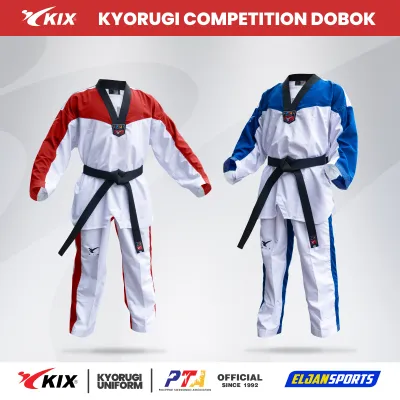
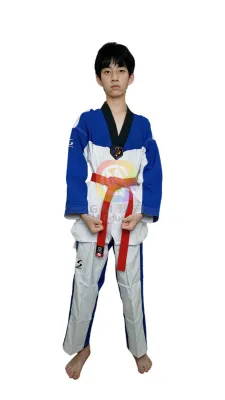
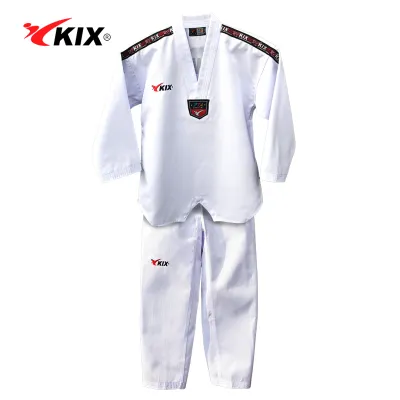
Prices are valid at publication and may change. Please refer to the product page for the latest price.
In contrast, standard training uniforms are designed for general use. They do not carry the official WT certification mark and are not bound by the same rigid design constraints. Standard uniforms often prioritize durability and affordability, making them excellent for the daily wear-and-tear of club practice.
The fabric composition differs significantly between the two. WT-approved uniforms typically utilize advanced, ultra-lightweight synthetic blends, such as 100% polyester or polyester-spandex mixes. These fabrics often feature specialized woven textures, such as diamond or ribbed patterns, designed to prevent the material from sticking to sweaty skin during intense matches. Standard training uniforms, on the other hand, frequently use heavier poly-cotton blends. While these blends are highly durable and comfortable for general training, they tend to absorb more moisture and can become heavy and stiff when saturated with sweat.
Design cuts also vary. WT-approved kyorugi uniforms feature a modern V-neck pullover design with a streamlined, aerodynamic fit that minimizes excess fabric for opponents to grab or for electronic scoring systems to get obstructed by. Standard uniforms may offer a slightly more relaxed or traditional fit, providing extra room for comfort but potentially adding bulk during high-speed sparring exchanges.
When a WT-Approved Uniform is Mandatory
If your athletic path includes official competition, a WT-approved uniform is not merely an option; it is a strict requirement. Sanctioned tournaments, ranging from national championships to regional qualifiers and international open events, enforce rigorous gear checks. Wearing a non-approved uniform during these events will lead to immediate disqualification at the staging area.

In the Philippines, official tournaments organized by the national sports association or recognized regional bodies strictly adhere to WT rules. If you aspire to join the national pool, compete in major inter-school athletic associations, or participate in official ranking tournaments, you must wear a uniform that displays the approved WT logo. This logo is typically embroidered or printed on the right chest of the jacket and the right thigh of the pants, serving as a visual indicator of compliance for referees and officials.
Before purchasing, it is vital to verify the authenticity of the certification. Genuine WT-approved uniforms feature specific identification marks, such as woven labels, holographic tags, or official logos integrated into the fabric design. Always inspect these details carefully, as counterfeit gear or uniforms with generic “taekwondo” labels will not pass official inspection. If you are an advanced competitor or a rising athlete transitioning into the tournament circuit, having at least one fully compliant WT-approved uniform in your gear bag is essential to ensure you are always tournament-ready.
Why Standard Training Uniforms Suit Daily Sparring
While WT-approved uniforms are indispensable for official matches, standard training uniforms are often the superior choice for daily sparring and regular gym sessions. The primary advantage of a standard uniform lies in its rugged durability. Daily training involves repetitive stretching, grabbing, falling, and high-intensity friction. Standard poly-cotton uniforms are built to withstand this constant abuse without tearing or wearing thin prematurely.
Furthermore, standard uniforms are highly cost-effective. For beginners who are still testing their commitment to the sport, or for rapidly growing children who may outgrow their gear within a single season, investing in a premium, certified uniform is rarely practical. Standard uniforms allow practitioners to train comfortably without the financial burden of high-end competition gear.
The tropical climate of the Philippines also plays a role in uniform selection. High humidity and intense heat mean that uniforms must be washed frequently—often after every single training session. Standard poly-cotton blends hold up exceptionally well to frequent machine washing and heavy-duty detergents. They maintain their structural integrity over hundreds of wash cycles, whereas the delicate, high-tech synthetic fibers and printed logos of competition-grade uniforms can degrade more quickly under harsh washing conditions.
Additionally, the slightly heavier weight of a standard uniform can actually serve as an excellent training tool. Practicing in a slightly heavier, more resistant uniform builds stamina and strength. When you eventually switch to an ultra-lightweight competition uniform for a tournament, you will experience a noticeable boost in speed, lightness, and agility.
Comparing Key Specifications and Value
When shopping for a taekwondo kyurugi uniform, comparing physical specifications on the product label is crucial to finding the right balance of performance and value. Look closely at the fabric composition. High-performance uniforms designed for sparring often incorporate mesh ventilation panels in high-heat zones, such as the armpits, sides of the torso, and the back of the knees. These panels allow air to circulate, which is incredibly beneficial in hot, humid training environments.
Reinforcement zones are another critical indicator of quality. A reliable sparring uniform must feature double or triple stitching in high-stress areas. Check the crotch gusset, the armpits, and the side slits of the jacket. Without proper reinforcement, the explosive hip rotation required for roundhouse and back kicks can easily cause seams to split.
When budgeting in ₱, standard training uniforms represent a highly accessible entry point, whereas WT-approved models require a larger financial commitment due to their specialized materials and licensing. To evaluate long-term value, divide the cost in ₱ by your estimated weekly training sessions over a year. If you train once or twice a week, a standard uniform offers excellent long-term value. If you train four to six times a week and compete regularly, investing in a premium WT-approved uniform is justified by its specialized performance benefits.
| Feature | WT-Approved Uniform | Standard Training Uniform |
|---|---|---|
| Primary Intended Use | Official sanctioned tournaments and elite sparring | Daily club training, promotional exams, and casual sparring |
| Fabric Composition | Ultra-lightweight synthetic blends (100% polyester) | Durable poly-cotton or medium-weight ribbed blends |
| Breathability & Weight | Extremely light, quick-drying, often features mesh panels | Moderate weight, highly absorbent, standard ventilation |
| Reinforcement | High-stress areas reinforced with lightweight stitching | Heavy-duty double or triple stitching for maximum durability |
| Regulatory Compliance | Fully compliant with World Taekwondo competition rules | Not approved for official sanctioned tournaments |
| Relative Price Tier | Premium investment | Budget-friendly to mid-range |
Verifying Sizing, Fit, and Care Instructions
Securing the correct fit is essential for maintaining maximum mobility during sparring. Taekwondo uniforms are sized primarily by height in centimeters, but you must always cross-reference your measurements with the specific manufacturer’s sizing chart. Competition-cut uniforms tend to have a slimmer, more tailored fit to reduce excess fabric, which means you may need to size up if you prefer a looser fit or have a broader build.
Shrinkage is another critical factor to keep in mind. Uniforms containing a high percentage of cotton will inevitably shrink during the first few washes. If you purchase a poly-cotton standard uniform, it is often wise to choose a size slightly larger than your exact measurements to accommodate this shrinkage. Conversely, 100% synthetic WT-approved uniforms are highly resistant to shrinking, meaning the fit you try on out of the box is the fit you will keep.
When your uniform arrives, perform a thorough physical inspection before removing any tags. Check the quality of the stitching along the hem of the pants and sleeves. Ensure the collar is stiff enough to hold its shape but flexible enough not to chafe your neck. Verify that all official logos and certification labels are securely attached and free of printing defects. Following the manufacturer’s care instructions—such as washing in cold water and air-drying—will preserve the fabric’s elasticity and keep the white fabric looking bright.
Final Decision Framework
To finalize your purchase, evaluate your current training status against a few simple decision rules. Choose a WT-approved uniform if you are actively competing in sanctioned tournaments, preparing for national-level selections, or if your local club requires certified gear for advanced sparring classes. The specialized lightweight fabric and guaranteed regulatory compliance make it an indispensable tool for serious competitors.
Opt for a standard training uniform if your primary focus is regular gym practice, self-defense, or if you are a beginner or intermediate student. The superior durability, ease of maintenance, and lower cost make it the most practical choice for daily wear.
If you find yourself transitioning between casual training and competitive sparring, consult your club instructor (sabumnim) before buying. They can provide valuable guidance on the specific requirements of your gym and help you determine the exact moment you need to upgrade to a certified competition uniform.
Frequently Asked Questions (FAQ)
Can I wear a standard uniform to a local sparring meetup?
Yes, standard training uniforms are generally perfectly acceptable for informal sparring meetups, inter-club friendly matches, and daily gym practice. These events focus on skill development rather than strict regulatory compliance, so the lack of a WT certification mark will not be an issue. However, it is always a good practice to check with the host gym or event organizer beforehand to ensure there are no specific dress codes, safety requirements, or weight restrictions regarding the gear you plan to wear.
How do I wash my kyorugi uniform to prevent shrinking?
To prevent your uniform from shrinking and to preserve the integrity of any printed WT logos, always wash it in cold water on a gentle cycle. Avoid using bleach, as it can weaken the synthetic fibers over time and cause yellowing. Hang the uniform to air-dry instead of using a high-heat clothes dryer, which is the primary cause of fabric shrinkage and logo peeling. Always prioritize the specific care label attached to your uniform, as different fabric blends require distinct maintenance steps.

Community discussion
Share your experience or ask a question. Comments are reviewed before publication.