
Living in a compact high-rise condominium in metropolitan areas like Metro Manila or Cebu requires strategic spatial planning before adding any fitness equipment. A Xiaomi walking pad is a popular space-saving solution for maintaining an active lifestyle at home, but its compact design does not eliminate the need for careful layout planning. To set up this equipment safely and comfortably, you must account for both its physical footprint and a surrounding buffer zone. Generally, you will need a dedicated floor area of at least 1.5 meters by 0.7 meters for the active machine, plus an additional safety clearance of 1 to 1.5 meters behind the unit and 0.5 meters on either side.
Failing to plan for these spatial demands can lead to cramped workouts, damaged furniture, or even physical injury. By understanding the distinction between storage size and active operational space, you can seamlessly integrate a walking pad into your daily routine without sacrificing the limited living area of your condo.
Decoding the Physical Footprint: Folded vs. Unfolded Dimensions
Before purchasing or unboxing your fitness equipment, you must distinguish between the space the machine occupies while stored and the space it requires when fully deployed. Xiaomi walking pads are celebrated for their folding mechanisms, but their static folded dimensions can be highly deceptive compared to their active footprint.
Products mentioned in this guide
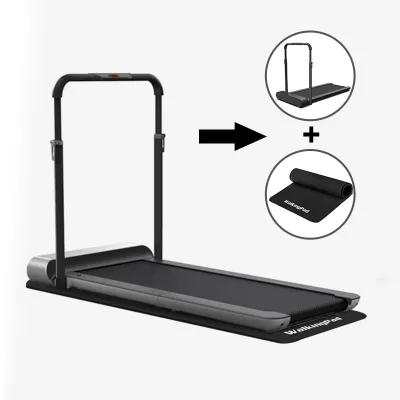
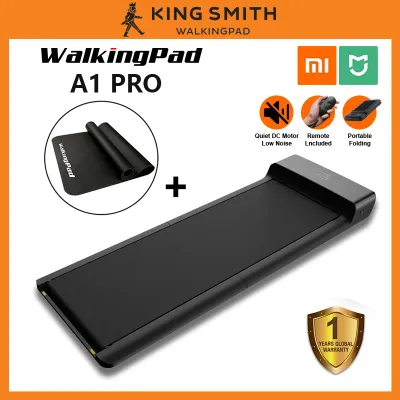
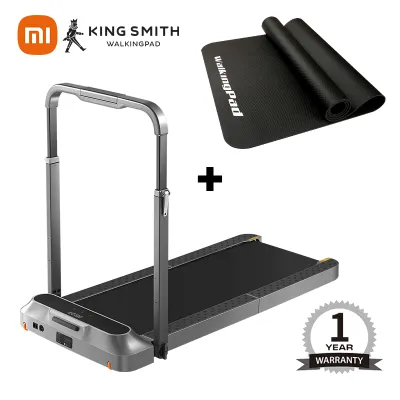
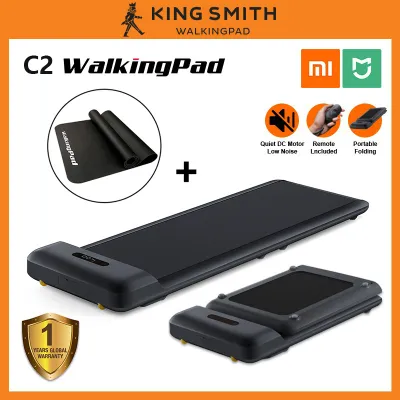
Prices are valid at publication and may change. Please refer to the product page for the latest price.
When folded, most models fold in half at a 180-degree angle, reducing their length significantly. A typical folded unit measures roughly 80 to 90 centimeters in length, 50 to 55 centimeters in width, and 13 to 15 centimeters in height. This compact form factor allows the device to slide under low-profile furniture or stand upright in tight corners. However, you should always locate the exact dimensions on your specific model’s specification label, user manual, or the manufacturer’s official website, as dimensions vary across different product generations.
When unfolded for active use, the physical footprint expands dramatically. The length typically doubles, stretching to approximately 145 to 150 centimeters, while the width remains constant. This active footprint represents the absolute bare minimum of flat floor space required just to place the machine on the ground, without accounting for your body’s movement or safety margins.
It is also important to note that the belt’s running area is always smaller than the outer frame of the machine. While the running belt might only measure around 120 centimeters in length and 40 centimeters in width, the structural housing, motor compartment, and side rails extend beyond these boundaries. Your spatial planning must always be based on the total outer frame dimensions rather than the belt size alone.
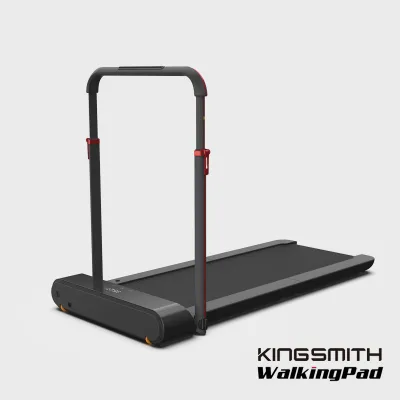
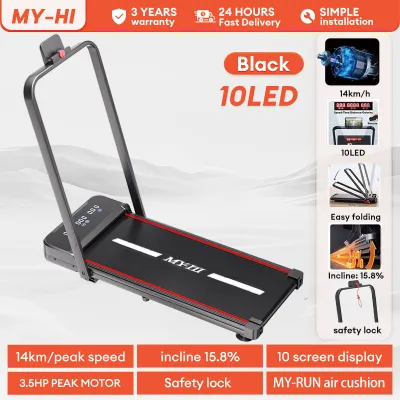
Additionally, the design style of your specific model affects how you plan your space. Some models feature a fully foldable frame with no handrails, which keeps the vertical profile extremely low. Other models include a fixed frame with a folding handrail or a built-in console. If your unit has a handrail, you must account for the vertical height of the bar when unfolded, which typically stands around 100 to 110 centimeters high, and ensure it does not interfere with nearby tables or wall-mounted fixtures.
Calculating Safety Clearance: Buffer Zones for Safe Walking
Operating a walking pad in a confined space without adequate clearance is a serious safety hazard. If you slip, lose your balance, or need to step off the moving belt suddenly, a lack of buffer space can result in hard impacts against walls or furniture. Creating a dedicated safety zone around the machine is essential for natural biomechanics and emergency stopping.

Rear Clearance
The space directly behind the walking pad is the most critical safety zone. You must maintain a minimum of 1 to 1.5 meters of completely unobstructed floor space behind the rear roller. If you lose your footing or if the belt stops abruptly, this buffer zone gives you room to step off safely or slide backward without striking a wall, glass sliding door, or sharp furniture edge. Never place the rear of the walking pad directly against a wall or a piece of heavy furniture.
Side Clearance
To ensure a comfortable and natural arm swing, leave at least 0.5 meters of clear space on both the left and right sides of the walking pad. Walking in a space that is too narrow forces you to restrict your upper body movement, which can negatively affect your posture and gait over time. Side clearance also prevents your hands, elbows, or hips from brushing against nearby walls, curtains, or dining chairs while you are in motion.
Front Clearance
At the front of the walking pad, maintain a clearance of at least 0.3 to 0.5 meters from the nearest obstacle. This space is necessary to allow proper airflow to the motor compartment, which is typically located at the front of the device. Keeping this area clear also ensures you have visual comfort while walking, preventing a claustrophobic feeling from staring directly into a blank wall, and allows easy access to the power switch and power cable.
Overhead Clearance
Do not forget to calculate vertical clearance, especially in Philippine condos where ceiling heights can be relatively low, sometimes measuring around 2.4 meters. To calculate your required headroom, add your physical height to the deck height of the walking pad (which is usually about 10 to 15 centimeters off the ground), and then add at least 30 centimeters of safety margin. This ensures you can walk or jog comfortably without your head coming dangerously close to low-hanging pendant lights, ceiling fans, or overhead storage shelves.
Measuring Your Condo Layout for Placement and Hidden Storage
Successful installation requires a realistic assessment of your condo’s layout, entryways, and potential storage zones. You must ensure that the machine can physically enter your home, move to its designated spot, and be stored away easily when guests visit or when you need to reclaim your living space.
First, measure the pathway leading into your condo. Check the width of your main entrance door, any tight hallway turns, and the dimensions of your building’s elevator. Although walking pads are compact, they are shipped in bulky cardboard boxes that can be difficult to maneuver through narrow corridors or tight door frames. Ensuring the boxed unit can clear these areas prevents delivery day headaches.
Next, if you plan to store the unit horizontally under furniture, you must measure the vertical clearance of the gap beneath your bed, sofa, or media console. Use a hard tape measure to find the exact height from the floor to the lowest point of the furniture frame. If your sofa has a sagging underside or a middle support leg, this will reduce the usable clearance. Ensure you have at least 2 to 3 centimeters of extra headroom beyond the folded thickness of the walking pad to prevent scraping the machine’s casing or damaging your furniture.
If you prefer vertical storage, evaluate your flat wall spaces or closet interiors. Some Xiaomi walking pad models are designed to stand upright on their own using integrated storage feet, while others require leaning against a wall or using a dedicated stand. If storing vertically, always verify that the floor is perfectly level. An uneven floor can cause a vertically stored unit to tip over easily, posing a safety risk to pets, children, or your condo’s walls. Furthermore, storing a heavy machine on an uneven surface can put uneven stress on its frame, potentially causing warping over time.
Managing Power Cables, Flooring, and Tropical Humidity
Setting up fitness equipment in the Philippines introduces unique environmental and structural challenges. High humidity, typical condo flooring materials, and electrical safety must all be managed to protect your investment and your home.
Cable management is a primary concern in small spaces. The power cord of a walking pad is typically short to prevent excess slack, meaning you must position the front of the machine close to a wall outlet. Avoid running the power cable across active walkways or under rugs, as this creates a severe tripping hazard and can wear down the cable’s insulation. It is highly recommended to plug the device directly into a wall outlet rather than using cheap extension cords or multi-plug adapters, which may not be rated for the electrical load of a motorized treadmill.
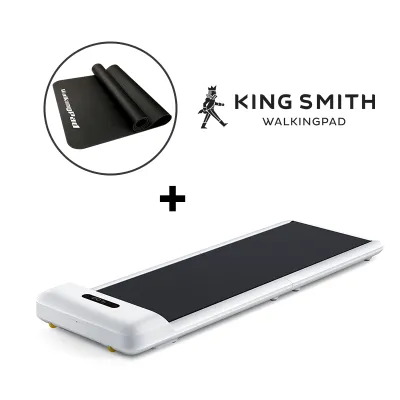
Protecting your condo’s flooring is another crucial step. Whether your floor is made of ceramic tiles, engineered wood, or vinyl planks, the vibration and weight of a walking pad can cause scratches, scuffs, or permanent indentations. Placing a dedicated, high-density rubber or EVA foam equipment mat under the machine is highly beneficial. A quality mat, which typically costs between ₱500 and ₱1,500 locally, serves multiple purposes:
- It dampens vibration and reduces noise transmission to neighbors living in the unit below.
- It prevents the walking pad from sliding or shifting on slippery tile floors during use.
- It catches sweat, protecting delicate laminate or wood flooring from moisture damage.
- Note that the mat will slightly expand the total floor footprint you need to allocate, as it should extend a few centimeters beyond the edges of the machine.
Finally, you must account for the tropical climate. High humidity can accelerate the degradation of electronic components, lead to rust on the metal frame, and encourage mold growth on the running belt if stored in a damp, unventilated area. Ensure the room where you use and store the walking pad has adequate air circulation, either through air conditioning or a well-placed electric fan. Avoid storing the unit on balconies, near open windows where sudden monsoon rains could splash it, or in damp laundry utility areas.
Common Space Planning Mistakes to Avoid in Compact Rooms
When trying to squeeze fitness equipment into a studio or one-bedroom condo, it is easy to overlook practical daily logistics. Avoiding these common spatial mistakes will keep your living area functional and safe:
- Ignoring door swing paths: Never place the walking pad where it blocks the swing path of closet doors, bathroom doors, main entryways, or balcony doors. Even if the machine is folded, a door that cannot open fully restricts your daily movement and can damage both the door and the fitness unit.
- Underestimating dynamic stride length: Do not assume that a short walking belt accommodates all walking styles. If you are tall or have a long stride, you may naturally drift backward or swing your arms wider as you increase your speed. Always plan for the maximum safety clearance rather than the minimum.
- Blocking essential utilities: Ensure your setup does not obstruct access to electrical breaker panels, air conditioning units that require regular filter cleaning, or emergency evacuation paths and balcony exits.
- Forgetting the physical effort of retrieval: A walking pad can weigh anywhere from 22 to 35 kilograms. If you store it deep under a bed, you must have enough physical space around the bed to comfortably bend down, lift, and drag the unit out without straining your back or hitting your head on nearby bedroom furniture.
Frequently Asked Questions (FAQ)
Can I use a Xiaomi walking pad directly on a carpet or thick rug?
It is not recommended to place a walking pad directly on medium-to-thick carpets or plush rugs. Soft, fibrous surfaces can block the motor’s ventilation vents located on the underside of the machine, leading to overheating and potential motor failure. Additionally, the fibers can attract dust and lint into the internal belt mechanism, causing the belt to slip or wear out prematurely. If your condo has carpeted floors, place a firm, flat, non-slip equipment mat over the carpet before setting up the walking pad to ensure a stable surface and proper airflow.
Do I need to assemble the walking pad in the room where it will be used?
While most Xiaomi walking pads arrive almost fully assembled in the box, you do not necessarily need to unbox and set them up in a cramped bedroom or tight hallway. The initial unboxing, unfolding, and any minor adjustments—such as aligning the belt or attaching safety handrails—require a larger temporary workspace. It is best to unbox and perform the initial setup in your largest open area, such as the living room. Once the unit is configured, you can easily fold it and use its integrated transport wheels to roll it into its final, tighter storage or usage spot.
Community discussion
Share your experience or ask a question. Comments are reviewed before publication.