
Selecting the right mountain climbing equipment is one of the most critical decisions any climber will make, as every piece of gear in your vertical system serves as a life-support link. Xinda has established a significant presence on major e-commerce platforms, offering an extensive catalog of vertical and alpine gear that ranges from personal protective equipment like harnesses and helmets to mechanical hardware such as carabiners, descenders, and pulleys. Deciding which of these items are worth buying requires a systematic evaluation of verified safety certifications, material specifications, and your specific climbing environment. In tropical climbing regions like the Philippines, where high humidity, intense heat, and coastal salt air can accelerate the degradation of both textiles and metals, making an informed choice at the official store is essential for your safety on the rock.
To navigate Xinda’s offerings successfully, you must understand how to match their product categories to your specific climbing discipline. Whether you are a beginner transitioning from an indoor gym to outdoor crags or an experienced mountaineer preparing for a multi-pitch ascent, your gear must be selected based on observable safety standards and physical compatibility. This guide provides a comprehensive framework to help you evaluate Xinda’s climbing and mountaineering categories, establish strict criteria for your purchases, implement critical pre-climb safety inspections, and shop smart at the official store.
Exploring Xinda's Climbing and Mountaineering Categories
When browsing the Xinda official store, the product catalog is broadly divided into personal protective equipment (PPE) and mechanical hardware. Understanding these categories is the first step in building a safe, functional climbing rack that aligns with your vertical goals.
Products mentioned in this guide
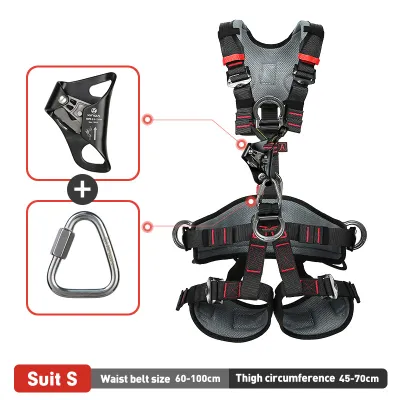
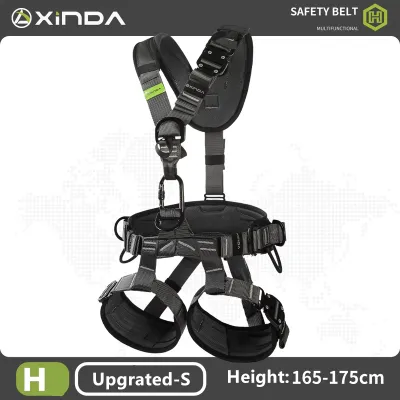
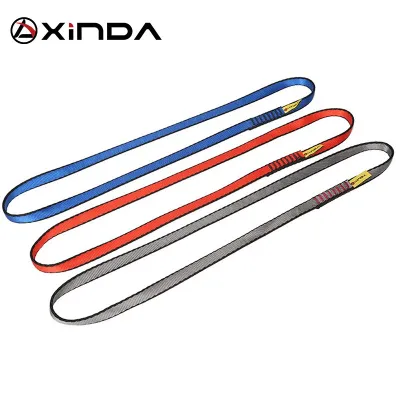
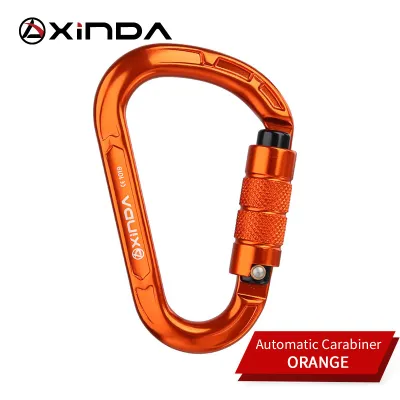
Prices are valid at publication and may change. Please refer to the product page for the latest price.
Climbing Harnesses
Harnesses are the primary connection point between your body and the safety rope. Xinda offers several designs, including full-body harnesses, chest harnesses, and standard sit harnesses. Sit harnesses are the most common choice for sport climbing, gym climbing, and mountaineering. When evaluating these harnesses, pay close attention to the construction of the waist belt and leg loops. For tropical climbing conditions, look for models that feature breathable, moisture-wicking mesh padding to manage sweat and heat. Adjustable leg loops are highly recommended if you plan to climb in varying weather conditions, as they allow you to adjust the fit when transitioning between lightweight shorts and thicker mountaineering pants.
Climbing Helmets
Helmets are designed to protect your head from falling debris, rockfall, and impacts during a fall. The helmets available in the catalog typically utilize either an acrylonitrile butadiene styrene (ABS) outer shell with an expanded polystyrene (EPS) foam liner, or a lighter in-mold polycarbonate (PC) shell. For climbing in hot and humid climates, ventilation is a primary comfort and safety factor. Look for helmet specifications that highlight multiple ventilation ports and adjustable suspension systems. A secure, easily adjustable chin strap and rear dial fit system are essential to ensure the helmet remains centered on your head during dynamic movements.
Carabiners and Connectors
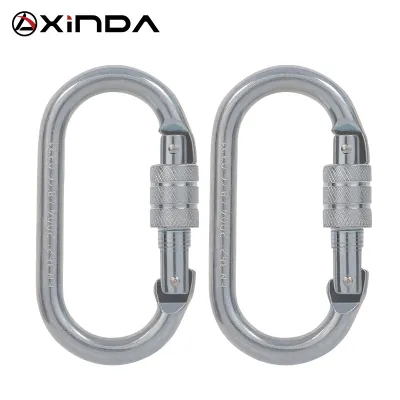
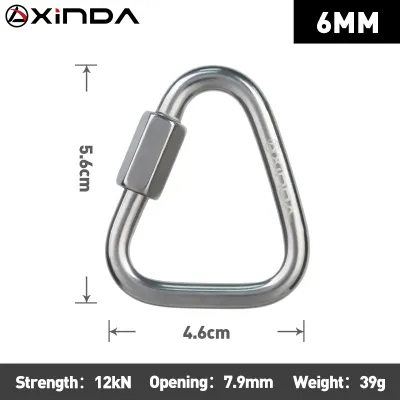
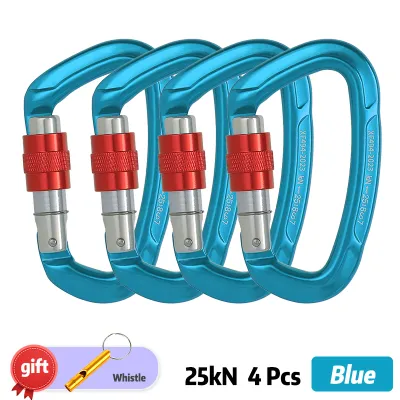
Carabiners are the workhorses of any climbing system, used for belaying, anchoring, and connecting gear. Xinda’s hardware selection includes various aluminum-magnesium alloy carabiners with different gate mechanisms, such as screw-gate, twist-lock, and auto-locking gates. Screw-gate carabiners are highly reliable and less prone to jamming with dirt, making them excellent for rigging anchors. Auto-locking carabiners provide an extra layer of safety for belay devices, as they lock automatically when the gate snaps shut. When selecting carabiners, always verify the major axis, minor axis, and open-gate strength ratings, which should be clearly laser-etched onto the spine of the metal body.
Descenders and Belay Devices
For controlling your descent or belaying a partner, the catalog features manual friction devices like figure-eight descenders and tubular belay devices, as well as assisted braking options. Figure-eight descenders are widely used in rappelling, search and rescue, and canyoning due to their excellent heat dissipation, though they can twist the rope over long descents. Tubular belay devices are the standard choice for sport and gym climbing, offering smooth rope handling and dual-slot designs for double-rope techniques. Ensure that any descender or belay device you choose is compatible with the diameter of the climbing rope you currently own.
Pulleys and Ascenders
For hauling gear, setting up rescue systems, or ascending fixed ropes, Xinda provides a variety of single and double pulleys, as well as hand and chest ascenders. Pulleys are categorized by their sheave diameter and bearing type, with ball bearings offering smoother rotation and higher efficiency than self-lubricating bushings. Ascenders utilize Toothed cams to grip the rope securely when loaded. These specialized tools are essential for big-wall climbing, mountaineering, and rope access work, but they require specific technical knowledge to operate safely.
Criteria for Deciding Which Xinda Items Are Worth Buying
With numerous options available at the Xinda official store, you must apply a strict set of criteria to determine which items are genuinely worth buying for your specific needs. Safety, material durability, and physical compatibility must always take precedence over price.

Verifying Independent Safety Certifications
The single most important criterion for any piece of climbing gear is independent safety certification. Never purchase or use climbing equipment that lacks verifiable safety markings. Look for the European Conformity (CE) mark accompanied by a four-digit notified body number (such as CE 1019 or CE 2008), which indicates that the gear has been tested and certified to European standards (EN). Additionally, look for the Union Internationale des Associations d’Alpinisme (UIAA) label, which signifies that the equipment meets the global mountaineering federation’s strict safety requirements. These certifications should be clearly visible on product labels, sewn into harness webbing, or stamped onto metal hardware.
Matching Gear to Your Skill Level and Climbing Venue
Your choice of gear should reflect your experience level and where you plan to climb. If you are primarily an indoor gym climber, a lightweight, simple sit harness with minimal gear loops and a standard tubular belay device will serve you well. For outdoor sport climbing on abrasive natural rock, prioritize durability. Look for harnesses with reinforced tie-in points and abrasion-resistant outer fabrics. If you climb near coastal areas where salt spray is present, prioritize anodized aluminum-magnesium alloy hardware, which offers superior resistance to corrosion compared to non-anodized metals.
Evaluating Weight, Ergonomics, and Handling
Every gram matters when you are carrying gear up a long route, but lighter is not always better for every climber. Ultra-lightweight gear often sacrifices durability or comfort. For example, a minimalist harness with thin webbing may feel uncomfortable during long hanging belays, whereas a slightly heavier, well-padded harness provides the support needed for multi-pitch climbs. When choosing carabiners and descenders, consider how they feel in your hand. Larger carabiners are generally easier to operate with gloves or when your hands are fatigued, while smaller, compact carabiners help reduce the overall weight of your rack.
Balancing Budget in ₱ Against Equipment Lifespan
While shopping on online marketplaces allows you to compare prices in ₱ easily, safety-critical gear is not the place to cut corners. Evaluate the cost of the equipment relative to its expected service life. Textile components like harnesses, slings, and helmets have a finite lifespan—typically a maximum of ten years from the date of manufacture, even if unused, and significantly less under regular use. Metal hardware like carabiners and descenders can last much longer if properly maintained, but they must be retired immediately if they show signs of excessive wear or deep grooving. Calculate your budget based on the cost-per-year of safe use, and always prioritize certified, high-quality gear over the cheapest available option.
Critical Safety Boundaries and Pre-Climb Inspections
Climbing is an inherently high-risk activity where equipment failure or improper use can result in severe injury or death. Operating within strict safety boundaries and performing meticulous pre-climb inspections are non-negotiable habits for every climber.
Equipment Cannot Replace Training and Judgment
It is vital to understand that owning certified, high-quality equipment is only one part of the safety equation. Gear cannot replace proper climbing instruction, sound risk assessment, and personal judgment. Before using any new equipment, seek professional training from a certified climbing instructor. You must fully understand how to tie correct knots, configure safe anchors, operate belay devices, and execute proper rappelling techniques. Never attempt to use climbing gear based solely on product descriptions or online videos.
Conducting Visual and Tactile Inspections
Before every single climb, perform a thorough visual and tactile inspection of all your gear. For textile items like harnesses, slings, and helmets:
- Run your fingers along every centimeter of the harness webbing to check for stiff sections, soft spots, cuts, fraying, or burns.
- Inspect the stitching at critical load-bearing points, such as the tie-in loops and belay loop, looking for loose, broken, or worn threads.
- Examine the metal buckles on the harness for any signs of deformation, rust, or sharp edges that could cut the webbing.
- Inspect the helmet shell for cracks, deep gouges, or dents, and ensure the internal foam liner is securely bonded to the shell and free of fractures.
For metal hardware like carabiners, descenders, and pulleys:
- Check the metal bodies for hairline cracks, deep scratches, or grooves worn by rope friction. Any groove deeper than one millimeter is a clear indicator that the gear must be retired.
- Test the gate action of every carabiner. The gate must open smoothly and snap shut completely under spring tension. If a gate sticks, hesitates, or fails to align perfectly with the nose, do not use it.
- Inspect screw-gate and auto-locking sleeves to ensure they thread or twist smoothly and lock securely without binding.
- Check pulleys to ensure the sheaves spin freely on their bearings without wobbling or grinding noises.
Defining Clear Stop Conditions and Retirement Protocols
Establish clear stop conditions for your gear. If you detect any abnormality during your inspection, or if a piece of equipment is subjected to a severe fall or impact, halt its use immediately. If you suspect hidden damage—such as internal micro-cracks in a carabiner after a drop onto a hard surface—do not risk your life on a visual assumption. Retire the gear immediately. To prevent accidental reuse, physically destroy retired gear before throwing it away: cut the webbing of harnesses, cut slings in half, and disable carabiners by bending the gates or cutting the bodies with a hacksaw.
Shopping Smart at the Xinda Official Store
To ensure you receive authentic, high-quality equipment backed by manufacturer support, you must navigate the purchasing process carefully when shopping online.
Identifying the Verified Official Store
Because climbing gear is life-safety equipment, you must avoid purchasing from unauthorized third-party sellers who may offer counterfeit, damaged, or improperly stored items. When shopping on e-commerce platforms, look for the verified “Xinda Official Store” or listings marked with official brand mall badges. Cross-reference the store’s contact information, business registration, and product listings with the official global website of the manufacturer. Authentic stores will provide clear, high-resolution images of the safety certification stamps on the products and detailed technical specifications.
Utilizing Manufacturer Size Charts Accurately
An improperly fitting harness or helmet is a major safety hazard. A harness that is too loose can allow you to slip out if you end up inverted during a fall, while a harness that is too tight will restrict your movement and cause painful pinching. Before purchasing, use a flexible measuring tape to measure your waist, thighs, and head circumference. Compare your measurements directly to the manufacturer’s size charts provided on the product page. Do not guess your size based on your everyday clothing sizes, as climbing gear sizing standards often differ significantly from casual wear.
Reviewing Store Policies and Warranties
Before finalizing your purchase, carefully review the store’s policies regarding returns, exchanges, and warranties. Many reputable outdoor retailers and official brand stores have strict limitations on returning safety-critical gear like harnesses and carabiners once they have been delivered, to ensure that returned (and potentially compromised) gear is never resold to another customer. Make sure you are completely certain of your sizing and product choices before ordering. Additionally, check if the official store offers a manufacturer’s warranty against material and manufacturing defects, and understand the process for submitting a claim if necessary.
Frequently Asked Questions (FAQ)
Is Xinda equipment suitable for beginner climbers?
Yes, Xinda equipment is suitable for beginner climbers, provided that the specific items you purchase carry verified CE or UIAA safety certifications. Beginners should focus on purchasing standard, highly adjustable gear—such as a basic sit harness with manual double-back buckles and a standard tubular belay device—as these items are easier to inspect, operate, and understand. Always have a certified climbing instructor inspect your new gear and demonstrate its proper use before you take it to the climbing gym or outdoor crag.
How can I verify I am buying from the actual Xinda official store?
To verify you are buying from the actual official store, look for official brand verification badges, high seller ratings, and positive customer feedback on the e-commerce platform. The official store will display comprehensive product descriptions that include detailed technical specifications, clear images of CE or UIAA certification markings, and accurate sizing charts. Avoid purchasing from sellers with unusually low prices, incomplete product descriptions, or those lacking official brand authorization badges, as these are common indicators of counterfeit or unauthorized goods.
Community discussion
Share your experience or ask a question. Comments are reviewed before publication.