
To choose the right gymnastics grips in the Philippines, you must balance immediate comfort against long-term durability, especially under hot and humid training conditions. Xpodium grips have emerged as a notable modern option, appealing to gymnasts who prioritize ergonomic shaping, precise bar feedback, and lightweight materials. However, traditional brands continue to hold a strong position for athletes who prefer thick, heavy-duty leather and a classic, structured break-in process.
The choice is highly individual. Sizing, event specialization (uneven bars, high bar, or rings), skill level, and personal comfort play massive roles in your decision. No single brand is universally superior for every athlete. Moreover, remember that gymnastics grips are training aids designed to enhance friction and protect your hands; they do not replace proper technique, physical conditioning, or coaching guidance.
4 Critical Dimensions for Comparing Gymnastics Grips
When evaluating Xpodium against other brands, you must look past marketing claims and focus on verifiable specifications. The right grip acts as an extension of your hand, meaning subtle differences in materials and construction will directly impact your performance and safety on the bars. To find the best fit, compare products across four primary design dimensions.
Products mentioned in this guide
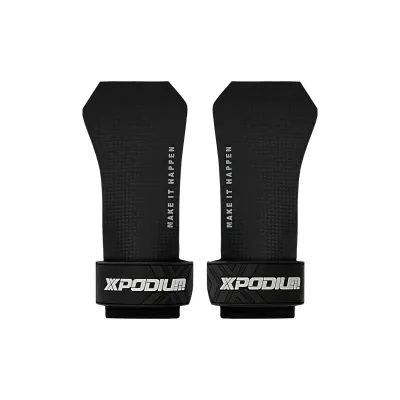
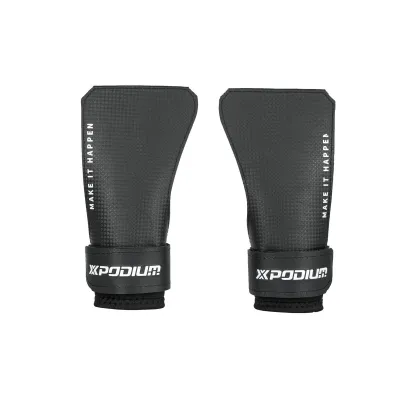
Prices are valid at publication and may change. Please refer to the product page for the latest price.
Leather Type and Break-In Period
The material of your grip determines how long it takes before you can safely perform high-intensity skills. Traditional grips use thick, stiff leather that requires a dedicated break-in period. During this phase, gymnasts must manually flex the leather, apply water or grip oil cautiously, and perform low-impact basic movements to mold the material to their hands.
Conversely, modern brands often utilize pre-broken-in leather or specialized synthetic microfibers. These materials offer immediate flexibility out of the box, reducing the time spent prepping the gear. However, the trade-off lies in how they handle sweat and chalk. Traditional leather absorbs moisture over time but can become stiff and slick if dried improperly. Synthetic blends often resist moisture absorption entirely, keeping the weight low, but they require consistent chalk application to maintain a reliable coefficient of friction in humid environments.
Dowel Configuration and Bar Feel
The dowel is the small, cylindrical rod secured near the fingers that creates a pocket, allowing you to lock onto the bar during release moves and giants. Dowel design varies by height, width, and shape. A rounded, standard-sized dowel provides a familiar, secure latching mechanism that many traditional gymnasts prefer for high-impact events.
Some modern brands, including Xpodium, experiment with flatter, square, or slightly tapered dowel profiles. These variations are designed to match the natural curvature of your fingers more closely, reducing localized pressure. When choosing a dowel profile, you must match it to your finger length and the specific diameter of the bars you use. A dowel that is too large for your fingers can cause hand cramping, while one that is too small may fail to create the necessary mechanical advantage on the bar.
Wrist Support and Closure Mechanisms
How a grip secures to your wrist affects both safety and comfort. The three primary closure systems are double-buckle, single-buckle, and Velcro. Double-buckle closures offer the most secure, non-slip fit, making them the standard for high-level gymnasts performing high-impact release elements. Single-buckle systems provide a slightly faster adjustment, while Velcro closures offer rapid adjustments between rotations but can degrade over time due to chalk accumulation.
Beyond the fastener, look closely at the width and padding of the wrist cuff. A wider cuff distributes the high forces experienced during swinging across a larger surface area of the wrist. If you are performing high-impact release moves, look for grips that feature built-in neoprene or leather padding along the wrist strap to prevent painful friction burns and bruising.
Xpodium Grips: Design Philosophy and Ideal User Profile
Xpodium design philosophy centers on ergonomic efficiency and rapid adaptation. Unlike older brands that rely on uniform, rectangular cuts of heavy leather, Xpodium often incorporates pre-shaped palms and tapered finger holes. This ergonomic curvature is engineered to mimic the hand’s natural resting state, reducing the bunching of material in the palm area which can lead to severe blisters.

The ideal user profile for Xpodium grips is an intermediate to advanced gymnast who values high tactile feedback from the bar. If you find that traditional, thick leather grips numb your sensation of the bar’s rotation, the thinner, more responsive profile of Xpodium can help you feel more connected during complex transitions. They are also highly suitable for gymnasts who need to transition quickly between different grip styles or those who do not have weeks to dedicate to breaking in a stiff pair of traditional leather grips.
However, these design choices come with distinct trade-offs. The thinner, highly flexible materials that give Xpodium grips their immediate comfort may result in a shorter overall lifespan compared to thick, heavy-duty leather alternatives. Gymnasts training high volumes—such as daily multi-hour sessions—may find they need to replace these grips more frequently. Additionally, athletes accustomed to the bulky, rigid support of traditional leather may experience a steep learning curve as they adjust to the increased hand sensitivity and different wrist support dynamics.
How Xpodium Stacks Up Against Other Leading Brands
To understand where Xpodium fits in the wider market, it helps to categorize its competitors into two main groups: Traditional Heavy-Leather Brands and Minimalist/Pre-Broken-In Brands.
Traditional Heavy-Leather Brands (such as Reisport or Gibson) prioritize ultimate durability and structural rigidity. These brands use thick, natural hides that require a significant break-in period but can withstand months of rigorous, high-volume training. In contrast, Xpodium focuses on immediate usability and tactile sensitivity. While a pair of traditional leather grips might feel like a stiff protective shield, Xpodium grips act more like a second skin, trading some long-term durability for immediate comfort and control.
- Feedback vs. Protection: Traditional brands excel at protecting the palms from friction and absorbing the heavy forces of release moves, but they reduce your ability to feel the bar. Xpodium prioritizes high bar feedback, allowing you to feel minor adjustments in your hand placement, though this thinner profile offers less cushioning against raw impact forces.
- Sizing Consistency: Sizing scales vary drastically between gymnastics brands. A "Medium" in Xpodium does not translate directly to a "Medium" in a traditional brand. You must measure your hand from the base of your palm to the tip of your middle finger, and compare that exact measurement against each manufacturer's specific size chart before buying.
Ultimately, choosing between Xpodium and traditional brands involves a clear trade-off. If you prioritize maximum durability, heavy wrist padding, and a classic, structured feel, traditional brands remain the standard. If you prioritize immediate comfort, ergonomic finger placement, and precise tactile sensitivity, Xpodium offers a compelling modern alternative.
Evaluating True Value: Durability, Sourcing, and Logistics in the Philippines
When purchasing specialized gymnastics equipment in the Philippines, calculating the true value of your investment requires looking beyond the initial retail price. You must factor in the local climate, shipping logistics, and safety maintenance.
Durability vs. Cost in Tropical Climates
The high relative humidity and heat in Philippine training facilities accelerate how quickly materials degrade. Sweat absorbed by natural leather can cause it to rot, stretch, or harden into a brittle texture after drying. When evaluating grips, calculate the cost per month of usable life. A pair of grips costing ₱3,500 that lasts six months of heavy training may offer better value than a ₱5,500 pair that degrades in three months due to moisture damage. If you train in a gym without climate control, look for materials that demonstrate high resistance to moisture and sweat-induced stretching.
Sourcing and Availability
Specialized gymnastics grips are rarely stocked in physical sporting goods stores in the Philippines. Most gymnasts must source their gear through official brand websites, authorized international distributors, or specialty gymnastics suppliers online. When ordering, ensure the seller is an authorized retailer to avoid counterfeit products, which pose severe safety risks on the bars.
Hidden Costs of International Shipping
Buying grips from overseas brands often incurs significant additional expenses. Always factor in international shipping fees, local customs duties, and import taxes to your total budget. Furthermore, because sizing is critical and returning an ill-fitting grip to an overseas seller is costly and time-consuming, double-check your measurements against the brand’s specific size guide before finalizing your purchase.
Safety Boundary and Pre-Use Inspection
Regardless of the brand or price paid, your grips are critical safety equipment. Inspect your grips before every training session. Check for the following signs of wear:
- Thinning or tearing leather around the finger holes or dowel
- Fraying or loose stitching along the palm and wrist strap
- Cracking, splitting, or loosening of the dowel material
- Weakened Velcro or bent buckle hardware
If you observe any structural compromise, stop using the grips immediately and consult your coach. Never attempt to repair damaged grips yourself with household adhesives or tape, as a grip failure mid-swing can lead to severe injury.
Decision Framework: Which Grip Should You Buy?
To make your final decision, use the following conditional framework to match your training needs to the right style of grip.
- Choose Xpodium if… you want a grip that requires minimal break-in time, provides high tactile feedback from the bar, features an ergonomic palm shape, and your coach approves of a thinner, more flexible design for your current skill level.
- Choose a Traditional Heavy-Leather Brand if… you prioritize maximum durability for high-volume daily training, prefer the rigid support of thick leather, require heavy wrist padding, and are willing to invest the time needed to break in the material manually.
- Choose a Pre-Broken-In/Minimalist Brand if… you are a recreational gymnast or beginner transitioning into dowel grips, prioritize immediate comfort over long-term durability, and are not yet performing high-impact release moves.
- Verify first if… you are switching brands, recovering from a wrist injury, or changing events. Always consult your coach to confirm that the grip style, finger-hole count (2-hole vs. 3-hole), and closure mechanism are appropriate for your competitive level, and measure your hands carefully against the current manufacturer size chart.
Frequently Asked Questions (FAQ)
How do I know if my gymnastics grips are worn out and need replacing?
You must replace your grips immediately if you observe visible thinning of the leather, particularly around the dowel or finger holes. Other critical warning signs include frayed stitching, stretched leather that alters the fit, cracked dowels, or Velcro that no longer holds securely under tension. Using worn-out grips increases the risk of a rip or slip, which can cause serious falls.
Can I use the same grip brand for both uneven bars and high bar?
While some versatile grip designs can transition between events, many gymnasts use event-specific grips. Uneven bar grips (typically 2-hole) and high bar grips (typically 3-hole) feature different dowel sizes, widths, and leather thicknesses tailored to the specific bar diameters and forces of those events. You should check with your coach to determine if a single pair is appropriate or if your routine requires event-specific equipment.
Do I need to wear wristbands with my gymnastics grips?
Yes, you should always wear high-quality cotton or neoprene wristbands underneath your gymnastics grips. The wristbands act as a protective barrier, preventing the leather straps or plastic buckles from rubbing directly against your skin. Without wristbands, the intense friction generated during swinging will quickly cause painful blisters, scrapes, and skin tears that can disrupt your training schedule.
Community discussion
Share your experience or ask a question. Comments are reviewed before publication.