
Choosing between a specialized 4-finger grip aid and standard grip accessories like traditional wrist straps or hooks depends on your specific training goals, setup speed preferences, and how you want the load distributed across your hands. If you want rapid setup and even pressure across your fingers during high-volume pulling movements, a 4-finger grip is highly effective. If you require maximum versatility, adjustable tension, and compatibility with various bar diameters for heavy lifts, standard wrist straps remain the traditional choice.
In tropical gym environments, such as those in the Philippines where high humidity and sweat can quickly compromise your natural hold, choosing the right accessory is crucial for maintaining a secure grip without overtaxing your forearms. This guide breaks down the structural differences, exercise compatibility, and safety checks to help you select the tool that best supports your strength training routine.
How the 4-Finger Design Compares to Standard Grips
The 4-finger grip accessory features a distinct pocket or sleeve design where each finger is individually slotted or positioned. This structure wraps around the palm and fingers, creating a continuous barrier between your skin and the knurling of the barbell or dumbbell. By securing the fingers together in a unified pocket, the accessory distributes the pulling force evenly across the entire width of your hand rather than concentrating the stress on individual fingers or the wrist joint alone.
Products mentioned in this guide
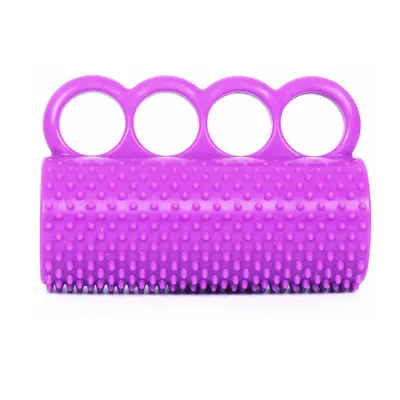
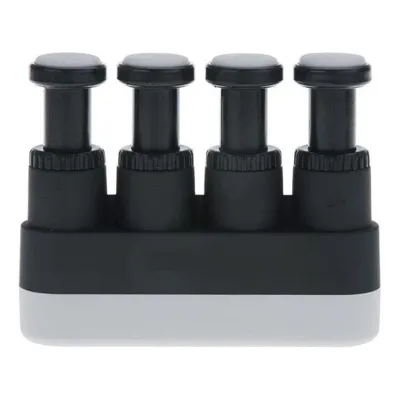
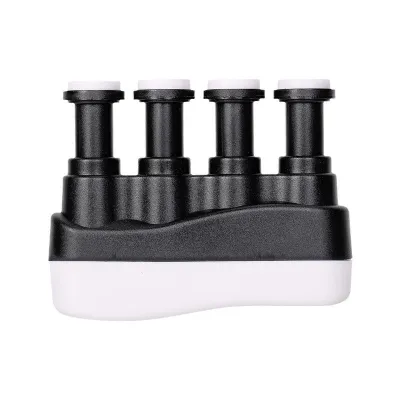
Prices are valid at publication and may change. Please refer to the product page for the latest price.
In contrast, standard wrist straps consist of a single strip of nylon, cotton, or leather that loops around your wrist and wraps repeatedly around the bar. This design transfers a significant portion of the load directly to your wrists, relying on the friction of the wrapped material to keep the bar secure. Rigid lifting hooks, another common alternative, utilize a metal hook covered in neoprene that hangs from a wrist strap, mechanically cradling the bar without requiring you to wrap any fabric.
These structural differences directly impact your tactile feedback and bar contact. Because a 4-finger grip covers the palm and the base of the fingers, it slightly reduces direct skin-to-metal contact, which can protect against calluses but may feel less tactile for lifters who prefer to feel the bar’s knurling. Standard straps allow you to maintain direct finger contact with the bar over the wrapped fabric, preserving a more traditional lifting feel.
Matching Your Grip Accessory to Specific Exercises
Selecting the right accessory requires looking closely at your training routine and the specific mechanics of your exercises. For heavy, static pulling movements like deadlifts, rack pulls, or heavy shrugs, the primary challenge is resisting bar rotation. Standard wrist straps excel here because the tight wrap physically locks the bar to your hands, preventing it from rolling out of your fingers even under extreme loads. While a 4-finger grip provides excellent friction and support, it relies more on your hand’s squeezing pressure to maintain the hold under maximal weights.

For high-volume rowing variations, lat pulldowns, and pull-ups, the priorities shift toward comfort and quick transitions. During a lat pulldown, a 4-finger grip allows you to hook your hand over the attachment instantly without spending time wrapping fabric. This is particularly beneficial in humid, non-air-conditioned gyms where sweat can make wrapping traditional straps a slippery, tedious process. The pocket design also allows for a more natural wrist angle during horizontal pulling, reducing the lateral strain on the wrist joint.
Dynamic or Olympic-style movements, such as cleans, snatches, or high pulls, introduce unique safety considerations. Standard wrapped straps can be dangerous during these lifts because they do not release instantly if you need to bail on a failed repetition, risking wrist or shoulder injury. A 4-finger grip, which does not physically bind your wrist to the bar with wrapped material, allows for an immediate release. However, because dynamic lifts require precise bar path control and rapid turnover, many lifters choose to perform them with a raw hook grip rather than any accessory, using equipment only when safety limits and personal training experience permit.
Comparing Comfort, Wrist Support, and Setup Speed
The daily user experience of these accessories depends heavily on physical comfort and how they handle the friction of repetitive sets. Standard wrist straps concentrate a large portion of the pulling force directly onto the delicate bones and tendons of the wrist. Over a long workout, this concentrated pressure can cause chafing, bruising, or localized discomfort, especially if the straps lack adequate padding. A 4-finger grip distributes this tension more broadly across the palm and fingers, reducing the direct pulling force exerted on the wrist strap itself.
Setup speed is another area of stark contrast. Wrapping standard straps around a barbell requires a coordinated, one-handed twisting motion that can be frustrating to master, especially when your hands are tired or sweaty. This wrapping process must be repeated for every single set, which can disrupt your training rhythm and extend your rest periods. A 4-finger grip simply slips over your fingers and palm in a single motion, allowing you to secure your grip on the bar in seconds and maintain a faster, more focused workout pace.
Adjustability and fit are critical factors to verify before purchasing. Standard straps are highly adaptable; because they are simple lengths of fabric, they fit any hand size, finger length, or bar diameter, from thin standard barbells to thick axle bars. A 4-finger grip, however, relies on a structured pocket design. If your fingers are exceptionally thick, long, or short, a fixed-size finger sleeve may pinch, bunch, or fail to align correctly with the bar. When training with non-standard bar diameters, a structured grip may also feel bulky, whereas a standard strap easily conforms to any shape.
How to Verify Weight Limits and Build Quality
Because grip accessories are critical safety links between your hands and heavy iron, you must verify their build quality and weight limits rather than relying on general assumptions. Start by checking the manufacturer’s official product specifications, packaging, or verified store listings to identify the maximum weight capacity. Look for explicit details regarding the tensile strength of the materials used, such as heavy-duty nylon webbing, reinforced leather, or specialized synthetic compounds.
When your gear arrives, perform a thorough physical inspection before taking it to the gym. Examine the stitching density along all load-bearing seams; look for double or cross-stitched patterns, which offer significantly better resistance to tearing than single straight stitches. Check the thickness and density of any wrist padding to ensure it will not bottom out under load. Inspect the edge finishing for fraying or loose threads, and verify that any metal buckles, D-rings, or hook-and-loop fasteners are heavy-duty, free of sharp edges, and securely anchored.
Over time, exposure to sweat, friction, and heavy loads will inevitably cause material fatigue. Establish a regular inspection routine before every workout. Look for signs of wear such as thinning fabric, stretched-out finger pockets, cracking leather, or weakening velcro closures. If you notice any structural degradation, replace the accessory immediately. As a general safety guideline, active lifters should consider replacing heavily used fabric or synthetic grip aids every 12 to 18 months to prevent sudden, mid-lift failures that could lead to severe injury.
Final Decision: Which Grip Should You Buy?
Your final choice should align with your specific training style, convenience preferences, and physical needs. Opt for the Yabe 4 Finger style if you prioritize a fast, seamless setup between sets, prefer even pressure distribution across your palm and fingers, and enjoy a secure, structured pocket feel during moderate to heavy pulling movements. This style is particularly well-suited for high-volume bodybuilding or hypertrophy training where minimizing transition time is key.
Choose standard wrist straps or lifting hooks if your training revolves around maximal strength lifts, powerlifting variations, or if you regularly use non-standard bar diameters. Standard straps offer unmatched versatility, allowing you to customize the wrapping tension and tightness to suit your exact hand size and the specific demands of the lift.
Before making your purchase, consider any personal physical limitations or regulatory constraints. If you have pre-existing wrist, hand, or finger injuries, consult a medical professional or physical therapist to determine which style provides the safest support for your anatomy. Additionally, if you plan to compete, check the official rulebooks of your sanctioned powerlifting, weightlifting, or strongman federation, as many organizations have strict guidelines regarding which grip accessories are permitted on the platform.
Frequently Asked Questions (FAQ)
Can I use these grip accessories for pushing exercises like bench presses?
No, grip accessories like 4-finger grips, straps, and hooks are designed exclusively for pulling movements where the weight is pulling away from your hands. Using them for pushing exercises like the bench press, overhead press, or dumbbell press is highly discouraged. Pushing movements require your palms to press directly against the bar, and placing thick fabric, leather, or structured pockets between your hand and the bar can compromise your grip stability, alter your wrist alignment, and increase the risk of the bar slipping out of your hands.
Do 4-finger grips replace the need to train raw grip strength?
Grip accessories are valuable tools to prevent your grip from becoming the limiting factor during heavy back or posterior chain training, but they should not replace raw grip development. Relying on accessories for every exercise can lead to underdevelopment in your forearms and hand strength. To maintain a balanced physical foundation, perform your warm-up sets and lighter working sets with a raw grip, reserving the 4-finger grips or straps for your heaviest working sets where your target muscles would otherwise outwork your hands.
Community discussion
Share your experience or ask a question. Comments are reviewed before publication.