
Selecting the right yoga mat is a fundamental decision that directly impacts your joint health, balance, and overall practice longevity. For men, this choice is particularly critical. On average, men possess a higher body mass and a different center of gravity than women, which exerts greater concentrated pressure on smaller joint areas like the wrists, knees, and ankles during weight-bearing poses.
If a mat is too thin, your joints will press directly against the hard floor, leading to pain and discomfort. Conversely, if a mat is too thick and squishy, you lose your connection to the ground, causing your ankles and wrists to wobble unsafely during standing balances. Finding the ideal thickness requires understanding how your body weight interacts with different materials and densities under various practice conditions.
Understanding Standard Yoga Mat Thickness Categories
Yoga mats generally fall into three primary thickness categories, each serving distinct purposes based on portability, stability, and cushioning.
Products mentioned in this guide
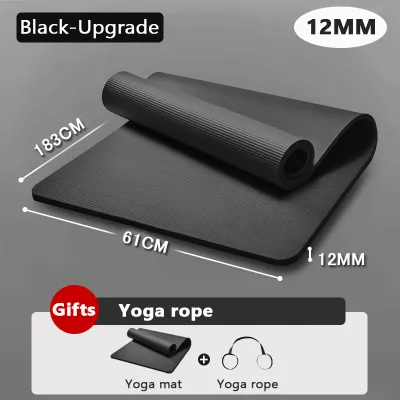
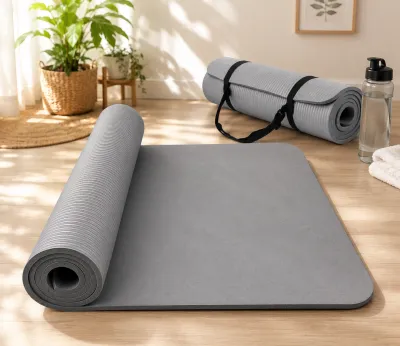
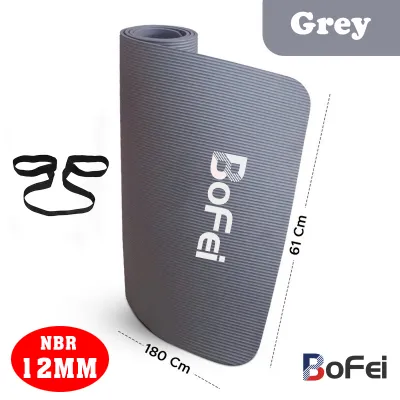

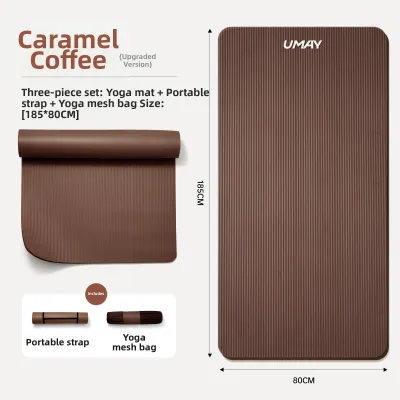
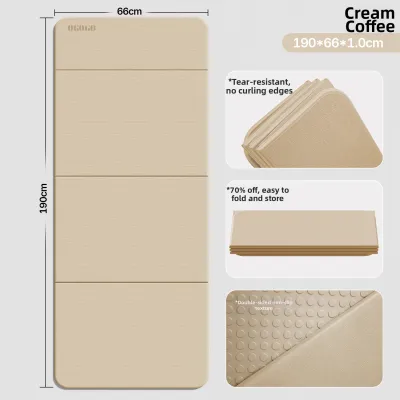
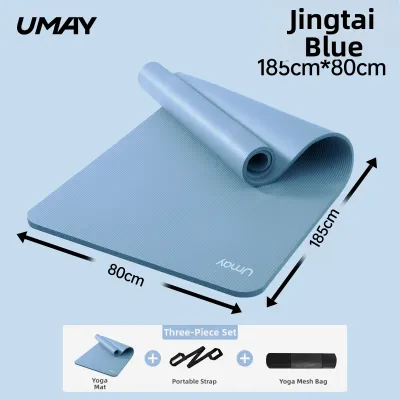
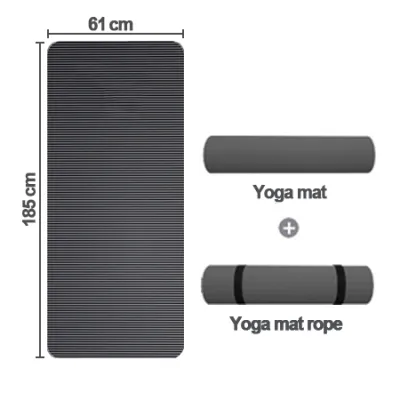
Prices are valid at publication and may change. Please refer to the product page for the latest price.
Travel and thin mats, which measure under 3mm, are designed primarily for portability and ease of transport. These mats are highly flexible, lightweight, and can easily fold into a travel bag or backpack, making them popular for outdoor sessions or commuting in busy urban areas. However, because they offer virtually no cushioning, they require excellent joint strength and are best suited for experienced practitioners who prioritize a firm, unyielding connection to the ground.
Standard mats, ranging from 3mm to 5mm, represent the industry benchmark and are the most common choice for general practice. A 4mm or 5mm mat provides a balanced middle ground, offering enough compression resistance to protect your knees during floor work while remaining firm enough to support stable standing balances. This category is highly versatile and serves as an excellent starting point for most male practitioners.
Thick and extra-thick mats, measuring 6mm and above, focus heavily on maximum cushioning and impact absorption. These mats are highly beneficial for restorative practices, yin yoga, or therapeutic sessions where you remain in floor-based poses for extended periods. While they offer superb comfort for the knees and spine, their increased height and softness can make standing balances significantly more challenging, as the feet sink into the material.
Matching Mat Thickness to Body Weight and Joint Sensitivity
Your physical build and joint history are the most critical factors when determining the right mat thickness for your practice.

Heavier body weight requires careful consideration of how a mat compresses under load. A practitioner weighing over 80 kilograms will compress a standard foam mat much more than a lighter individual. If the mat material is too soft or thin, your knees, elbows, or hip bones will quickly bottom out, pressing directly against the hard floor. To prevent this, heavier men should look for mats that offer either a slightly thicker profile (around 5mm to 6mm) or a significantly higher material density that resists complete compression.
Joint sensitivity and previous physical injuries also dictate your cushioning needs. High-pressure areas like the wrists in Planks, the knees in Low Lunges, and the tailbone in seated postures bear the brunt of your body weight. If you suffer from chronic wrist pain, mild joint stiffness, or are recovering from a sports injury, prioritizing a mat with sufficient cushioning is essential to keep your practice comfortable and sustainable.
Your preferred style of yoga further refines this choice. Dynamic, fast-paced styles such as Vinyasa, Ashtanga, or Power Yoga involve rapid transitions, jumps, and intense standing balances where a stable, non-slip foundation is paramount; here, a dense 4mm to 5mm mat is ideal. On the other hand, slower, floor-heavy styles like Yin Yoga or gentle stretching are highly compatible with thicker 6mm mats, as the primary goal is comfort during long, static holds.
Balancing Joint Cushioning with Pose Stability
While a thick, plush mat might feel incredibly comfortable when you first step onto it, excessive cushioning introduces distinct physical trade-offs that can compromise your safety.
The primary risk of an overly thick or soft mat is joint instability, particularly in the ankles and wrists. When you attempt standing balancing poses like Tree Pose or Warrior III on a squishy surface, your feet sink unevenly. This forces the tiny stabilizing muscles and ligaments in your ankles to work overtime to keep you upright, leading to rapid fatigue and an increased risk of strains. Similarly, in hand-balancing poses, a soft mat can cause your wrists to hyperextend as your palms sink deeper than your fingers.
A firm ground connection is necessary for proper skeletal alignment and muscle engagement. When your feet can feel the solid floor through a dense mat, your brain receives immediate sensory feedback, allowing you to distribute your weight evenly across the four corners of your feet. This solid foundation enables you to engage your core and leg muscles correctly, protecting your lower back and joints from unnecessary strain.
To achieve the perfect balance, consider practical compromise solutions rather than relying solely on a thick mat. You can choose a high-quality, standard 4mm or 5mm mat for overall stability, and keep a folded yoga blanket, a small foam knee pad, or a folded towel nearby. During joint-heavy kneeling poses, simply slide the extra padding under your knees or wrists, and remove it when returning to standing poses. This approach provides targeted protection exactly when you need it without compromising your balance.
Why Material Density Matters as Much as Thickness
When shopping for a yoga mat, it is a common mistake to focus entirely on thickness while ignoring material density. In reality, density plays an equal, if not greater, role in determining how much joint support a mat actually provides.
A thin, high-density mat will often offer superior joint protection compared to a thick, low-density foam mat. For example, a dense 4mm natural rubber mat will firmly support your weight, preventing your joints from ever touching the hard floor. Conversely, a cheap 8mm open-cell foam mat will compress completely to paper-thinness under the pressure of a single knee, offering zero actual cushioning despite its impressive visual thickness.
Understanding common mat materials helps you evaluate their compression and support properties:
Natural rubber is highly dense, heavy, and offers exceptional grip, making it an excellent choice for sweaty, humid environments. It provides firm, reliable joint support that does not bottom out under heavy weight.
PVC (Polyvinyl Chloride) is highly durable and can be manufactured in very high densities, offering excellent joint protection and longevity, though it can become slippery when wet unless textured.
TPE (Thermoplastic Elastomer) is lightweight and offers a softer, more cushioned feel, making it comfortable for sensitive joints, but it lacks the extreme density and durability of natural rubber under heavy daily use.
Cork mats feature a natural cork top layer backed by a dense rubber or TPE base, providing a firm, stable surface with excellent wet grip that actually improves as you sweat.
When browsing options on an online marketplace or in a local sports store, always check the manufacturer’s specifications for weight and density indicators. A heavier mat of a given size usually indicates a denser, higher-quality material that will provide lasting joint support without collapsing under your body weight. Investing ₱2,000 to ₱5,000 in a high-density mat often saves you from the discomfort and rapid wear associated with cheap, low-density alternatives.
How to Test and Verify Your Mat Before Committing
Before fully committing to a new yoga mat, it is essential to perform a few simple physical checks to ensure it meets your specific support and stability needs.
You can conduct a simple compression test either in-store or immediately after unboxing your mat at home. Place the mat on a hard floor and press your thumb or the heel of your hand firmly into the surface. If you can easily feel the hard floor underneath with minimal effort, the mat lacks the density required to support a male frame. Next, assume a Tabletop or Low Lunge position; if your knees feel painful pressure against the floor, the mat is either too thin or too soft.
Because a mat’s performance can vary based on your local climate and sweat levels, verify the retailer’s return and exchange policies before making a purchase. Many premium brands and local distributors in the Philippines offer trial periods or flexible return policies, allowing you to exchange the mat if you find it lacks adequate joint support during your initial home practices.
Pay close attention to observable signals during your first few sessions. Persistent wrist fatigue after planks, bruising on your knees, or a constant feeling of instability during standing poses are clear signs of inadequate support. If you experience these issues, it is a strong indication that you need to adjust either the thickness, the density, or the material of your mat to protect your body.
Frequently Asked Questions (FAQ)
Do men need wider or longer yoga mats for better joint support?
Standard yoga mats are typically 68 inches long and 24 inches wide, which can be restrictive for taller men or those with broad shoulders. If your hands or feet constantly slip off the edges of the mat during wide-stance poses like Warrior II or Downward Dog, your joints are forced into awkward, unaligned angles to stay on the cushioned surface. Opting for an extra-long (72 to 84 inches) and extra-wide (26 to 30 inches) mat ensures your entire body remains fully supported, allowing for proper alignment and safer joint loading.
Can I use a thick fitness or Pilates mat for yoga?
Using a standard fitness or Pilates mat for yoga is highly discouraged due to safety and stability risks. Fitness mats are typically 10mm to 15mm thick, highly compressible, and designed for low-impact floor exercises like crunches. They lack the specialized surface grip required for yoga, creating a severe slipping hazard during standing poses. Furthermore, their extreme softness makes standing balances highly unstable, putting dangerous, uneven strain on your ankles and wrists as they struggle to find a solid foundation.
Community discussion
Share your experience or ask a question. Comments are reviewed before publication.