
A yoga mat’s thickness directly dictates your balance, joint comfort, and overall stability during a session. While a standard 6mm mat offers a firm connection to the floor for active standing poses, thicker options like 8mm, 10mm, or 15mm mats provide deep cushioning that shields sensitive knees and elbows from hard surfaces. Choosing the right thickness requires balancing your specific practice style against how much cushion your joints need to remain comfortable.
Decoding Thickness Specs: What the Millimeters Mean for Your Joints
When practicing on hard surfaces common in local homes, such as ceramic tiles or polished concrete, the physical feedback from your floor is immediate. During kneeling poses like Cat-Cow or low lunges, a thin mat can cause sharp pressure in the knees, while seated or supine poses can make the tailbone and spine press uncomfortably against the hard ground.
To prevent this discomfort, many practitioners look for a thick yoga mat, often referred to locally as a yoga matt makapal. However, thickness alone does not guarantee joint protection. You must check the manufacturer’s density specifications alongside the millimeter rating. A low-density foam mat might look thick but compress completely under your body weight, leaving your joints resting directly on the hard floor anyway.
Products mentioned in this guide
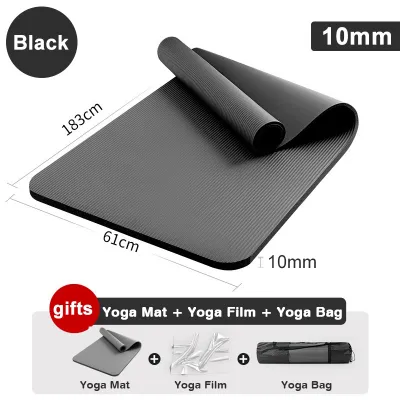
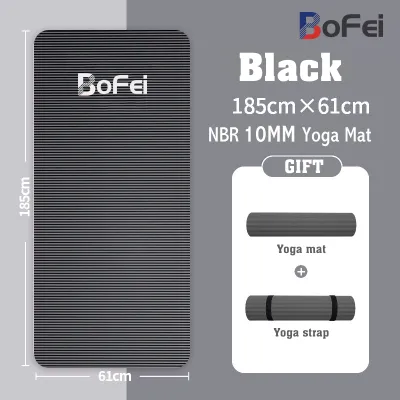
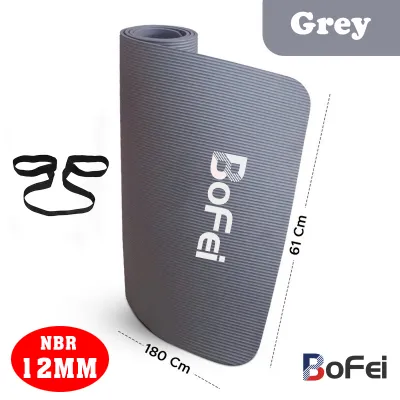
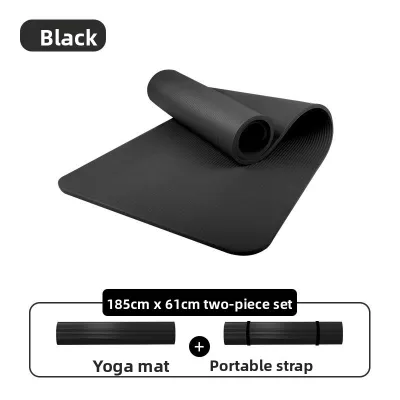
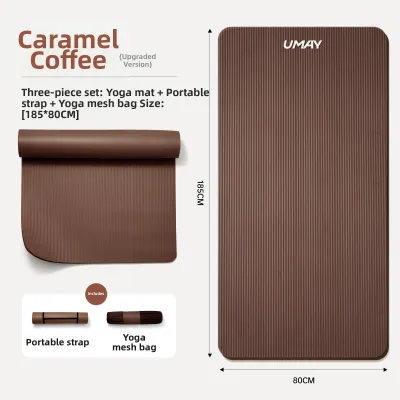
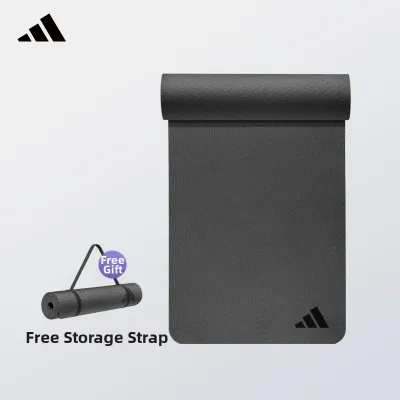
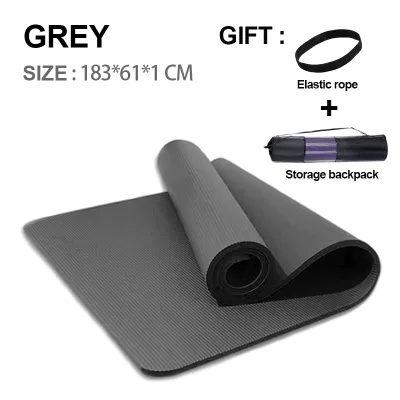
Prices are valid at publication and may change. Please refer to the product page for the latest price.
Conversely, while extra cushioning protects sensitive joints during floor work, it can introduce instability during standing balances like Tree Pose. On a highly compressible surface, your ankles must work twice as hard to micro-adjust and maintain alignment, which can lead to fatigue or strain.
Practical Feel: Comparing 6mm, 8mm, 10mm, and 15mm Mats
To find your ideal setup, it helps to compare how different millimeter ratings perform across two competing priorities: ground connection and impact absorption. Here is how the most common thickness levels feel in practice.

6mm Mats: The Balance of Cushion and Stability
A 6mm mat is widely considered the standard for general yoga practice. It provides just enough padding to take the edge off a hard floor while keeping you close enough to the ground to maintain solid stability. When you transition through dynamic sequences, your feet can grip the surface firmly without sinking into a soft, shifting base.
This thickness is highly suitable for active, flowing styles like Vinyasa or Ashtanga, where secure foot placement and rapid transitions are essential. It also remains lightweight and easy to roll up, making it highly portable for commuting to local studios or outdoor parks, even in warm, humid weather.
8mm to 10mm Mats: Extra Support for Sensitive Joints
Stepping up to an 8mm or 10mm mat introduces a noticeable layer of impact absorption. Kneeling, seated, and supine poses feel significantly more comfortable, as the extra millimeters absorb the pressure that would otherwise travel straight into your joints. If you frequently experience wrist discomfort in Downward-Facing Dog, this range offers a softer landing.
However, this added comfort comes with distinct trade-offs. Standing balances become slightly more challenging because the thicker material compresses under your feet, reducing your direct connection to the floor. Additionally, these mats are bulkier and heavier, making them less convenient to carry around if you rely on public transit or active commuting.
15mm Mats: Maximum Cushioning for Restorative Practice
A 15mm mat represents the maximum cushioning available for floor-based routines. This ultra-thick profile is highly beneficial for yin yoga, restorative practices, and floor-based Pilates, where you spend the majority of your session holding passive poses or lying down. The deep padding creates a comfortable barrier against cold, hard floors, allowing your body to relax completely.
Despite the luxurious comfort, a 15mm mat is generally unsuitable for active yoga styles. The extreme thickness makes standing balances highly unstable and increases the risk of ankle strain during fast transitions. It is best reserved for dedicated home practices focused on gentle stretching, rehabilitation, or core work.
Choosing the Right Thickness for Your Practice Style
Selecting the right mat thickness requires matching the equipment to your primary style of movement. If your routine consists of fast-paced Vinyasa, Ashtanga, or power yoga, a 6mm mat keeps you grounded and secure. For slower, floor-centric practices like Yin or Restorative yoga, an 8mm to 15mm mat will serve you better by keeping your body cushioned during long holds.
Your physical build and joint sensitivity should also guide your decision. Heavier practitioners naturally exert more downward force, which can cause thin mats to bottom out quickly. If you have sensitive knees or wrists but still want to practice active standing poses, you do not have to buy an ultra-thick mat that ruins your balance.
Instead, consider using a targeted support strategy. You can place a folded yoga towel, a small foam pad, or even a secondary thin travel mat directly under your knees or wrists during specific floor poses. This approach allows you to enjoy the stability of a standard 6mm mat for standing sequences while getting extra cushioning exactly when and where you need it.
Beyond Thickness: Checking Density and Material Firmness
When shopping for a thick mat, remember that thickness is only half of the comfort equation; material density and firmness play an equally critical role. For example, a 6mm mat made of high-density natural rubber or dense polyurethane (PU) can feel much more supportive and protective than a cheap 10mm mat made of low-density polyvinyl chloride (PVC) or basic foam, which collapses instantly under pressure.
To evaluate a mat’s true supportiveness, perform a physical “bottoming out” check. Press your knee or the heel of your hand firmly into the mat’s surface. If you can easily feel the hard floor underneath with minimal pressure, the material lacks the density required to protect your joints during a full practice.
Additionally, consider the tropical climate and humidity of the Philippines, which can make home workouts quite sweaty. Verify the mat’s surface texture and whether it features a closed-cell or open-cell structure. Closed-cell mats do not absorb sweat, making them easier to wipe clean and keep hygienic, though they may require a grip towel if you sweat heavily. Open-cell mats offer superior wet grip but require regular, deep cleaning to prevent moisture and odors from building up inside the material.
Frequently Asked Questions (FAQ)
Is a 15mm yoga mat too thick for beginners?
Yes, a 15mm mat is generally too thick for beginners who are still learning foundational yoga poses. The highly compressible surface makes it difficult to find a stable center of gravity, which can hinder your balance and alignment. Beginners are usually better off starting with a standard 6mm mat and using props, like a folded blanket or block, to cushion sensitive areas as they build strength.
Can I use a thick yoga mat for high-intensity interval training (HIIT)?
Using an ultra-thick yoga mat (10mm to 15mm) for high-intensity interval training (HIIT) is not recommended due to safety risks. The soft, squishy material does not provide the lateral stability needed for rapid pivots, jumps, or side-to-side movements, increasing the risk of ankle rolling or joint strain. Always check the manufacturer’s guidelines to ensure your mat is rated for high-impact, athletic footwear.

Community discussion
Share your experience or ask a question. Comments are reviewed before publication.