
Choosing between the Yonex EZONE 98 and the EZONE 100 is a critical decision when tailoring your tennis gear to your personal playing style. Both rackets are celebrated for their user-friendly feel and explosive power, largely driven by their signature isometric head shape. This unique design square-shapes the frame to expand the sweet spot vertically, offering a more forgiving hitting zone than traditional round frames. However, the choice between a 98-square-inch and a 100-square-inch head size introduces distinct physical and tactical trade-offs that can significantly alter your performance on the court.
To make the right choice, you must look beyond the cosmetic similarities and evaluate how each frame interacts with your swing speed, physical conditioning, and typical court positioning. The EZONE 100 is built to maximize depth and spin, making it a highly forgiving option for players who want easy power from the baseline. Conversely, the EZONE 98 is engineered for precision and feedback, rewarding players who possess clean, fast strokes and a desire to control the ball’s trajectory with pinpoint accuracy. Understanding these nuances ensures you invest in a racket that complements your strengths rather than fighting against your natural mechanics.
Core Differences in Head Size and Sweet Spot
The most immediate physical difference between these two models is the surface area of the racket head, which directly dictates how the string bed behaves upon impact. The EZONE 100 provides a larger hitting surface, which naturally translates to a more expansive sweet spot. When you are stretched wide on a defensive shot or forced to hit on the rise, this extra surface area acts as a safety net. Off-center hits that would normally die on a smaller frame still find enough depth to keep you in the rally, making the 100-square-inch head highly forgiving during intense, fast-paced exchanges.
Products mentioned in this guide
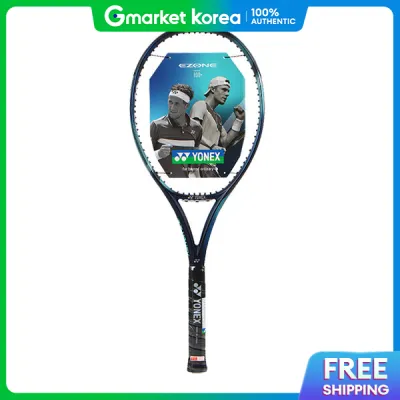
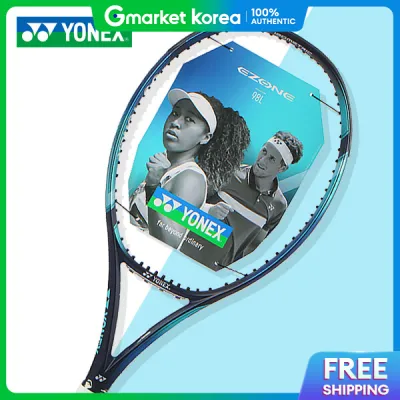
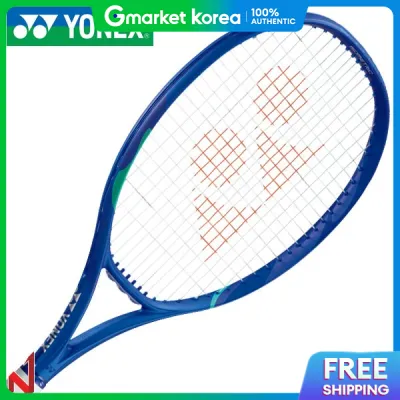
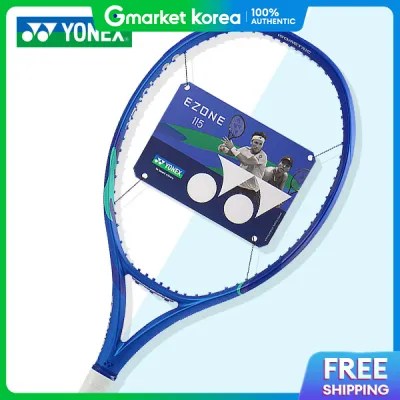
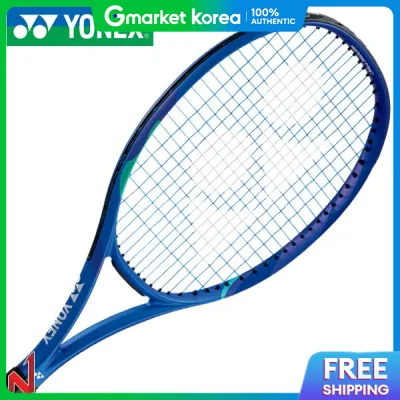
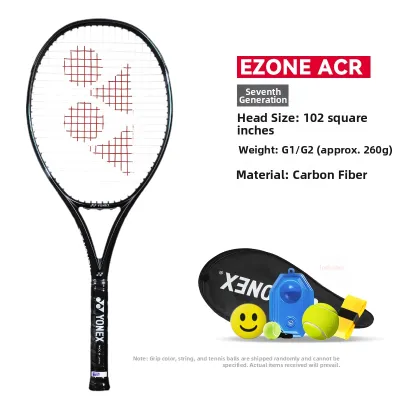
Prices are valid at publication and may change. Please refer to the product page for the latest price.
In contrast, the EZONE 98 concentrates its mass and string bed response into a more compact area. This smaller head size reduces the trampoline effect of the strings, giving you a much sharper, more direct tactile sensation at contact, which allows players with consistent stroke paths to paint the lines and change directions with confidence. This high level of precision demands a higher level of footwork and preparation to avoid weak responses on off-center hits.
To determine which head size suits you, take an honest look at your current unforced error rate and stroke consistency. If you find yourself frequently hitting the ball slightly off-center during long baseline rallies, or if you play on uneven outdoor courts where wind and bad bounces are common, the EZONE 100 offers the margin of error you need. If you are a highly consistent ball striker who rarely struggles with clean contact, the EZONE 98 will unlock a level of directional control that a larger head simply cannot match.
Weight, Maneuverability, and Swing Dynamics
Beyond the head size, the physical weight and how that weight is distributed throughout the frame—known as swingweight—play a massive role in how the racket feels during a long match. Static weight is simply how heavy the racket is when resting on a scale, while swingweight measures how heavy the racket feels when you are actually swinging it through the air. In tropical playing conditions, such as the high heat and humidity often experienced on outdoor courts in the Philippines, managing arm fatigue is crucial. A racket that feels light in the first set can feel heavy by the third set if the swingweight does not match your physical conditioning.

The EZONE 100 series is generally designed to support modern, spin-friendly baseline play. Its frame geometry and weight distribution provide excellent stability through the contact zone, allowing you to plow through heavy incoming balls without the racket twisting in your hand. This stability makes it easier to generate heavy topspin and deep, penetrating groundstrokes with a medium-to-fast swing.
The EZONE 98 series, while slightly heavier in static weight in its standard configuration, often features a thinner beam and a more head-light balance. This design allows the racket to cut through the air with less resistance, offering faster maneuverability. This agility is highly beneficial when you need to react quickly at the net for reflex volleys, hit sharp angles on the run, or whip the racket head up quickly to hit a heavy kick serve. The faster swing speed also benefits players who prefer flatter, more driving stroke trajectories, as it allows them to accelerate the racket head rapidly to generate pace on their own terms.
Before making a purchase, it is essential to verify the specific version tags printed on the racket throat or packaging, such as the standard, L (Light), or Tour variants. Yonex produces several sub-models within both the 98 and 100 families, and these variations can alter the static weight by 15 grams or more. A standard EZONE 98 will feel vastly different from an EZONE 98L, so always check the exact specifications to ensure you are buying the weight class that matches your physical strength and swing speed.
Matching the Racket to Your Skill Level and Court Position
Selecting the right EZONE model requires a clear understanding of your technical proficiency and where you spend most of your time on the court. For beginner to intermediate players, the EZONE 100 is almost always the more logical starting point. At this stage of development, developing clean stroke mechanics and finding consistent depth are the primary goals. The 100’s larger sweet spot and inherent power assist you on serves and baseline rallies, helping you keep the ball deep in the opponent’s court even when your footwork isn’t perfect or when you are dealing with a slippery grip due to high humidity.
Advanced players, on the other hand, often have the physical strength and technical consistency to generate their own power. For these competitors, the EZONE 98 is a precision tool that allows them to handle heavy incoming pace without fear of the ball flying long. If your game relies on aggressive line painting, sharp angles, and transition play, the 98 provides the control needed to execute these high-risk shots. It allows you to swing out fully on the ball, knowing that the frame’s control-oriented characteristics will keep the ball within the lines.
Your tactical identity should also guide your decision. Baseline grinders who prefer to stay back, hit heavy topspin, and outlast their opponents will appreciate the EZONE 100’s stability and easy depth. All-court players and net-rushers, who constantly transition from the baseline to the forecourt, will likely prefer the EZONE 98’s quick-handling nature and crisp volleying feel.
Specification Verification and String Setup Considerations
When you are ready to purchase or demo an EZONE, you must verify the critical specifications listed on the frame’s decals. Pay close attention to the unstrung weight, the balance point (measured in millimeters or points head-light), and the string pattern, which is typically a standard 16×19 configuration for both models. Checking these parameters ensures you do not accidentally purchase a regional variant or a lighter version that does not fit your needs.
Your choice of strings and tension will also play a massive role in how either racket performs. Because the EZONE 100 is naturally powerful, many players choose to pair it with a stiffer, low-powered co-polyester string or increase the tension slightly to tame that power and gain more control. Conversely, the EZONE 98’s stiffer, more control-oriented frame can sometimes feel harsh on the arm if strung too tightly. To maximize comfort and ball pocketing on the 98, you might want to drop the tension by a few pounds or use a softer multifilament or hybrid string setup.
Keep in mind that racket specifications and technologies can shift slightly between different production years and generations. A previous-generation EZONE may have a slightly different stiffness profile or beam thickness compared to the latest release. Always base your final decision and setup choices on the exact model year and region-specific label currently available to you, rather than relying solely on general reviews of older models.
Decision Framework: Which EZONE Should You Choose?
To finalize your decision, use this straightforward framework to align your playing style with the correct EZONE model:
- Choose EZONE 100 if: You prioritize forgiveness, easy baseline power, and heavy spin generation. This model is ideal if you are an intermediate player looking to transition to a more competitive level, or if you want a racket that helps you maintain depth during long, exhausting rallies in hot, humid weather.
- Choose EZONE 98 if: You have a fast, established swing path and prioritize pinpoint placement, crisp net play, and direct tactile feedback. This model is best suited for advanced players who can consistently strike the center of the string bed and want to control heavy pace with precision.
- Verify first if: You are unsure about your swing speed, arm endurance, or exact tactical identity. Before spending your hard-earned money—which can be a significant investment of several thousand pesos (₱)—it is highly recommended to consult a certified stringer or local tennis coach, or arrange a physical demo session to test both frames side-by-side on the court.
Frequently Asked Questions (FAQ)
Is the Yonex EZONE 100 too powerful for advanced players?
While the EZONE 100 is often recommended for intermediate players due to its forgiving nature, many advanced players and competitive tournament competitors successfully use it. To manage the frame’s inherent power, highly skilled players typically customize their setup by using low-powered polyester strings, increasing the string tension, or adding weight to specific areas of the frame to customize the balance. This allows them to enjoy the defensive benefits of a larger sweet spot while maintaining the control necessary for high-level play.
Can I use the same string tension for both the 98 and 100?
If you are transitioning between these two models, using the exact same string tension may result in a very different feel on the court. A larger head size like the 100-square-inch frame generally creates a livelier string bed with more trampoline effect at a given tension. If you are moving from the EZONE 100 to the EZONE 98, you may want to drop your string tension by 1 to 2 pounds to maintain a similar level of comfort and depth. It is always best to log your feedback after a few hitting sessions and make incremental adjustments.
Community discussion
Share your experience or ask a question. Comments are reviewed before publication.