
Choosing the right tennis racket can completely transform your performance, and within the highly acclaimed Yonex Ezone lineup, the decision often comes down to a choice between two flagship head sizes: the Ezone 98 and the Ezone 100. Both rackets are celebrated for their plush feel and user-friendly power, but they cater to distinct player profiles and swing mechanics. The primary distinction lies in how they balance control, forgiveness, and effortless depth on the court.
The Yonex Ezone 98 is tailored for advanced players who possess fast, full swings and prioritize surgical precision and directional control. In contrast, the Yonex Ezone 100 is designed for intermediate to advanced players who want a larger sweet spot, easier access to depth, and more forgiveness on off-center hits. There is no single winner between the two; the optimal choice depends entirely on your skill level, physical stamina, and how you generate racket head speed.
Head Size and Sweet Spot: 98 vs 100 Square Inches
The physical difference of two square inches between these two frames might seem negligible on paper, but it fundamentally alters how the racket behaves when making contact with the ball. The Ezone 100 features a larger face that naturally creates a wider string bed. This extra surface area expands the hitting zone, giving you a significantly more forgiving response when you fail to strike the ball perfectly in the center of the frame.
Products mentioned in this guide
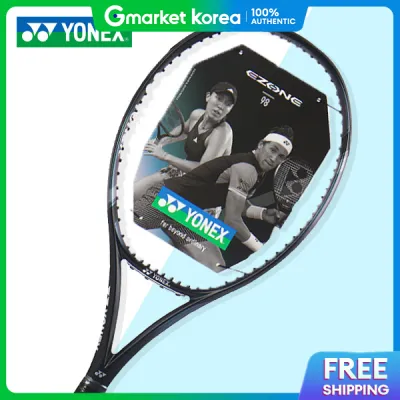
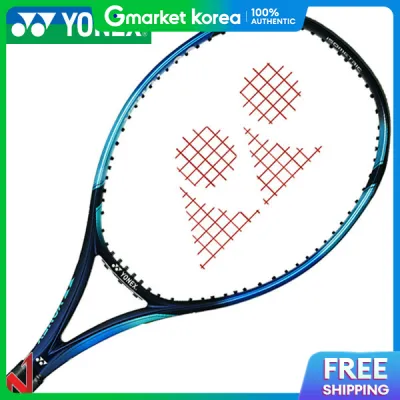
Prices are valid at publication and may change. Please refer to the product page for the latest price.
Yonex utilizes its signature Isometric head shape across both models, a design that squares the corners of the frame to increase the intersection of the main and cross strings. While this technology expands the sweet spot on both rackets, the Ezone 100 benefits from this geometry on a larger scale. On humid afternoons when fatigue sets in and your footwork slows down, the Ezone 100 helps keep off-center hits deep in the opponent’s court rather than letting them die on your side of the net.
The Ezone 98, with its more compact hitting area, offers a denser string spacing in the sweet spot. This configuration reduces the trampoline effect of the string bed, providing highly consistent ball pocketing and immediate, precise feedback to your hand. When you strike the ball cleanly with the 98, the sensation is incredibly rewarding and connected, but mishits will feel noticeably more jarring and will land significantly shorter than they would with the 100.
Because string bed dimensions and beam constructions can vary slightly across different production runs, players should check the manufacturer’s official specification sheets for exact measurements. Understanding these geometric differences is the first step in aligning a racket with your physical capabilities and typical contact point consistency.
Power, Spin, and Control on the Court
Power and spin are highly dependent on how a racket’s frame geometry interacts with your swing speed. The Ezone 100 is engineered to provide effortless depth. Because of its longer main strings and slightly thicker beam, the frame deforms less upon impact, transferring more energy back into the ball. This inherent power is a massive asset for defensive play, allowing you to return deep shots even when pushed far behind the baseline.

Spin generation also differs between the two models due to string movement and launch angle. The Ezone 100 offers an inherently higher launch angle, meaning the ball naturally exits the string bed on a higher trajectory. This characteristic makes it incredibly easy to hit deep, looping topspin shots that push your opponents back. For players with moderate swing speeds, the Ezone 100 provides the necessary assistance to keep rallies competitive without requiring extreme physical exertion.
Conversely, the Ezone 98 is a control-oriented frame that requires you to supply your own power. If you do not swing with high racket head speed and proper technique, your shots may lack depth and penetration. However, for players who can generate rapid head speed, the Ezone 98 offers exceptional directional control. You can swing with maximum force, confident that the racket’s lower launch angle and precise string bed will keep the ball from flying long.
Spin on the Ezone 98 is highly controllable but must be driven by player technique. The denser feel of the string bed allows players with fast, vertical swings to “bite” into the ball, producing heavy, driving topspin that dives sharply before the baseline. While the 100 offers easier spin, the 98 provides more predictable spin for players who like to dictate play with aggressive, flat drives or precise angles.
Maneuverability and Arm Comfort
How a racket moves through the air dictates how quickly you can react during fast exchanges. The Ezone 98 features a thinner beam profile and a smaller head size, which reduces aerodynamic drag. This design allows the racket to cut through the air quickly, making it highly maneuverable at the net during rapid volley exchanges or when scrambling to return a fast serve.
In terms of stability, the Ezone 100 holds a slight advantage against heavy, hard-hitting opponents. Its wider beam and higher twist weight prevent the frame from twisting in your hand when blocking back powerful shots. This stability is particularly beneficial for doubles players who spend a significant amount of time defending the net or hitting reflex volleys against aggressive drives.
Comfort is a hallmark of the Yonex Ezone series, which incorporates advanced vibration-filtering technologies in the shaft and grommets to protect the player’s arm. However, the perceived comfort of each model depends heavily on how cleanly you hit the ball. Because the Ezone 100 has a larger sweet spot, it generally feels more comfortable and plush for intermediate players who occasionally miss the center of the frame.
The Ezone 98 is also exceptionally comfortable, but only when struck cleanly. If your swing is inconsistent, the smaller sweet spot means you will experience more harsh vibrations traveling up your arm. When evaluating comfort, it is essential to consider the specific generation of the Ezone you are purchasing, as Yonex refines its dampening materials and frame stiffness with each subsequent release.
The Decision Framework: Choose 98 or 100?
To make an informed decision, you must evaluate your current skill level, physical conditioning, and tactical approach to the game. Aligning these factors with the specific strengths of each frame will ensure you do not end up struggling against your own equipment.
Choose the Ezone 98 if…
- You are an advanced player (NTRP 4.5+ or equivalent local ranking) with established, long swing paths.
- You prioritize surgical placement, drop shots, and driving the ball flat over raw, effortless depth.
- You can consistently strike the ball in the center of the string bed and do not rely on the racket to generate power.
- You prefer a whippy, aerodynamically fast feel for quick transitions at the net.
Choose the Ezone 100 if…
- You are an intermediate to lower-advanced player looking to maximize consistency and depth.
- You want a generous margin for error on off-center hits, especially during long matches in hot, humid conditions.
- You play a significant amount of doubles and require a stable frame to block back fast volleys.
- You prefer an easy launch angle that helps you hit deep topspin with moderate physical effort.
Verify first if…
- You are transitioning between these two head sizes; it is highly recommended to demo both models using the exact same string type and tension.
- You are playing on high-bounce outdoor hard courts or slower clay courts, as court surface speed can influence whether you need more control (98) or more assistance with depth (100).
Your playing style should dictate this choice. Flat hitters who like to sweep the ball early often lean toward the 98 for its predictable trajectory, while modern topspin players who love to grind from the baseline typically find the 100 to be a more efficient tool for exhausting their opponents.
Crucial Specs to Verify Before Buying
Head size is only one variable in the performance equation. Before finalizing your purchase at a local pro shop or online distributor, you must verify several other critical specifications that can drastically alter how either Ezone model plays.
- Weight Variants: Both the 98 and 100 head sizes come in lighter versions, such as the Ezone 98L (typically 285g) or the Ezone 100L (285g) and 100SL (270g). The standard Ezone 98 weighs 305g unstrung, while the standard Ezone 100 weighs 300g. A lighter variant of the 100 will play completely differently than the standard version, so ensure you are purchasing the correct weight for your physical strength.
- Grip Size: Selecting the correct grip size (ranging from 4 1/8 to 4 1/2) is essential. In tropical, humid climates where sweaty hands are common, an incorrect grip size can cause the racket to twist, leading to wrist fatigue or injury. Always check local availability and consider using a high-quality overgrip to manage moisture.
- String Tension and Type: The strings you choose will amplify or mute the racket's natural characteristics. Stringing the Ezone 100 with a stiff polyester string at a higher tension can help tame its power, while putting a softer multifilament string at a lower tension in the Ezone 98 can enhance its comfort and pocketing.
- Racket Generation: Yonex updates the Ezone line every few years. Ensure you verify whether you are buying the latest model or a previous generation, as beam widths, stiffness ratings, and cosmetic designs vary between versions.
Frequently Asked Questions (FAQ)
Is the Yonex Ezone good for beginners?
The standard Yonex Ezone 100 (300g) and Ezone 98 (305g) are generally too heavy and demanding for absolute beginners. However, the Ezone lineup features lighter variants, such as the Ezone 100L or Ezone 100SL, which are excellent for beginners. These lighter models offer a generous sweet spot and easy power, allowing new players to develop their strokes without straining their muscles or joints.
Do I need to string the Ezone 98 and 100 differently?
Because the Ezone 100 inherently produces more power, many players choose to string it slightly tighter (around 52 to 55 lbs) to gain more control and prevent the ball from flying. The Ezone 98, which is naturally control-oriented, is often strung slightly looser (around 48 to 52 lbs) to help open up the sweet spot and increase comfort. You should consult a professional stringer to find the ideal tension based on your specific string choice and swing speed.
Community discussion
Share your experience or ask a question. Comments are reviewed before publication.