
Selecting the right braided fishing line is one of the most critical decisions you will make before heading out to the water. The choice between 4-strand, 8-strand, and 12-strand braided lines ultimately depends on your target environment, your preferred casting techniques, and your budget. While a higher strand count offers a smoother, rounder profile that excels in long-distance casting and finesse applications, a lower strand count provides thicker individual fibers that deliver superior resistance against harsh, abrasive structures. Understanding these structural differences allows you to match your line to your specific fishing style, ensuring you do not overpay for performance characteristics you do not need.
In tropical fishing environments, such as the coastal waters and inland rivers of the Philippines, your gear must withstand high humidity, intense sun exposure, and diverse underwater structures. Whether you are casting light lures for mangrove jack in brackish estuaries or jigging in deep offshore waters, the physical construction of your braided line directly impacts your casting distance, knot strength, and overall control. By evaluating how each strand count behaves under tension and against friction, you can make an informed decision that balances cost with on-the-water reliability.
Understanding Braid Construction and Profile Differences
To understand how braided lines perform, you must first look at how they are manufactured. Braided fishing lines are constructed by weaving multiple strands of high-strength polyethylene (PE) fibers together. The number of strands—often referred to as carriers—determines the fundamental physical structure of the line. A 4-strand line uses four thicker individual carriers, an 8-strand line uses eight medium-sized carriers, and a 12-strand line weaves twelve ultra-fine carriers into a single cohesive line.
Products mentioned in this guide
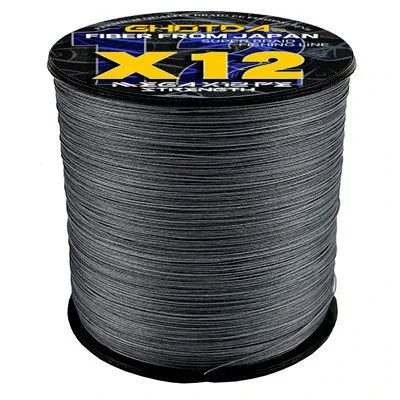
![[COD]100M 4 Strands Braided Fishing Line Super Strong PE Fishing Line Multifilament Braided Line](https://img.lazcdn.com/g/p/8dbdacca26bccd82e41c2f861d68deb8.jpg_400x400q80.jpg_.webp)
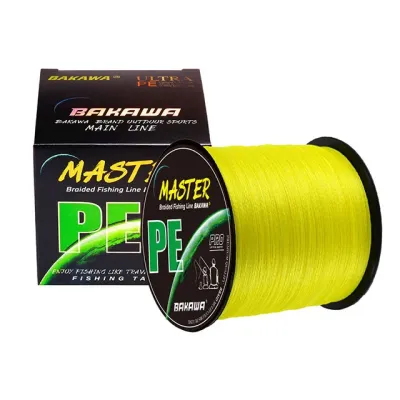
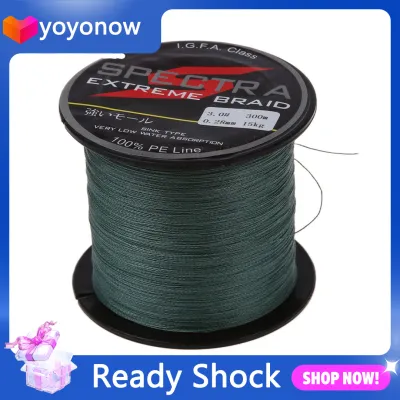
Prices are valid at publication and may change. Please refer to the product page for the latest price.
The density and pattern of this weave directly affect the line’s cross-sectional profile. When four strands are braided together, the resulting line has a noticeably flatter, more rectangular profile. This shape occurs because there are fewer fibers to fill the gaps during the braiding process, leaving a textured surface that you can easily feel between your fingers. As the carrier count increases to eight and twelve, the weave becomes significantly tighter and more compact. This tighter weave fills the internal voids, creating a highly rounded, cylindrical profile that closely resembles a single solid strand.
This structural difference dictates how the line behaves on your reel and in the water. A rounder line sits more evenly on the spool, reducing the likelihood of digging into itself under heavy pressure. Conversely, a flatter line may catch the wind during a cast, though it often cuts through water differently when sinking. When selecting a line, your baseline needs should guide your choice: if you require a line that glides effortlessly with minimal resistance, higher strand counts are preferred, whereas rugged environments call for the simpler, tougher construction of fewer strands.
Evaluating Smoothness, Abrasion, and Casting Performance
The physical profile of your braided line directly impacts casting distance and guide friction. Because a 12-strand line is exceptionally round and smooth, it generates minimal friction as it passes through the ceramic guides of your fishing rod. This lack of resistance allows for quiet, long-distance casts, which is highly advantageous when using lightweight lures or targeting wary fish in shallow water. An 8-strand line offers a highly comparable level of smoothness, making it a popular all-rounder, while a 4-strand line produces a distinct “buzzing” sound as the textured surface rubs against the rod guides during a cast.

However, this smoothness comes with a distinct trade-off in abrasion resistance. In a 4-strand line, each of the four carriers is relatively thick. If the line rubs against a sharp rock, barnacle, or concrete piling, the outer surface of the thick carrier may scrape, but the core of the fiber often remains intact, preserving its breaking strength. In contrast, a 12-strand line relies on twelve incredibly thin fibers. If this line scrapes against a sharp object, even a minor nick can completely sever several of these micro-fibers, drastically reducing the line’s structural integrity and increasing the risk of a sudden break under tension.
When evaluating these performance trade-offs, it is essential to verify the manufacturer’s specifications rather than relying solely on the strand count to assume strength. Check the packaging for the precise diameter-to-strength ratio, as high-quality materials can vary significantly across brands. A premium 8-strand line may feature a tighter weave and higher-grade PE fibers than a budget-friendly 12-strand line, resulting in better consistency and fewer weak points. Always inspect the line’s diameter consistency along its length, as any flat spots or uneven sections can lead to unpredictable casting performance and weak knots.
Matching Strand Count to Your Fishing Technique and Environment
Matching your braided line to your specific fishing technique and local environment is key to maximizing success. A 4-strand braided line is optimal for heavy cover and high-abrasion scenarios. If you are fishing around mangrove roots, submerged timber, or rocky shorelines where your line frequently contacts rough surfaces, the thick, rugged fibers of a 4-strand line provide the necessary durability. This construction is also highly effective for techniques like frogging or heavy jigging in thick vegetation, where you need to slice through weeds to pull a fish out of hiding.
For anglers who require versatility across a wide range of techniques, an 8-strand braided line serves as the ideal middle ground. It provides a balanced combination of smoothness for decent casting distance and sufficient durability for mixed environments. Whether you are casting soft plastics for estuary species, trolling along coastal reefs, or bait fishing from a sandy beach, an 8-strand line handles these diverse demands with ease. It performs exceptionally well on both spinning and baitcasting reels, offering a reliable user experience without requiring specialized handling.
When your fishing demands maximum casting distance, extreme sensitivity, and minimal line drag, a 12-strand braided line becomes the primary choice. This ultra-smooth line is perfect for finesse techniques, such as micro-jigging or ultra-light casting, where the slightest vibration must transmit directly to your rod tip. Because the line is incredibly round and thin, it cuts through strong water currents with minimal drag, allowing your lures to sink faster and stay in the strike zone longer. This makes it highly effective for deep-water jigging or targeting line-shy species in crystal-clear open waters where line visibility could deter a bite.
Before purchasing your next spool of braided line, use this quick decision checklist to verify your requirements:
- Assess the Cover: Will your line frequently rub against sharp rocks, barnacles, or thick roots? If yes, prioritize a 4-strand line.
- Determine Casting Needs: Do you need to cast lightweight lures long distances into open water? If yes, opt for an 8-strand or 12-strand line.
- Evaluate Water Current: Are you fishing in deep water with strong currents where line drag will affect your lure action? If yes, a thin 12-strand line is highly beneficial.
- Check Reel Type: Ensure your reel's spool is compatible with ultra-smooth braids, or prepare to use a monofilament backing to prevent slipping.
Assessing Budget and Value Across Strand Options
The manufacturing complexity of weaving more strands directly influences the retail price of braided lines. Generally, 4-strand lines are the most budget-friendly option, often priced under ₱500 for a standard spool, making them highly accessible for beginners or anglers who go through a lot of line in rough environments. Moving up to an 8-strand line typically positions you in a mid-range tier, generally ranging from ₱500 to ₱1,500, which offers a significant performance upgrade without a prohibitive cost. Premium 12-strand lines sit at the top of the pricing spectrum, often exceeding ₱1,500, reflecting the advanced technology required to weave twelve micro-fibers consistently.
To determine if upgrading to a 12-strand line provides a tangible return on investment, evaluate whether your specific fishing style benefits from its unique properties. If you primarily fish in heavy cover where line wear is rapid and frequent re-spooling is necessary, investing in an expensive 12-strand line may lead to unnecessary expenses, as the line will wear out just as quickly as a cheaper 4-strand alternative. However, if you specialize in technical casting, deep-sea jigging, or ultra-light finesse fishing where casting distance and sensitivity directly dictate your catch rate, the premium cost of a 12-strand line is justified by the performance advantages it delivers.
When comparing value across different brands, look beyond the strand count and examine secondary indicators of quality. Check the total line length on the spool to ensure it matches your reel’s capacity, and verify if the line features specialized coatings designed to resist UV damage and water absorption. A high-quality coating can significantly extend the lifespan of your line, especially in hot, humid tropical climates. By balancing the initial purchase price against the expected lifespan and performance needs, you can select a line that offers the best long-term value.
Frequently Asked Questions (FAQ)
Does a higher strand count mean the line is stronger?
No, a higher strand count does not automatically make a braided line stronger. The overall breaking strength of a line is determined by the quality of the raw polyethylene (PE) materials used and the total diameter of the line. A 4-strand line and a 12-strand line with the same rated breaking strain (for example, 20 lbs) will hold the same weight under a straight pull. However, the 12-strand line will achieve this strength with a thinner, smoother profile, while the 4-strand line will be slightly thicker but offer better resistance to physical abrasion.
Can I use 12-strand braided line on any fishing reel?
Yes, you can use 12-strand braided line on most modern spinning and baitcasting reels, but you must take specific spooling precautions. Because 12-strand line is exceptionally smooth and round, it has a tendency to slip on a bare metal spool under heavy tension. To prevent this, always apply a few wraps of electrical tape to the spool arbor before winding the line, or use a short backing of monofilament line. Additionally, ensure your reel’s line roller is clean and functioning smoothly to prevent twists in the ultra-fine line.
How often should I replace my braided fishing line?
Rather than relying on a fixed timeframe, you should replace your braided line based on observable signs of wear and tear. Regularly inspect the last few meters of your line for physical fraying, fuzzy texture, or a loss of its protective outer coating, as these are clear indicators of structural degradation. If you notice significant color fading or if the line feels rough and brittle to the touch after prolonged exposure to salt water and tropical sun, it is time to cut back the worn section or completely respool.

Community discussion
Share your experience or ask a question. Comments are reviewed before publication.