
To start playing badminton in the Philippines, a beginner should look for a lightweight racket (typically classified as 4U), featuring a flexible shaft and an even-balanced or head-light frame. This combination provides the necessary maneuverability to learn basic strokes without straining the wrist or shoulder. Opting for a pre-strung model from a reputable brand allows you to step onto the court immediately while keeping your initial investment practical.
Selecting your first racket can feel overwhelming given the sheer variety of technical specifications available. However, focusing on how a racket complements your current physical strength and coordination will make the decision much simpler. By understanding a few key design elements, you can find a racket that helps you develop proper form, prevents early fatigue, and ensures an enjoyable introduction to the sport.
Understand Your Playing Style and Physical Strength
Before looking at specific models, it is essential to evaluate your current physical capabilities and how you intend to play. Beginners often lack the specific forearm and wrist conditioning that seasoned players develop over years of training. Choosing a racket that is too heavy or too stiff can lead to rapid fatigue and increases the risk of minor injuries, such as tennis elbow or shoulder strain.
Products mentioned in this guide

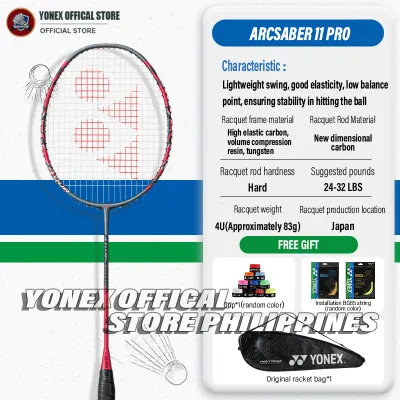
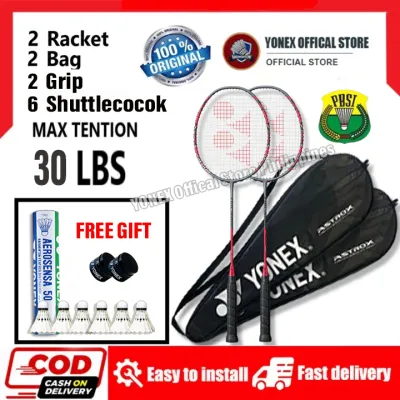
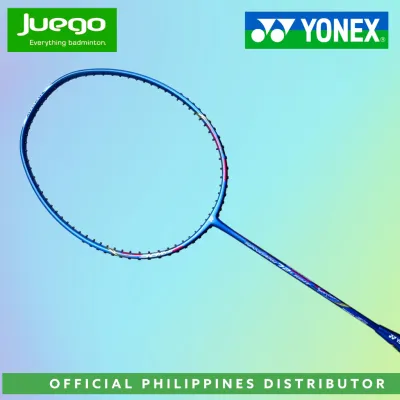
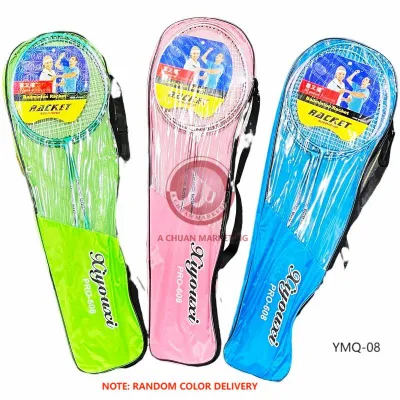
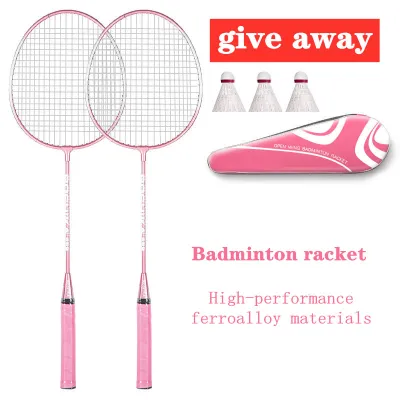
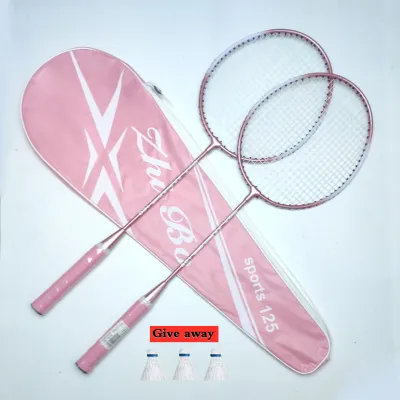
Prices are valid at publication and may change. Please refer to the product page for the latest price.
At this early stage, your playing style is likely still evolving. You might find yourself naturally leaning toward defensive play, focusing on lifting and clearing the shuttlecock deep into the opponent’s court to buy time. Alternatively, you might have an aggressive instinct, attempting to smash whenever the opportunity arises. A beginner-friendly racket should accommodate both tendencies by offering a balanced performance profile rather than specializing in one extreme.
For this reason, entry-level rackets prioritize forgiveness and ease of use over raw power or extreme control. They typically feature an isometric head shape, which creates a larger sweet spot. This design ensures that even if you do not hit the shuttlecock dead-center, your shots will still travel with reasonable speed and accuracy. This built-in forgiveness is crucial for building confidence as you work on your hand-eye coordination and footwork.
Key Racket Specifications to Evaluate
Understanding technical specifications allows you to filter out advanced rackets that might hinder your progress. The most critical factors to look at are weight, balance point, shaft flexibility, and grip size.

Weight and Balance Point
Racket weight is standardized using a “U” classification system, which you can find printed on the shaft or cone of the racket. A lower number indicates a heavier racket. For example, 3U rackets weigh between 85 and 89 grams, while 4U rackets weigh between 80 and 84 grams. There are also lighter options, such as 5U (75 to 79 grams). For most beginners, a 4U racket is the ideal starting point. It is light enough to swing quickly and minimize arm fatigue during long sessions on hot indoor courts, yet heavy enough to provide decent stability and power transfer.
The balance point of a racket determines how that weight is distributed. Head-light rackets have more weight concentrated near the handle, making them highly maneuverable and excellent for quick defensive reactions and fast net play. Head-heavy rackets concentrate weight at the top of the frame, which assists in generating momentum for powerful smashes but requires stronger wrist action to control. Even-balanced rackets distribute weight uniformly, offering a versatile middle ground. Beginners generally benefit most from even-balanced or head-light rackets, as they are much easier to control while learning the fundamentals of the swing.
You can easily check the balance point of a racket in a physical store. Rest the shaft of the racket on your index finger and adjust its position until the racket balances horizontally. If your finger is closer to the head of the racket, it is head-heavy; if it is closer to the handle, it is head-light. This quick physical check helps you verify how the racket will feel in your hand before making a purchase.
Shaft Flexibility and Grip Size
Shaft flexibility refers to how much the racket bends during a swing. Rackets are categorized from flexible to medium, stiff, and extra-stiff. Stiff shafts are designed for advanced players with fast, explosive swing speeds who can bend the frame using precise wrist snaps. For beginners, a flexible or medium-flex shaft is highly recommended. A flexible shaft acts like a spring, bending easily during your swing and releasing that stored energy to help propel the shuttlecock further. This assists you in clearing the shuttlecock from baseline to baseline without needing perfect technique or immense physical strength.
Grip size is another crucial factor for comfort and control, denoted by a “G” rating followed by a number. Unlike the weight system, a larger G-number indicates a smaller grip circumference. Common sizes include G4, G5, and G6. In the local market, G5 is the most widely available size and fits the average hand comfortably. A grip that is too large can prevent you from using your fingers effectively to control the racket angle, while a grip that is too small can cause you to squeeze too tightly, leading to forearm cramps.
When choosing a grip size, it is wise to select a slightly smaller size like G5 or G6 because you can always customize it. Adding a replacement grip or a thin overgrip allows you to adjust the thickness to your exact preference. In the humid tropical climate of the Philippines, players sweat heavily, making overgrips an essential accessory to maintain a secure hold on the racket and prevent it from slipping out of your hand during intense rallies.
Setting a Realistic Budget and Verifying Retailers
As a beginner, you do not need to spend a fortune on professional-grade equipment. A realistic budget for a reliable, durable entry-level racket ranges from ₱1,000 to ₱3,000. Within this price range, you can find high-quality graphite or carbon fiber frames that offer excellent durability and playability. Avoid very cheap steel or aluminum rackets, which are often sold in pairs at department stores for a few hundred pesos. These rackets are heavy, lack flexibility, and can transmit harsh vibrations to your arm, increasing the risk of joint discomfort.
When browsing your options, you will encounter both factory-strung and unstrung rackets. Factory-strung rackets come pre-installed with strings from the manufacturer, making them highly convenient and cost-effective for beginners who want to start playing immediately. Unstrung frames are sold without strings, allowing players to choose their preferred string type and tension. While custom stringing offers performance benefits, it adds to the overall cost and requires technical knowledge that beginners do not yet need.
To ensure you are purchasing genuine gear, always buy from authorized sports retailers, physical specialty stores, or official brand storefronts on major ecommerce platforms. Counterfeit rackets are highly prevalent in online marketplaces and often mimic the appearance of expensive models. However, these counterfeits lack structural integrity, use inferior materials, and can break easily under normal play. Purchasing from verified sellers ensures you receive a genuine product covered by a manufacturer warranty.
Step-by-Step Racket Selection Process
To simplify your purchase, follow this straightforward selection process to find the right racket for your needs:
First, filter your choices by weight and flexibility. Look specifically for rackets labeled as 4U with a flexible or medium-flexible shaft. This immediately eliminates heavy or stiff professional models that could hinder your learning process.
Second, inspect the racket frame for the manufacturer’s recommended string tension. This information is usually printed on the shaft or near the cone, showing a range such as 20 to 24 lbs (pounds). Beginners should always stick to lower tensions within this range. Lower tension increases the trampoline effect of the string bed, providing more power and a larger sweet spot. High string tensions (above 26 lbs) tighten the strings like a board, requiring precise sweet-spot contact and high swing speeds to generate depth, which can easily strain a beginner’s wrist.
Third, test the racket’s physical feel. If you are shopping in a physical store, hold the handle using a relaxed forehand grip and perform a few gentle shadow swings to check the maneuverability. If you are purchasing from an online sports merchant, carefully read the product specifications and verify the seller’s return policy. Ensure the merchant uses sturdy packaging, such as a rigid cardboard box or bubble wrap, to protect the frame from warping or cracking during transit.
Essential Accessories and Basic Racket Care
Investing in a few key accessories and practicing basic maintenance will protect your equipment and improve your overall safety on the court.
Choosing the right shuttlecock is highly important. Nylon or plastic shuttlecocks are highly recommended for beginners because they are incredibly durable and cost-effective. In the humid tropical climate of the Philippines, feather shuttlecocks can become heavy and degrade rapidly, especially during casual outdoor or indoor play. Nylon shuttlecocks maintain their flight characteristics longer and can withstand mis-hits without breaking.
Additionally, proper footwear is critical for safety. Always wear non-marking indoor court shoes when playing on wooden or rubber courts. These shoes are specifically designed to provide lateral traction, helping you change directions quickly without slipping. Running shoes or casual sneakers lack this lateral support and can lead to ankle rolls or slips on dusty court surfaces.
To care for your racket, store it in a padded thermal bag when not in use. High humidity and extreme heat—such as leaving your gear inside a parked car under the sun—can weaken the graphite frame and cause the strings to lose tension prematurely. A thermal bag helps regulate temperature and shields the racket from moisture.
Finally, make it a habit to inspect your racket frame regularly. Look for micro-cracks, paint chips, or deformed grommets (the plastic eyelets that protect the strings from the frame). Frame damage often occurs during accidental clashes with a doubles partner’s racket or when scraping the floor to retrieve a low shot. If you spot a crack in the frame, avoid restringing it, as the high tension can cause the frame to collapse completely.
Frequently Asked Questions (FAQ)
Should a beginner buy a pre-strung or unstrung racket?
For most beginners, a pre-strung racket is the most practical choice. It eliminates the extra cost of buying strings separately and paying for a stringing service, allowing you to start playing immediately. The factory string tension is typically set at a moderate level (around 20 to 22 lbs), which is ideal for learning basic strokes and maximizing the sweet spot. As your skills progress and you develop a specific playing style, you can transition to unstrung frames to customize your string type and tension.
How can I tell if my racket strings need replacing?
You can identify the need for restringing by looking for visible signs of wear, such as fraying fibers, deep notches where the vertical and horizontal strings cross, or a broken string filament. Additionally, you may notice a loss of tension over time; the string bed will feel mushy, and the shuttlecock will not bounce off the racket face with a crisp sound. Casual players who play once or twice a week should consider restringing their racket every few months to maintain consistent performance, rather than waiting for a string to snap completely.

Community discussion
Share your experience or ask a question. Comments are reviewed before publication.