
Choosing the right football whistle in the Philippines requires balancing acoustic power, environmental resilience, and role-specific features. Because local matches often face intense tropical downpours, high humidity, and loud crowd environments, officials and coaches must select whistles that do not fail when wet or lose their pitch over long matches. The ideal choice depends on whether you are refereeing a high-stakes league match in a noisy stadium or running daily training drills on a grassroots pitch.
A football whistle is not merely an accessory; it is the primary tool of communication on the pitch. It serves as a physical extension of a referee’s authority, capable of stopping play instantly, preventing player conflict, and maintaining the flow of the game. For coaches, it is an essential tool for instruction, safety, and grabbing attention across wide training fields. Understanding how different whistle designs perform under various conditions is the first step in selecting a reliable tool that will not let you down when a critical decision must be made.
To make an informed choice, sports officials must evaluate several key factors, including internal mechanisms, material durability, ergonomics, and acoustic properties. By matching these features to your specific role and the environmental conditions of your matches, you can ensure clear, authoritative communication every time you step onto the pitch. This guide provides a comprehensive framework to help you navigate the selection process and maintain your equipment for long-term reliability.
Products mentioned in this guide
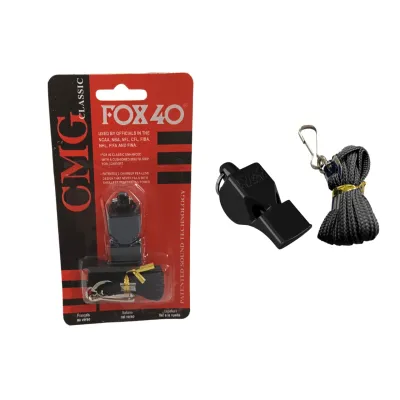
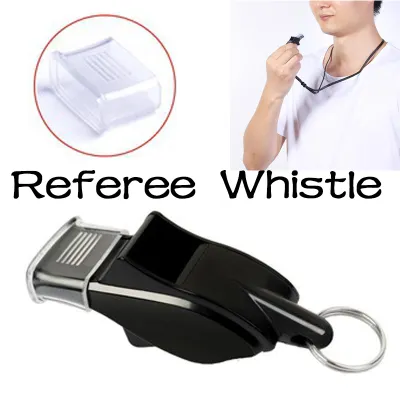

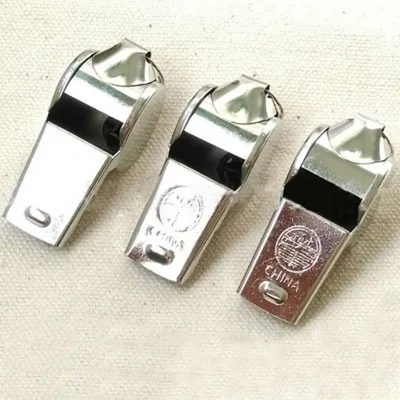
Prices are valid at publication and may change. Please refer to the product page for the latest price.
Understanding Whistle Mechanisms: Pea vs. Pealess
The fundamental difference between sports whistles lies in their internal design: pea and pealess mechanisms. Traditional pea whistles feature a small, spherical ball—the “pea”—inside a hollow chamber. When you blow air into the mouthpiece, it forces the pea to rotate rapidly, intermittently blocking and opening the air vents. This rapid movement creates a warbling, vibrato sound with a fluctuating pitch that is highly recognizable and effective at grabbing attention.
However, pea whistles have significant limitations when used in extreme conditions, particularly in tropical climates. The pea is traditionally made of cork or synthetic materials, which can absorb moisture from saliva, heavy rain, or high humidity. When a cork pea absorbs water, it swells, becomes heavy, and loses its ability to bounce freely inside the chamber. In some cases, surface tension from moisture can cause the pea to stick to the inner walls of the whistle. When this happens, the whistle fails to produce its characteristic trill, resulting in a weak, airy hiss that is virtually impossible for players to hear on a noisy field.
Pealess whistles, on the other hand, utilize advanced fluid dynamics to generate sound without any moving parts. These whistles feature precisely engineered air chambers and tuning holes that split the air stream as it enters the body. The split air streams collide inside the chambers, creating high-frequency, harmonic sound waves that exit through multiple ports. Because there are no internal components to jam, swell, or freeze, pealess whistles offer unmatched reliability in wet, humid, and dirty environments.
If water enters a pealess whistle during a sudden tropical downpour, it does not compromise the mechanism. A quick, sharp breath is usually enough to clear any moisture from the chambers, instantly restoring the whistle’s full acoustic power. This self-clearing capability makes pealess models the preferred choice for outdoor sports officials who must perform consistently regardless of the weather.
Maintenance and cleaning routines also differ significantly between the two mechanisms. Pea whistles require careful drying after every use to prevent mold and mildew from growing on the cork pea, which can degrade the material and ruin the whistle’s sound. Pealess whistles are much easier to maintain, as they can be submerged in warm soapy water or sanitizing solutions without any risk of damaging internal components, making them a more hygienic option for frequent use.
Core Selection Criteria for Football Officials and Coaches
When evaluating football whistles at local sporting goods stores or online sports retailers, several physical and acoustic features must be carefully compared to ensure you select a high-performing tool. The first and most critical criterion is sound projection and frequency. The acoustic output of a whistle must be matched to the size of the field and the level of ambient noise. On a large, open football pitch, low-frequency sounds tend to dissipate quickly, whereas high-frequency tones cut through wind, rain, and distant traffic. Referees should look for whistles with multi-tone chambers that produce a combination of high frequencies, creating a sharp, discordant sound that demands immediate attention.

Material durability is another essential consideration. Sports whistles are typically constructed from high-impact plastics, such as ABS plastic, or metals like brass and stainless steel. High-impact plastic is lightweight, highly resistant to cracking if dropped on hard ground, and does not conduct heat or cold excessively. This makes plastic whistles highly comfortable to use in the intense tropical heat of the Philippines, where metal whistles can become uncomfortably hot if left in direct sunlight. Metal whistles offer exceptional durability but can cause dental discomfort if accidentally struck while in the mouth.
Ergonomics and grip play a vital role in how comfortable and secure a whistle feels during a match. Referees often prefer whistles with integrated rubber mouth grips, also known as cushioned mouth grips. These soft, thermoplastic elastomer covers protect the teeth, provide a secure grip when running, and prevent the whistle from slipping out of the mouth when wet. Additionally, consider the carrying method: finger-grip models feature adjustable bands that slide over the fingers, allowing referees to keep the whistle in their hand while signaling, while traditional models rely on secure lanyards with quick-release safety clasps to prevent neck strain.
Finally, hygiene features should not be overlooked. Because whistles are exposed to saliva, sweat, and outdoor dust, they can quickly become breeding grounds for bacteria. Look for designs with smooth, open internal chambers that do not trap dirt and are easy to flush out with water. Some manufacturers offer whistles made from antimicrobial plastics, but regular cleaning remains the most effective way to ensure hygiene.
Matching Whistle Features to Your Specific Role
To select the most effective whistle, you must align its physical and acoustic characteristics with your primary duties on the pitch. Referees, assistant referees, and coaches all have distinct communication needs that require different whistle features.
Referees require an authoritative tone that stops play instantly and asserts control. The whistle must have a sharp, immediate acoustic response that reaches peak volume without delay. Because referees must run constantly, signal with their arms, and write in their notebooks, hands-free operation is highly beneficial. Referees should prioritize whistles compatible with finger grips or secure wrist lanyards, ensuring the tool is always accessible without restricting hand movement.
Coaches, by contrast, use whistles primarily for instruction, managing training drills, and capturing players’ attention across multiple training grids. For coaches, durability under frequent daily use and a distinct pitch that players can easily distinguish from neighboring training sessions are key. Since coaches often blow the whistle repeatedly at close range, a slightly lower decibel level or a warmer tone may be preferred to prevent ear fatigue. Budget considerations in ₱ are also important, as coaching staff often need to purchase multiple whistles for training programs, making durable, cost-effective plastic pealess whistles in multi-packs a highly practical choice.
Assistant referees primarily communicate with the main referee using flags, but they must carry a secondary whistle for emergencies or specific localized signals, such as signaling a substitution or a foul out of the referee’s view. The assistant referee’s whistle should have a distinctly different tone or pitch from the main referee’s whistle to avoid confusing the players on the pitch. A compact, medium-decibel pealess whistle is often suitable for this supporting role, providing a clear signal without overpowering the main official’s whistle.
Condition-Based Shortlist: Matching Features to Environments
Rather than relying on unverified brand rankings, sports officials should use a structured, condition-based framework to shortlist suitable whistle types based on the specific environments in which they operate.
In the wet and humid environments of the Philippines, sudden downpours during the monsoon season can quickly saturate equipment. For these conditions, prioritize pealess whistles with self-clearing chambers that automatically expel water when blown. Avoid cork-pea models entirely in wet weather, as moisture absorption will compromise the sound quality and reliability. Ensuring your whistle is rated for wet-weather performance is essential for maintaining control during rainy-season matches.
For high-noise stadiums, where crowd noise, drums, and horns can drown out standard signals, you must verify the decibel rating on the product packaging before purchasing. Look for high-decibel pealess whistles, typically rated at 115 dB or higher, that feature multi-tone chambers. The discordant, high-frequency sound generated by these whistles is specifically designed to penetrate extreme ambient noise and reach players on the far side of the pitch.
At youth and grassroots levels, equipment is often subjected to rough handling, dirt, and frequent drops on hard ground or gravel. In these settings, highly durable, high-impact ABS plastic whistles are the most practical choice. They offer excellent impact resistance, are lightweight, and are highly cost-effective, making them easy to replace if lost or damaged. Additionally, their simple, open-chamber designs make them easy to sanitize between sessions if shared among coaching staff.
Purchasing, Inspection, and Care Guidelines
Equipping yourself with a reliable whistle requires careful inspection upon purchase and a commitment to regular maintenance. By following a structured care routine, you can ensure your equipment remains hygienic and functions perfectly on match day.
When purchasing a new whistle from a local sporting goods store or an online marketplace, perform a thorough physical inspection before its first use. Examine the mouthpiece and internal chambers for any manufacturing defects, sharp molding seams, or plastic flashing that could cut your lips or tongue. Ensure the air passage is completely clear of debris or plastic remnants that could restrict airflow and compromise the sound quality.
Next, verify the strength of the lanyard and its attachment points. The split ring or clip connecting the whistle to the lanyard must be robust enough to withstand sudden tugs during active play. If you prefer a neck lanyard, ensure it features a safety breakaway clasp that releases under tension to prevent choking hazards if the lanyard is pulled or caught on equipment.
Establish a routine cleaning protocol to prevent bacterial buildup and material degradation. After every match or training session, rinse the whistle thoroughly under warm running water to remove saliva and dirt. For a deeper clean, submerge pealess whistles in a mild solution of warm water and dish soap, use a small, soft-bristled brush to clean the internal chambers, and rinse completely before air-drying. Avoid using harsh chemical solvents or boiling water, as extreme heat can warp plastic components.
Finally, know when to retire your whistle. Regularly inspect the body for signs of wear, such as micro-cracks in the plastic, a deformed mouthpiece from biting, or frayed lanyard loops. If a pealess whistle begins to produce a rattling sound, a lower volume, or requires significantly more effort to blow, it has reached the end of its usable life. Replace it immediately to ensure your signals remain clear and authoritative on the pitch.
Frequently Asked Questions (FAQ)
Do electronic whistles replace traditional ones for football referees?
Electronic whistles, which produce sound at the push of a button, offer a hygienic alternative as they do not require mouth contact. However, before using one, referees must check local football association regulations, as some leagues may restrict or prohibit electronic signaling devices in official matches. Additionally, electronic whistles rely on batteries, introducing a failure risk that traditional mechanical whistles do not have; a dead battery mid-match can disrupt the entire game.
How often should a football whistle be replaced?
There is no fixed expiration date, but a whistle should be replaced as soon as you observe physical damage or sound degradation. Inspect the body for micro-cracks, a crushed or deformed mouthpiece, or structural wear that could compromise its integrity. If the whistle’s pitch changes, its volume drops, or it requires significantly more effort to produce a clear sound, it is time to replace it to maintain clear communication on the pitch.

Community discussion
Share your experience or ask a question. Comments are reviewed before publication.