
Choosing the right training cones for football drills in the Philippines requires balancing visibility, durability under tropical weather, and the specific demands of your training surface. Whether you are setting up a quick session on a local barangay covered court, a muddy natural grass pitch during the rainy season, or a modern artificial turf field, the right cones serve as the foundation for developing footwork, spatial awareness, and tactical discipline. Investing in high-quality training markers ensures that your drills run smoothly without constant interruptions to reset blown-away or damaged equipment.
By understanding the physical characteristics of different cone types and matching them to your specific training environment, you can optimize your practice sessions for players of all skill levels. This guide breaks down the essential factors to consider when selecting training cones, from material flexibility and wind resistance to local purchasing options, helping you build an effective and long-lasting training kit.
Understanding Your Drill Requirements
Before purchasing any training equipment, it is essential to analyze the specific types of drills you plan to run, as this directly dictates the physical characteristics of the cones you will need. Agility and speed drills, such as the classic 5-10-5 shuttle run, three-cone drills, or ladder simulations, require low-profile markers that players can easily move around without the risk of tripping. If a player accidentally steps on a marker during a high-speed change of direction, the cone must collapse safely underfoot to prevent ankle sprains or other injuries.
Products mentioned in this guide
Prices are valid at publication and may change. Please refer to the product page for the latest price.
For ball-control and dribbling exercises, such as slalom runs or tight-space weaving, the spacing between the cones is incredibly tight, often requiring players to make rapid, precise touches. In these scenarios, highly visible but low-profile markers are ideal because they clearly define the path without obstructing the player’s view of the ball. Conversely, tactical drills, positional play, and scrimmage boundary markings require taller, more prominent markers that players can easily spot from across the pitch, even when their focus is on tracking the movement of teammates and opponents.
The training environment in the Philippines plays a massive role in determining the best cone setup. Natural grass pitches, which are common in many school fields and community sports complexes, can become highly uneven and muddy, especially during the wet monsoon months from June to October. On these surfaces, lightweight cones can easily sink into the mud or become obscured by patches of taller grass, requiring brighter colors and slightly taller profiles for adequate visibility.
On the other hand, artificial turf fields provide a perfectly flat and consistent surface, but they present their own challenges. During the dry season, the synthetic fibers and rubber infill of turf pitches can absorb and radiate intense heat under the midday sun, reaching temperatures that can soften and warp low-grade plastics. If you frequently train on multi-purpose barangay covered courts or indoor futsal facilities, the hard concrete or wooden floors require cones with sufficient base weight to prevent them from sliding away when brushed by a passing ball or a player’s shoe.
Types of Football Training Cones
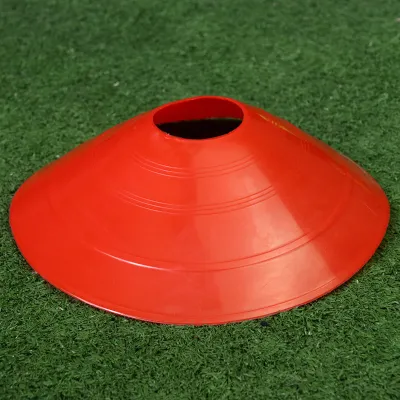
Understanding the distinct designs of football training cones allows you to select the right tool for each specific coaching objective. The most common and versatile option is the disc cone, often referred to as a saucer cone. Standing approximately two inches high, these low-profile markers are the industry standard for agility, footwork, and close-control dribbling drills. Their primary advantage is safety; because they are molded from flexible, lightweight plastic, they collapse instantly when stepped on and pop back into shape once the pressure is released. This minimizes the risk of injury during high-intensity sessions where players are constantly changing direction at maximum speed.

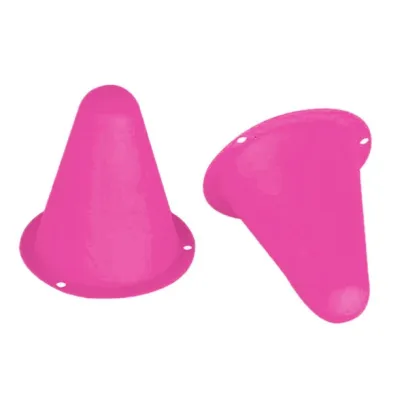
Tall cones, which typically range from 6 to 12 inches or more in height, serve a completely different purpose on the training pitch. These cones offer excellent vertical visibility, making them the preferred choice for marking the outer boundaries of a training grid, indicating passing gates, or acting as static defenders that players must dribble around or pass through. Because of their height, they are easily seen from a distance, helping players maintain their spatial awareness and execute long-range tactical plays. Some advanced tall cones feature pre-drilled holes or slots at the top, allowing coaches to insert plastic hurdles or crossbars to create adjustable agility obstacles for plyometric training.
For coaches and players who are constantly on the move, collapsible and pop-up cones offer unmatched convenience. These innovative designs are engineered to fold flat or compress down to a fraction of their standing height, allowing them to fit easily into a standard backpack or a crowded gear bag. This portability is particularly valuable in the Philippines, where many coaches and players rely on public transportation, such as jeeps or light rail transits, to travel between different training venues. By reducing the physical bulk of the equipment, collapsible cones make it much easier to transport a complete training setup without the need for a dedicated vehicle.
Each cone type has its own set of trade-offs, and a well-rounded training kit usually incorporates a mix of different designs. While disc cones are unmatched for safety and footwork drills, they can easily be lost from sight on large fields or under poor lighting conditions. Tall cones provide the necessary visibility for boundary marking but can pose a tripping hazard if placed directly in the path of rapid agility drills.
Key Features to Evaluate Before Buying
When shopping for training cones, it is easy to assume that all plastic markers are essentially the same. However, evaluating specific physical and material attributes before making a purchase can make the difference between a set of cones that lasts for years and one that cracks during its first week on the pitch. The first feature to examine is visibility and color contrast. On the lush green grass of natural pitches or the deep green of artificial turf, bright neon colors like orange, yellow, and pink offer the highest contrast. If you frequently train during the late afternoon or under the yellow-tinted floodlights of local community courts, choosing high-visibility fluorescent shades is crucial for ensuring that players can easily spot the markers without straining their eyes.
Material durability and flexibility are equally critical, especially when training in tropical climates. Look for cones manufactured from low-density polyethylene (LDPE) or high-grade vinyl, as these materials possess the necessary elasticity to withstand repeated stepping, stomping, and bending without cracking or shattering. Cheap, brittle plastics tend to degrade rapidly when exposed to the intense ultraviolet (UV) radiation of the Philippine sun, leading to discoloration and structural failure. Checking the product specifications for UV resistance or flexible material construction is an excellent way to ensure your investment survives the harsh local weather.
Base weight and wind resistance are vital considerations for outdoor training sessions. Lightweight plastic cones are easily displaced by sudden gusts of wind, which are incredibly common during afternoon thunderstorms and monsoon seasons. To prevent your training grids from constantly blowing away, look for cones designed with a slightly heavier base or aerodynamic features, such as disc cones with built-in wind cutouts that allow air to flow through the marker rather than lifting it off the ground. For indoor or hard-court training, a textured or rubberized base helps the cone grip the smooth surface, preventing it from sliding when struck by a fast-moving football.
Finally, do not overlook the importance of transport and organization accessories. Managing dozens of loose cones can quickly become a frustrating chore, leading to lost equipment and cluttered gear bags. Opt for cone sets that come complete with a plastic or metal carrying strap, a mesh storage bag, or a stacking cone holder. These simple accessories not only make it much easier to carry your gear to and from the pitch but also help maintain the shape of the cones during storage.
Building Your Cone Setup for Different Skill Levels
As players progress through different stages of athletic development, their training equipment and drill configurations must adapt to match their growing capabilities. For youth and beginner setups, the primary focus should be on safety, simplicity, and high visual engagement. Young players are still developing their coordination and spatial awareness, so using highly distinct, bright colors is an excellent way to help them navigate complex drills. For example, you can use yellow cones to mark the starting line, blue cones to indicate where they must perform a turn, and red cones to define the shooting zone. Keep the spacing between the cones relatively wide to give beginners ample room to control the ball without feeling rushed, and always use soft, flexible disc cones to eliminate any risk of injury if a child falls on them.
For advanced and competitive setups, the training environment must simulate the high-pressure, fast-paced conditions of a real match. This requires incorporating mixed cone heights and more complex spatial patterns. You can place tall cones to represent opposing defenders, forcing players to lift their heads and scan the field, while using low-profile disc cones to mark the precise passing lanes or acceleration zones. Advanced setups also benefit from heavier, wind-resistant cones that remain firmly in place during high-intensity, physical drills where players are moving at maximum speed and generating significant air displacement.
Regardless of the skill level, coaches should regularly adjust the spacing and patterns of their cone layouts to keep players challenged. As players demonstrate improved ball control, quicker reaction times, and sharper agility, gradually decrease the distance between the cones in dribbling grids. This forces them to use smaller, more precise touches on the ball and accelerates their decision-making processes. By systematically varying the colors, heights, and spacing of your cone setups, you can create a dynamic training environment that continuously pushes players to refine their technical skills.
Where to Buy and What to Expect in the Philippines
Acquiring quality training cones in the Philippines involves navigating a variety of retail channels, each with its own advantages and considerations. Major sporting goods stores located in prominent shopping malls across Metro Manila, Cebu, and Davao typically carry a selection of basic training equipment, allowing you to physically inspect the material flexibility and build quality before making a purchase. However, these physical retail outlets may have limited stock or higher price points compared to online options, especially if you are looking to purchase bulk sets for a school, club, or barangay league.
For a wider selection and more competitive pricing, online marketplaces and specialized ecommerce platforms are highly popular choices among local coaches and players. When shopping online, it is crucial to exercise diligence to ensure you receive high-quality sporting goods. Always check the seller’s overall rating, read customer reviews, and look closely at photos uploaded by previous buyers. These real-world photos are invaluable for verifying the actual size, color vibrancy, and material flexibility of the cones, helping you avoid brittle, low-quality plastic knockoffs that do not match the product descriptions.
Shipping costs and delivery times are additional factors to keep in mind when ordering online, particularly for bulk purchases. A set of 50 or more cones, along with their carrying straps and holders, can be surprisingly heavy and bulky, which may result in higher shipping fees depending on your location. If you are ordering from overseas sellers, factor in the potential for longer delivery times and ensure that you review the platform’s return and refund policies.
Frequently Asked Questions (FAQ)
How do I clean and maintain my training cones after use on muddy pitches?
To maximize the lifespan of your training cones, it is important to clean them promptly after training on wet or muddy pitches. Begin by rinsing off any accumulated mud, grass clippings, and dirt using clean, running water from a garden hose or faucet. Avoid using harsh chemical detergents, bleach, or highly abrasive scrubbing brushes, as these can scratch the plastic surface, degrade the material, and cause the bright colors to fade prematurely. If the mud is particularly stubborn, a mild dish soap and a soft sponge are usually sufficient to clean the surface.
Once the cones are clean, spread them out in a shaded, well-ventilated outdoor area to air dry completely before stacking them. Never stack or store your cones while they are still damp, as trapped moisture can lead to the growth of mold, mildew, and unpleasant odors inside your gear bag. Additionally, always store your training equipment in a cool, dry place away from direct sunlight when not in use. Prolonged exposure to intense UV rays can cause the plastic to become brittle and crack, significantly reducing the durability of your cones.
Can I use the same cones for both football and other sports?
Yes, standard training cones are highly versatile and can be effectively utilized across a wide variety of sports, including basketball, rugby, track and field, and physical education classes. The fundamental principles of agility, spatial marking, and speed training remain consistent across these disciplines, making a quality set of cones an excellent investment for multi-sport athletes and school athletic programs. For example, disc cones can easily mark out boundary lines for a temporary volleyball court or serve as agility markers for basketball defensive sliding drills.
However, it is important to ensure that the physical characteristics of the cones match the specific safety and surface requirements of each sport. While lightweight, flexible disc cones are perfectly safe for outdoor grass pitches where players wear cleats, indoor sports played on polished wooden or synthetic courts require careful consideration. On smooth indoor surfaces, lightweight plastic cones can easily slide when stepped on or brushed by a ball, creating a potential slipping hazard for athletes making sharp cuts. For indoor use, look for cones with non-slip rubber bases or heavier profiles that remain securely in place on hard surfaces.

Community discussion
Share your experience or ask a question. Comments are reviewed before publication.