
Finding the right roller skates for a young girl in the Philippines is an exciting milestone that opens up a world of active, outdoor fun. However, with the wide variety of options available, parents often struggle to choose between different styles, wheel types, and safety features. The ideal pair of skates is not a one-size-fits-all product or a specific trending brand. Instead, it is the pair that matches her unique age, physical development, skill level, and the specific environments where she will be skating. In the Philippines, where outdoor spaces range from smooth indoor mall rinks to rough concrete barangay basketball courts and subdivision roads, understanding these variables is essential. By focusing on adjustable sizing, structural support, and appropriate wheel specifications, you can ensure your child enjoys a safe, comfortable, and highly rewarding skating experience.
How to Evaluate Skate Specifications for Comfort and Control
To ensure comfort and control, the first specification to evaluate is the boot construction. Hard-shell boots feature a molded plastic outer skeleton that provides maximum lateral ankle support. This rigidity is incredibly beneficial for beginners whose ankle muscles are still developing, as it prevents the foot from bowing inward or outward. For intermediate or advanced skaters, soft boots made of reinforced fabric offer greater flexibility, a lighter overall weight, and a more contoured fit. In the warm and humid climate of the Philippines, heat buildup inside the boot is a common issue. If you choose a hard-shell boot, look for models with ventilated shells and removable, washable mesh liners. This allows you to maintain hygiene and keep the skates smelling fresh after sweaty outdoor sessions.
Next, consider the wheels, which are defined by their diameter and hardness (measured as durometer on the “A” scale). For skating on rough outdoor pavements, asphalt roads, or concrete courts, soft wheels rated between 78A and 82A are highly recommended. These softer polyurethane wheels act like shock absorbers, dampening vibrations from uneven ground and providing a reliable grip to prevent slipping. Conversely, if your child will primarily skate on smooth indoor surfaces, such as polished wooden rinks or smooth mall floors, harder wheels rated 85A or above will offer a faster roll with less rolling resistance. Wheel diameter also plays a critical role in stability. Smaller wheels, typically ranging from 58mm to 62mm for quad skates and 64mm to 72mm for inline skates, keep the child’s center of gravity closer to the ground, making it much easier to maintain balance.
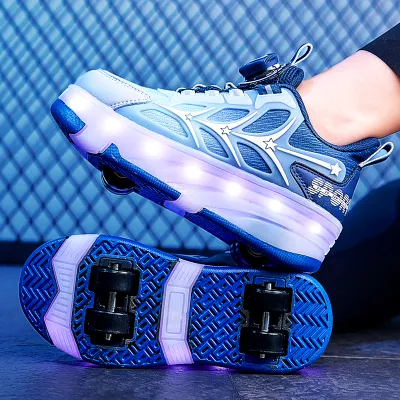
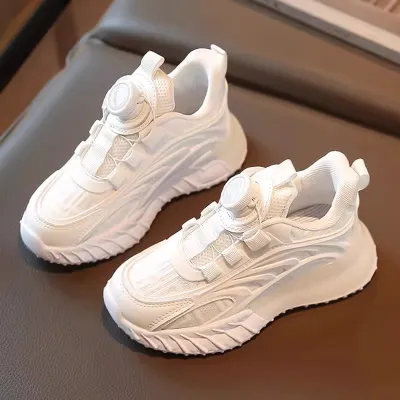
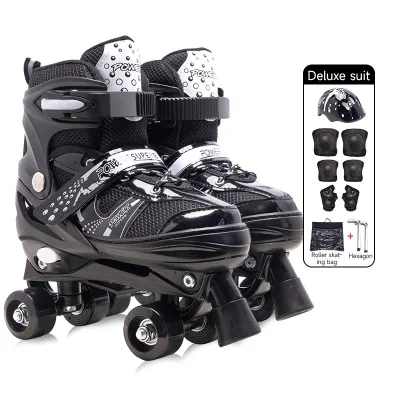
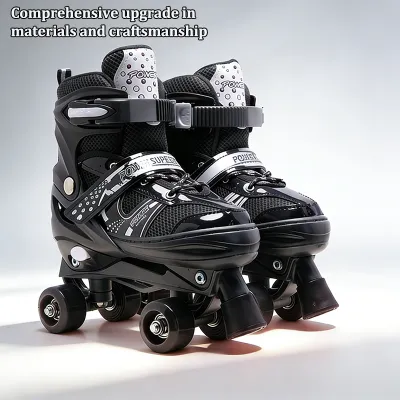
Products mentioned in this guide
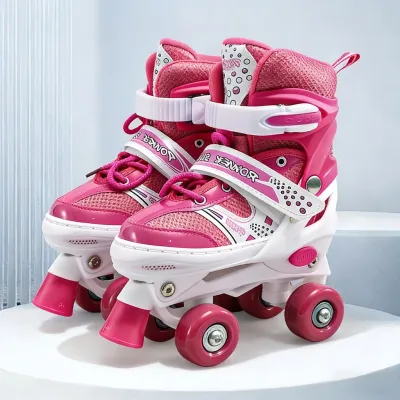
![[Free Shipping + One Year Warranty] COD Double Row Adjustable Roller Skates Skates for Beginners 4 Wheels Roller Skates Free Protective Gear Included Helmet](https://img.lazcdn.com/g/p/b4c0ed01631810a6b0b08d61adf4084f.jpg_400x400q80.jpg_.webp)
Prices are valid at publication and may change. Please refer to the product page for the latest price.
The frame, which holds the wheels and attaches to the bottom of the boot, is another critical component. Frames are generally made of either reinforced plastic (composite/nylon) or aluminum. Composite frames are excellent for younger, lighter skaters because they absorb road vibrations exceptionally well, providing a smoother ride on bumpy outdoor surfaces. Aluminum frames, on the other hand, are stiffer, more durable, and offer superior power transfer. They are highly suited for older children or those who are progressing quickly and require a more responsive skate.
Finally, because children grow rapidly, adjustable sizing mechanisms are a highly practical feature. High-quality adjustable skates allow the boot to expand across three to four distinct sizes at the press of a button. To determine the correct base size, do not rely on your child’s standard shoe size, which can vary significantly between brands. Instead, place her foot on a sheet of paper, trace the outline, and measure the distance from the heel to the tip of the longest toe in centimeters. Compare this measurement directly to the manufacturer’s size chart. Avoid the temptation to buy skates that are several sizes too large with the intention of letting her “grow into” them. A loose boot lacks proper ankle support, causes painful friction blisters, and significantly increases the risk of falls and joint strain.
Choosing Between Quad and Inline Skates for Beginners
Choosing the right wheel configuration is a pivotal decision that directly impacts how quickly and safely your child learns to skate. Quad skates, featuring a classic two-by-two wheel layout, provide a wide and highly stable lateral base. When standing completely still, a child on quad skates will find it much easier to maintain her balance without tipping sideways. This makes quad skates an exceptional choice for very young children, typically between the ages of three and seven, or for absolute beginners who feel anxious about standing on wheels. The stable platform allows them to focus on basic posture, marching steps, and building confidence. However, parents should note that the wider profile of quad skates can make them slightly more cumbersome on rough outdoor pavement, as the wide wheels are more likely to catch on small stones, twigs, or cracks in the concrete.

Inline skates, which feature wheels arranged in a single straight line, offer a completely different riding dynamic. They are designed for forward speed, agility, and smooth gliding over longer distances. Because the wheels are narrower and aligned, inline skates roll over cracks, pebbles, and uneven pavement much more easily than quad skates, making them highly practical for outdoor use in subdivisions or parks. However, they require a higher level of active ankle stabilization and core balance. Inline skates are generally best suited for older children, typically ages eight and up, or for those who have already developed good physical coordination through activities like gymnastics, dancing, or ice skating.
Knowing when to transition your child from quad skates to inline skates, or when to upgrade to a more advanced model, requires observing her physical cues. Look for signs of mastery in her current pair. If she can glide smoothly on one foot for several seconds, execute clean crossovers (stepping one foot over the other while turning), and stop confidently without relying on walls or physical barriers, her balance is well-developed. Furthermore, observe her ankle alignment while rolling. If her ankles remain straight and upright without bowing inward, she has built the necessary muscle strength to handle the reduced lateral stability of inline skates or a more flexible, high-performance soft boot.
Essential Safety Gear and Proper Fitting Techniques
Before your child takes her first roll, it is vital to establish that protective equipment is non-negotiable. No matter how advanced a skate’s design is, safety gear cannot replace proper training, adult supervision, and personal judgment. Roller skating is a high-risk sport that involves speed and hard surfaces, meaning falls are an inevitable part of the learning process. Before allowing your child to skate freely, teach her the correct way to fall. Beginners should practice falling forward onto their knee and elbow pads while keeping their hands slightly raised, rather than falling backward onto their tailbone or outstretched wrists, which can lead to severe injuries.
A complete safety gear set must include a certified helmet, knee pads, elbow pads, and wrist guards. The helmet must fit snugly on the head, sitting level on the forehead just above the eyebrows, and should not tilt backward to expose the front of the head. Knee and elbow pads should feature hard plastic outer caps to slide along the concrete during a fall, backed by thick, shock-absorbing foam. Wrist guards are perhaps the most critical piece of armor for skaters; they must have a rigid, contoured plastic splint on the palm side to absorb the impact of a forward fall and prevent hyperextension of the wrist. Ensure all pads fit snugly without slipping down during movement, but not so tightly that they restrict blood circulation.
When fitting the skates themselves, perform two essential checks: the finger test and the heel lock check. With the child wearing her skating socks, slide her foot into the boot and secure all laces, straps, and buckles. Have her stand up with her knees slightly bent in a ready position. Try to slide your index finger down behind her heel inside the boot. If you can easily fit more than one finger, the skate is too large and will not provide adequate support. Next, perform the heel lock check by holding the skate boot firmly while asking your child to lift her heel. If her heel lifts significantly inside the boot, the skate is either too loose or too large, which will lead to friction blisters and a lack of control.
To prevent discomfort, have your child wear her new skates indoors on a carpeted floor for 15 to 20 minutes during the first few days. This allows the inner padding to mold to her foot shape gradually. During these initial sessions, monitor her feet closely for early warning signs of an improper fit. Red pressure spots on the inner ankle bone, the pinky toe, or the instep indicate areas of excessive friction. If she constantly complains of foot cramping or if you observe her ankles collapsing inward while standing, stop the session immediately to adjust the straps or re-evaluate the skate’s sizing and support level.
Where to Buy and What to Inspect Before Skating
When looking to purchase roller skates in the Philippines, parents have several options, each with distinct advantages. Visiting a specialized local sports retailer or a physical brand store is highly recommended for beginners, as it allows your child to try on different models and sizes in person under the guidance of knowledgeable staff. If you choose to buy from online marketplaces or official brand stores on ecommerce platforms, pay close attention to the seller’s return and exchange policies. Because precise fit is critical for safety, ensure the seller offers hassle-free size exchanges. Additionally, verify that the product comes with a clear warranty covering manufacturing defects on major structural components like the frame, buckles, and boot shell.
Setting a realistic budget is essential for securing a safe and durable product. While it may be tempting to purchase cheap, unbranded toy skates often priced under ₱1,000 on online platforms, these products frequently compromise on safety. They often feature hard plastic wheels that slide dangerously on smooth surfaces, weak plastic frames that flex under weight, and thin, unsupportive boots that offer no ankle protection. A reliable, adjustable entry-level skate from a reputable sports brand typically ranges from ₱2,500 to ₱6,000. This price point ensures you are investing in durable aluminum or reinforced nylon frames, high-quality polyurethane wheels, and robust closure systems that keep your child safe.
Before your child takes her first roll, perform a thorough physical inspection of the gear. First, check the chassis alignment to ensure the frame is perfectly centered and securely bolted to the boot. Next, spin each wheel individually; they should spin smoothly, quietly, and freely for several seconds without any wobbling, grinding noises, or resistance, which would indicate dry or damaged bearings. Inspect the brake pad—either the rear heel brake on inline skates or the front toe stop on quad skates—to verify that it is tightly secured and has sufficient thickness to friction-stop safely.
Finally, look for authentic safety certification labels on the product packaging, such as the European standard codes EN 13843 (for inline skates) or EN 13899 (for roller skates). These markings indicate that the skates have undergone rigorous testing for structural strength and impact resistance. If you discover any loose rivets, cracked plastic, stripped screws, or missing hardware during your inspection, do not allow your child to use the skates. Contact the manufacturer or retailer immediately to arrange for a replacement.
Frequently Asked Questions (FAQ)
How often should I check the skate size as my child grows?
You should check the fit of your child’s skates every two to three months, or at the start of every skating season. Children’s feet grow rapidly, often in sudden spurts, and they may not always communicate when their toes are feeling cramped. Physical signs that a child has outgrown her current skate setting include red marks or blisters on her toes, complaints of pinching or numbness, or her toes curling inside the boot. While adjustable skates are highly convenient, they have strict structural limits. Once the boot has been extended to its maximum setting, check the sliding mechanism for any play or looseness. If the mechanism feels unstable, it is time to plan an upgrade to the next size bracket to ensure continued safety and support.
Can I use indoor roller skates for outdoor pavement?
You can use indoor roller skates outdoors, but only if you swap the wheels first. Indoor skates typically come equipped with hard wheels (90A to 100A durometer) designed to grip polished wood or plastic tile floors. If you use these hard wheels on rough Philippine asphalt, concrete subdivision roads, or outdoor courts, the ride will be highly uncomfortable due to severe vibrations. Hard wheels also slide easily on dusty outdoor surfaces, increasing the risk of falls, and they will wear down or chip rapidly. To transition safely, verify that your skate’s wheels and bearings are interchangeable, and replace the indoor wheels with soft outdoor wheels (78A to 82A durometer) that can absorb shocks and maintain traction on uneven pavement.
What is the safest way to teach a beginner to stop?
The safest way to teach a beginner to stop is to practice in a flat, smooth, and completely traffic-free environment, such as an empty garage, a quiet subdivision court, or a paved driveway. For inline skates, teach the heel brake technique: have your child slide her braking foot slightly forward, lift her toes to press the rubber heel brake firmly into the ground, and bend her knees to sink her hips low for balance. For quad skates, teach her to use the front toe stop by dragging it lightly behind her body, or practice the plow stop by pushing both feet outward and then turning the toes slightly inward to slow down. Always emphasize that keeping a low, bent-knee posture is key to maintaining balance during any braking maneuver.

Community discussion
Share your experience or ask a question. Comments are reviewed before publication.