
Buying an adjustable basketball hoop requires balancing playability, safety, and weather resistance. In the Philippines, where sudden tropical downpours, high humidity, and strong winds are common, your choice must withstand the elements while offering a stable foundation for active play. To find the right system for your driveway or backyard, you need to evaluate the height adjustment mechanism, base capacity, backboard material, and rim construction against your specific space and budget.
Height Adjustment Range and Mechanisms
The adjustment mechanism determines how easily you can transition the hoop between different heights. Telescopic systems are the most budget-friendly, requiring you to manually tilt the pole and insert a locking pin into pre-set increments. While highly reliable and low-maintenance, they usually require two adults to adjust safely and are best if you plan to keep the hoop at a fixed height for long periods.
Pneumatic or gas-assist systems use a pressurized cartridge to lift the backboard with a simple squeeze of a handle. This allows younger players to adjust the height with minimal effort, though you should check the manufacturer’s warranty on the gas cylinder, as extreme tropical heat can affect pressurized components over time.
Products mentioned in this guide
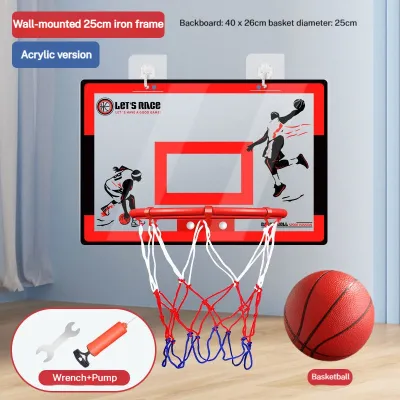
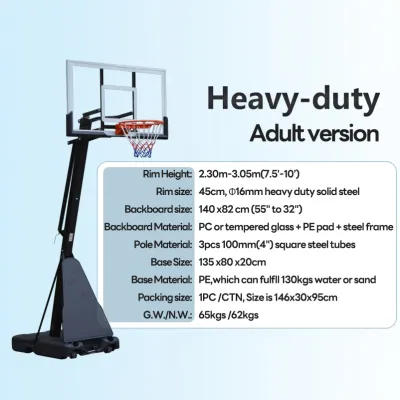
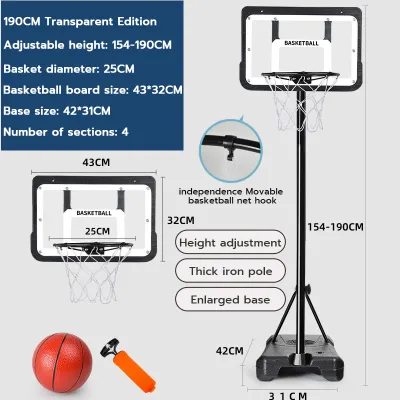
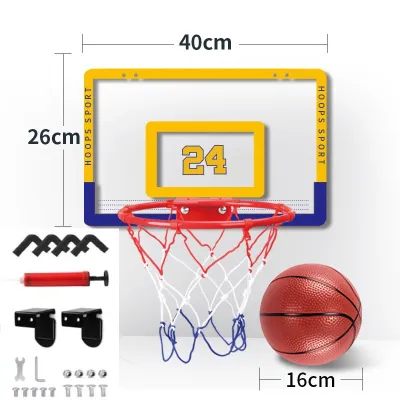
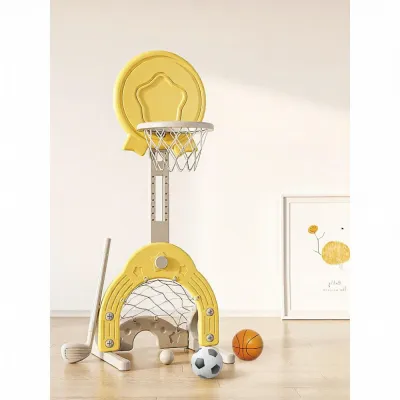
Prices are valid at publication and may change. Please refer to the product page for the latest price.
Crank mechanisms utilize a rotating handle to wind the hoop up or down smoothly to any exact height within its range. This offers the most precise adjustment, but the moving gears require regular lubrication to prevent rust in humid environments.
When checking specifications, ensure the system adjusts from a low starting point—typically 7.5 feet (2.3 meters) for young children—up to the regulation 10 feet (3.05 meters) for older players. Always verify that the unit features a secondary locking pin or physical retention bracket to prevent the heavy backboard from sliding down unexpectedly during a game.
Base Capacity, Stability, and Portability
A portable hoop relies entirely on its base to stay upright during intense play and high winds. Most residential bases range from 27 to 40 gallons in capacity. Filling this reservoir properly is critical to preventing tip-overs that can damage property or cause injury.

Choosing between water and sand as a filling agent involves a trade-off between convenience and density. Water is inexpensive and easy to drain if you need to relocate the hoop, but it can evaporate or leak if the plastic base develops a hairline crack. In tropical climates, standing water inside a base can also become a breeding ground for mosquitoes if the plug is not sealed perfectly.
Sand is approximately 45% denser than water, providing superior stability and wind resistance. However, filling a base with dry sand is a labor-intensive process, and once filled, the hoop becomes extremely difficult to move. Some players use a combination of both or add base gel additives that solidify water to prevent sloshing.
To move the hoop, look for integrated wheels positioned at the front or rear of the base. Ergonomic handles and a balanced tilt design allow you to roll the unit across concrete or asphalt, though moving a fully weighted base over grass or uneven ground is rarely practical. If you plan to store the hoop during typhoon season, prioritize a model with a slightly smaller base footprint and high-quality nylon wheels.
Backboard Materials and Rim Construction
The backboard material directly dictates the rebound quality and how the system handles outdoor exposure. Polycarbonate is highly impact-resistant and virtually unbreakable, making it excellent for rough recreational play. However, it tends to yellow and degrade under intense tropical sunlight and offers a somewhat dead rebound response.
Acrylic backboards provide better optical clarity and a more active bounce than polycarbonate. They resist weathering and UV discoloration much better, though they are more prone to scratching over time.
Tempered glass is the gold standard used in professional courts, offering the truest rebound and scratch-free clarity. Because glass is significantly heavier, it requires a much more robust pole and base system to prevent shaking, and it carries a higher price tag.
The rim construction must match the players’ style of play. Standard static rims are bolted directly to the backboard or frame and offer no give; aggressive play or hanging on these rims can easily shatter a backboard or bend the support pole. Breakaway rims feature enclosed steel springs that compress under load, absorbing the impact of dunks and protecting the structural integrity of the entire system.
Given the high humidity and salt air in coastal regions, look for powder-coated steel rims and weather-resistant nylon nets. Rust-resistant hardware and zinc-plated bolts are essential specifications to check to ensure the frame does not weaken over years of outdoor exposure.
Matching Hoop Specifications to Your Playing Space
Before purchasing, measure your available driveway or court space carefully. You must account for the backboard overhang—the distance the backboard extends forward from the main support pole. A larger overhang provides more safety space for players running under the basket but requires a deeper playing area so the base does not block vehicle traffic.
Consult your local subdivision, barangay, or homeowner association (HOA) guidelines before setting up a portable hoop. Some communities restrict permanent street placement, limit playing hours to respect neighbors, or require hoops to be stored out of sight when not in use.
Maintaining your hoop ensures it remains safe to use year after year. Establish a routine to inspect the base for leaks, check the metal poles for signs of rust, and tighten all structural bolts after major weather events. Applying a rust-inhibiting spray to joint connections can significantly extend the lifespan of your investment.
Frequently Asked Questions (FAQ)
How much weight should I add to the base for outdoor wind resistance?
Always consult the manufacturer’s manual for the specific maximum fill line and recommended weight capacity of your model. Generally, a standard portable base requires at least 100 to 150 kilograms of sand or water to remain stable. Sand is highly recommended for windy areas because of its superior density, while water is suitable if you need to drain and move the system frequently.
Can I convert a portable adjustable hoop into an in-ground system later?
Most portable basketball poles are not engineered or warrantied for direct concrete burial because their steel thickness and rust-prevention coatings are designed specifically for above-ground use. Modifying a portable pole can compromise its structural integrity and safety. If you want a permanent setup in the future, look for manufacturer-approved ground sleeve conversion kits, or purchase a dedicated in-ground system from the start.

Community discussion
Share your experience or ask a question. Comments are reviewed before publication.