
Quick Answer: Adjustable vs. Fixed-Size Skates
When deciding between adjustable kids roller skates and fixed-size pairs, the choice comes down to how fast your child’s feet are growing and how they plan to skate. If your child is a casual skater who is still growing rapidly, adjustable skates are generally the most practical and cost-effective choice. However, if your child is training for competitive sports, learning advanced tricks, or has specific orthopedic needs, a fixed-size skate offers the precise fit and structural rigidity required for high-performance maneuvers.
Adjustable skates feature an expandable shell that typically covers three to four sizes, allowing the boot to grow alongside your child. This design saves you from purchasing new skates every few months during growth spurts. On the other hand, fixed-size skates provide a single, unyielding mold that maximizes ankle stability and energy transfer, which is crucial for advanced disciplines but requires a complete replacement as soon as the child’s foot grows.
Ultimately, neither option is universally superior. The right choice depends on your child’s age, how often they skate, and whether they view skating as a casual weekend hobby or a dedicated sport.
Products mentioned in this guide
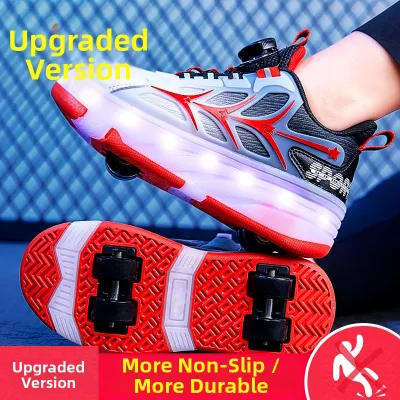
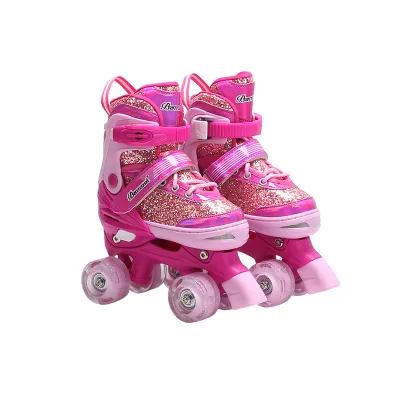
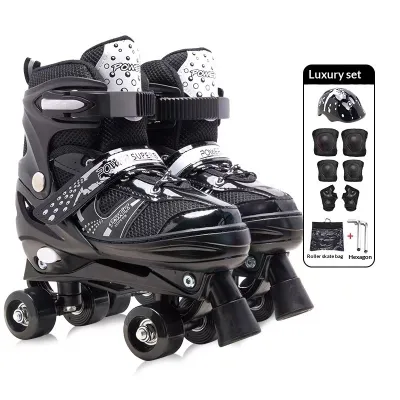
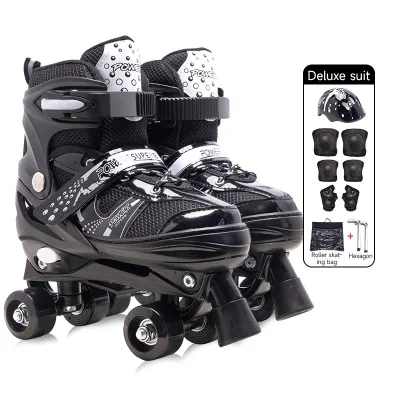
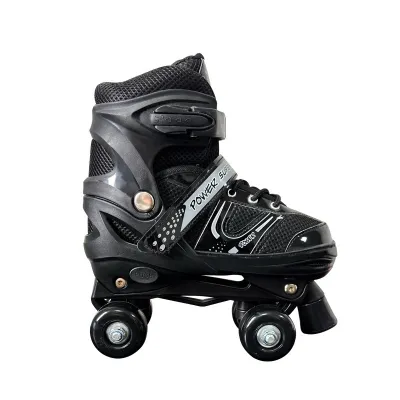
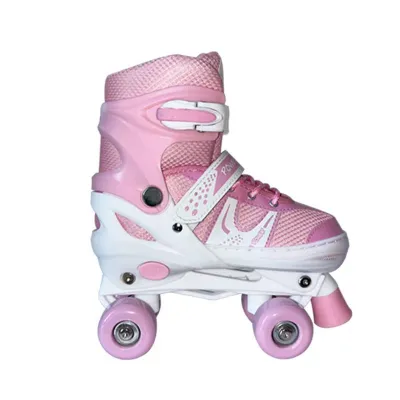
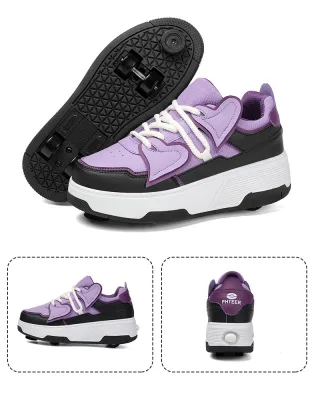
Prices are valid at publication and may change. Please refer to the product page for the latest price.
Core Differences in Fit, Support, and Lifespan
Understanding the structural differences between these two skate types helps set realistic expectations for performance and durability. Adjustable skates utilize a sliding mechanism—often controlled by a push-button or a manual tool—that allows the toe cap or heel of the boot to slide forward or backward. While highly convenient, this sliding design introduces moving parts and joints into the shell, which can slightly reduce the overall rigidity of the boot compared to a solid, single-piece mold.

In contrast, fixed-size skates feature a unified, continuous shell. This solid construction naturally offers higher torsional rigidity, meaning the boot resists twisting under heavy lateral pressure. For beginners, the slight flex in an adjustable boot is rarely a limitation, but for advanced skaters executing jumps, sharp turns, or rapid crossovers, the absolute rigidity of a fixed boot is highly beneficial.
An adjustable skate typically expands across four distinct sizes, meaning a single pair can last through several years of casual use. Conversely, a fixed-size skate has a lifespan strictly dictated by your child’s natural growth cycle. In active growth phases, a child might outgrow a fixed-size boot in six months to a year, requiring a brand-new purchase even if the wheels and bearings are still in excellent condition.
The inner liner of an adjustable skate must accommodate multiple foot lengths. Manufacturers often use elasticized toe boxes or layered, compressible padding that stretches as the shell expands. While this design is highly adaptable, it can sometimes result in uneven padding distribution or minor pressure points at the maximum expansion limit. Fixed-size liners are molded to a single, specific foot shape, offering consistent cushioning, superior heel lock, and targeted arch support throughout the entire life of the skate. In hot and humid tropical climates, such as in the Philippines, thick padding can trap sweat, making breathable, high-quality liner materials a key factor to verify before buying.
Cost Breakdown: Upfront Price vs. Long-Term Value
Purchasing adjustable kids roller skates often requires a slightly higher initial investment compared to a single, low-end fixed-size pair. However, the long-term math heavily favors the adjustable option for growing children. For instance, a reliable pair of adjustable skates might cost between ₱2,000 and ₱5,000 on local online marketplaces or specialty sports stores. If you were to buy fixed-size skates instead, you might need to purchase three separate pairs over the same multi-year period to keep up with growth spurts. Even at a lower price of ₱1,500 per fixed pair, the cumulative cost quickly surpasses the price of a single adjustable pair.
While the adjustable boot itself lasts longer, parents must account for the wear and tear of components. In tropical environments, outdoor skating on rough concrete barangay courts or asphalt park paths quickly wears down polyurethane wheels and rubber brake pads. Bearings can also degrade due to humidity and dust. Because your child will use an adjustable skate for a longer duration, you will likely need to replace the wheels, bearings, or brakes at least once before the boot is fully outgrown. When calculating long-term value, check the availability and prices of compatible replacement parts.
Well-maintained skates can often be resold or passed down to younger siblings. Fixed-size skates, because they are used for shorter periods, often remain in excellent cosmetic and structural condition when outgrown. Adjustable skates, having endured years of expansion and outdoor use, may show more significant wear on the buckles, straps, and sliding mechanisms. Before attempting to resell or reuse either type, inspect the integrity of the closure systems, check for cracks in the plastic frame, and ensure the wheels still spin smoothly without excessive play.
Safety and Performance Checks for Growing Feet
Proper fit is essential to prevent blisters, ankle strain, and falls. When trying on skates, have your child stand up and bend their knees slightly. In this position, their toes should gently touch the front of the liner without being cramped or bent, and their heel should remain firmly locked into the back of the boot. Check the manufacturer’s sizing chart carefully, as skate sizes do not always align perfectly with standard school shoe sizes. Ensure the ankle cuff wraps snugly around the lower leg, maintaining a straight vertical alignment without bowing inward or outward.
Every skate has a maximum weight limit specified on the product label or user manual. Adjustable skates, with their multi-piece frames and sliding shells, are particularly sensitive to weight limits. Exceeding these limits can cause the chassis to flex, leading to poor wheel alignment and increased fall risks. Always verify the frame material—reinforced nylon or aluminum frames offer better durability and alignment stability than thin, unreinforced plastics, especially for older or heavier children.
Regularly inspect your child’s feet after a skating session. Redness, blisters, or persistent pressure marks on the toes or ankles are clear indicators that a fixed-size skate is too small, or that an adjustable skate needs to be expanded to the next setting. For adjustable models, look for physical indicators on the shell, such as alignment marks or locking pins. If the boot is extended to its final notch and your child’s toes are still pressed tightly against the front, the skate has reached its maximum safe limit and must be replaced to avoid restricting foot development.
How to Decide: A Sizing and Usage Decision Matrix
To help you make the right choice for your family, use this practical decision framework based on your child’s current skating habits, physical development, and goals.
Choose Adjustable If…
- Your child is still growing rapidly: If they change shoe sizes every few months, an adjustable boot will save you from frequent, costly replacements.
- The skating is purely recreational: For casual weekend rolls around the neighborhood, local parks, or smooth indoor rinks, the convenience of adjustable skates easily outweighs any minor performance trade-offs.
- You are on a strict budget: Investing in one high-quality adjustable pair is far more economical than buying multiple fixed-size pairs over a two-to-three-year period.
- The skates will be shared: If siblings with similar foot sizes want to share a single pair of skates, an adjustable model allows quick resizing between sessions.
Choose Fixed-Size If…
- Your child is pursuing advanced disciplines: For artistic skating, speed skating, aggressive street skating, or roller hockey, the absolute rigidity and direct power transfer of a fixed-size boot are necessary.
- They skate multiple times a week: High-frequency training demands maximum comfort, precise heel lock, and specialized padding that only a dedicated, single-size liner can provide.
- There are specific orthopedic requirements: Children who require custom insoles or have unique foot shapes benefit from the stable, unyielding structure of a fixed-size shell.
Verify First If…
- Check the return policy: Before purchasing online or in-store, verify if the retailer allows size exchanges, especially if you are ordering based on online sizing charts.
- Consult a professional: If your child has flat feet, pronation, or experiences foot pain during physical activities, consult a pediatric podiatrist or a professional skate fitter before choosing a boot style.
- Review the warranty terms: Check the manufacturer's warranty regarding the adjustable mechanism, buckles, and frame, as these moving parts are subject to high stress over years of use.
Frequently Asked Questions (FAQ)
Can I use thick socks to make fixed-size skates last longer?
Attempting to size up a fixed skate and filling the extra space with thick or multiple layers of socks is a common but risky practice. Excessively thick socks reduce the effectiveness of the boot’s ankle support, allowing the foot to slide laterally inside the shell. This lack of stability increases the risk of ankle sprains and makes it harder for beginners to maintain balance. Furthermore, in warm climates like the Philippines, heavy socks trap heat and sweat, leading to severe friction, blisters, and accelerated wear of the inner liner. For safety and control, always prioritize a snug, correct fit with standard athletic socks.
Do adjustable roller skates compromise ankle support for beginners?
Quality adjustable roller skates do not compromise ankle support for beginners, provided they are constructed with a rigid outer cuff. To test this physically, try squeezing the sides of the ankle cuff; it should resist collapsing under hand pressure. When your child wears the skate, the cuff should wrap firmly around the ankle without allowing the foot to tilt sideways. When reviewing product specifications, look for models featuring a high-cut cuff made of reinforced composite materials and secure closure systems, such as a combination of laces, micro-adjustable buckles, and hook-and-loop instep straps.

Community discussion
Share your experience or ask a question. Comments are reviewed before publication.