
Choosing the right roller skates for a young girl involves balancing her immediate comfort with her rapid physical growth. In the tropical climate of the Philippines, where outdoor play on concrete driveways, barangay courts, and park pathways is a year-round activity, selecting the correct footwear is essential for both safety and enjoyment. The decision ultimately comes down to a choice between adjustable-size skates, which expand to accommodate growing feet, and fixed-size skates, which offer a single, unyielding boot size optimized for performance.
For most beginners and casual skaters, adjustable skates provide the most practical and cost-effective entry point. Young skaters pursuing structured training or advanced disciplines, however, will benefit far more from the uncompromising support of fixed-size skates. By evaluating your child’s current skill level, physical development, and skating goals, you can make an informed investment that keeps them rolling safely and confidently.
Key Differences Between Adjustable and Fixed-Size Skates
Adjustable roller skates feature a multi-segmented shell that expands or contracts along a built-in track. This adjustment is typically secured by a spring-loaded push-button, a locking lever, or a manual screw mechanism located near the heel or midfoot. When the mechanism is engaged, the toe cap slides forward, lengthening the boot’s sole to cover a range of three to four standard shoe sizes.
Products mentioned in this guide
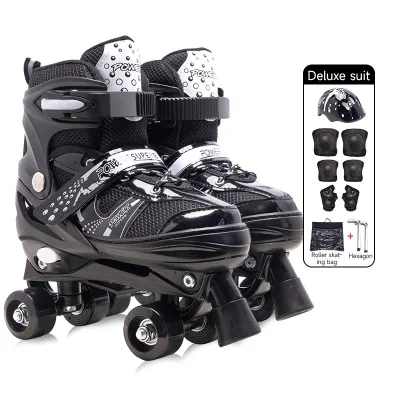
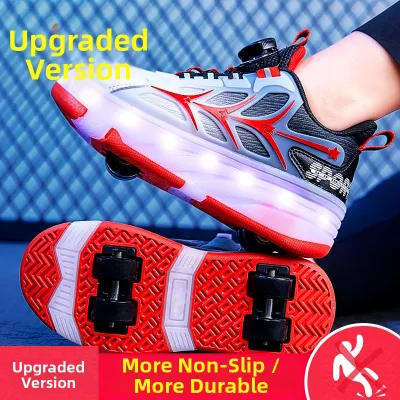
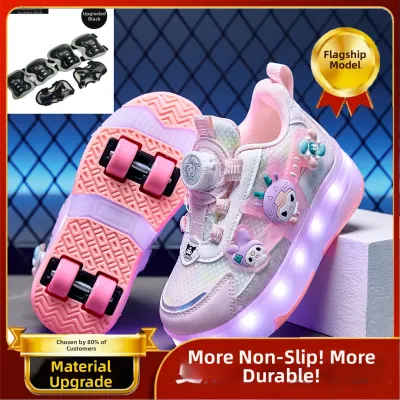
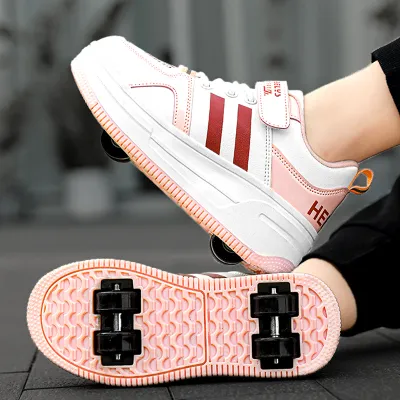
Prices are valid at publication and may change. Please refer to the product page for the latest price.
Inside the boot, the liner is designed with elasticized or overlapping materials at the toe box. This allows the inner padding to stretch naturally as the outer shell is extended, preventing uncomfortable gaps or bunching. Because of this built-in flexibility, a single pair of adjustable skates can accommodate a child’s foot through multiple growth spurts over several seasons.
In contrast, fixed-size roller skates are constructed with a single, rigid boot shell and a non-adjustable sole plate. This traditional design ensures that the entire structure remains completely solid, with no moving parts along the base of the foot. The inner liner is tailored precisely to that specific size, offering uniform cushioning and a direct connection between the foot and the frame.
Because there are no sliding tracks or locking hardware, fixed-size skates generally have a lower overall weight and fewer mechanical points of failure. This streamlined construction makes them highly responsive to subtle foot movements. However, they offer zero room for physical growth, meaning they must be replaced as soon as the child’s feet grow.
| Feature | Adjustable Roller Skates | Fixed-Size Roller Skates |
|---|---|---|
| Sizing Mechanism | Push-button, lever, or screw-based expansion | Rigid, single-size molded boot |
| Size Range | Typically covers 3 to 4 sizes per model | Single dedicated size |
| Liner Design | Stretchable toe box or overlapping fabric | Fixed, contoured padding |
| Structural Weight | Slightly heavier due to adjustment hardware | Lighter, streamlined construction |
| Primary Use Case | Casual recreation, growing children, beginners | Advanced training, artistic, roller derby |
Evaluating Fit, Comfort, and Foot Support
Achieving a proper fit is the most critical factor in preventing foot fatigue and ensuring a child’s safety on wheels. When testing any skate, you must check for heel slip by observing whether the child’s heel lifts off the footbed when they bend their knees and push forward. In a properly fitted boot, the heel should remain locked securely in the rear pocket, which prevents friction blisters and maintains optimal control over the wheels.

Toe room must be carefully evaluated to prevent painful cramping, especially during long sessions in warm, humid weather. In both adjustable and fixed designs, the child’s toes should have enough space to wiggle slightly but should not press hard against the front of the boot. In adjustable models, expanding the boot too far can create excess volume, causing the foot to slide forward and backward, which destabilizes the ankle and compromises balance.
Fixed-size skates inherently provide more consistent lateral support because the rigid, one-piece shell does not have the structural joints found in adjustable models. This stiffness is vital for protecting developing ankles from rolling outward or inward during strides. To find the correct size, always measure your child’s foot in millimeters from the heel to the longest toe while they are standing, and compare this measurement directly to the manufacturer’s specific sizing chart rather than relying solely on standard street shoe sizes.
Matching Skates to Skill Level and Goals
A child’s current skating proficiency and long-term goals should heavily influence which boot style you select. Beginners and casual recreational skaters who primarily roll around neighborhood courts or local parks generally thrive in adjustable skates. The forgiving fit and built-in room for growth allow young skaters to focus on basic balance, gliding, and stopping without the immediate pressure of outgrowing their gear within a few months.
As a skater transitions to specialized disciplines, the limitations of adjustable boots become more apparent. Activities such as aggressive street skating, roller derby, artistic figure skating, or long-distance outdoor endurance require precise power transfer and immediate responsiveness. For these pursuits, fixed-size skates are highly recommended, as their rigid construction ensures that every movement of the foot translates directly to the wheels, allowing for sharper turns, jumps, and advanced maneuvers.
Before investing in high-end equipment, it is wise to assess your child’s commitment level to the sport. If they are just testing the waters or skating occasionally on weekends, an adjustable model minimizes the financial risk of a short-lived hobby. However, if they are enrolled in structured lessons, joining a local club, or showing a deep, sustained interest in mastering technical skills, investing in a dedicated fixed-size skate will support their athletic development far more effectively.
Cost-Effectiveness and Long-Term Value
Balancing the household budget against a child’s rapid growth is a constant challenge for parents. In the local market, entry-level adjustable skates typically range from approximately ₱1,500 to ₱3,500, offering a highly economical solution because a single pair can last through several growth spurts over two to three years. This multi-year utility significantly reduces the frequency of replacement purchases, making them an attractive option for families prioritizing long-term savings.
Performance-oriented fixed-size skates generally command a higher upfront price, often starting around ₱4,000 and scaling upward depending on the materials, bearing ratings, and frame construction. Because children can outgrow a single shoe size in a matter of months, choosing fixed-size skates during active growth phases means parents must be prepared to replace the entire setup much more frequently. This can dramatically increase the total cost of ownership over a short period.
However, high-quality fixed-size skates often retain excellent durability and structural integrity, which can offset their initial cost through resale value or hand-me-down potential. Well-maintained fixed boots made from premium composite materials or thick leather can easily be passed down to younger siblings or sold to other families within the local skating community. When calculating long-term value, consider whether you prefer the immediate, hassle-free savings of an adjustable boot or the potential long-term durability and performance of a premium fixed boot.
Decision Framework: Which Skate Should You Choose?
To finalize your decision, evaluate your child’s specific physical needs and skating environment using a clear set of conditions. Choose adjustable roller skates if your child is a beginner or casual skater, is currently experiencing rapid growth spurts, and you want to maximize your budget over several years. This option provides a safe, comfortable, and highly adaptable platform for learning the basics of the sport.
Conversely, choose fixed-size roller skates if your child has already mastered basic skating techniques, is participating in structured training or competitive disciplines, and requires maximum lateral ankle support for advanced maneuvers. The rigid, unified construction of a fixed boot is indispensable for safety and performance at higher speeds and during technical footwork.
Before making any purchase, verify if your child has unique anatomical considerations, such as exceptionally wide feet or flat arches that require custom orthotic insoles, as these are often easier to accommodate in the precise interior of a fixed-size boot. Additionally, check with your local skating rink or training academy, as some structured programs have specific safety gear guidelines or frame requirements that may favor one style over the other.
Essential Safety Gear and Pre-Ride Checks
Regardless of the skate type you choose, protective equipment is non-negotiable for preventing injuries on hard outdoor surfaces. A properly fitted helmet, along with durable knee pads, elbow pads, and wrist guards, must be worn during every single session. Ensure that the protective pads fit snugly without sliding down the limbs, and adjust the straps regularly as your child grows to maintain reliable impact protection.
Before every ride, perform a quick visual and physical inspection of the skates to ensure they are in safe working condition. Check that all wheel axles are tightened securely using the appropriate tool, and spin each wheel to verify that the bearings run smoothly without grinding or sticking. Inspect the polyurethane wheels for uneven wear patterns, and examine the rear brake pad or toe stop to ensure it is not excessively worn down or loose.
Establish clear safety boundaries and instruct your child to stop skating immediately if they feel any unusual wobbling, hear strange noises, or experience sudden physical discomfort. If you observe deep cracks in the plastic shell, stripped adjustment screws, or a loose frame-to-boot connection, do not attempt temporary home repairs. Stop using the skates immediately and consult the manufacturer’s guidelines or a qualified local skate technician to replace the damaged components.
Frequently Asked Questions (FAQ)
How Do I Know if My Child's Roller Skates Are Too Small?
You can identify if your child’s roller skates have become too small by checking their feet immediately after a skating session. Look for distinct red marks, localized swelling, or blisters along the heels, ankles, and the sides of the big and pinky toes. If your child complains of toe cramping, numbness, or a pinching sensation while rolling, the boot is likely too tight and requires immediate adjustment or replacement.
Another clear indicator is observing how your child moves while wearing the skates. If their heel lifts excessively inside the boot when they try to push off, or if they constantly struggle to maintain their balance because their toes are curled up inside the toe box, the fit is compromised. For adjustable skates, check if the shell has already been expanded to its maximum setting; if the foot has outgrown this final stage, it is time to transition to a larger size.

Community discussion
Share your experience or ask a question. Comments are reviewed before publication.