
Choosing the right badminton racket is a highly personal decision that directly impacts your performance, comfort, and enjoyment on the court. When comparing the popular Yonex Arcsaber, Voltric, and Nanoray series, the choice comes down to how you want to control the rally. The Arcsaber series, epitomized by the classic Arcsaber 11, is designed for exceptional control and an even-balance feel, allowing you to place the shuttle with excellent precision. In contrast, the Voltric series utilizes a head-heavy design to maximize power for strong smashes from the backcourt. Meanwhile, the Nanoray series focuses on a head-light balance and aerodynamic frame to deliver fast swing speeds, making it a practical option for defensive players and rapid-fire doubles rallies.
In tropical playing conditions like those in the Philippines, where high humidity can quickly sap your energy and soften string tension, selecting the right racket philosophy is even more critical. A racket that matches your natural physical capabilities helps prevent premature fatigue during long, sweaty sessions in local sports centers. Because Yonex continuously updates its product lines, understanding the core engineering behind these three series will help you navigate both classic models and modern successors. By analyzing your playing style, physical strength, and typical court position, you can identify which design philosophy will support your game.
Understanding the Core Design of Each Yonex Series
Each Yonex racket series is engineered around a distinct structural philosophy that dictates how weight is distributed across the frame and shaft. This distribution, known as the balance point, fundamentally alters how the racket behaves during a swing. Understanding these foundational designs is the first step in determining which series aligns with your physical attributes and tactical preferences.
Products mentioned in this guide
![[ RE-STOCK ] Yonex Isometric Arcsaber 11 Pro (Grayish Pearl) Badminton Racket Arc11-P 4U G5 /85g 24LBS 25LBS max](https://img.lazcdn.com/g/p/ea139ce637509fad896d2165e3e15be3.jpg_400x400q80.jpg_.webp)
![【Buy 1 Get 5 Free】YONEX ARCSABER 11 PRO Badminton Racket Full Carbon Single 4UG5 26-30Lbs 83g Made In Japan [Freebies :2 * hand glue 12 * shuttlecock 2 * bag 1]](https://img.lazcdn.com/g/p/f324fe8eea630d27492994ffd6e64d8d.jpg_400x400q80.jpg_.webp)
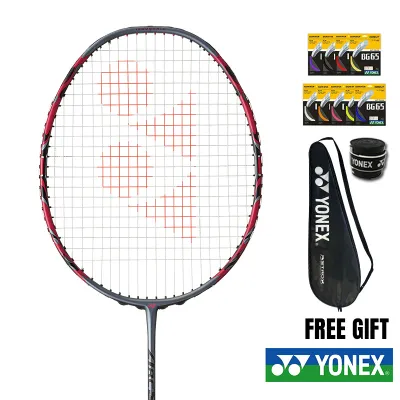
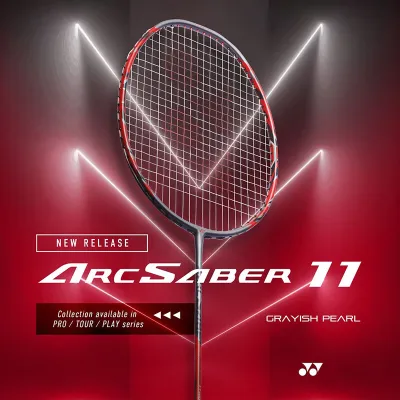
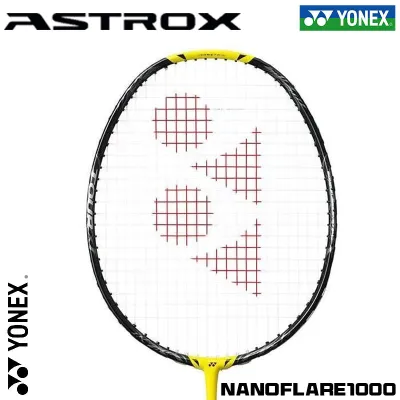
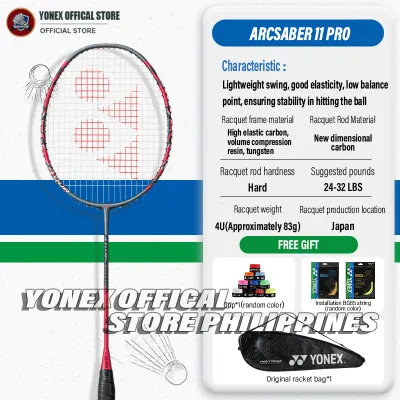
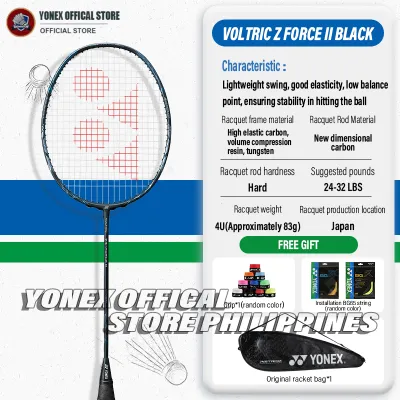
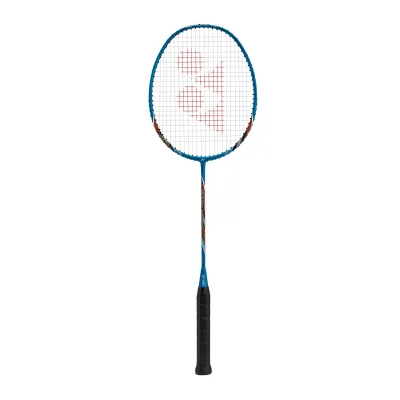
Prices are valid at publication and may change. Please refer to the product page for the latest price.
The Arcsaber series is built on the concept of “shuttle hold” and even balance. The frame is designed to flex slightly upon impact, allowing the shuttlecock to remain on the string bed a fraction of a second longer. This brief pocket of contact gives you clear feedback and control, making it easier to direct the shuttle to tight corners or execute delicate net drops. Because the weight is distributed evenly between the head and the handle, Arcsaber rackets offer a neutral feel that does not favor power over speed, or vice versa.
The Voltric series represents the power-centric side of the Yonex lineup, characterized by a distinct head-heavy balance. By placing more mass at the top of the racket head, Voltric models leverage centrifugal force during your swing to generate downward momentum. This design is intended to amplify the force of your smashes and deep clears, allowing you to push opponents to the backcourt with less physical effort. However, this head-heavy distribution requires stronger wrist and forearm conditioning to maneuver quickly during fast defensive exchanges.
The Nanoray series occupies the opposite end of the spectrum, utilizing a head-light balance and aerodynamic frame geometry. By shifting the weight distribution toward the handle, Nanoray rackets minimize air resistance and reduce the physical effort required to initiate a swing. This design allows for rapid defensive reactions, quick drive exchanges, and fast recovery after a shot. It is a series built for speed, prioritizing fast-paced flat rallies and defensive blocks over heavy power.
While these core philosophies define each series, it is important to remember that individual models within these lines can vary. Yonex frequently introduces new materials, frame shapes, and shaft flexibilities across different production years and price points. Therefore, you should always treat these series-wide traits as a starting point and verify the exact specifications of the specific model you are considering.
Matching Racket Characteristics to Your Playing Style
To select the right racket, you must first analyze your typical role on the court and how you prefer to score points. Your playing style dictates whether you need the power of a head-heavy frame, the rapid recovery of a head-light racket, or the versatile control of an even-balanced model. Matching these physical characteristics to your tactical needs is essential for maximizing your performance and preventing injury.

Power and attacking players who dominate the backcourt generally benefit most from the head-heavy traits of the Voltric series. If your primary strategy is to force weak returns with steep, heavy smashes and deep, commanding clears, the extra mass in the racket head works to your advantage. The momentum generated by a head-heavy frame helps transfer kinetic energy to the shuttle, making your offensive shots more effective. However, this style demands good physical endurance, as swinging a head-heavy racket repeatedly over a multi-game match can strain your shoulder and wrist.
Control and rally players who focus on all-court precision and tactical placement will find their match in the Arcsaber series. If you prefer to construct rallies patiently, using deceptive drop shots, precise net play, and sudden changes of pace, the even-balanced Arcsaber 11 design provides the neutral platform you need. The extended shuttle hold allows you to feel the contact clearly, giving you the confidence to play tight to the net or paint the lines. This versatility ensures you are well-equipped, whether you are defending a smash or transitioning into an attack.
Speed and defensive players, particularly those who specialize in fast-paced doubles matches, are best served by the head-light characteristics of the Nanoray series. In doubles, the game is often won or lost in the flat zone, where rapid drive exchanges and quick defensive blocks dictate the rhythm. A head-light racket allows you to manipulate the frame with minimal lag, enabling you to intercept fast shots at the net or defend heavy smashes with quick wrist snaps. This speed-oriented design reduces the physical strain on your arm during rapid-fire exchanges, keeping your reactions sharp.
To help determine where you fit, consider a quick self-assessment of your on-court responsibilities. Ask yourself if you spend more time initiating attacks from the back, defending and driving from the mid-court, or controlling the net. Additionally, evaluate your physical conditioning; players who experience quick arm fatigue in hot, humid indoor halls may want to avoid heavy, stiff frames in favor of more maneuverable options.
Key Specifications to Verify Before Buying
Before finalizing your purchase on any online marketplace or at a local sports specialty store, you must learn to read and interpret the official specification sheets. Racket labels contain vital technical data regarding balance, flexibility, and weight that will tell you exactly how the racket will perform in your hand. Relying solely on a series name is not enough, as sub-models can be customized for different skill levels.
The balance point is a critical metric to verify, as it determines where the center of gravity lies. Manufacturers typically measure this in millimeters from the bottom of the handle, or classify it simply as head-heavy, even, or head-light. When inspecting a physical racket, you can often find these markings printed directly on the shaft or the cone just above the grip. An even-balance racket like the Arcsaber 11 sits right in the middle, offering a balanced pivot point that feels natural to most players.
Shaft flexibility is another crucial factor that must match your swing speed and wrist strength. Shafts are generally categorized as flexible, medium, stiff, or extra stiff. A stiff shaft, often found in high-end models like the Arcsaber 11, requires a fast swing speed and precise timing to generate power, making it ideal for advanced players. If your swing is slower or you rely more on arm movement than wrist snap, a medium or flexible shaft will bend more easily, providing a whip effect that helps propel the shuttle with less effort.
Weight categories are standardized by Yonex using a “U” classification system, which you can find stamped on the cone of the racket. The most common weights are 3U (typically 85 to 89 grams) and 4U (typically 80 to 84 grams). A heavier 3U racket provides more stability and momentum for powerful shots, but it can quickly tire your arm during long sessions in humid conditions. A lighter 4U racket offers superior maneuverability and is highly recommended for doubles players or those looking to reduce physical strain.
Always make it a habit to consult the manufacturer’s official specifications or physically inspect the racket before making a decision. If you are purchasing from an online marketplace, double-check the product description to ensure you are getting the exact weight and grip size (such as G5, which is highly popular in the Philippines for smaller hands) that fits your physical preferences.
Condition-Based Decision Framework
To make your final decision easier, you can use a structured framework based on your current playing conditions, physical health, and long-term development goals. Rather than looking for a universal winner, focus on which racket design supports your immediate needs on the court.
You should choose the Arcsaber 11, or its modern equivalents in the Arcsaber lineup, if your priority is balanced, all-around performance. This series is the ideal choice if you want a racket that does not force you into a specific tactical box, allowing you to play defensively or offensively as the situation demands. It is highly suited for singles players who need to cover the entire court, as well as doubles players who value control and placement over raw power.
You should choose a Voltric model if your game is built entirely around aggressive, backcourt attacking play. If you have the physical strength, proper overhead technique, and a desire to hit heavy, steep smashes, the head-heavy balance will complement your style. However, you must be prepared for the physical demands of this frame, ensuring your shoulder and wrist can handle the extra weight during extended play.
You should choose a Nanoray model if you are a fast-paced doubles specialist who thrives on defense, quick drives, and net interceptions. The head-light balance will give you the speed advantage needed to win flat exchanges and defend against aggressive opponents. It is also an excellent option for players who want to minimize arm fatigue and maintain quick reaction times throughout long tournament days.
Finally, always consider your physical condition and skill transition before buying. If you are recovering from a shoulder, elbow, or wrist injury, or if you are still developing your basic hitting technique, avoid stiff and head-heavy rackets. Instead, consult a qualified badminton coach or a professional stringer at your local club to get personalized advice on the best shaft flexibility and string setup for your current physical state.
Frequently Asked Questions (FAQ)
Can a beginner use a head-heavy Voltric racket?
While a beginner can physically swing a head-heavy Voltric racket, it is generally not recommended for those still learning the basics of the game. Head-heavy rackets require proper overhead hitting technique and wrist strength to maneuver safely and effectively. Beginners who lack this developed technique often compensate by using excessive arm force, which increases the risk of wrist, elbow, and shoulder strain. Starting with an even-balanced or head-light racket allows novices to focus on clean mechanics, footwork, and timing before transitioning to more physically demanding, power-oriented frames.
Does the string tension change how an Arcsaber 11 feels?
Yes, string tension has a noticeable impact on how an even-balanced racket like the Arcsaber 11 behaves on the court. Higher string tensions (such as 26 lbs and above) tighten the string bed, which enhances control and provides crisp feedback, but reduces the sweet spot and requires faster swing speeds to generate power. Lower tensions (around 20 to 24 lbs) offer a spring-like effect that makes it easier to clear the shuttle deep, which is highly beneficial in humid tropical climates where the air can feel heavy. Always check the recommended tension range printed on the racket shaft to ensure you do not exceed the frame’s structural limits and void the warranty.

Community discussion
Share your experience or ask a question. Comments are reviewed before publication.