
When preparing for a family day at a beach resort or a local pool in the tropical heat, safety is always the top priority. Many parents purchase a kids floater swimming vest expecting it to act as a reliable shield against water hazards. However, the reality is that not all swimming vests are designed to save lives. Many products sold online are classified merely as recreational swim aids or water toys, which do not offer the buoyancy or structural integrity required to keep a child safe in an emergency. Understanding the difference between a certified safety device and a simple swim aid is the first and most critical step in protecting your child around the water.
The Crucial Difference Between Safety Vests and Swim Aids
To make an informed choice, you must understand the functional divide between a personal flotation device and a recreational swim aid. A certified safety vest, often classified as a life jacket, is engineered with a specific goal: to keep an unconscious or exhausted child’s airway completely clear of the water. These devices feature concentrated buoyancy, often including a specialized collar that naturally tilts a child’s head backward and face-up.
In contrast, recreational swim aids—frequently marketed under terms like “swim trainer,” “floater,” or “puddle jumper”—are designed solely to assist a conscious, active child who is learning to swim. These items help a child maintain a natural swimming position but do not have the capability to turn an inactive child face-up. Relying on a recreational floater to act as a life-saving device in deep or rough water is a dangerous misconception.
Products mentioned in this guide
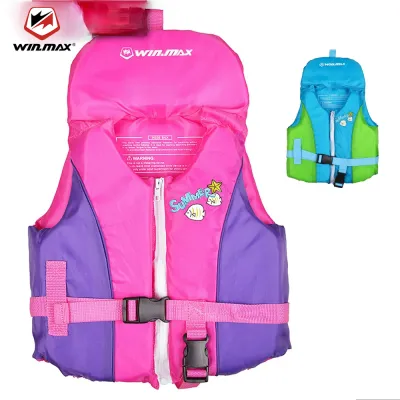
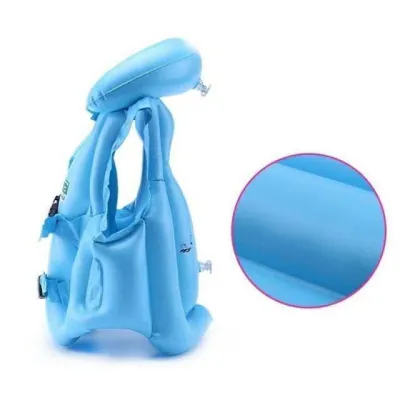
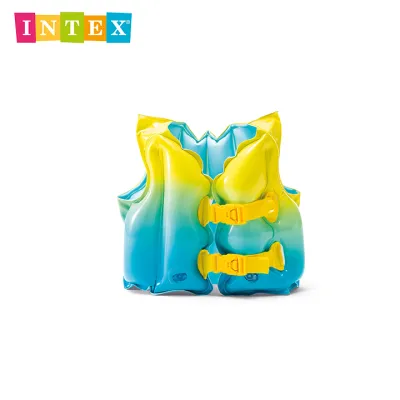
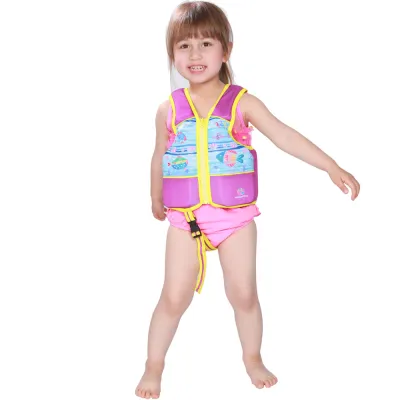
![[Local Delivery] Kids Swimming Life Vest Cartoon Animals Print Flotage Life Jacket with Lockable Buckles for Girls Boys 2-12 Years](https://img.lazcdn.com/g/p/c663b7d7a306cf5c0523f9e58d0e8bb0.jpg_400x400q80.jpg_.webp)
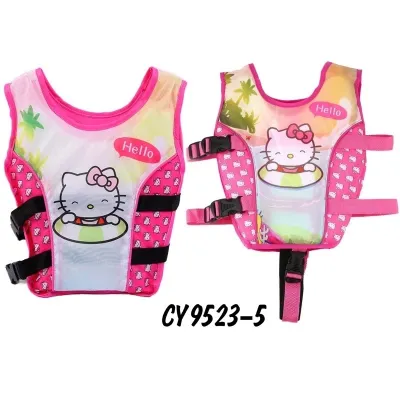
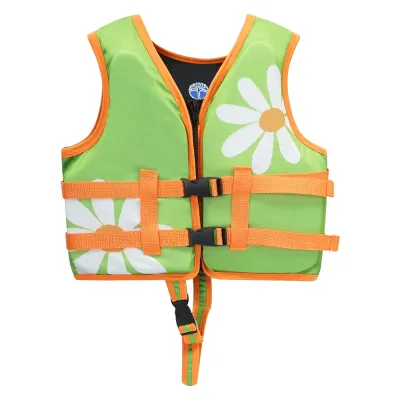
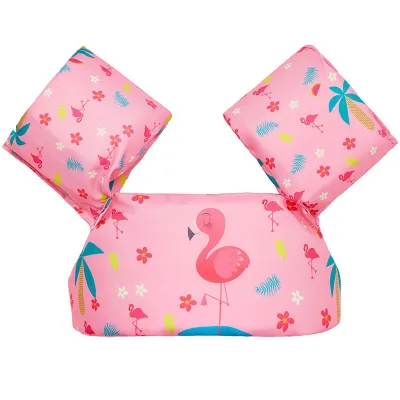
Prices are valid at publication and may change. Please refer to the product page for the latest price.
When evaluating a vest, you can perform several visual and structural checks to identify genuine safety features. A true safety vest will almost always feature a durable crotch strap that runs between the child’s legs. This strap is vital because, without it, the vest will simply slide up over the child’s head when they enter the water. Additionally, look for heavy-duty, impact-resistant buckles, a strong front zipper, and high-visibility colors like bright orange, yellow, or neon green that remain easily visible under the water’s surface.
How to Read and Verify Buoyancy Ratings on Labels
Every legitimate safety vest comes equipped with an informational label or an inner tag that outlines its specific performance capabilities. Before purchasing a kids floater swimming vest, locate this label—usually printed directly onto the inside lining of the vest. This tag contains critical specifications, including the maximum user weight, chest size range, and the buoyancy rating, which is often measured in Newtons.

Matching your child’s current weight to the vest’s rated capacity is non-negotiable. Parents are often tempted to buy a size larger to allow room to grow, especially when investing several hundred or thousands of pesos (such as ₱1,500 to ₱3,000) on quality gear. However, an oversized vest is a severe safety hazard. If the vest is too large, the buoyancy material will sit too high on the child’s body, failing to lift their mouth and nose clear of the water, or worse, allowing the child to slip out entirely.
You must also check the manufacturer’s specified water conditions. Buoyancy ratings are calculated based on specific environments, such as calm swimming pools, sheltered lakes, or open coastal waters. A vest rated for a calm resort pool in Laguna may not provide sufficient buoyancy or stability in the rolling waves of an open beach. Always ensure the vest’s rated environment matches where your family plans to swim.
Navigating Safety Certifications and Standards
Legitimate safety gear must undergo rigorous testing to prove it can perform under pressure. When shopping on online marketplaces or at local sporting goods stores, look for official certification marks printed clearly on the vest’s inner tag. Common global standards include the United States Coast Guard approval, European Standards (EN ISO 12402), or Australian Standards (AS 4758). These markings indicate that the product has met strict buoyancy, material strength, and design requirements.
Be cautious of misleading certification claims. Some manufacturers print vague statements like “made with certified materials” or “approved foam.” This is a common marketing tactic designed to distract from the fact that the entire vest has not been tested or certified as a cohesive safety device. The certification must apply to the finished product as a whole, ensuring that the stitching, buckles, straps, and foam work together flawlessly under tension.
Establish an immediate stop condition when evaluating gear. If a swimming vest lacks clear, legible certification information, displays suspicious or misspelled logos, or has peeling, generic labels, do not use it. In the unregulated space of cheap imported goods, counterfeit safety badges are common. If you cannot verify the certification through the manufacturer’s official database or documentation, treat the vest as a toy rather than a safety device.
Essential Fit, Usage, and Supervision Rules
Even the most highly certified safety vest will fail if it is not fitted and worn correctly. To ensure a proper fit, begin by loosening all straps, putting the vest on your child, and zipping it up completely. Next, fasten all buckles, starting from the waist and moving upward, and tighten them until the vest is snug against the child’s torso. The vest should feel secure but comfortable enough to allow normal breathing.
Once the straps are tightened, perform the physical “lift test.” Stand behind your child, grab the shoulder straps of the vest, and firmly pull upward. If the vest slides up past your child’s chin, nose, or ears, it is either too loose or too large. You must tighten the straps further or switch to a smaller size. Additionally, always secure the crotch strap; skipping this step allows the water’s upward force to push the vest up while the child’s body sinks down.
Most importantly, parents must remember that no flotation device can ever replace active, touch-supervision. It takes only a few seconds for an accident to occur, and a vest can become snagged, unbuckled, or shifted if a child panics. Active supervision means an adult is in the water, within arm’s reach, and fully focused on the child—not distracted by a phone or socializing on the pool deck. Treat the vest as an extra layer of protection, never as a substitute for your direct presence.
When to Stop Using or Replace a Swimming Vest
Over time, environmental factors will degrade the materials of any swimming vest, reducing its effectiveness. In tropical climates like the Philippines, intense sunlight, high humidity, and exposure to chlorine or saltwater accelerate this wear. Regularly inspect the vest for observable signs of degradation, such as faded fabric, which indicates UV damage that weakens the outer shell. Check for compressed or cracked foam inserts, frayed straps, rusted zipper teeth, or buckles that no longer click securely into place.
There are several conditions under which a vest must be retired immediately. If the vest has sustained a significant impact—such as being crushed under heavy gear in a car trunk—the internal foam may have collapsed, permanently losing its buoyancy. Similarly, if the fabric tears, exposing the inner flotation foam, or if your child simply exceeds the maximum weight limit printed on the label, the vest is no longer safe for use and must be replaced.
To maximize the safe lifespan of your child’s vest, follow proper care and maintenance routines. After every swim, thoroughly rinse the vest with clean, fresh water to remove chlorine, salt, and sand. Hang it to dry in a well-ventilated, shaded area away from direct midday sunlight, which can dry out and crack the internal foam. Once completely dry, store the vest in a cool, dry place to prevent mold and mildew from taking hold in humid conditions.
Frequently Asked Questions (FAQ)
Can a kids swimming vest prevent drowning in all water conditions?
No, a swimming vest cannot guarantee safety in all water conditions. Vests are rated for specific environments, and rough coastal waters, strong rip currents, or sudden waves can easily overwhelm a child, even if they are wearing a certified device. Active adult supervision remains mandatory at all times, regardless of the water conditions or the vest’s safety rating.
Are inflatable arm bands as safe as a certified swimming vest?
No, inflatable arm bands are not as safe as a certified swimming vest. Arm bands are classified as swim toys and lack essential safety features like head support and crotch straps. They are highly susceptible to sudden deflation from punctures, can easily slip off wet skin, and do not keep a child’s head face-up if they become exhausted or lose consciousness.

Community discussion
Share your experience or ask a question. Comments are reviewed before publication.