
Stainless steel carabiners are safe for rock climbing only if they are specifically manufactured, rated, and certified for climbing and life-support applications. While stainless steel is exceptionally durable and highly resistant to environmental wear, simply being made of steel does not make a carabiner safe for climbing. Many steel carabiners found in general hardware stores are designed for industrial, agricultural, or utility use and cannot withstand the dynamic forces of a climbing fall. To ensure your safety on the rock, you must understand how to identify certified climbing gear, read load ratings, and inspect your equipment for signs of wear.
Understanding Carabiner Materials: Stainless Steel vs. Aluminum
When selecting climbing gear, understanding the material properties of your equipment is fundamental to making safe decisions. The vast majority of carabiners used by recreational climbers are made of aluminum alloys. Aluminum is favored because of its exceptional strength-to-weight ratio, which allows climbers to carry dozens of carabiners on their harness without being weighed down. This lightweight characteristic is crucial for traditional climbing, sport climbing, and multi-pitch routes where every gram matters.
Stainless steel, on the other hand, is significantly heavier than aluminum but offers distinct advantages in durability and environmental resistance. Stainless steel is highly resistant to abrasion, meaning it can withstand the constant friction of dirty ropes sliding through it far better than aluminum. This makes stainless steel carabiners the preferred choice for fixed installations, such as top-rope anchors, lower-off stations at the top of popular sport routes, and indoor climbing gym anchors.
Products mentioned in this guide
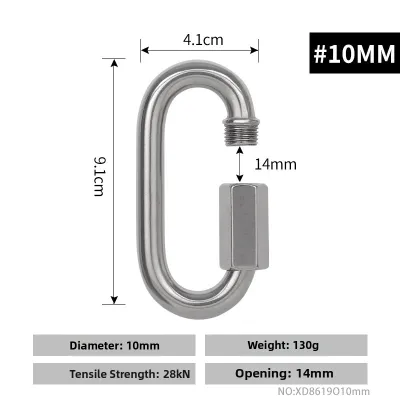
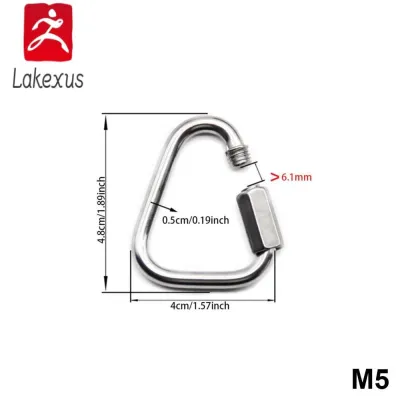
Prices are valid at publication and may change. Please refer to the product page for the latest price.
In highly humid and coastal environments, such as the tropical sea cliffs found in the Philippines, the air is thick with moisture and salt. These conditions accelerate the corrosion of standard aluminum and low-grade steels, leading to rapid degradation of fixed gear. Stainless steel carabiners are specifically utilized in these harsh settings to resist rust and stress corrosion cracking, ensuring that fixed anchors remain safe for the climbing community over extended periods.
However, the heavy weight of stainless steel makes it impractical for everyday racking on your harness. Carrying a full set of steel quickdraws would quickly fatigue a climber and compromise performance. Ultimately, material choice alone does not guarantee safety; a stainless steel carabiner is only safe for climbing if it has been engineered, tested, and certified to meet the rigorous demands of fall protection.
How to Verify Load Ratings and Breaking Strength
To verify if a stainless steel carabiner is safe for climbing, you must inspect the technical markings etched or stamped onto its spine. Climbing carabiners are engineered to withstand specific forces, and these limits are clearly indicated on the body of the gear. If a carabiner lacks these markings, it should never be used for climbing or any load-bearing application.

The strength of a climbing carabiner is measured in kilonewtons (kN), which is a unit of force rather than static weight. One kilonewton is roughly equivalent to 100 kilograms of static force under gravity. However, during a climbing fall, the dynamic forces generated by the falling climber, the rope, and the belay system can easily exceed the static weight of the climber by several times. This is why climbing gear must be rated to withstand high kilonewton forces.
A certified climbing carabiner will display three distinct load ratings on its spine. The first is the major axis rating, which represents the strength of the carabiner when loaded end-to-end with the gate fully closed. For climbing, the major axis rating must be at least 20 kN, though many stainless steel models exceed this. This is the strongest orientation and the way the carabiner is designed to be loaded during normal use.
The second rating is the minor axis rating, which indicates the strength when the carabiner is cross-loaded, meaning the force is applied sideways against the gate. This rating is significantly lower, typically ranging from 7 to 10 kN. Cross-loading is a dangerous configuration that should be avoided, as it drastically reduces the safety margin of the gear.
The third rating is the gate-open rating, which shows the strength of the carabiner if a fall occurs while the gate is accidentally held open by a rope or an obstruction. Because the structural loop is broken when the gate is open, this rating is also much lower, often between 7 and 9 kN. You must always cross-reference these markings with the manufacturer’s official technical specification sheet to verify the exact load limits and ensure the gear meets the demands of your specific climbing activity.
Checking Safety Certifications and Standards
Before trusting your life to any piece of climbing equipment, you must verify that it carries recognized safety certifications. These certifications are proof that the gear has undergone rigorous independent testing to ensure it can withstand the extreme forces of a climbing fall. Without these marks, a carabiner is simply an unverified piece of metal.
The most common certification mark to look for is the CE mark (Conformité Européenne), followed by a four-digit identification number of the certifying body. For climbing carabiners, this mark indicates compliance with the European standard EN 12275, which defines the safety requirements and test methods for connectors used in mountaineering and climbing. This standard ensures the carabiner has passed specific static and dynamic strength tests.
Another critical certification is the UIAA (International Climbing and Mountaineering Federation) safety label. The UIAA works closely with manufacturers to develop strict safety standards that often exceed regional requirements. When a stainless steel carabiner carries the UIAA logo, it means the product has been tested in certified laboratories and meets the highest international safety benchmarks for climbing equipment.
You must actively avoid using unmarked, unbranded, or generic hardware store carabiners for any climbing or life-support application. These utility items are designed for static loads, such as securing cargo, hanging hammocks, or industrial rigging. They do not undergo dynamic impact testing, and their manufacturing processes lack the strict quality control required for personal protective equipment. Using a non-certified carabiner for climbing poses an extreme risk of catastrophic failure.
Inspection and Maintenance for Climbing Carabiners
Regular inspection and proper maintenance are essential to ensure your stainless steel carabiners remain in safe working condition. Even the strongest steel gear can degrade over time due to environmental exposure, wear, and mechanical fatigue. Developing a consistent pre-use inspection routine is a fundamental habit for every climber.
Begin with a thorough visual and tactile inspection of the entire carabiner body. Look closely for any hairline cracks, deep grooves worn by ropes, sharp edges, or physical deformation. In humid, tropical, or coastal environments, pay special attention to any signs of corrosion. While stainless steel is highly resistant to rust, it can still develop stress corrosion cracking, which can weaken the metal internally without showing obvious external damage.
Next, test the mechanical function of the gate and locking mechanism. The gate must open smoothly and spring back completely to the closed position the moment you release it. If the gate sticks, hesitates, or fails to close fully, the carabiner is unsafe to use. For locking carabiners, verify that the sleeve (whether screwgate or auto-locking) engages securely and does not slip or bind.
Proper maintenance can significantly extend the lifespan of your gear. Clean your carabiners regularly by rinsing them in warm, clean water to remove dirt, salt, and grit. If the gate action becomes stiff, you can apply a small drop of dry, wax-based lubricant to the gate hinge and spring area, wiping away any excess to prevent dirt from sticking. Store your gear in a cool, dry, well-ventilated space away from direct sunlight, dampness, and corrosive chemicals.
When to Stop Using a Carabiner and Seek Professional Advice
Knowing when to retire your climbing gear is a critical safety skill that can prevent catastrophic accidents. You must establish clear boundaries for when a carabiner is no longer fit for service. If a piece of gear fails any part of your visual or mechanical inspection, it must be retired immediately and rendered unusable to prevent accidental future use.
Specific physical signals that mandate immediate retirement include a gate that fails to close or lock, visible cracks, deep grooves exceeding the manufacturer’s wear limits, or severe corrosion. Additionally, if a carabiner is subjected to a severe drop from a significant height onto a hard surface, or if it catches a high-impact fall, it should be retired. Such events can cause internal micro-fractures that compromise the structural integrity of the metal without leaving visible marks.
If you ever encounter conflicting instructions, cannot identify the brand or history of a carabiner, or are unsure about its suitability for a specific climbing setup, stop using it immediately. In these situations, consult the manufacturer’s official guidelines or seek advice from a qualified climbing professional. Equipment cannot replace proper training, safety judgment, and correct handling techniques; always prioritize safety and err on the side of caution.
Frequently Asked Questions (FAQ)
Can I use a stainless steel carabiner from a hardware store for climbing?
No, you must never use a stainless steel carabiner from a hardware store for climbing or any life-support application. Hardware store carabiners are designed for utility tasks and lack the dynamic impact testing, strict quality control, and certified load ratings required to catch a human fall. Using non-certified hardware for climbing poses a severe risk of equipment failure.
Does stainless steel prevent rust completely in outdoor environments?
While stainless steel is highly resistant to corrosion, it is not completely rust-proof. In highly humid, tropical, or marine environments, salt and moisture can still cause surface rust or dangerous stress corrosion cracking over time. Regular inspection, rinsing with fresh water after exposure, and proper dry storage are essential to maintain the safety and integrity of stainless steel gear.

Community discussion
Share your experience or ask a question. Comments are reviewed before publication.