
A standard badminton bag’s advertised capacity rarely matches its real-world limit once you pack your actual playing gear. While a bag labeled as a “6-pack” or “9-pack” can technically hold that many bare rackets, the moment you add a pair of court shoes, a tube of shuttlecocks, a water bottle, and a change of clothes, the usable racket capacity often drops by half. For players navigating hot and humid tropical climates, where carrying extra shirts and large water flasks is a daily necessity, understanding how gear volume interacts with bag design is the key to choosing the right storage setup.
Assessing Your Actual Racket and Gear Needs
To determine the right bag size, you must first audit what you carry to the court. Casual players who play once or twice a week typically only need one or two rackets. At this level, your gear footprint is minimal, requiring just the rackets, a water bottle, and perhaps a spare shirt. A compact bag or a specialized sports backpack is usually sufficient for these light sessions.
In contrast, competitive players or those undergoing intensive training sessions often carry three to six rackets. Having multiple rackets is not about showing off; it is a practical backup strategy. High string tensions, aggressive play, and humid weather can cause strings to snap unexpectedly mid-match. Carrying multiple rackets strung at your preferred tension ensures you can continue playing without interruption.
Products mentioned in this guide
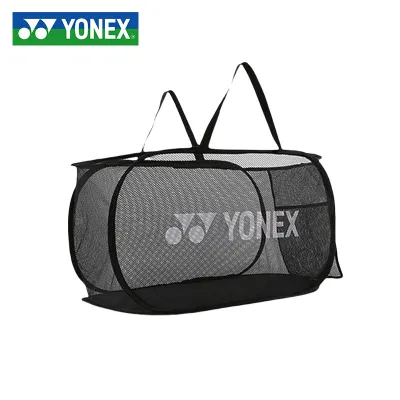

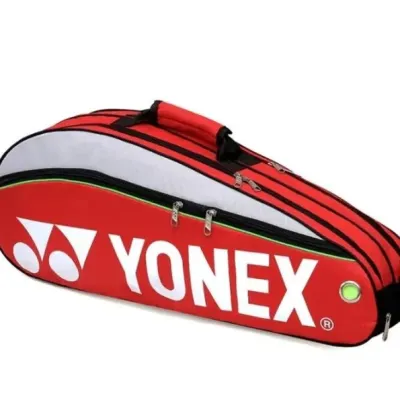
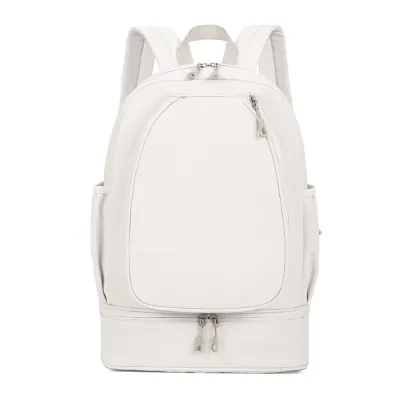
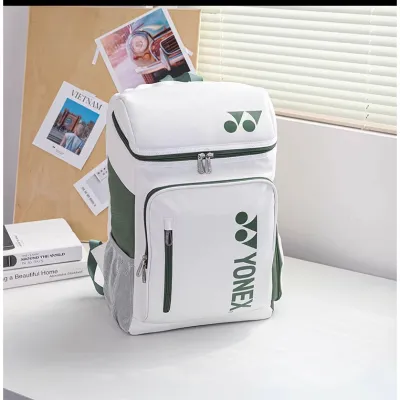
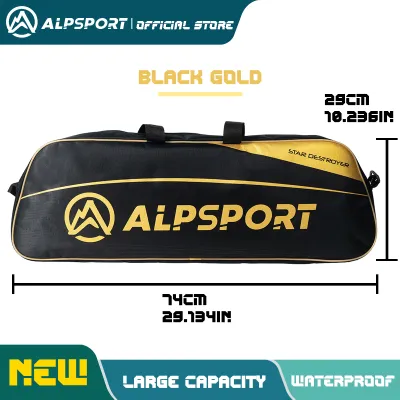

Prices are valid at publication and may change. Please refer to the product page for the latest price.
However, rackets are only part of the equation. The non-racket essentials often dictate your bag’s true capacity. A standard tube of shuttlecocks takes up a significant amount of cylindrical space. Court shoes, which should always be carried separately to keep dirt and moisture away from your rackets, require a large block of space at the bottom of the bag. In tropical environments, you will also need to pack extra apparel, towels, wristbands, and a substantial water bottle to stay hydrated.
Even the physical dimensions of your rackets affect how they fit. While standard badminton rackets share a uniform length of approximately 675 millimeters, grip sizes and customization can alter their bulk. Rackets wrapped in thick towel grips take up considerably more volume in the handle compartment than those with thin polyurethane overgrips. When stacking multiple rackets side-by-side, these bulkier handles can force the frames to splay, reducing the overall number of rackets you can safely zip into a single compartment.
Decoding Badminton Bag Capacity Labels and Layouts
When browsing online marketplaces or local sports shops, you will encounter industry-standard labels like 3-pack, 6-pack, and 9-pack. These ratings are calculated under laboratory conditions using bare rackets without thermal covers, extra grips, or any other gear. A 6-pack bag, for instance, features two main compartments designed to hold three rackets each.

In practice, these labels serve as a measure of total volume rather than a literal count of rackets you can carry alongside your gear. If you place a pair of size 10 court shoes into the shoe compartment, that pocket expands inward, consuming nearly half of the space in one of the main compartments. Adding a single tube of shuttlecocks and a change of clothes into the remaining space can easily reduce a 6-pack bag’s actual racket capacity to just two or three rackets.
Internal layouts also play a massive role in how space is distributed. Many mid-to-high-end bags feature dedicated shoe compartments, wet/dry separators, and thermal-lined pockets. Thermal lining uses thick, insulated materials designed to protect racket strings from extreme temperature fluctuations, which can cause tension loss or premature breakage. While highly beneficial, this insulation adds physical bulk to the compartment walls, slightly reducing the flexible stretching capacity of the fabric. Dedicated shoe compartments are excellent for hygiene, but because they share the internal volume of the main compartments, they create a zero-sum game for space.
Matching Bag Styles to Your Carry Load and Commute
Choosing the right bag style requires balancing your total gear volume with how you travel to the badminton court. In bustling urban areas where commuting via public transport, jeepneys, or walking is common, a specialized badminton backpack is often the most practical choice. These backpacks feature a dedicated rear compartment that holds one or two rackets with the handles protruding from the top. They keep your hands free and present a slim profile, making it easier to navigate crowded spaces. However, their storage for shoes and apparel is highly compressed.
For players who prefer a lightweight option for quick club sessions, shoulder bags and tote bags are excellent alternatives. These bags are designed to carry one or two rackets alongside basic personal items. They are easy to sling over your shoulder and fit comfortably in passenger seats or small lockers. The trade-off is a lack of structured compartments, meaning your shoes, keys, and rackets may end up jostling against each other if not packed carefully.
If you regularly participate in tournaments, weekend leagues, or long training blocks, a rectangular tournament bag is indispensable. These bags are built for maximum capacity, offering flat, structured compartments that keep rackets perfectly parallel. They easily accommodate four to six rackets, multiple changes of clothes, shoes, toiletries, and snacks. While they offer the best protection and organization, they are bulky to carry over long distances and are best suited for players traveling by car or private transport.
Packing Strategies to Maximize Usable Space
Efficient packing is not just about fitting more gear into your bag; it is about protecting your expensive rackets from structural damage. To maximize space, always alternate the orientation of your rackets when placing them in the compartment. Lay the first racket with the head at the top, and the second with the head at the bottom. This alternating head-to-handle pattern prevents the wide frame heads from stacking directly on top of each other, which creates unnecessary bulk and uneven pressure on the frames.
Make full use of external pockets and specialized sleeves. Bulky items like water bottles or sports drinks should be kept in external mesh pockets rather than inside the main compartments. This not only saves valuable internal space but also eliminates the risk of condensation or accidental spills ruining your racket strings, grip tape, or spare apparel.
Keep small accessories organized in dedicated side pockets. Items such as replacement grips, scissors, sports tape, and keys can easily get lost at the bottom of a large compartment. Storing them in smaller, zippered side pockets keeps the main compartments clear and flat, allowing your rackets and shoe bags to slide in smoothly without catching on loose items.
Frequently Asked Questions (FAQ)
Can I fit a badminton racket in a standard sports backpack?
While you can slide a badminton racket into a standard school or gym backpack, it is not recommended for regular use. Standard backpacks are not long enough to cover the entire racket, leaving the fragile shaft and handle protruding from the zipper. This exposure increases the risk of the handle catching on doors or branches during travel. Furthermore, standard backpacks lack the structural stiffness and specialized padding needed to prevent the racket frame from bending or warping under the weight of other heavy items in the bag.
Does a thermal-lined compartment reduce the total racket capacity?
Yes, thermal-lined compartments slightly reduce the overall usable space compared to standard, unlined pockets. The insulating materials and protective layers built into the walls of these compartments are thicker and less flexible than standard polyester or nylon. This added thickness means the compartment walls cannot stretch as easily when packed tightly. However, the trade-off is highly beneficial, as the insulation protects your high-tension strings from heat-induced stretching and structural degradation.
How do I protect my rackets when the bag is fully packed?
To protect your rackets in a tightly packed bag, always store them in their individual soft cloth covers before placing them in the main compartment. This prevents the frames from scratching each other and protects the delicate strings from catching on zippers or eyelets. Always place your heaviest gear, such as court shoes and water bottles, at the bottom of the bag or in their designated separate compartments. Never force a zipper shut over an overstuffed compartment, as the localized pressure can warp the racket frames or snap the strings.

Community discussion
Share your experience or ask a question. Comments are reviewed before publication.