
Flying a kite is one of the most enduring outdoor activities that brings families together, offering a perfect blend of physical play, coordination, and shared joy. Among the various designs available, the eagle kite stands out as a particularly captivating choice. With its realistic bird-of-prey silhouette and dynamic soaring motion, an eagle kite mimics the majestic flight of real birds, instantly capturing the imagination of children and adults alike. In the Philippines, where wide-open spaces and coastal breezes provide ideal flying conditions, introducing an eagle kite to your family outings can elevate a simple weekend into an unforgettable adventure.
Beyond the visual thrill, kite flying offers a much-needed break from digital screens, encouraging children to engage with the natural world. Running across an open field, feeling the tension of the line, and watching a majestic artificial bird ride the wind currents helps develop gross motor skills, spatial awareness, and hand-eye coordination. It is an active, healthy pursuit that gets the whole family moving, breathing fresh air, and working together to keep the kite aloft.
However, the success of your outing depends heavily on choosing a kite that matches the age and skill level of your family members. A kite that is too large or complex can quickly lead to frustration, tangled lines, and early disappointment, while one that is too small might fail to engage older kids. By understanding the different types of eagle kites and their specific handling requirements, you can ensure a smooth, rewarding, and frustration-free experience for everyone involved.
Products mentioned in this guide
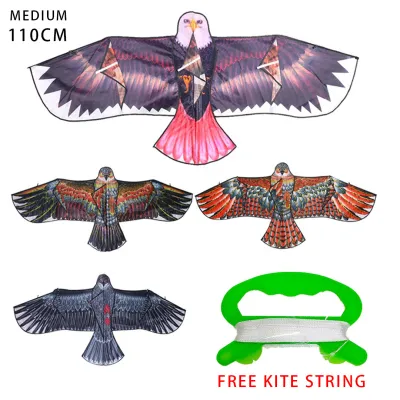
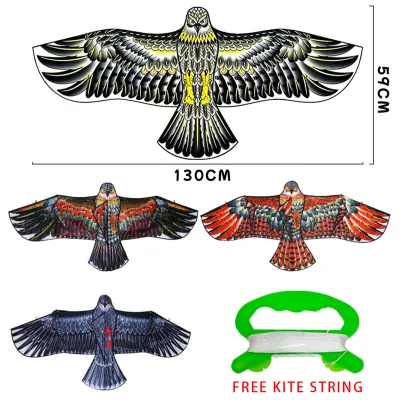
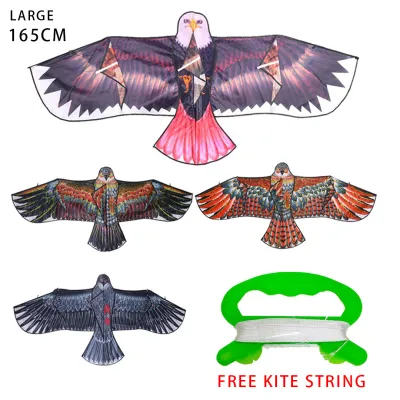
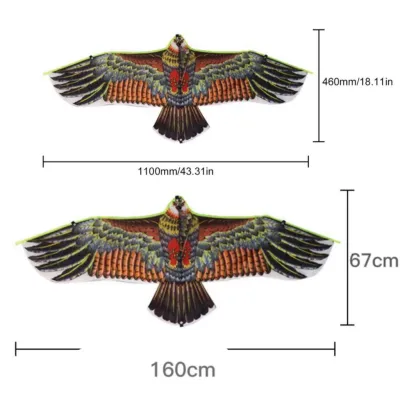
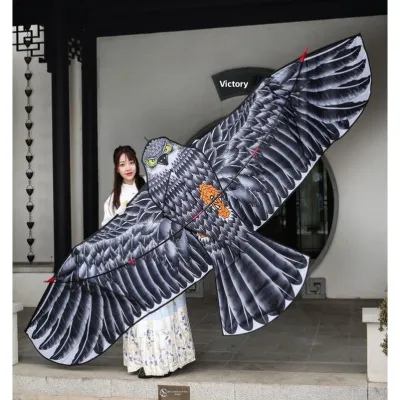
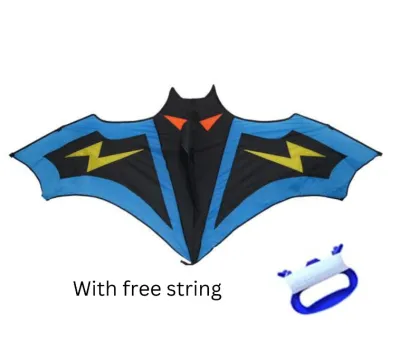
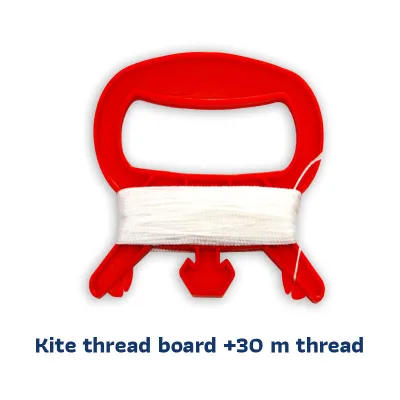
Prices are valid at publication and may change. Please refer to the product page for the latest price.
Best Eagle Kite Types for Different Age Groups
To help you find the perfect match for your family, it is helpful to categorize eagle kites by size, frame structure, and control complexity. Different age groups have varying levels of physical strength, coordination, and patience, meaning a kite that is perfect for a teenager might be completely unmanageable for a toddler.
For Young Children (Ages 3–7): Small Delta Eagles
For the youngest flyers, the primary goal is immediate success with minimal frustration. Small delta-shaped eagle kites, which typically feature a wingspan of under 1 meter, are specifically designed to meet these needs. These kites use a highly stable triangular delta geometry that naturally catches even the gentlest breezes, allowing them to launch into the air with very little effort from the child or parent.
These entry-level kites are almost always constructed from lightweight ripstop nylon, which keeps the overall weight to an absolute minimum. They feature simple single-line control systems, meaning the child only needs to hold onto a single handle and manage the tension of one string. There are no complicated steering maneuvers to learn, making it easy for young children to feel a sense of control and accomplishment as they watch their eagle soar.
To ensure maximum stability, look for small delta eagles that come with pre-attached ribbon tails or streamers. These tails add aerodynamic drag to the rear of the kite, which prevents it from spinning, looping, or diving when faced with sudden gusts of wind. Because these kites are small and lightweight, they generate very little pulling force, ensuring that small hands can hold the reel comfortably and safely under close adult supervision.
For Older Kids and Teens (Ages 8–15): Medium Framed Eagles
As children grow older, they develop better coordination and a desire for more active engagement. Medium-sized framed eagle kites, with wingspans ranging from 1 to 1.5 meters, offer an exciting step up. These kites feature highly detailed, realistic graphics that look remarkably like real eagles in flight, providing a more immersive and visually satisfying experience.
The defining feature of this category is the use of a flexible, lightweight frame, usually made of fiberglass rods. This frame gives the kite its distinct bird-like shape and allows it to maintain its structure in stronger winds. Fiberglass is incredibly resilient, which is crucial for this age group, as it allows the kite to survive the inevitable hard landings and minor crashes that occur as kids learn to pilot their craft.
Flying a medium-framed eagle kite teaches older children basic wind-reading skills and the fundamentals of aerodynamics. They will learn how to position themselves relative to the wind, how to feel the tension in the line, and how to make subtle adjustments to keep the kite stable. Many of these models also support the attachment of longer, flowing wind-socks or drogues, which add stability in moderate winds while creating a stunning visual display in the sky.
For Adults and Experienced Flyers: Large Soft-Cell or Stunt Eagles
For adults, older teenagers, or families looking to fly a kite as a collaborative team, large-scale eagle kites offer an impressive and challenging option. These kites feature wingspans exceeding 1.5 meters and are designed to dominate the sky. They fall into two main categories: large framed kites and frameless parafoil, or soft-cell, designs.
Parafoil eagle kites are particularly popular for travel because they have no rigid frame or rods to assemble or break. Instead, they feature hollow fabric cells that inflate with air as the wind passes through them, creating a natural wing shape that generates massive lift. When you are finished flying, a parafoil kite can be folded up into a compact pouch that easily fits into a backpack, making it an excellent choice for family road trips and beach vacations.
For those seeking a highly active and skill-based experience, dual-line stunt eagle kites allow the pilot to actively steer the kite through loops, dives, and sharp turns. This style requires a steep learning curve and excellent hand-eye coordination, as you must manage two separate lines simultaneously to control the kite’s direction. Because large kites catch a significant volume of wind, they can generate intense pulling forces; flyers should always wear protective gloves to prevent line burns and ensure they are flying in a completely clear, open area.
Key Features to Check Before Buying Online
When shopping for an eagle kite on popular ecommerce platforms, it is easy to get overwhelmed by the sheer number of options. To ensure you purchase a high-quality product that will last for multiple seasons, you should carefully inspect the product specifications and descriptions rather than relying solely on product photos.

- Material: The durability of the kite's sail is paramount. High-quality eagle kites are made from ripstop nylon or high-grade polyester fabric. These materials are woven with a special cross-hatch reinforcing pattern that prevents small punctures or snags from spreading into large, ruinous tears. Avoid cheap kites made from thin plastic films or low-grade plastics, as these materials degrade rapidly under the intense ultraviolet rays of the Philippine sun and are highly prone to cracking or tearing.
- Frame Construction: The frame must be both incredibly strong and highly flexible to withstand the physical demands of flying and crashing. Look for kites that specify fiberglass or carbon fiber spars. Carbon fiber is exceptionally light and rigid, making it ideal for high-performance kites, while fiberglass offers excellent flexibility and impact resistance at a more affordable price point. Avoid kites that use heavy wooden dowels or brittle, solid plastic rods, which can easily snap on impact.
- Wind Rating: Always check the manufacturer's recommended wind range before making a purchase. A versatile family kite should have a wind rating of approximately 8 to 25 kilometers per hour (km/h). This range ensures that the kite can launch in light afternoon breezes but remains stable and structurally sound when the wind picks up. Flying a kite outside its recommended wind range can result in a kite that refuses to lift or one that becomes dangerously unstable.
- Line and Reel Quality: The quality of the included line and reel often determines how enjoyable your flying experience will be. Many budget-friendly kites come with thin, low-quality string wrapped around a small, uncomfortable plastic ring that easily tangles. For a frustration-free experience, look for packages that include a high-tensile braided nylon or Dacron line paired with a sturdy, ergonomic hoop reel or a ball-bearing winding wheel. A smooth reel mechanism allows you to let out and retrieve line quickly, preventing tangles and jams.
Safety and Location Tips for Philippine Outdoors
While flying a kite is generally a safe and low-risk activity, the unique environmental and weather conditions in the Philippines require families to follow specific safety guidelines to protect themselves and others.
- Weather Awareness: The weather in the Philippines is heavily influenced by seasonal monsoons, namely the Amihan and the Habagat. While these wind patterns are excellent for kite flying, they can also bring sudden, localized tropical thunderstorms and heavy downpours. Always check the local weather forecast before heading out. If you see dark storm clouds approaching or hear thunder, reel in your kite immediately. A wet kite line can conduct electricity, making it an extreme hazard during a lightning storm.
- Hazard Avoidance: Before launching your eagle kite, take a moment to thoroughly inspect your surroundings. The most critical safety rule is to never fly a kite near overhead power lines, electrical substations, or telephone poles. If your kite does become tangled in a power line, do not attempt to retrieve it yourself, as this can result in fatal electrocution; instead, contact your local electric cooperative or utility provider. Additionally, stay far away from busy highways, active airports, and dense tree lines that can snag your line or cause accidents.
- Location Selection: To enjoy a smooth, uninterrupted flight, choose a location with wide-open spaces and clean, unobstructed wind. In the Philippines, some of the best spots for kite flying include wide public parks, such as the Clark Parade Grounds in Pampanga, the open fields of Quezon Memorial Circle, or the historic Luneta Park in Manila. If you are near the coast, wide sandy beaches—such as those in La Union, Zambales, or Batangas—provide excellent, steady sea breezes that are perfect for launching larger eagle kites.
- Personal Care: Spending several hours under the tropical sun can quickly lead to dehydration, sunburn, or heat exhaustion. To keep your family safe, plan your kite-flying activities for the cooler parts of the day, such as the early morning or the late afternoon. Ensure everyone applies a high-SPF, broad-spectrum sunscreen, wears a wide-brimmed hat, and wears sunglasses to protect their eyes while tracking the kite against the bright sky. Keep a cooler stocked with plenty of fresh water and hydrating drinks to ensure everyone stays well-hydrated.
Maintenance Tips for Tropical Climates
The tropical climate of the Philippines, characterized by high humidity, intense sunlight, and salty coastal air, can take a toll on your kite’s materials. Proper maintenance is essential to extend the lifespan of your eagle kite and ensure it remains ready for your next family outing.
- Post-Flight Cleaning: After a day of flying at the beach or in a dusty field, your kite will likely have accumulated sand, salt, or dirt. Use a soft, slightly damp microfiber cloth to gently wipe down the fabric sail and the frame rods. This is especially crucial after flying near the ocean, as salt crystals can trap moisture, corrode metal connectors, and act as an abrasive that wears down the fabric fibers over time.
- Drying: Never store a wet or damp kite in its carrying bag. In the humid Philippine climate, trapping moisture inside a sealed bag will quickly lead to the growth of mold and mildew. This not only causes unpleasant odors but can also permanently stain the vibrant eagle graphics and weaken the structural integrity of the fabric. Hang your kite up to air-dry completely in a shaded, well-ventilated indoor space before folding and packing it away.
- Storage: Store your dry kite in a cool, dark, and dry place, away from direct sunlight and extreme temperatures. Avoid leaving your kite in the trunk of a car, where temperatures can reach damaging levels, causing plastic fittings to warp and the fabric's protective coatings to degrade. Keeping your kite in a dedicated storage sleeve in a closet will prevent UV fading and physical damage, keeping the eagle's colors bright and striking for years.
Frequently Asked Questions (FAQ)
What wind speed is best for flying an eagle kite?
Most standard family eagle kites fly best in light to moderate breezes, typically ranging from 8 to 24 kilometers per hour (km/h). You do not need specialized wind-measuring tools to determine if the conditions are right; instead, look for natural visual cues in your environment. Ideal wind conditions are present when leaves on trees are rustling, small twigs and branches are in constant motion, and flags are fully extended but not flapping violently. If the wind is so calm that leaves are completely still, the kite will struggle to stay aloft. Conversely, if large tree branches are swaying heavily or it is difficult to walk against the wind, it is too strong for safe family flying.
Can I fly an eagle kite at the beach?
Yes, beaches are among the most popular and rewarding locations for flying eagle kites. Coastal areas naturally benefit from consistent, steady sea breezes that are unobstructed by buildings, trees, or hills, making it incredibly easy to launch and maintain a stable flight. However, flying at the beach requires a few precautions. The salty air and fine sand can easily find their way into your kite reel’s moving parts, so it is important to rinse and dry your equipment after each trip. Additionally, always choose a spacious, uncrowded section of the beach to fly your kite, ensuring that your lines do not pose a tripping or entanglement hazard to other beachgoers and swimmers.

Community discussion
Share your experience or ask a question. Comments are reviewed before publication.